What size of hose reel machine is recommended?
When selecting a hose reel machine for agricultural or landscape irrigation, the right size depends on your field dimensions, water pressure availability, and mobility requirements. For farms between 50 and 200 hectares, a traveler irrigator with a 75mm or 90mm PE pipe diameter and 300–500 meters of pipe length covers most needs efficiently. A single unit can irrigate over 1.33 hectares per cycle, saving more than 50% water compared to traditional methods. Matching pipe length, nozzle diameter, and inlet pressure to your crop type and terrain is the foundation of a cost-effective sizing decision.
Understanding Hose Reel Sizing Basics


What a Hose Reel Machine Actually Does
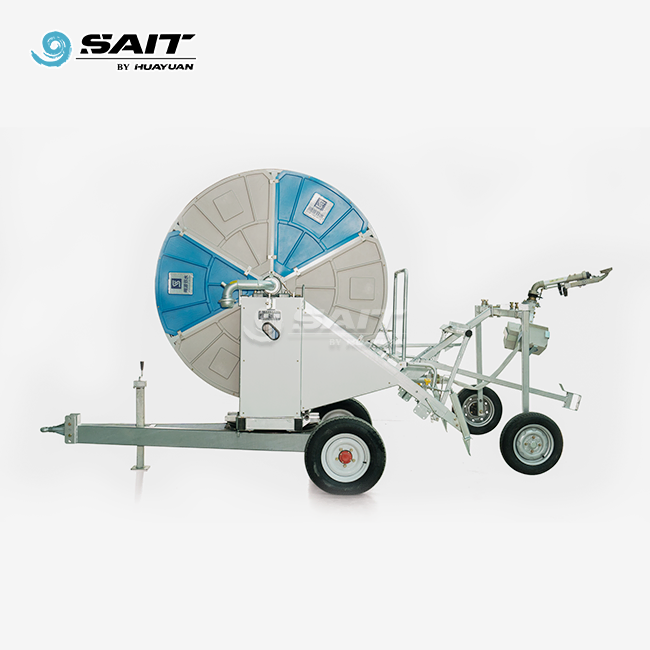
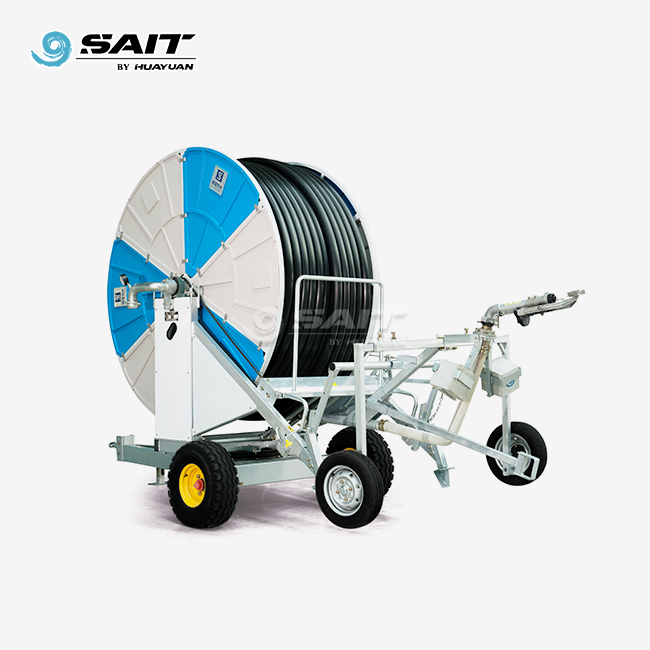
A hose reel irrigator is a mobile watering device that moves on its own and is made up of a big polyethylene pipe wound around a spinning drum. A gearbox moves the pipe back at a controlled speed while pressurized water flows through the system. This moves a sprinkler carriage across the field. This plan gets rid of the need for permanent underground infrastructure while still providing even water coverage over a wide range of terrain.
Key Sizing Factors to Understand First
The main factors that affect size choice are the diameter and length of the PE pipe, the water pressure coming in, and the sprinkler flow rate that your water source can handle. Larger pipe sizes can handle more flow, but they need bigger pumps. Longer pipe lengths make it possible to water more areas, but they make the spinning drum heavier. A productive system is one that matches all three to the length of your field and the output of your pump. An undersized or overpowered system is one that doesn't.
Portable vs. Fixed: Why It Matters for Size
Portable hose reel machine traveler systems are made to be moved from one field strip to another, so the size of the drum and the weight of the whole machine are directly related. A system made up of 90mm × 400m pipes weighs a lot more than one made up of 75mm × 300m pipes. For contractors who work on various farms or hire companies that manage shared equipment, the largest size that can be moved is often the deciding factor before field coverage even comes into play.
How to Determine the Right Hose Reel Size: A Dimensional Analysis Approach
Step 1 — Measure Your Effective Field Length
The length of your pipe must exactly match the length of the irrigation line. The JP-90 series can handle 300m and 400m runs at higher flow rates, while the JP-75 series can handle 300m, 400m, and 500m field strips. If most of your field strips are 350 meters long, the JP-75/400 has enough reach without wasting pipe capacity or making the retraction tension uneven while it's working.
Step 2 — Confirm Your Water Supply Capacity
The flow rate and pressure at the inlet can't be changed. The JP-75 model works with an inlet pressure of 0.5 to 1 MPa and a spray flow range of 15.5 to 34.3 m³/h. The JP-90/400, on the other hand, can handle flow rates of up to 50 m³/h and outlet pressures as low as 0.3 MPa. This makes it ideal for fields with pump systems that handle a lot of water. Before you order, you should always compare the machine's rated flow window to the output of your pump.
Step 3 — Match Nozzle Diameter to Crop Type
Droplet size, spray range, and application rate are all controlled by the width of the nozzle. The JP-75 series can handle nozzles with sizes ranging from 16mm to 22mm. It has a spray range of 24–44 meters and an irrigation area of 47–74 meters. With nozzles ranging from 14mm to 28mm, the JP-90 series can spray up to 46 meters away and water an area 43–78 meters wide. For gentle, fine-droplet application, vegetable growers usually like smaller nozzles. Grain farmers, on the other hand, can run larger nozzles at faster travel speeds.
Comparing Hose Reel Types for Optimal Sizing and Application
Turbine Drive vs. Electric Drive
Systems that are powered by water turbines are the best choice for farms and fields that are not connected to the power grid. The propeller turns the energy of the moving water into mechanical retraction force. This means that there is no need for an outside power source at the field spot. When it comes to sports fields and places with strict noise laws, electric drive models are better because they let you control the speed more precisely and make less noise.
Single-Gun Carriage vs. Boom-Type Carriage
The HUAYUAN SAIT hose reel traveler irrigator can be used with both single-gun spray carts and booms that have more than one sprinkler. Single-gun setups focus the flow into a single rotating nozzle, which lets the projectile be thrown up to 46 meters farther. Boom-type carriages spread flow across multiple nozzles at lower individual pressure. This reduces wind interference and provides more uniform distribution across wider crop rows, which is especially helpful for vegetable or specialty crops that grow slowly. A pipe with a thicker wall and a bigger diameter keeps its shape when the pressure changes and doesn't break down in the sun after being used outside for a long time. HUAYUAN SAIT makes its own PE pipe from new materials, not recycled ones. This pipe has been shown to last more than 15 years. This is important for choosing the right size because the thickness of the pipe wall affects the smallest bend radius and drum diameter that are needed to store the pipe without stress fractures forming over time.
PE Pipe Quality as a Sizing Variable
Not all PE pipes carry the same sizing implications. Thicker-wall pipe in larger diameters retains shape under pressure cycling and resists UV degradation over extended outdoor use. HUAYUAN SAIT manufactures its own PE pipe from virgin materials — no recycled content — with a documented service life exceeding 15 years. This matters in sizing decisions because pipe wall thickness affects the minimum bend radius and drum diameter required to store the pipe without stress fractures forming over time.
Practical Hose Reel Sizing in Different Industry Scenarios
Medium-Scale Grain and Row Crop Farmers
If you have a 100-hectare grain business with 350-meter field strips, the JP-75/400 is a good starting point. The operator can change the application depth from light daily irrigation to heavy pre-planting soaking without having to change any of the equipment. The travel speeds range from 8 to 60 m/h. The system waters more than 1.33 hectares each time, which means that three to four passes a day are enough to meet the main watering needs of a normal medium-sized farm.
For quick reference, here are the main model specs:
- JP-75/300: 75mm pipe, 300m length, 15.5–34.3 m³/h flow, 47–74m irrigation width, travel speed 8–60 m/h
- JP-75/400: 75mm pipe, 400m length, same flow range, extended reach for longer field strips
- JP-75/500: 75mm pipe, 500m length, 0.6–1.1 MPa inlet required, longest reach in the 75mm class
- JP-90/300: 90mm pipe, 300m length, 17.2–48.4 m³/h flow, 43–78m irrigation width
- JP-90/400: 90mm pipe, 400m length, broadest flow range 10–50 m³/h, lowest minimum inlet pressure at 0.3 MPa
These five types cover most farm sizes and water supply setups that are common in medium-sized farms and contractor service businesses.
Agricultural Service Contractors and Rental Companies
Contractors who are in charge of watering multiple farms for different clients need machines that can cover a lot of land and are easy to move. For regular transport, the JP-75 line has the best weight-to-coverage ratio. For rental fleets, sticking to one pipe width makes it easier to find extra parts and cuts down on the time needed to train new workers. This saves money right away and adds up when there are 10 or more units in the fleet.
Sports Turf and Landscape Managers
Golf courses and sports fields need water to be applied precisely and evenly so that the ground doesn't get too wet. The smaller nozzle sizes and boom-type carriage design make fine droplet atomization and low working pressure, which lowers the risk of surface flow and compaction. Boom configurations can spray up to 40 meters wide, which means that one pass by the machine can cover regulation-width fairways or multi-use sports fields without any overlap waste.
Hose Reel Installation and Maintenance Tips to Match Your Size Choice
Positioning and Anchoring at Setup
When the hose reel machine's reel unit is properly anchored before use, the drum doesn't move during high-tension retraction. Anchor stakes or frame ballast must be strong enough to handle the extra pulling force for 90mm pipe models with heavier hose loads. Place the machine so that the pipe leaves the drum at a right angle to the field strip. If it's not lined up correctly, the hose-layering scroll mechanism will wear out faster, and the winding will be uneven.
Routine Maintenance by Size Class
Because they work with higher steady loads, larger drum units need to have their gearbox oil level and rotor vane state checked more often. The HUAYUAN SAIT's 4-speed gearbox has carefully made gears that don't wear out easily and keep the speed stable during the whole withdrawal cycle. Every month, the surface of the PE pipe is checked for wear and tear or UV cracks, and the turbine is cleaned once a year. This keeps the system working at its best for its more than 10-year service life.
Troubleshooting Uneven Retraction
The most common problem in the field with any drum-style traveler, no matter what size, is uneven turning. It usually means that either the pipe tension wasn't right during the first wrap or the scroll bar guide is worn out. On bigger units with 400–500m of pipe, one layer that isn't lined up right near the drum core puts extra pressure on the layers that are farther away. If you fix the position of the scroll bar early on, the pipe won't deform, which would lower the effective flow cross-section and raise the working pressure without warning.
Conclusion
There are three numbers that you can use to choose the right hose reel traveler irrigator size: the length of your field strip, the flow rate of your pump, and the tip width your crop needs. The JP-75 series covers strips 300 to 500 meters long with modest flow rates. The JP-90 series, on the other hand, takes on higher-volume tasks with more nozzle options. Both models save more than 50% of the water used for watering, make sure that the water is spread out evenly, and have machines that last more than 10 years. The most reliable way to make a good purchase is to match these parameters to your actual operational data instead of guessing.
FAQ
Q1: How do I know if a hose reel machine is too small for my farm?
The most obvious sign is that the length of your effective field strip is longer than the length of the pipe on the unit. If your strips are 420 meters long and your machine is 300 meters long, each pass leaves 120 meters unwatered. Pick a pipe length that is at least as long as your longest field strip.
Q2: Can one machine cover different pipe diameters?
No, the drum shape, the distance between the scroll bars, and the torque rating of the gearbox are all designed to work with a certain pipe diameter. When you mix pipe diameters on the same reel, the winding fails and the pressure changes.
Q3: How does pipe length affect machine lifespan?
Longer lines add weight to the drum and make the gearbox work harder to withdraw. As pipe length goes up, the time between proper repair visits gets shorter. Instead of once a year, units that carry 500m of 75mm pipe should have their gearboxes inspected every season.
Q4: What inlet pressure is the minimum for reliable turbine operation?
The JP-90/400 works at a minimum inlet pressure of 0.3 MPa, the lowest level in the current product line. A lot of other models need at least 0.5 MPa. When the rated minimum is not met, the turbine will either stop or pull back in a strange way.
Get the Right Hose Reel Machine for Your Operation — Contact HUAYUAN SAIT Today
HUAYUAN SAIT has manufactured traveler irrigators for over 20 years, with an annual production capacity of 14,000 units and delivery as fast as one week. As a direct-factory hose reel provider, we offer OEM and ODM designs, a 1-year full guarantee, 3-year low-cost parts support, and lifelong spare parts supply at factory cost. Send your field dimensions and pump details to kevin@showyirrigation.com and receive a matched model suggestion within 24 hours.
References
1. Food and Agriculture Organization of the United Nations. Irrigation Water Management: Irrigation Methods. FAO, 2022.
2. Howell, T.A. "Irrigation Efficiency." Encyclopedia of Water Science, Marcel Dekker, 2003.
3. Camp, C.R., Sadler, E.J., & Yoder, R.E. Evapotranspiration and Irrigation Scheduling. American Society of Agricultural Engineers, 1996.
4. Lamm, F.R., Ayars, J.E., & Nakayama, F.S. Microirrigation for Crop Production: Design, Operation and Management. Elsevier, 2007.
5. Irrigation Association. Landscape Irrigation Best Management Practices. Irrigation Association, 2021.
6. Solomon, K.H. "Irrigation System Uniformity and Efficiency." Journal of Irrigation and Drainage Engineering, ASCE, 2019.
Get a tailored irrigation solution for your project — our engineering team is ready to support you from design to installation.