What maintenance is required for four-wheel lateral irrigation wheels?
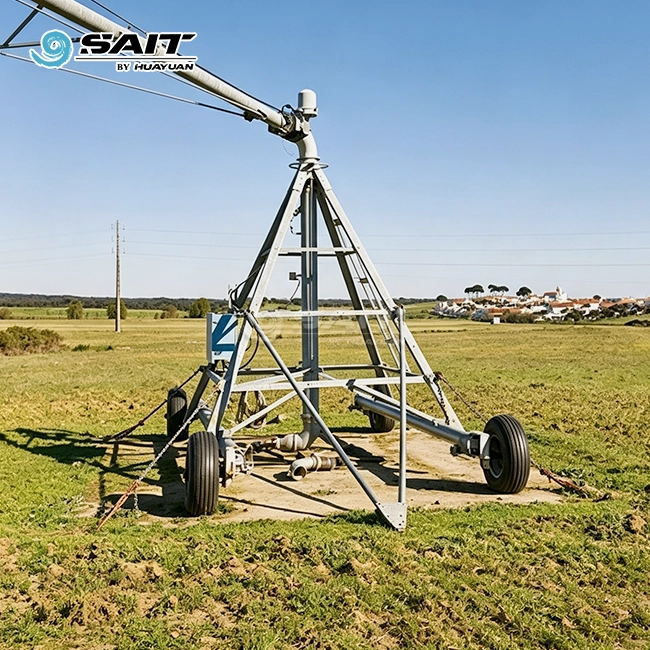
Keeping a four-wheel lateral irrigation system running at peak efficiency starts with the wheels. These drive units carry the entire machine frame across rectangular fields—sometimes covering travel distances up to 3,000 meters per run—while dragging water supply hoses and supporting span lengths from 37.5 m to 54.9 m. Proper wheel maintenance on a lateral move system is not optional; it directly determines whether your field achieves the 98% irrigation coverage rate these machines are designed to deliver or whether unplanned downtime eats into your crop cycle.
Understanding Four-Wheel Lateral Irrigation Wheels and Their Maintenance Needs
In a lateral move system, the drive cart is the most important piece of machinery. The first step in making a good maintenance plan is to know what it does and what could go wrong.
What the Four-Wheel Drive Cart Actually Does
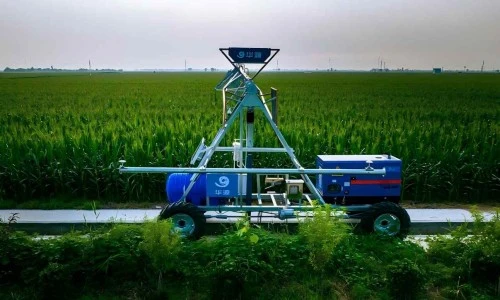
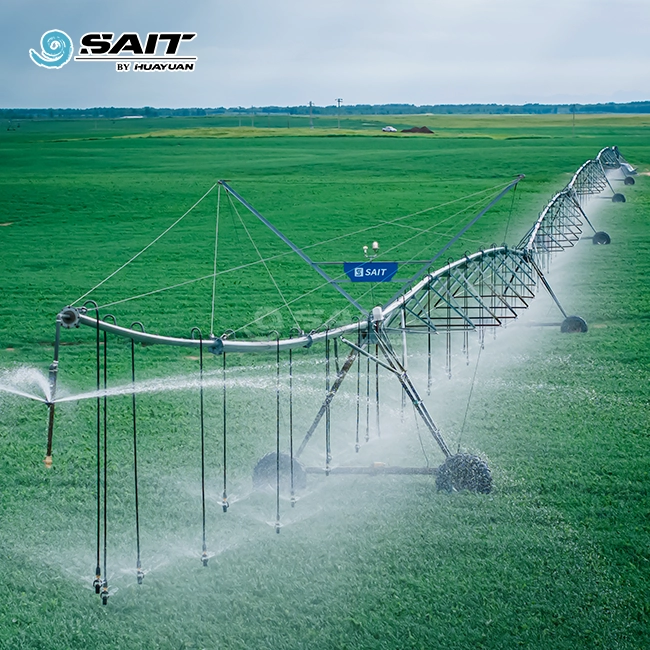
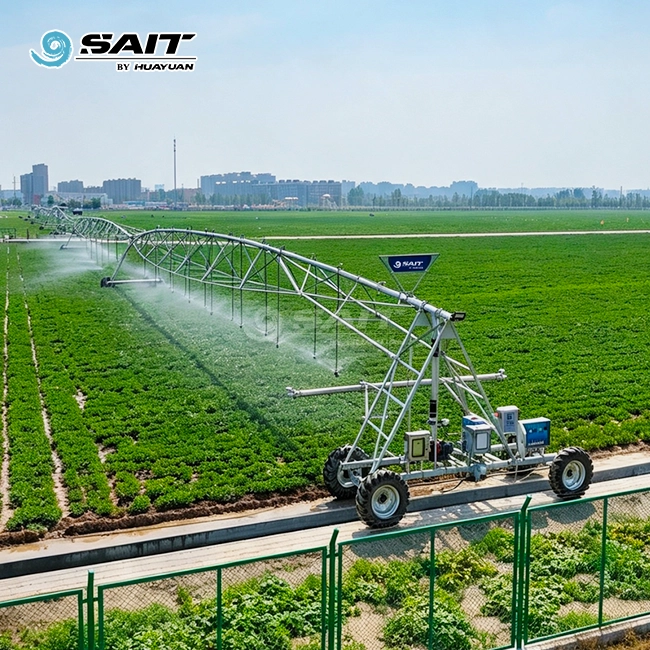
A center pivot turns around a set point, but a lateral move system moves in a straight line across from the core pipeline. The four-wheel cart gives the whole machine grip, evens out the load, and lets you control the alignment. HUAYUAN SAIT systems come with wheels in sizes 11.2-24, 14.9-24, and 16.9-24, with both tubeless and tubed tire options.
Why Wheel Condition Affects Irrigation Uniformity
The machine frame leans a little when a wheel loses air pressure or has tread wear that isn't even. That tilt changes the angles of the nozzles, the way the water is spread, and your Coefficient of Uniformity can drop by 90%. A study from the American Society of Agricultural and Biological Engineers shows that one of the main reasons why lateral move irrigation doesn't work as evenly as it should is because of mechanical alignment variation.
The Structural Load These Wheels Carry
A HUAYUAN SAIT four-wheel lateral irrigation lateral move machine can be as long as 973 m and have main pipe diameters of 168 mm or 219 mm. The four-wheel design spreads the structural and hydraulic load over a larger area than two-wheel designs, which lowers the stress on each wheel and keeps the dirt from getting too packed. Still, every field pass puts a lot of torque on each drive unit, so regular checks have to be done.
Common Issues Affecting Four-Wheel Lateral Irrigation Wheels
Rectangular crop operations, like rows of sugar beets, beds of potatoes, and strips of vegetables, have unique wear patterns that are different from those seen on center pivot equipment. If you know the failure modes, you can take action before something breaks.
Tire Degradation and Pressure Loss
Lateral move systems with high-flotation tires can work on wet soils after irrigation. Sidewall cracking is sped up by UV light, fertilizer left over from fertigation runs, and repeated soil penetration. If a tire drops even 5 PSI of air, it changes how high the machine can go and causes it to drift side to side over long distances.
Axle and Bearing Wear
On a four-wheel cart, the axle assembly supports both the weight of the machine and the corrections made to its position. When a bearing fails, it usually starts making small grinding noises before it stops working completely. Nebraska Extension's rules for irrigation repair say that replacing bearings is one of the three most common service tasks for linear move systems.
Guidance System Interference Caused by Wheel Problems
The HUAYUAN SAIT systems can guide in furrows, along cables, or using both BDS and GPS to guide them. The electrical control system sets off an alignment fault when the worn wheels cause the cart to stray outside the guidance adjustment range, which is usually ±10 cm over a 1 km run. This means that problems with wheels don't just affect the wheels themselves; they lead to mistakes in the control system and stops in operations.
Step-by-Step Maintenance Checklist for Four-Wheel Lateral Irrigation Wheels
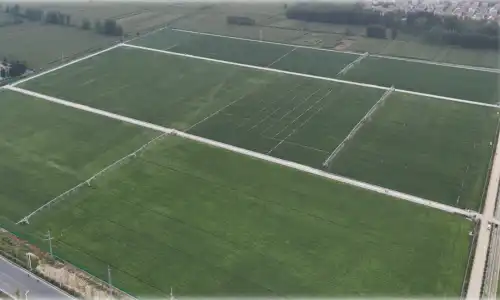
With a structured checklist, maintenance goes from being a last-minute scramble to a routine that you can count on. Every operator should do these basic maintenance and inspection tasks:
- Weekly visual inspection: Walk the full length of the machine and check each tire for visible cracks, embedded debris, or sidewall bulging. Check that all four wheels sit flush on the soil surface with no visible lean.
- Bi-weekly tire pressure check: Use a calibrated gauge matched to the manufacturer's specification for your chosen wheel size (11.2-24, 14.9-24, or 16.9-24). Record readings in a logbook and flag any tire losing more than 2 PSI between checks.
- Monthly bearing lubrication: Apply food-grade or high-temperature grease to all bearing points on the drive cart axle assembly. Dry bearings are the single fastest path to axle seizure on lateral move equipment operated in sandy or abrasive soils.
- End-of-season axle inspection: Remove wheels, clean the axle journals, and measure shaft diameter against the original specification. Replace any axle showing more than 0.5 mm of wear taper.
- Pre-season alignment verification: Before the first irrigation pass of the season, run the machine 50 meters on flat ground and measure lateral deviation. Deviation greater than 10 cm indicates either a tire pressure imbalance or a guidance sensor calibration issue.
For four-wheel lateral irrigation setups, if you are trained, these jobs can be done in less than two hours per week. Skipping them, on the other hand, has real-world effects: an Irrigation Association study from 2022 found that unplanned downtime on linear move systems costs operators between $180 and $320 per hour in lost irrigation capacity.
Many operators say that after using this checklist regularly, the number of emergency service calls goes down significantly and it takes longer for major parts to need to be replaced.
Optimizing Wheel Maintenance to Improve System Performance and Water Efficiency
Good wheel condition is an important part of how well the whole system works. A horizontal move machine that can cover 240 hectares per unit is only useful when all of its mechanical parts work as they should.
IoT and Remote Monitoring Integration
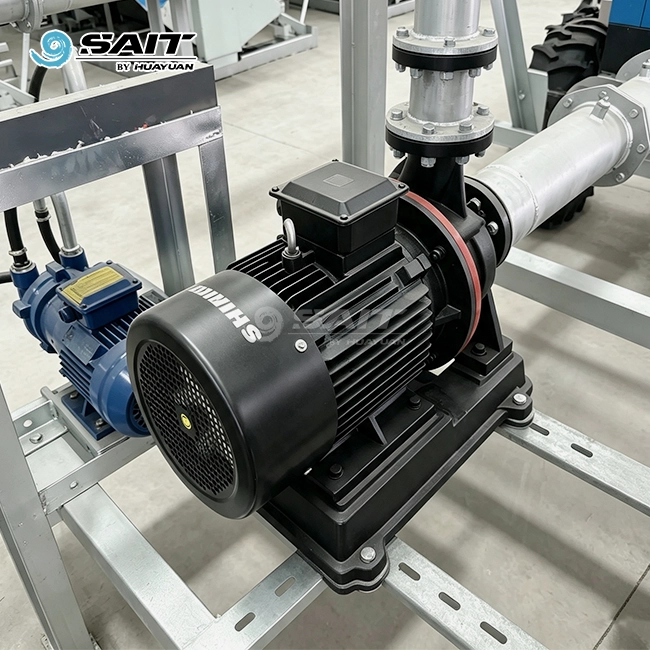
The electronic remote control system from HUAYUAN SAIT lets workers keep an eye on the performance of the drive carts from a central place. Before the machine gets to the end of its pass, wheel load sensors and travel speed data can show if the traction is uneven. This is often an early sign of problems with the tires or bearings.
Integrating Wheel Checks with Full-System Inspections
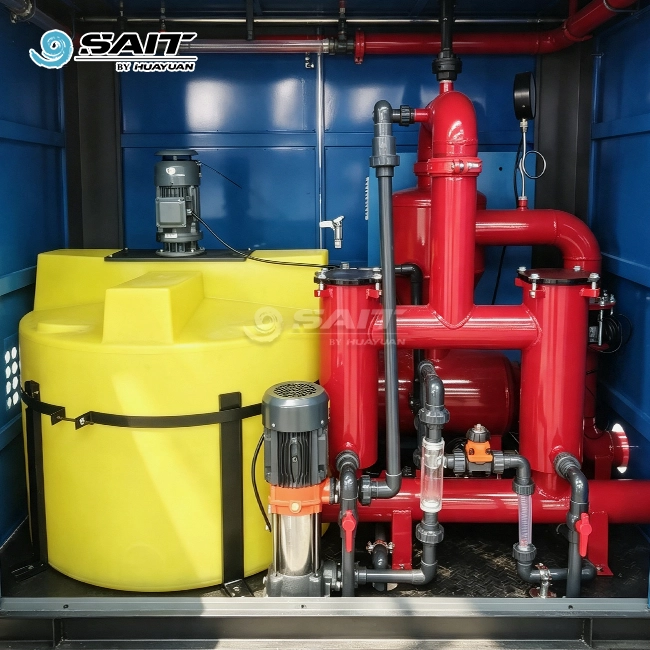
In addition to wheel upkeep, the nozzle package, drag hose connections, and pump function should all be inspected. All checks should be done at the same time. This cuts down on the total number of hours needed for each inspection cycle and makes sure that a problem with a bearing or a partially blocked nozzle doesn't both lower application uniformity at the same time.
Seasonal Preparation for Extreme Conditions
HUAYUAN SAIT four wheels linear equipment works reliably from -20°C to 60°C, so it can be used in a wide range of places, from wheat farms in the CIS region to projects in the Middle East to clear out deserts. In cold places, slightly deflate tires before putting them away to lower sidewall stress during freeze-thaw cycles. To stop abrasive wear in sandy areas with high temperatures, lubricate bearings every two weeks instead of once a month.
Choosing the Right Four-Wheel Lateral Irrigation Wheel and Maintenance Partner
Part of how much maintenance your lateral move system will need in the future is decided when you buy it. How much it costs to own something depends on which tools you buy and which supplier you buy it from.
Evaluating Wheel Specifications for Your Field Conditions
Which tire size is best for your job depends on the soil's carrying ability and the slope of the field. The 14.9-24 high-flotation tire works well on clay- or water-rich soils that are popular in growing potatoes and vegetables. If you have machines with longer spans or double-beam structures that are working on heavy soils, the 16.9-24 size can hold more weight.
What to Expect from a Reliable Supplier
Every lateral move system from HUAYUAN SAIT comes with a full guarantee for one year, low-cost upkeep and parts replacement for three years, and spare parts at the factory cost price for life. The company has been making things for 20 years and has over 130 patents, including 35 idea patents. Their hot-dip galvanized steel structures have coatings that are thicker than 80 μm, which protect them from corrosion and extend their useful life in difficult field conditions.
OEM and Custom Configuration Support
If agricultural project developers and equipment distributors need a four-wheel lateral irrigation supplier, HUAYUAN SAIT can help. They can support full OEM branding, custom span lengths from 37.5 m to 54.9 m, and drive unit configurations that are best for the soil and crop. With every project order, there is on-site control of the installation and training for the user.
Conclusion
Wheel maintenance on a four-wheel lateral irrigation system is easy, can be planned for, and is directly linked to how much work gets done in the field. A program that protects your investment and keeps watering uniformity above 90% includes eye checks once a week, regular tracking of tire pressure, lubrication of bearings once a month, and a review of the axles at the end of the season. Your system covers 98% of the field every irrigation season if you keep up with regular maintenance and use high-quality parts like hot-dip galvanized structures, BDS/GPS dual-mode guidance, and modular drive configurations.
FAQ
Q1: How often should I inspect four-wheel lateral irrigation wheels?
During busy watering seasons, check the tires and balance of the wheels once a week. Do a full check of the axles and bearings once a month, and do a full mechanical review before and after every yearly shutdown.
Q2: Can in-house staff handle wheel maintenance, or do I need a technician?
Regular jobs like checking the tire pressure, doing eye checks, and greasing the bearings can be done by trained farm staff. A trained irrigation expert is needed to measure the axle, recalibrate the guidance sensor, and replace the bearings on sealed units.
Q3: What are the signs that a wheel needs replacement?
If there is persistent lateral drift during a pass, an unusual grinding sound coming from the axle, visible cracks in the sidewall of the tire, or a tire that won't hold pressure after being inflated several times, it's time to get a new one.
Q4: Does wheel maintenance affect water application uniformity?
Yes. A worn or under-inflated tire changes the travel height and frame alignment of the machine, which changes the angles of the nozzles and lowers the Coefficient of Uniformity. Keeping the tires properly aligned and at the right pressure is a direct way to improve the accuracy of watering.
Get a Custom Maintenance Plan from a Trusted Four-Wheel Lateral Irrigation Manufacturer
With more than 130 patents and 20 years of experience making irrigation systems, HUAYUAN SAIT's four-wheel lateral irrigation systems are built to last for a long time in commercial farming. Each system comes with on-site fitting help, a full guarantee for one year, and spare parts that are available for as long as they cost the same. Get in touch with our technical team right away to get a quote on a field-specific configuration or a maintenance plan that is made just for your crop and terrain.
Kevin@showyirrigation.com is his email address.
References
1. American Society of Agricultural and Biological Engineers (ASABE). Standards for Design and Installation of Microirrigation Systems. ASABE, 2021.
2. Irrigation Association. Linear Move and Lateral Move Irrigation Systems: Performance and Maintenance Guidelines. Irrigation Association, 2022.
3. Nebraska Extension. Irrigation System Maintenance and Management. University of Nebraska–Lincoln, 2020.
4. Camp, C.R., Sadler, E.J., & Busscher, W.J. "A comparison of uniformity measures for drip irrigation systems." Transactions of the ASAE, 40(4), 1011–1020, 1997.
5. Food and Agriculture Organization of the United Nations. Irrigation Water Management: Irrigation Methods. FAO Irrigation and Drainage Paper No. 45, FAO, 2019.
6. Evans, R.G., & Sadler, E.J. "Methods and technologies to improve efficiency of water use." Water Resources Research, 44(7), 2008.
Get a tailored irrigation solution for your project — our engineering team is ready to support you from design to installation.