What is the water requirement for a single-span small-field irrigation?
Water requirement for a single-span small-field irrigation typically ranges from 4 to 25 mm per application event, depending on crop type, soil texture, and local evapotranspiration rates. For a field between 4 and 15 hectares, a well-configured single span small fields irrigation system can deliver water at flow rates matched precisely to soil infiltration capacity, preventing runoff and deep percolation losses. Under standard agronomic conditions, corn requires roughly 5–8 mm per irrigation cycle, while soybeans need 4–6 mm. The HUAYUAN SAIT system applies water at application rates as low as 6 mm/hour, aligning delivery with soil intake and eliminating waste.
Understanding Water Requirements in Single-Span Small-Field Irrigation


A successful watering program starts with making sure the water level is right. When working with a small area, making a mistake directly causes a loss of yield or lost input cost.
How Crop Type Shapes Demand
The amount of water that different foods need is very different. In the Midwest of the United States, corn at its most green stage needs 6–9 mm of water per day of full evapotranspiration. Cotton, on the other hand, may need up to 10 mm of water per day during boll growth. It is possible to match these daily crop factors with a single-span automated unit that has the right pipe diameter: 5" (127 mm) for lighter flows or 6-5/8" (168 mm) for higher volume needs.
Soil Texture and Infiltration Rate
It takes 15–25 mm of water per hour for sandy loam soils to soak up water, but only 5–10 mm of water per hour for clay loam soils. The amount of water that is actually used drops sharply if the rate of application is higher than the rate of entry. This is taken care of by the SAIT control system, which changes the travel speed and application timing based on how much water is absorbed by the soil. This keeps the distribution even across the wetted radius above 90%.
Climate and Evapotranspiration Conditions
For compact irrigation, using the FAO Penman-Monteith equation to figure out reference evapotranspiration (ET₀) gives us a starting point for making plans. In dry U.S. states like Arizona and California's Central Valley, ET₀ can hit 8–10 mm/day in July, which means that irrigation cycles need to happen more often. In the northern Great Plains, summer ET₀ is about 5–6 mm/day, which means that irrigation events happen more frequently.
Design Principles Influencing Water Requirement in Single-Span Irrigation Systems
How well water gets to the roots depends on more than just agronomic data; it also depends on how the system is set up.
Span Length and Coverage Area
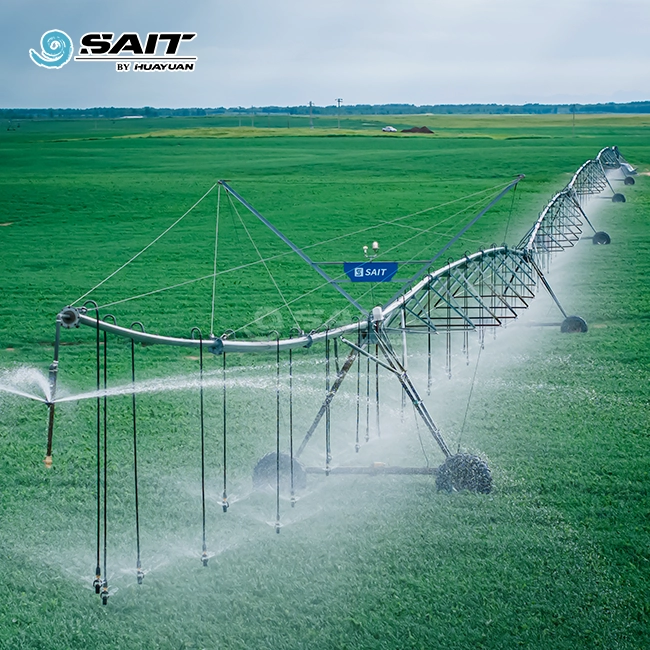
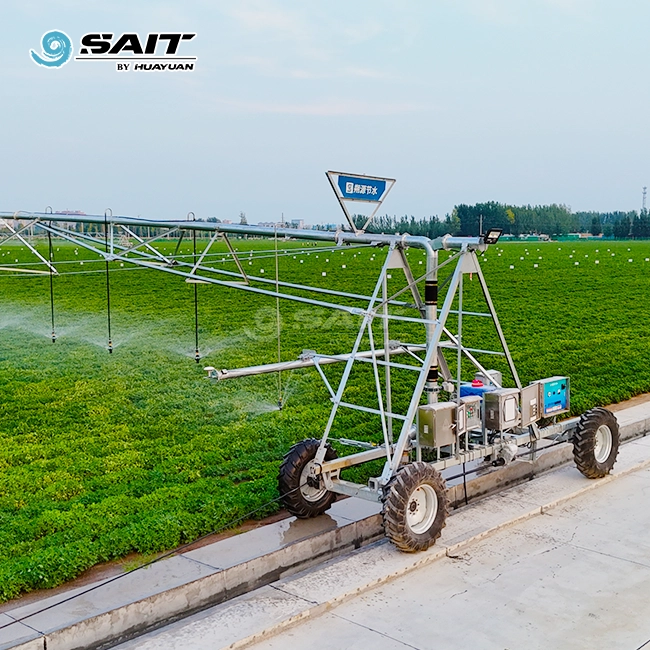
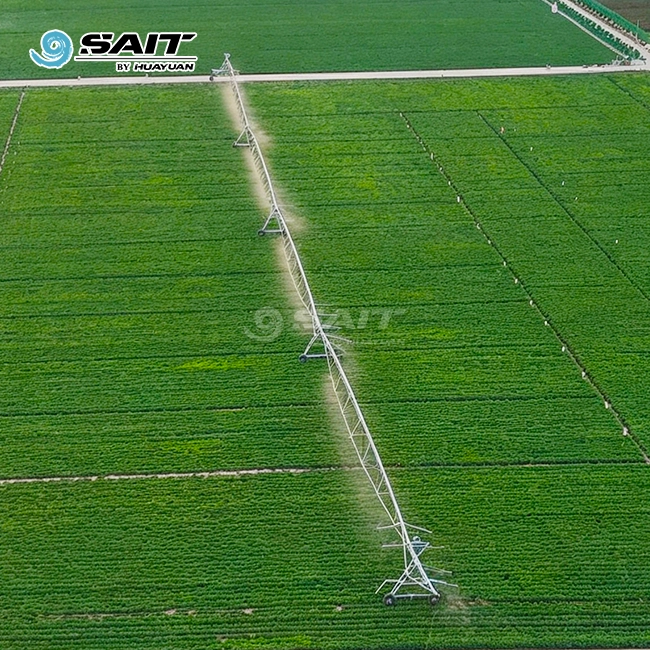
HUAYUAN SAIT spans range from 37.5 m to 66.5 m long, and they can have overhangs that go up to 25 m long. About 4–6 ha are covered by a 49.1-meter span with a 5.5-meter overhang in a normal travel setting. Longer lengths cut down on the number of passes that need to be made, but they also need higher input pressure, which changes the pump choice and the cost of energy. The watered perimeter-to-area ratio goes down when the span length is matched to the field layout. This lowers evaporation losses at the field edges.
Emitter Spacing and Sprinkler Selection
The application rate regularity is directly affected by the outlet spacing, which can be 1.9 m or 2.9 m (customizable). Tighter spacing improves consistency factors better, but it also raises the number of nozzles and the pressure demand. HUAYUAN SAIT matches different outlet configurations with different sprinkler packages, such as low-pressure rotating heads and fixed-plate emitters. This lets application rates be adjusted from 6 to 25 mm/hour, depending on the crop and soil.
Automation and Variable Rate Application
The SAIT Smart Control System uses IoT devices, data on soil wetness, and big data models to make variable rate irrigation (VRI) work zone-by-zone. This means that parts of a field with sandier soil get pulses that are lighter and happen more often, while parts with heavier soil get pulses that stay in place longer at a slower speed. Remote scheduling through the SAIT platform gets rid of the need to guess by hand and measures the total seasonal water use.
Comparison of Single-Span Irrigation Versus Alternative Systems Regarding Water Use
To pick the right technology, you need to look at how much water different types of systems use in real life, not just their specs in a catalog.
This is how common ways of watering compare to a single-span automated unit:
- Flood irrigation uses 60–80% of the water that is applied to the field, losing 20–40% to runoff and deep percolation. According to data from the USDA NRCS, a single-span pivot system that works at >90% distribution uniformity can save more than 70% of the water that would have been used to flood-irrigate similar plots.
- Drip irrigation has the best ideal efficiency (90.5–95%), but it costs more per acre and has a high risk of clogging when the water source isn't good. Over the course of 5 years, the costs of installing and maintaining drip systems for row crops larger than 4 ha often outweigh the costs of single-span mechanized systems.
- Stationary sprinkler grids offer modest regularity (75–85% CU), but they need large lateral pipe networks, a lot of work to move, and can't be automated.
Compact irrigation with a single-span device in the middle offers application efficiency about the same as drip on medium-textured soils, but it is easier to use and can be automated like center-pivot technology. For industrial areas between 4 and 15 ha, it is hard to find a better balance at a competitive price.
Practical Guidelines for Estimating and Managing Water Requirements
With accurate estimates, you can avoid both under-irrigating and over-applying, which can be expensive. The steps for doing the calculations are easy to understand.
Step-by-Step Estimation Method
Here is the daily crop evapotranspiration value, which is given by ETc = Kc × ET₀. Kc is the crop coefficient for this growth stage. To find the gross water demand per cycle, multiply ETc by the number of days that go by between watering events. Add a 10–15% factor to account for system waste and canopy interception losses. In Kansas, a 6-ha cornfield in the middle of the season gets 6.5 mm of rain per day and has a 3-day cycle. The gross demand is equal to about 6.5 x 1.15 x 3 = 22.4 mm per event.
Monitoring and Maintenance Practices
Without regular maintenance, water efficiency drops quickly. At the start of every season, pressure gauges should be checked at every hookup point on a tower. Nozzle regulators need to be cleaned once a year to keep them from getting partially clogged, especially at the outer span where application rates are highest. The SAIT system keeps track of changes in journey speed and pressure from afar, so teams can fix problems before uniformity falls below accepted levels.
Installation Quality and System Setup
Choosing a span height of 2.1 m, 2.9 m, 3.8 m, or 4.5 m changes how wind moves through and evaporates water from the crop canopy to the nozzle. In hot, dry places, lower curves cut down on evaporation loss. HUAYUAN SAIT oversees the installation process to make sure the leveling is correct, the gearmotors are aligned (25.5:1 at 1.5 hp or 40:1 at 0.75 hp), and the initial pressure is set correctly. This directly impacts whether the system meets its rated application uniformity from the start.
Procurement Insights and Supplier Selection for Single-Span Irrigation Systems
If you choose the right single span small fields irrigation supplier, it will affect not only the price you pay, but also the total cost of ownership over 20 years.
Evaluating Supplier Technical Capability
Suppliers should show that they follow the ASABE and ISO 9001 standards for quality management and irrigation. HUAYUAN SAIT has more than 130 patents, including 35 idea patents and 15 foreign patents. He got these patents by working with China Agricultural University for a long time. Corner missed irrigation is cut down to less than 5% by the company's BeiDou + IoT positioning system. This is a performance measure that not many catalog sellers can back up with field data.
Cost Structure and After-Sales Terms
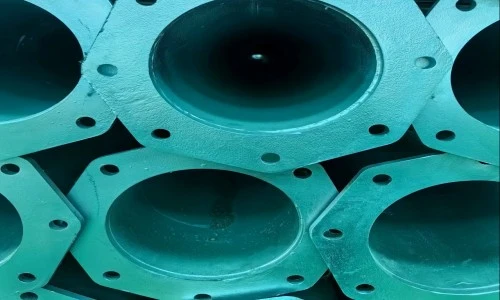
A standard single-span unit's price includes the main pipeline (5", 6-5/8", or 8-5/8"), the truss assembly with 20 mm or 22 mm truss rods, the hot-dip galvanized structure with a minimum 80 μm zinc coating, and the SAIT control panel. HUAYUAN SAIT provides a full guarantee for one year, low-cost part repair for three years, and lifelong supply of spare parts at factory cost. This system makes long-term maintenance budget uncertainty less likely than with wholesalers who don't have direct factory backing.
OEM and Custom Configuration Options
If a buyer wants private-label branding, custom span configurations, or SCADA integration, HUAYUAN SAIT can take pilot orders from a single unit and make a prototype in 30 to 45 days. For confidential design work, an NDA is usually required, and the language of the control screen can be changed to fit any market. A production capacity of 1,800 units per year guarantees on-time delivery of multi-unit purchase contracts.
Conclusion
There is no set amount of water that small-field mechanized irrigation needs. It depends on the crop, the land, the temperature, and how the system is set up. By matching the HUAYUAN SAIT single span small fields irrigation unit to the amount of water that percolates through the earth and running it through the SAIT Smart Control System, it is possible to get distribution uniformity of over 90% while cutting yearly water use by over 70% compared to flood methods. The spans range from 37.5 m to 66.5 m, and the profile heights are different. The system is built to last 20 years and is hot-dip galvanized, so it can accurately apply water over 4 to 200 hectares.
FAQ
Q1: What flow rate does a single-span system typically require?
The flow is affected by span length, nozzle spacing, and the depth of the application that is wanted. At an inlet pressure of 1.0 to 2.5 bar, the flow rate for a 49.1 m span that covers about 5 ha is usually between 30 and 80 m³/hour.
Q2: Can a single-span unit handle irregular field shapes?
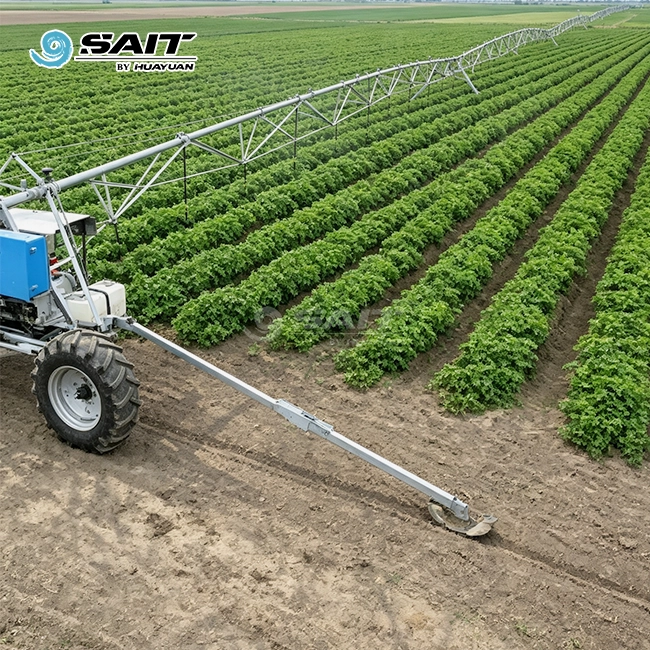
Yes. The corner arm extension from HUAYUAN SAIT makes the effective watering area 15% bigger on square or irregular plots of land. It fills in the coverage gaps that regular fixed-radius systems leave open.
Q3: What power source do these systems need?
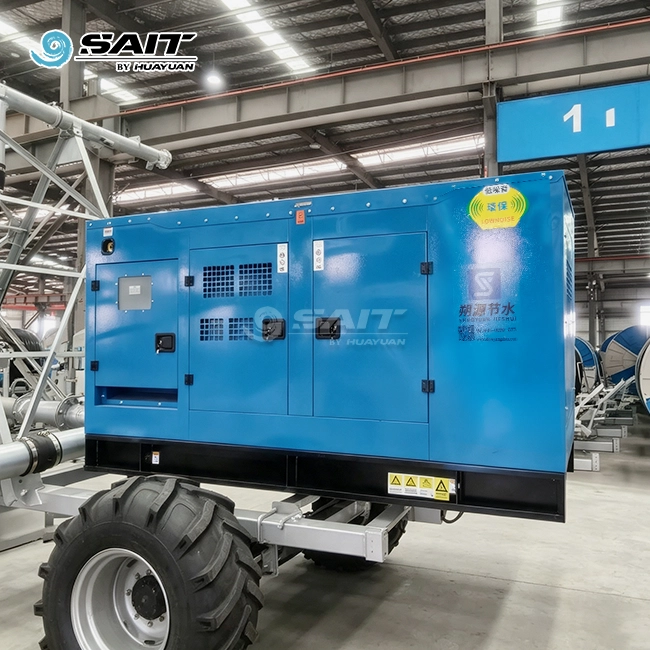
For the most part, the gearmotor works with either 3-phase grid power or a gasoline engine. The 0.75 hp (40:1) option works well for places with low power and low running costs.
Q4: How often should the system be serviced?
The rated uniformity is kept throughout the service life by checking the gearbox oil, tire pressure (wheel sizes 11.2-24, 14.8-24, or 16.9-24 are available), nozzle regulators, and cable integrity once a year.
Ready to Size Your Single-Span System? Contact HUAYUAN SAIT Today
When HUAYUAN SAIT makes single span small fields irrigation systems, they make sure they are accurate, last a long time, and work well in the field. Our team helps procurement managers and project engineers choose the right system the first time. We have 20 years of production experience, follow ISO 9001, build with hot-dip galvanized steel at 80 μm+, and offer full OEM support from the test unit to the large order. You can email the HUAYUAN SAIT team directly at kevin@showyirrigation.com to request a technical configuration suggestion.
References
1. Allen, R. G., Pereira, L. S., Raes, D., & Smith, M. — Crop Evapotranspiration: Guidelines for Computing Crop Water Requirements, FAO Irrigation and Drainage Paper No. 56, Food and Agriculture Organization of the United Nations, 1998.
2. USDA Natural Resources Conservation Service — Irrigation Water Management, National Engineering Handbook, Part 652, U.S. Department of Agriculture, 2016.
3. Keller, J., & Bliesner, R. D. — Sprinkle and Trickle Irrigation, Van Nostrand Reinhold, 1990.
4. American Society of Agricultural and Biological Engineers — ASABE Standard S436.1: Test Procedure for Determining the Uniformity of Water Distribution of Center Pivot and Lateral Move Irrigation Machines Equipped with Spray or Sprinkler Nozzles, ASABE, 2014.
5. International Organization for Standardization — ISO 11545: Agricultural Irrigation Equipment — Centre-Pivot and Moving Lateral Irrigation Machines with Sprinkler or Spray Nozzles — Determination of Uniformity of Water Distribution, ISO, 2009.
6. Howell, T. A. — "Enhancing Water Use Efficiency in Irrigated Agriculture," Agronomy Journal, American Society of Agronomy, Vol. 93, No. 2, 2001.
Get a tailored irrigation solution for your project — our engineering team is ready to support you from design to installation.