How does a center pivot end gun system Improve Irrigation?
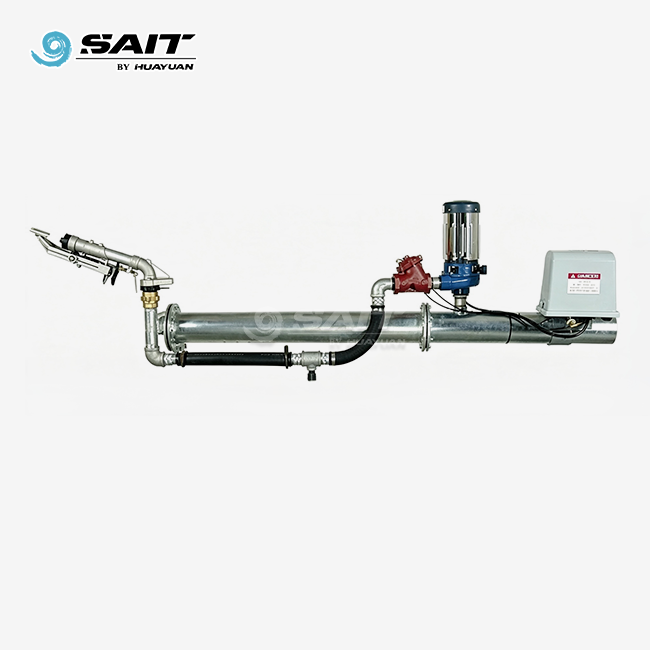
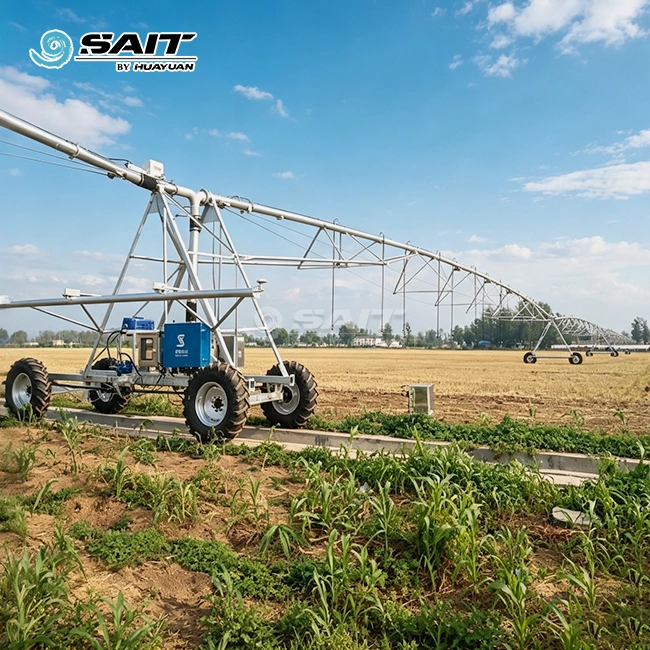
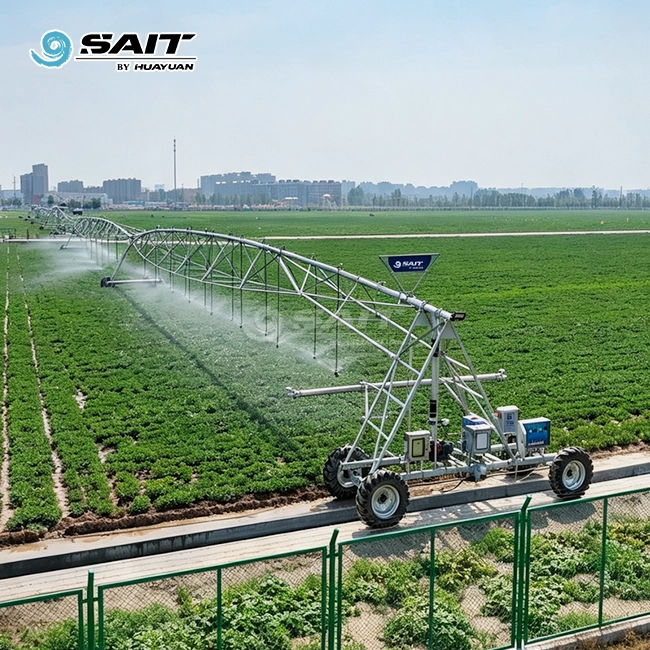
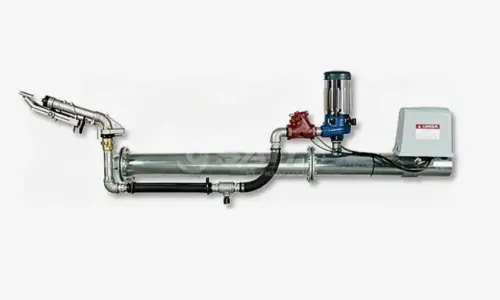
A center pivot end gun system is a high-volume, long-range sprinkler assembly mounted at the outermost end of a pivot machine. Its core function is to extend the irrigation radius beyond the pipeline's physical reach, recovering field corners and margins that the circular pivot path naturally misses. On large commercial farms growing corn, soybeans, cotton, or wheat, this translates directly into reclaimed productive acreage—up to 15% more irrigated land per pivot rotation—without adding span length or capital cost to the main structure.
Understanding Center Pivot End Gun Systems – Overview & Design Principles
A circle is what most industrial hinge systems do. Standard outlets can only reach square and rectangular fields, but not triangular points. An end gun assembly fills that gap by firing a high-pressure stream outward from the pivot's end point. This increases the effective throw by 18 to 30 meters, depending on the configuration of the nozzle and the operating pressure.
Core Components and System Types
The set has a rotating impact sprinkler head, a boom arm, a solenoid or hydraulic valve, and a dedicated booster pump with a power rating of 2HP to 5HP for when mainline pressure is not enough. Electric-actuated solenoid systems offer GPS-linked sector control, which means that the gun will only fire when the pivot hits a certain corner zone. Hydraulic versions get their pressure from the mainline, which makes them less reliant on electricity in places like sub-Saharan Africa and Central Asia that are not connected to the grid. Fixed-nozzle designs work best with flat, rectangular fields, while adjustable-arc designs can precisely handle fields with curved edges.
Hydraulic and Spray Pattern Principles
When used with an expert end gun, the operating pressure is usually between 40 and 100 PSI, and the direction angles are 18°, 24°, or 43°. It is better to use a lower direction (18°) on open fields in Kansas or Kazakhstan because it stops wind drift. According to ASAE S398.1, the performance metrics are Distribution Uniformity (DU) and Coefficient of Uniformity (CU). An accurately calibrated end gun keeps a CU above 85% across its throw radius, which is the same as the sprinkler package on the main pivot.
How Center Pivot End Gun Systems Improve Irrigation Efficiency
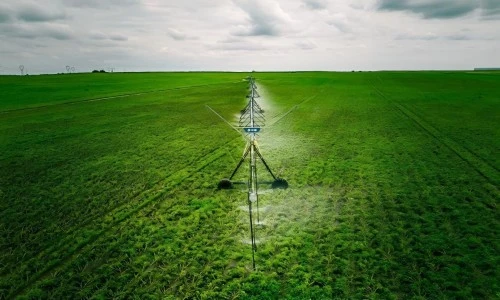
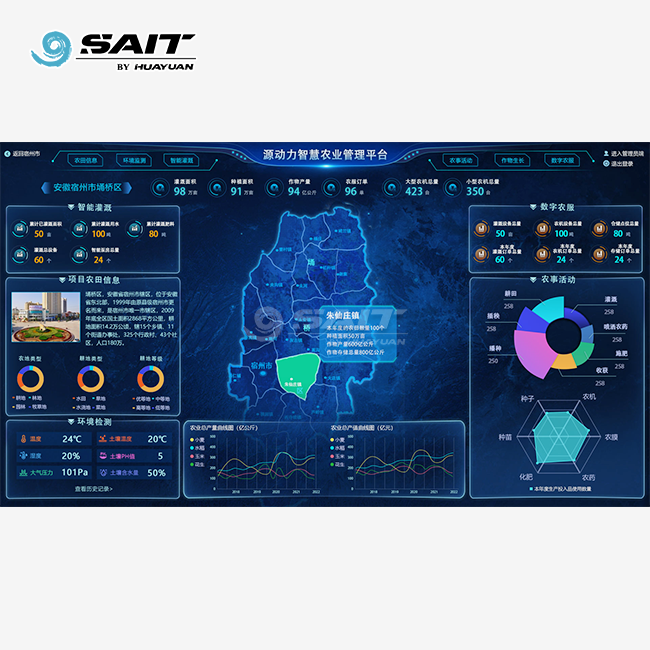
Adding an end gun assembly to a precision watering platform changes how water, energy, and inputs are handled across an entire field, going beyond just corner recovery. For instance, the SAIT Smart Control System matches the amount of water applied to the rate at which water is absorbed by the soil. This stops runoff and makes sure that the root zone always has enough water during each turn.
Increasing Coverage and Crop Yield
Up to 200 hectares can be watered by a single pivot with a maximum radius of 800 meters. Without an end gun, the edges of a 200-hectare square plot stay dry, which is about 21 to 27 hectares of land that can't be used for farming. When a GPS-triggered end gun is used during corner passes, that acreage is recovered. With normal U.S. corn yields of 180 bushels per acre, this adds measured revenue each season.
Water and Fertilizer Efficiency
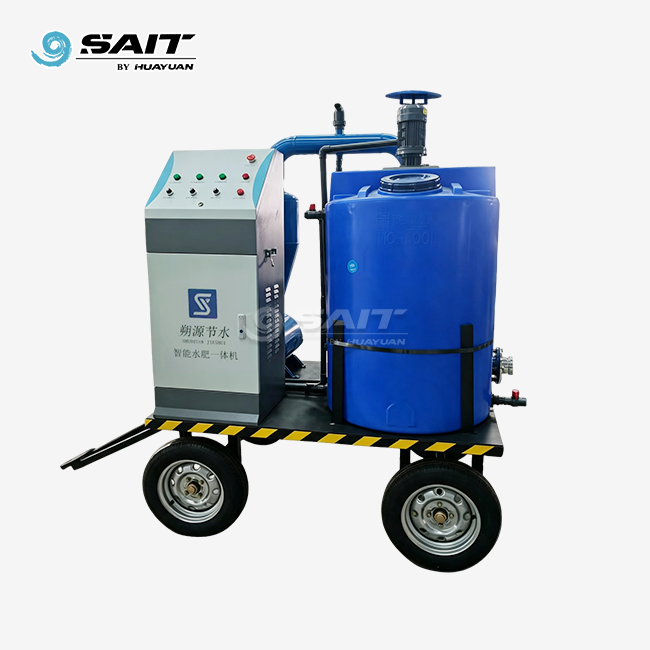
The HUAYUAN SAIT system saves more than 70% more water than the old-fashioned flood watering method. Integrated water-fertilizer operation sends soluble nutrients directly to the edges of the field through the same end gun tip, so there's no need for two separate passes for chemigation. Variable Rate Irrigation (VRI), which is powered by big data soil models in the SAIT platform, changes the application depth zone by zone. This way, sandy corners get less water than clay sections that hold on to water, which cuts down on both leaching and input waste at the same time.
Reducing Soil Erosion and Runoff
When the nozzle pressure is calibrated, high-velocity impacts on bare soil between rows are stopped. This is important because high-velocity impacts often cause surface crusting and erosion in row crop systems. When the end gun's trajectory and application rate match the soil's ability to soak up water, the water goes straight through the ground instead of pooling at the field edge.
Comparison and Decision-Making: Choosing the Right End Gun System for Your Operation
Purchasing managers often look at new manufacturers' pivot systems along with systems from Valley, Lindsay, and Reinke. The total cost of ownership, not just the unit price, is what makes the difference in the end. Here are the most important technical and business factors to look at:
- Electric vs. Hydraulic Activation: Electric solenoid systems allow GPS sector control and remote swapping through mobile platforms, which is very important for managing corners accurately. Hydraulic activation is easier to use mechanically and works well in places where power isn't always available, but it doesn't have the zone-specific programming that current farm management tools need.
- Adjustable vs. Fixed Arc: Adjustable mechanical stops let you set sector angles between 90° and 180°. This keeps the pivot structure from self-irrigating and works with fields that aren't perfectly round. Fixed-arc types are cheaper up front, but they can't be changed easily when field patterns change.
- Build Quality and Corrosion Protection: Hot-dip galvanizing with a zinc coating that is at least 80µm thick is the standard for long-lasting structural integrity in the industry. HUAYUAN SAIT uses this standard for all of its towers, truss assemblies, and pipeline parts. They have a proven service life of 20 years or more in temperatures ranging from -20°C to 60°C.
These benefits can successfully solve the two most common buying problems that big businesses have: the high costs of replacing parts too soon because of rust and the hard work of making corner irrigation passes by hand. Operators in dry areas, like the Middle East and North Africa, say that galvanizing quality is what makes them happy with their equipment over the long term.
Installation, Maintenance, and Troubleshooting of End Gun Systems
Whether a center pivot end gun system works as well as it should or becomes a constant repair problem depends on how well it was installed. HUAYUAN SAIT offers expert advice and on-site installation supervision as a regular service, not as an extra.
Step-by-Step Integration with Existing Pivots
The end gun attaches to the extension piece at the wide end of the pivot. The HUAYUAN SAIT has overhang lengths ranging from 2.7m to 25m and span heights of 2.1m, 2.9m, 3.8m, or 4.5m to meet the crop canopy clearance needs of high-profile crops like corn at tassel or sugarcane. The armored UL-Listed wire links the solenoid valve to the SAIT control panel. The control panel handles the activation coordinates based on the pivot's current GPS location.
Routine Maintenance Practices
By checking the solenoid diaphragm and internal pilot filter once a year, you can keep them from getting clogged up with algae, mineral scale, or grit, which is the main reason why end guns don't work. At the start of each irrigation season, a portable gauge should be used to check the nozzle pressure. If the reading at the gun outlet is less than 40 PSI, it means that the booster pump needs to be checked out or the stream pressure needs to be changed.
Procurement Guide: Where and How to Buy Center Pivot End Gun Systems
It takes more than a low unit price to find a reliable center pivot end gun system supplier. Whether a supplier relationship works for a single OEM pilot project or a 5,000-hectare state farm program depends on the level of warranty coverage, the ease of getting spare parts, and the ability to make changes.
HUAYUAN SAIT has been making things for 20 years and can make 1,800 pivot and linear systems every year. The factory is right next to Xuzhou, which is a hub-level logistics center in the Huaihai Economic Zone. It can fulfill orders for both China and other countries faster than most Chinese factories can. Main pipeline specifications cover 5" (127mm), 6-5/8" (168mm), and 8-5/8" (219mm) diameters, with span lengths from 37.5m to 66.5m and outlet spacing of 1.9m or 2.9m (customizable). Wheel options include 11.2-24, 14.8-24, and 16.9-24 in tube or tubeless configurations.
After-sales terms include a 1-year full warranty, 3-year low-cost maintenance and part replacement for three years, and spare parts will always be available at the factory cost price. OEM and ODM services accommodate private-label branding, custom control panel language, and interaction with third-party SCADA systems are all possible.
Conclusion
A standard center pivot can be turned into a whole-field irrigation platform with the help of a center pivot end gun system. It increases the return on investment (ROI) of every pivot investment by reclaiming corners, making water flow more even, and allowing precise chemigation at field edges. When used with a long-lasting system that can be automated, like HUAYUAN SAIT's hot-dip galvanized pivot line and SAIT Smart Control platform, the performance gains stay the same in all seasons, climates, and types of crops. Choosing the right method and provider is important for long-term agricultural output for business farms, government buying programs, and EPC contractors.
FAQ
Q1: How often should an end gun nozzle be calibrated?
At the start of each irrigation season and after any mainline repairs, the pressure should be taken as a reading. Every year, a catch-can field test makes sure that the Coefficient of Uniformity stays above 85%.
Q2: Can an end gun be retrofitted onto an existing center pivot?
Yes. Most commercial pivots have an overhang piece that can be used to place an end gun. Compatibility depends on how much pressure the pipeline can hold and how well the control system can handle GPS sector activation inputs.
Q3: Does an end gun require a booster pump?
When the stream pressure at the pivot's terminal end drops below 40 PSI, a booster pump (2HP–5HP) is needed. This is the lowest level of pressure needed for the end gun to rotate reliably and for the throw radius to work.
Q4: How does wind affect spray pattern integrity?
High-trajectory nozzles (43°) cause the most wind shift. When you're in an area that gets a lot of wind, moving to an 18° trajectory tip makes the pattern much more stable without reducing the throw distance.
Ready to Maximize Your Field Coverage? Contact HUAYUAN SAIT Today
HUAYUAN SAIT delivers engineered center pivot end gun system solutions built for large-scale commercial and government irrigation programs. With 20 years of manufacturing precision, 80μm hot-dip galvanized construction, and SAIT Smart Control automation, every unit is designed to perform across 200 hectares and 20 years. Reach our technical team at kevin@showyirrigation.com to request a custom configuration quote from a trusted center pivot end gun system manufacturer.
References
1. Evans, R. G., & King, B. A. (2012). Site-specific sprinkler irrigation in a water-limited future. Transactions of the ASABE, 55(2), 493–504.
2. Kincaid, D. C., Solomon, K. H., & Oliphant, J. C. (1996). Drop size distributions for irrigation sprinklers. Transactions of the ASAE, 39(3), 839–845.
3. Howell, T. A. (2001). Enhancing water use efficiency in irrigated agriculture. Agronomy Journal, 93(2), 281–289.
4. Camp, C. R., Sadler, E. J., & Busscher, W. J. (1997). A comparison of uniformity measures for drip and spray irrigation systems. Transactions of the ASAE, 40(4), 1013–1020.
5. Clemmens, A. J., & Dedrick, A. R. (1994). Irrigation techniques and evaluations. FAO Irrigation and Drainage Paper No. 45, Food and Agriculture Organization of the United Nations.
6. Rogers, D. H., Lamm, F. R., & Alam, M. (1997). Subsurface drip irrigation systems: Status of the technology in 1997. Kansas State University Agricultural Experiment Station and Cooperative Extension Service, Technical Report MF-2338.
Get a tailored irrigation solution for your project — our engineering team is ready to support you from design to installation.