What is a Centre Pivot?
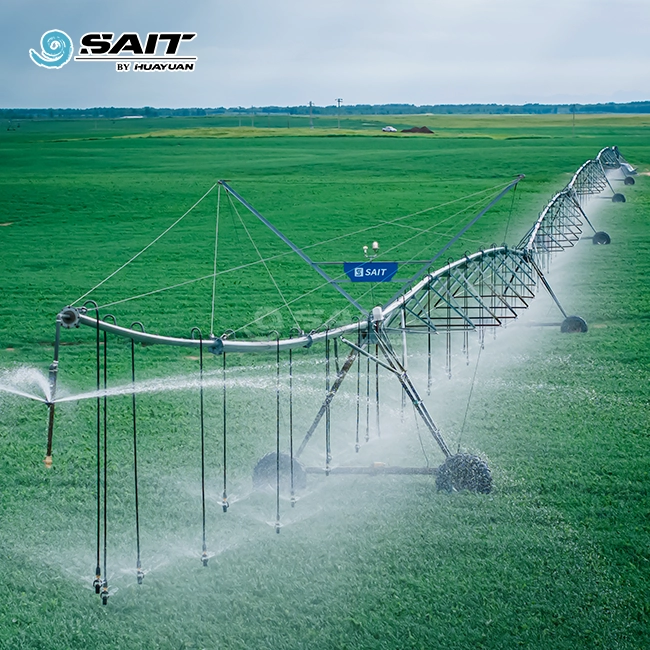
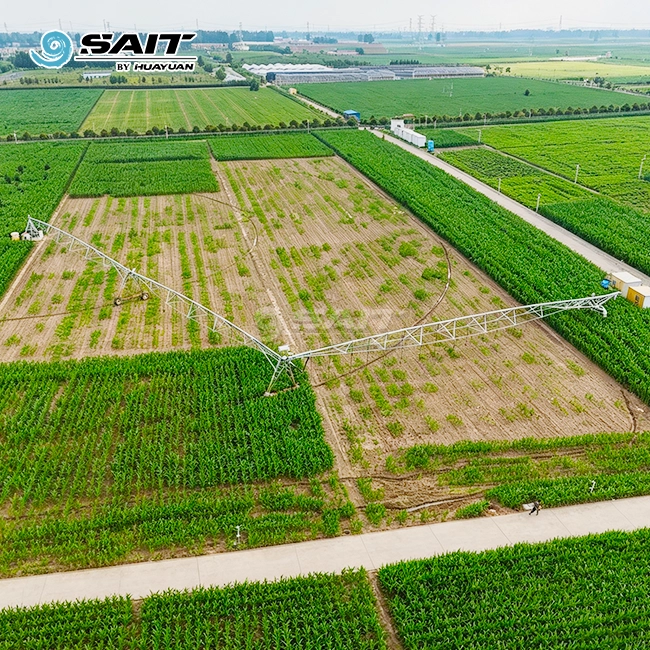
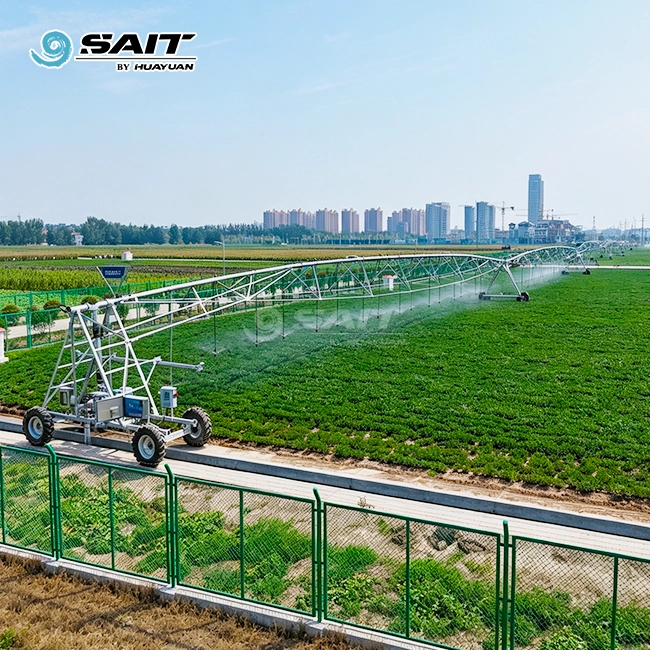
A center pivot is a mechanized, rotating irrigation system anchored at a fixed central point, with a lateral pipeline supported by a series of mobile wheeled towers that travel in a circular arc across the field. Water is pumped from the pivot point outward through the pipe and applied to crops via overhead sprinklers or drop nozzles. The system rotates slowly around the anchor point, covering a circular area with each complete revolution. Widely adopted on commercial farms worldwide, it replaces labor-intensive flood methods with automated, precise water delivery across fields ranging from 4 to 200 hectares per unit.
Understanding the Basics of Centre Pivot Irrigation
A modern pivot irrigation system is not just one machine; it is made up of many structural and electrical parts that work together. Knowing about each part helps engineers and procurement managers choose configurations that work best in their particular fields.


Core Components and How They Work Together
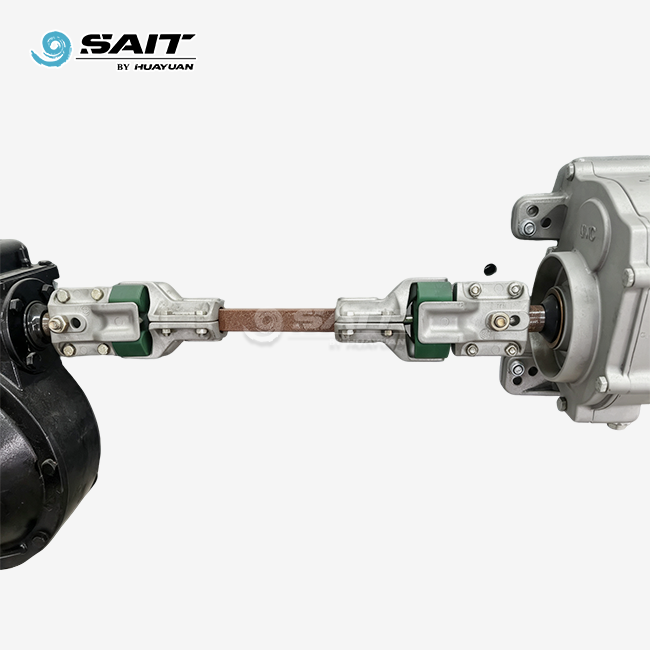
The system starts at the pivot point, which is a set water intake that is linked to the supply source. From there, across the field, a number of galvanized pipe spans are held by truss rod systems made of 20mm or 22mm truss rods. Each span is supported by a self-moving tower that is powered by a gearmotor that comes in two different ratios: 25.5:1 at 1.5hp or 40:1 at 0.75hp. The wheels on this tower can be 11.2-24, 14.8-24, or 16.9-24, so that it can handle different types of dirt. Armored cables that are listed by UL reliably carry power along the whole length of the machine.
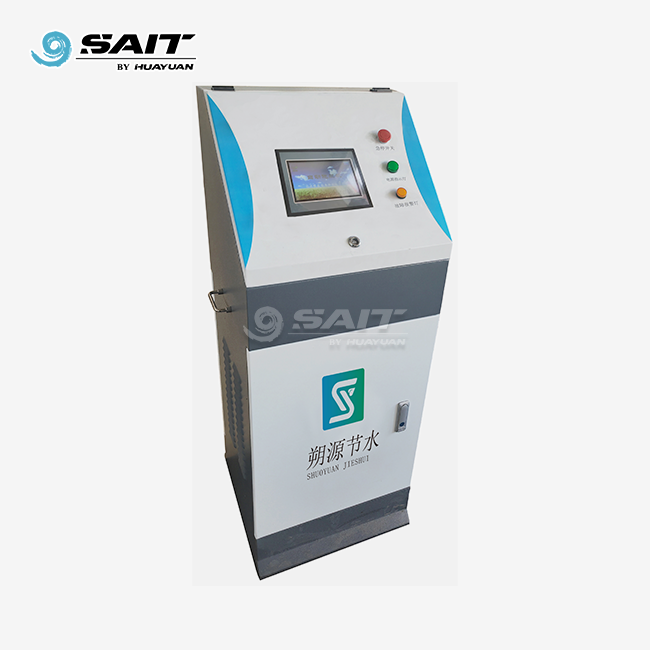
The SAIT Smart Control System controls the speed and direction of rotation, as well as the scheduling of irrigation and application based on zones. It works with big data models to make Variable Rate Irrigation (VRI) possible. With VRI, water delivery is based on how well the soil soaks up water instead of using a flat rate across the field.
Profile Options and Structural Versatility
There are four span height profiles for HUAYUAN SAIT systems: 2.1m, 2.9m, 3.8m, and 4.5m. These cover standard, low, high, and ultrahigh clearance configurations. This range can fit everything from low-lying grain fields to tall sugar cane and biofuel farms. Different flow needs can be met by pipelines with sizes of 5" (127mm), 6-5/8" (168mm), and 8-5/8" (219mm), and span lengths from 37.5m to 66.5m allow for accurate coverage calibration. The truss rod and angle structure keep the load evenly spread across the whole span, so it doesn't bend when heavy water loads hit it.
Challenges in Traditional Irrigation and How Centre Pivots Solve Them
Surface flood and trench irrigation lose a lot of water because it runs off and seeps into the ground. The Food and Agriculture Organization (FAO) says that automated overhead systems apply water 85–95% of the time, while surface irrigation systems only do so 40–60% of the time. In addition to losing water, traditional methods require a lot of seasonal work and make crop stands that aren't even because the moisture isn't spread out evenly.
Measurable Gains in Water Efficiency and Yield Consistency
When compared to standard flood irrigation, HUAYUAN SAIT center pivot systems save over 70% more water. When a large-scale corn business in a semi-arid area switches from flood irrigation to pivot irrigation, the marketable yield usually goes up by 20–35% in the first two growing seasons. This is mostly because the plants don't have to deal with as much moisture stress during key growth stages. The fertigation function, which combines water and fertilizer, concentrates the delivery of nutrients even more at the root zone. This cuts down on waste and increases the efficiency of fertilizer use.
Because of these operational gains, the payback time is faster. When buying teams figure out the total cost of ownership over a 20-year service life, which is how long HUAYUAN SAIT systems are meant to last, the cost of irrigation per hectare drops much lower than for manual or gravity-fed options.
Selecting the Right Centre Pivot System for Your Business Needs
For a pivot system to work for your operation, you need to look at the shape of the field, the texture of the soil, the height of the crop canopy, the availability of power, and the capacity of the water source. A system that works best on flat, square fields in the Midwest of the United States is very different from one that works on rough terrain in East Africa or on a high-clearance sugar cane plantation in Brazil.
Here are the main things that make a good match between systems and a bad match that costs a lot:
- Field coverage and radius: HUAYUAN SAIT systems deliver a maximum radius of 800 meters, covering up to 200 hectares per unit. Overhang options from 2.7m to 25m extend effective coverage beyond the last tower for irregular field boundaries.
- Span configuration: Choose from six span lengths (37.5m to 66.5m) and outlet spacings of 1.9m or 2.9m (customizable) to calibrate application rate uniformity across the irrigated circle.
- Profile clearance: Ultra-high profile towers at 4.5m clear mature maize, sugar cane, and feed crop canopies without mechanical contact. Standard 2.1m profiles suit cereal grains and legumes.
- Sprinkler package: Multiple nozzle configurations accommodate sandy soils with high infiltration rates, heavy clay soils prone to runoff, and everything in between. The SAIT system tunes the application rate to match soil infiltration characteristics precisely.
- Corner Arm System: For square or irregular fields, an optional corner arm increases effective irrigation area by up to 15%, addressing one of the most persistent limitations of circular pivot coverage.
Together with HUAYUAN SAIT's in-house technical help, these selection criteria make sure that every system configuration is useful and not just generic. When looking for a center pivot provider for projects with more than one unit, procurement teams can benefit from OEM and ODM customization options, such as private-label branding, translated control panel language, and SCADA integration.
Installation, Maintenance, and Optimization Best Practices
No matter how good the gear is, a pivot system that is put correctly will work better than one that isn't. Every system that HUAYUAN SAIT delivers comes with on-site installation supervision and expert advice to make sure that the alignment of the towers, the torque of the anchor bolts, the leveling of the pipelines, and the setting of the control panel all meet factory standards from the start.
Routine Maintenance Protocols That Extend Service Life
The hot-dip galvanized construction, which has a zinc covering that is at least 80μm thick, makes corrosion-related upkeep a lot easier over the 20-year design life. Steel buildings that have been treated to this standard last longer than regular galvanized parts when exposed to chemicals, constant moisture, and fertilizer drift. Gearmotor oil levels, wheel gearbox (50:1 or 52:1 ratio) lubrication, truss rod tightness, and spray nozzle wear should all be checked by owners every season. Application uniformity doesn't drop below the system's target coefficient of uniformity, which is over 90%, when worn nozzles are replaced right away.
The center pivot SAIT Smart Control System allows for remote monitoring through a smartphone, which lets operators find problems like motor stalls, pressure drops, or sudden stops without having to go to the field and check them out. Updates and changes to the tuning can be made to the software from afar, which cuts down on downtime and the number of service calls.

Future Trends and Innovations in Centre Pivot Irrigation
Precision farm systems and pivot irrigation are coming together faster and faster. BeiDou satellite navigation integration, which is already built into HUAYUAN SAIT systems, lets you set the system to within centimeters for automatic corner arm deployment and GPS-guided speed control, which cuts the number of missed irrigations to less than 5%.
To make dynamic watering plans, an AI-driven irrigation schedule looks at data from soil wetness sensors, weather forecasts, and models of crop growth stages. IoT connectivity connects the pivot to centralized farm management screens. This lets agronomists and remote operations teams see what's going on in setups with multiple units that cover thousands of hectares. These improvements are not just ideas; HUAYUAN SAIT has proven them by working with China Agricultural University and state key R&D projects, and they are ready for production. They are backed by a portfolio of over 130 patents.
Conclusion
Center pivot irrigation is now an important part of all the world's major agricultural regions for growing crops on a large scale and efficiently. It gets around the main problems that standard ways can't: a lack of water, workers, and inconsistent yields. HUAYUAN SAIT has been making things for 20 years, can make 1,800 units a year, and can do a lot of engineering customization for buying teams that need more than a stock product. With hot-dip galvanizing that goes beyond 80µm, a SAIT smart control platform, and a service life of more than 20 years, each system is a long-lasting, high-return asset for any serious farming operation.
FAQ
Q1: How long does a centre pivot system typically last?
A hot-dip galvanized center pivot made to HUAYUAN SAIT standards will work consistently for at least 20 years with regular upkeep and a water source that is pH-controlled. The 80μm+ zinc covering is a key part of that long life in harsh field conditions.
Q2: Can the system operate on sloped or uneven terrain?
Yes. Terrain that isn't level can be accommodated by universal joints between span pieces and movable tower legs. High-clearance tower shapes (up to 4.5m) make the system even more flexible for uneven terrain without affecting the structure's strength.
Q3: Is fertigation supported?
The water-fertilizer function works together so that liquid nutrients can be added directly to the irrigation stream. This way, the root zone gets the exact amount of nutrients it needs during each irrigation cycle, without having to make separate fertilizer applications.
Q4: Can the control panel be customized for non-English markets?
We at HUAYUAN SAIT can fully localize OEM products to fit the needs of different markets. This includes changing the language of the control panel, customizing the user interface, and adding private label branding to tower boxes and truss parts.
Partner with HUAYUAN SAIT — Your Trusted Centre Pivot Manufacturer
Every center pivot for sale by HUAYUAN SAIT is designed to be precise, from OEM pilots for a single unit to project launches for 20 units. We take the danger out of buying big amounts of irrigation equipment because our plant has been around for 20 years. We can send ready-to-use products in one week from our logistics hub in Suzhou. We offer a 1-year full warranty, 3-year low-cost upkeep coverage, and we supply spare parts for life at cost price. Tell our tech team about your field objectives and project needs right now. To get a personalized configuration proposal, email us at kevin@showyirrigation.com.
References
1. Food and Agriculture Organization of the United Nations. Irrigation Water Management: Irrigation Methods. FAO, 2020.
2. American Society of Agricultural and Biological Engineers. ASABE Standard S436.1: Test Procedure for Determining the Uniformity of Water Distribution of Center Pivot and Lateral Move Irrigation Machines. ASABE, 2018.
3. Camp, C.R., Sadler, E.J., & Busscher, W.J. "A Comparison of Uniformity Measures for Drip Irrigation Systems." Transactions of the ASABE, 1997.
4. Evans, R.G., & King, B.A. "Site-Specific Sprinkler Irrigation in a Water-Limited Future." Transactions of the ASABE, 2012.
5. Irrigation Association. Landscape and Agricultural Irrigation Best Management Practices. Irrigation Association, 2021.
6. Phene, C.J., & Howell, T.A. "Soil Sensor Control of High-Frequency Irrigation Systems." Transactions of the ASAE, 1984.
Get a tailored irrigation solution for your project — our engineering team is ready to support you from design to installation.