Corner Arm System Installation: A Practical Guide
Installing a corner arm system on a center pivot irrigation setup is one of the most impactful upgrades a commercial grower can make. A properly configured pivot corner arm extends water coverage into the square edges and irregular boundaries that standard circular pivots leave dry — areas that can represent up to 20% of total field acreage. This guide walks through every stage of the process, from site planning to post-installation testing, with specific reference to the HUAYUAN SAIT GPS/BDS-guided corner arm platform.
Understanding Corner Arm Systems: Definition and Core Components


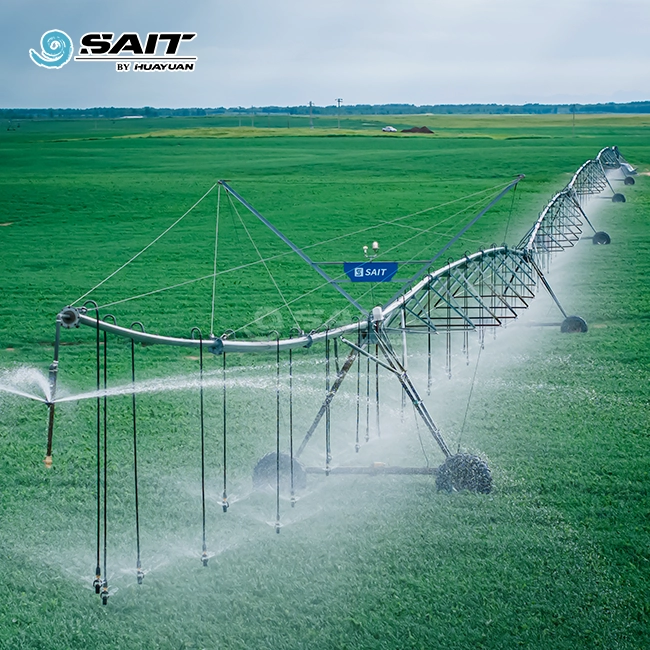
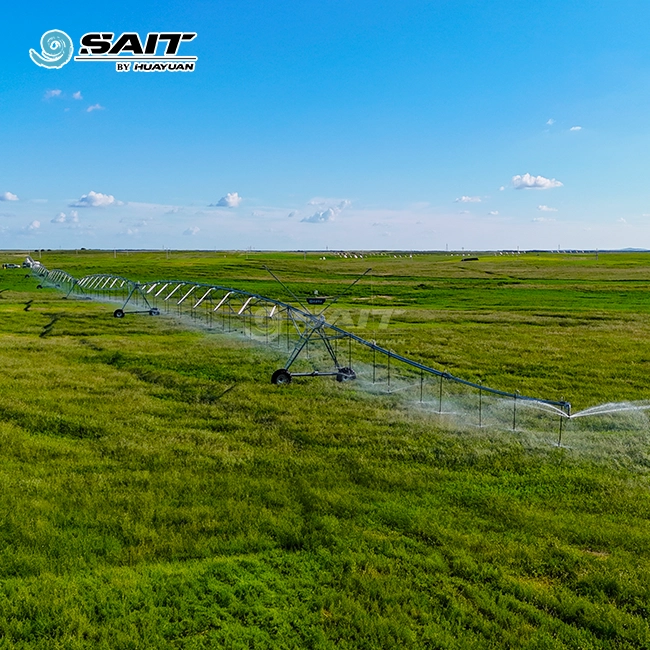
A corner arm system — sometimes called a corner arm system — is a mechanically articulated span attached to the outermost tower of a center pivot. Unlike the main pivot spans that follow a fixed circular path, the corner arm system unfolds and retracts autonomously, guided by real-time positioning data, to sweep into field corners before pulling back as the machine returns to open terrain.
Key Structural and Control Elements
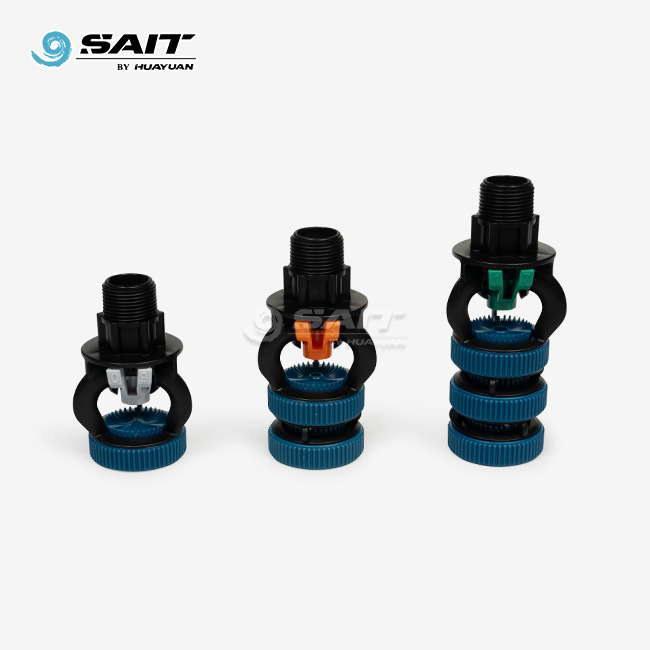
The HUAYUAN SAIT corner arm system centers around a 168mm main pipe diameter and delivers a maximum effective spray reach of 81 to 110.7 meters. Its positioning backbone relies on BDS (BeiDou Navigation System) with wheel track accuracy of ±15mm — a level of precision that prevents boundary overspray and supports GPS-defined no-spray zone compliance. Sprinkler actuation runs through 48 individually programmable solenoid valves, which pulse each nozzle on and off according to real-time geolocation data, producing irrigation uniformity above 90% even at field edges. The end irrigation assembly includes both an end nozzle and an end gun for flexible coverage adjustment.
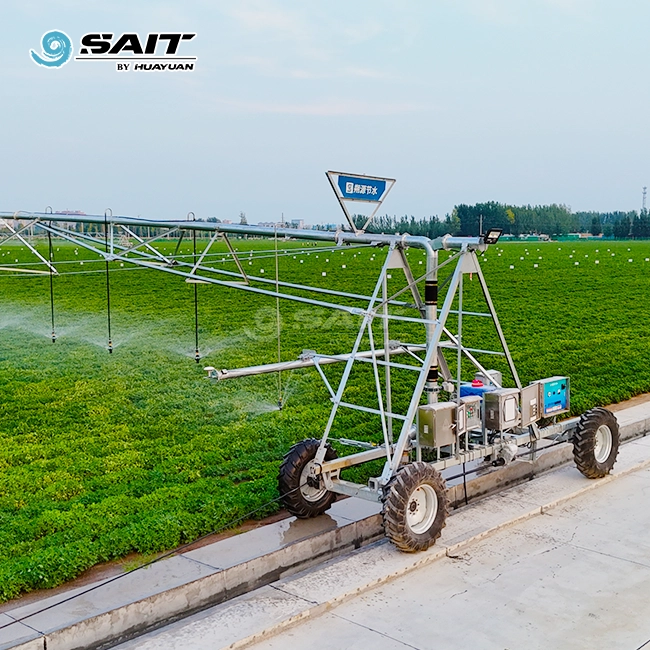
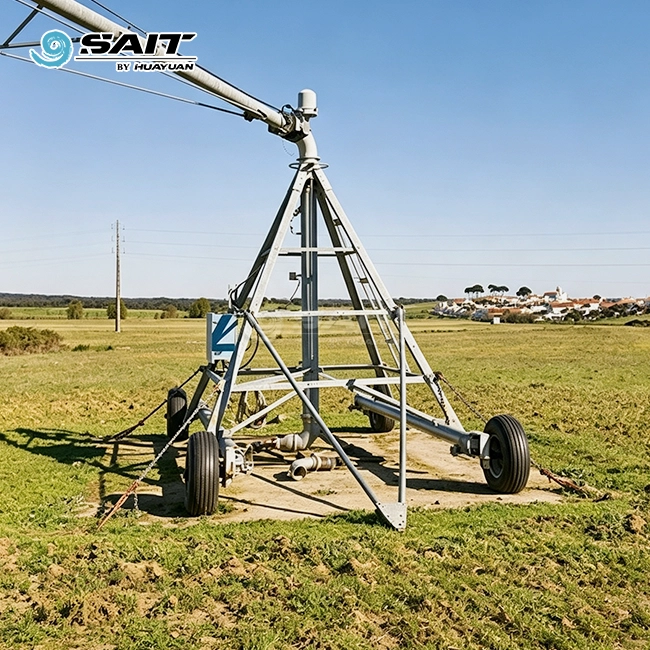
What separates this platform from catalog-standard options is the dual-tower bracket drive unit. It delivers measurably lower steering load on drive components, while the wide-profile T-bar mounting resists lateral displacement in high-wind operating conditions. The track roller connection uses enlarged rollers paired with new-generation wear plates, extending component service intervals significantly.
Preparing for Installation: Site Assessment and Planning
Careful pre-installation planning determines whether the Corner irrigation corner arm system performs at specification from day one or requires costly field corrections after commissioning. Skipping this phase is the single most common reason for alignment errors and premature drive component wear.
Field Survey and Load Distribution Review
Before any hardware arrives on site, the engineering team needs a precise field boundary map — ideally derived from GPS survey data. Soil bearing capacity directly affects tower sinkage and alignment stability, particularly for the articulated corner tower, which bears asymmetric loads during the corner arm system's sweep arc. Document drainage patterns, power supply routing, and any physical obstacles such as access roads or pump enclosures that fall within the corner arm system's travel path.
Compatibility and Configuration Selection
Match span configuration to field geometry. HUAYUAN SAIT supports span length selection from 37.5m to 66.5m and profile heights between 2.1m and 4.5m, accommodating both standard row crops and high-clearance applications. Confirm that the site power supply meets the corner arm system's three-phase requirements, and verify that the BDS antenna placement has an unobstructed sky view for reliable positioning lock.
Coordinate delivery scheduling with the installation crew. With production located adjacent to Xuzhou's logistics hub, HUAYUAN SAIT maintains a one-week delivery lead time for standard configurations, which allows tight alignment between site readiness and equipment arrival.
Step-by-Step Corner Arm System Installation Guide
A structured corner arm system installation sequence reduces alignment errors and protects components during assembly. Here is how a professional installation team approaches each phase.
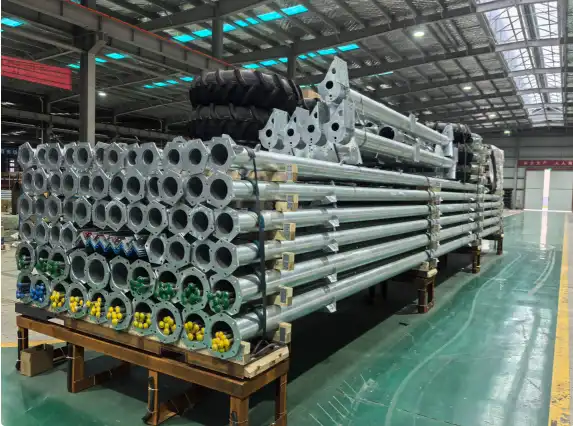
Unpacking and component verification — Inspect all structural truss sections, drive units, the corner arm system weld assembly, solenoid valve manifolds, and the SAIT control panel upon arrival. Cross-reference against the packing list and flag any transit damage before the delivery vehicle departs.
Main pivot alignment and anchor point establishment — Set the center pivot anchor, verify plumb, and confirm the main span alignment before attaching the corner arm system assembly. The corner arm system's swing joint must be squared to the final main span to prevent binding during articulation.
Corner arm system swing joint and drive unit mounting — Attach the dual-tower bracket assembly to the end span, torque all fasteners to specification, and confirm that the track rollers seat flush against the drive rail. The T-bar mounting plates should be leveled across both tower legs before final tightening.
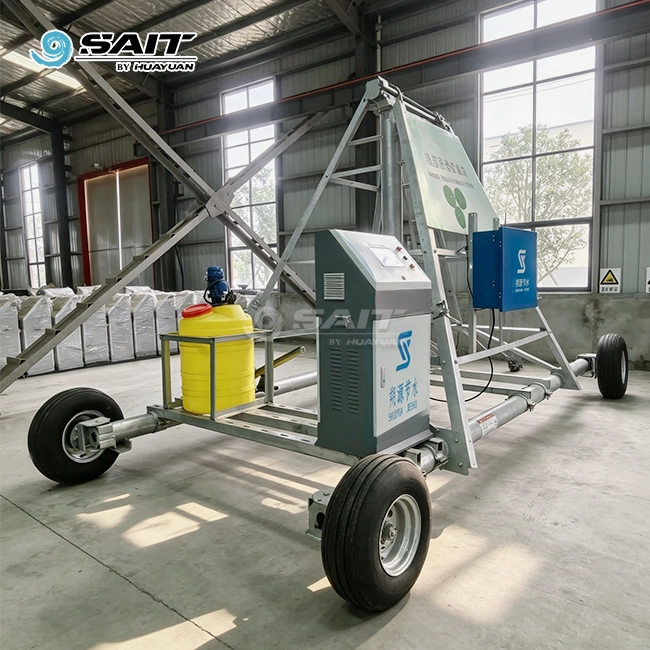
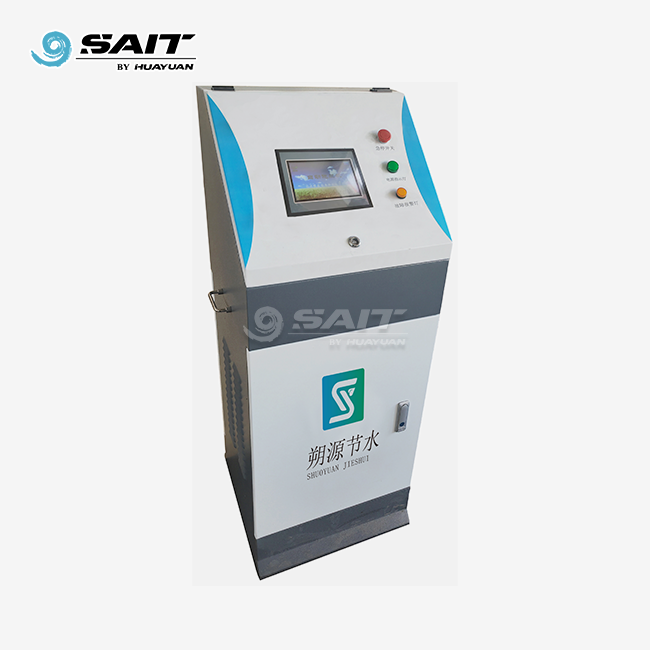
Wiring and BDS control interface setup — Route power and signal cables through the designated conduit paths. Connect the 48-channel solenoid valve harness to the SAIT control panel and commission the BDS positioning module. Input field boundary coordinates and define any no-spray zones directly in the SAIT variable rate interface.
Functional testing under load — Run the corner arm system through a full rotation cycle at reduced speed. Monitor corner arm system deployment and retraction timing against the BDS position readout, verify that each solenoid valve actuates at the correct field position, and confirm end gun activation logic. Document any timing offsets and adjust pulse sequencing in the control panel accordingly.
HUAYUAN SAIT's on-site installation support team accompanies the commissioning phase, providing hands-on technical guidance and control panel calibration service. This reduces first-season operational errors substantially.
Maintenance Schedule and Operational Best Practices
A consistent maintenance routine protects the corner arm system investment and sustains irrigation uniformity across multiple growing seasons. The swing joint and rotating seals on the corner arm system articulation point deserve particular attention because they operate under dynamic load every cycle.
Routine Inspection Intervals
Inspect the swing joint, track rollers, and wear plates every 500 operating hours. Apply manufacturer-specified lubricant to the articulation bearing and all pivot points at the same interval. Examine solenoid valve diaphragms and filter screens seasonally — particulate buildup is the leading cause of individual nozzle underperformance. Verify BDS antenna alignment annually and recalibrate field boundary coordinates if the center anchor position has shifted.
The hot-dip galvanized coating applied to all HUAYUAN SAIT structural steel exceeds 80μm zinc thickness, which provides corrosion protection well above industry-standard specifications. This matters particularly for operations in high-humidity climates or alkaline soil conditions. With consistent visual inspection and touch-up coating on any mechanical abrasion points, the structural service life extends beyond 20 years.
Procurement Insights: Selecting the Right Corner Arm Supplier
Procurement teams evaluating pivot corner arm systems should prioritize three factors above unit price: positioning accuracy, nozzle control resolution, and structural durability under field conditions. A corner arm system with coarse GPS guidance and zone-level nozzle control will produce visible corner under-irrigation regardless of price point.
HUAYUAN SAIT's engineering foundation rests on over 130 patents — including 35 invention patents and 15 international patents — developed through collaborative research with China Agricultural University and supported by national key R&D project funding. The result is a missed irrigation rate below 5% for the Corner irrigation, which competes directly against established North American brands on technical performance metrics.
Here are the core procurement advantages worth evaluating:
- Direct factory supply with no intermediary markup, supporting bulk project orders of 5–20 corner arm systems and pilot orders as low as 1 corner arm system for field demonstration
- Full OEM/ODM customization covering control panel language localization, private-label branding on tower assemblies, and custom RAL color matching
- Comprehensive after-sales coverage including a 1-year full warranty, 3-year low-cost maintenance and parts replacement, and lifelong spare parts supply at factory cost price
- Export-ready documentation compliant with ISO 9001, ASABE standards, and project-specific certification requirements
These advantages address the total cost of ownership equation directly, making HUAYUAN SAIT a credible alternative for procurement teams comparing against Valley, Lindsay, and Reinke on long-cycle commercial projects.
Conclusion
Installing a GPS/BDS-guided pivot corner arm system correctly transforms field coverage from approximately 78% to near-complete utilization of every acre within the boundary. The HUAYUAN SAIT platform achieves this through sub-20mm positioning accuracy, 48-channel individual solenoid valve control, and a structural design validated for long-term durability across a broad range of operating climates. Proper site assessment, sequential installation discipline, and adherence to the recommended maintenance schedule will protect performance through the full service life of the corner arm system.
FAQ
Q1: How long does a full corner arm system installation typically take?
A standard single-unit installation with a trained crew and pre-surveyed field data takes two to four days, including control panel commissioning and BDS calibration. Complex irregular field boundaries with multiple no-spray zones may require an additional day for boundary coordinate programming.
Q2: Can the SAIT corner arm system be retrofitted to an existing center pivot?
Retrofitting is possible when the base pivot's end span structure and control panel are compatible with the SAIT wiring harness and BDS module. An engineering review of the existing span-end tower capacity is required before proceeding.
Q3: What happens if the BDS signal is interrupted during operation?
The SAIT control system defaults to a safe-retract failsafe mode, withdrawing the corner arm system to its neutral position and halting forward travel until the positioning signal is restored, preventing any boundary encroachment.
Q4: How often should solenoid valves be serviced?
Filter screen inspection every season and diaphragm replacement every two to three seasons are the standard intervals under normal operating conditions. Higher sediment loads in water sources may shorten filter service intervals.
Connect with HUAYUAN SAIT — Corner Arm System Manufacturer
HUAYUAN SAIT brings 20 years of precision irrigation manufacturing experience to every corner arm system project. Whether you need a single pilot unit or a multi-site procurement package, our engineering team delivers site-specific configuration, certified documentation, and on-site installation support. Reach our technical sales team directly at kevin@showyirrigation.com to request specifications and a project quote.
References
1. Evans, R. G., & Sadler, E. J. (2008). Methods and technologies to improve the efficiency of water use. Water Resources Research, 44(7).
2. Lyle, W. M., & Bordovsky, J. P. (1995). Low-energy precision application (LEPA) irrigation system. Transactions of the ASAE, 24(5).
3. O'Shaughnessy, S. A., Urrego, Y. F., Evett, S. R., Colaizzi, P. D., & Howell, T. A. (2013). Spatial and temporal calibration of commercial variable rate irrigation systems. Irrigation Science, 31(3).
4. Kincaid, D. C. (2005). Application rates from center pivot irrigation with current sprinkler types. Applied Engineering in Agriculture, 21(4).
5. Camp, C. R., Sadler, E. J., & Busscher, W. J. (1997). A comparison of uniformity measures for drip irrigation systems. Transactions of the ASAE, 40(4).
6. American Society of Agricultural and Biological Engineers (ASABE). (2017). ASABE Standards: Design, Installation, and Performance of Underground, Thermoplastic Irrigation Pipelines. ANSI/ASABE S376.
Get a tailored irrigation solution for your project — our engineering team is ready to support you from design to installation.