What is a center pivot end gun system used for?
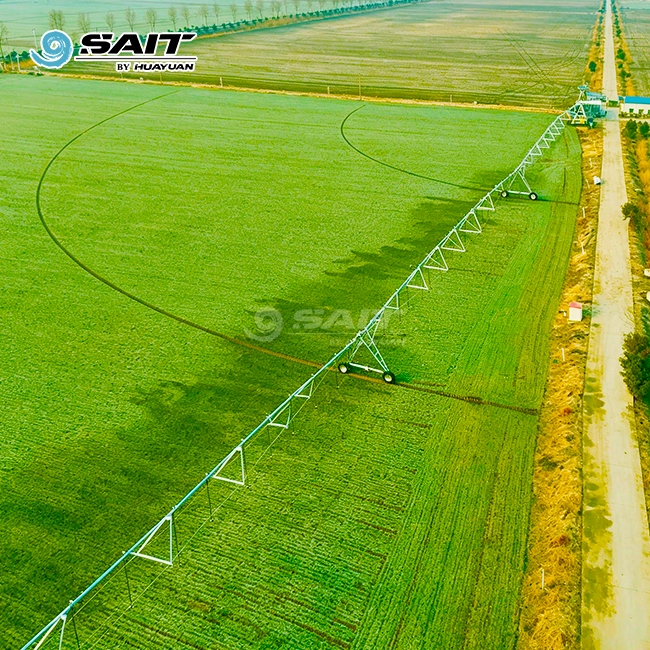
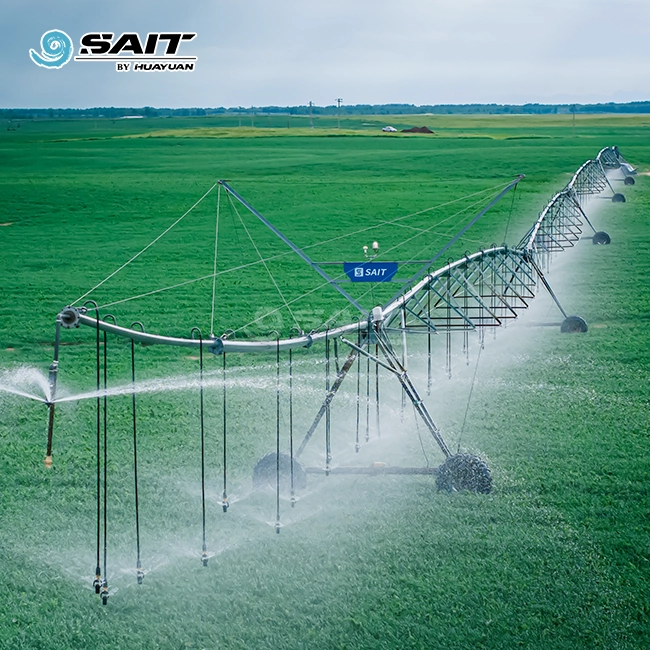
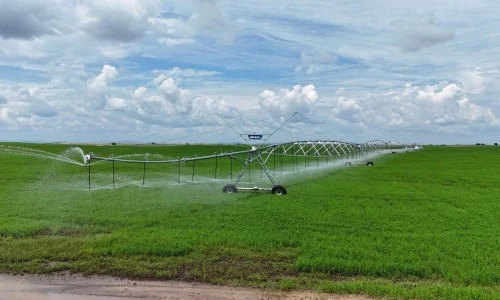
A center pivot end gun system is a high-volume, long-range irrigation assembly mounted at the outermost end of a center pivot machine. Its primary purpose is to extend the effective watering radius beyond the physical span of the pipeline, reclaiming the unirrigated corners of square and rectangular fields. By deploying an automated, high-pressure sprinkler — often supported by a booster pump — this system recovers up to 15% of otherwise arid corner acreage, directly increasing crop yield potential and maximizing the return on irrigation infrastructure investment across corn, soybeans, wheat, cotton, and sugarcane operations.
Understanding the Center Pivot End Gun System


A circle is what most center pivot tools follow. On a 160-acre square field, that circle covers about 21% of the land. A well-built end gun assembly fills in this gap with precise sector control, turning on only when the pivot arm sweeps around turns and turning off automatically along the edges of the road or near objects with GPS-linked solenoid valves.
The HUAYUAN SAIT pivot platform can work up to 800 meters away and can water up to 200 hectares of land each cycle. Main pipeline choices come in three common diameters: 5" (127mm), 6-5/8" (168mm), and 8-5/8" (219mm). These sizes can handle large amounts of flow demand. Engineers have full control over the throw shape before the end gun even fires because span lengths can be anywhere from 37.5m to 66.5m and offset configurations can be anywhere from 2.7m to 25m.
How the End Gun Synchronizes With the Pivot
The SAIT Smart Control System instantly fires the end gun and makes sure that the rate of water release matches the rate of soil infiltration to stop flow and surface sealing. Operating pressures are usually between 40 and 100 PSI, and trajectory angles of 18°, 24°, or 43° are chosen based on the wind speed and the height of the crop canopy. When BeiDou tracking and IoT data are combined, the rate of missed watering drops below 5% and the uniformity coefficient rises above 90%. These are numbers that are much better than those achieved by traditional sector-control methods.
Core Components and Design Considerations
A reliable end gun assembly depends on the whole pivot system it ends being structurally sound. If you skimp on the main span hardware, the end gun won't work as well because pressure drops more with each span before it reaches the gun nozzle.
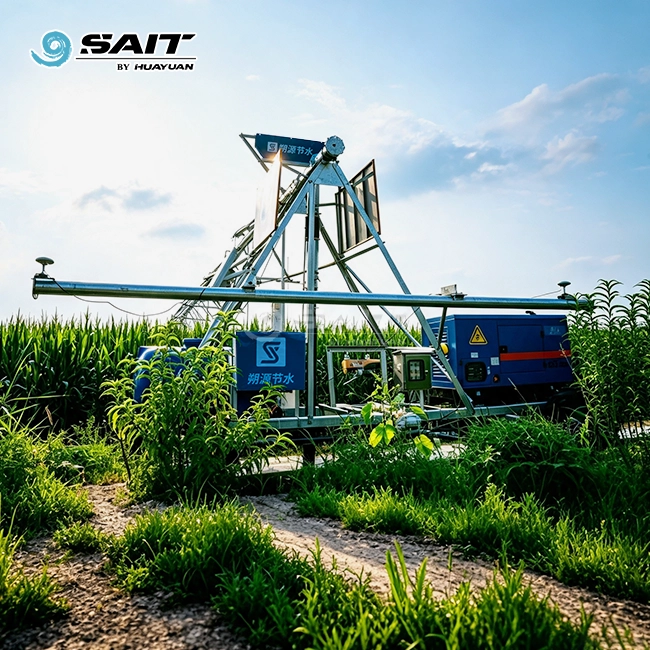
HUAYUAN SAIT uses hot-dip galvanized steel with a zinc coating that is at least 80μm thick to make its pivot spans. This goes beyond the usual standards for industrial galvanizing and provides good rust protection in arid tropical areas, deserts, and mild continental temperatures ranging from -20°C to 60°C. The truss rod and angle structure, which comes in 20mm and 22mm truss rod sizes, evenly distributes the load, which keeps the tower from getting worn out over time. This building standard is made to last for at least 20 years, which shows how durable it is.
Here are the core configuration parameters that shape end gun system performance:
- Span height options of 2.1m, 2.9m, 3.8m, and 4.5m allow for normal row crops to be grown through high-clearance sugarcane and biofuel fields, making sure the end gun can clear the canopy without affecting its path.
- Outlet spacing of 1.9m or 2.9m (customizable) lets the spray package be tuned to match application rates with the hydraulic conductivity of the soil. This keeps the field from ponding at the edges, where the end gun provides overlapped coverage.
- Wheel size options — 11.2-24, 14.8-24, and 16.9-24 — with tube or tubeless tire availability make it easier for the tower to move over soft or wet ground that is common near field edges, where end gun coverage is most important.
- UL-listed armored cable and gearmotor options (25.5:1 at 1.5hp; 40:1 at 0.75hp) make sure that the electricity stays on even when bad weather could normally stop automated end gun sector control.
These factors together decide if an end gun system gives a consistent application depth at the field edge or causes wet-dry variability that lowers yield. The most common problems with retrofitting can be avoided if the right sizes are used during the planning phase.
Maintenance Practices That Protect Long-Term Performance
By checking the solenoid diaphragms and internal pilot screens once a year, operators can keep them from getting clogged up with algae and mineral scale, which is the most common reason operators report for activation failure. Abrasive resistance testing of brass or polymer parts should be done before they are bought because nozzle orifice wear can happen in water that is full of sand. HUAYUAN SAIT backs this up with a full guarantee for one year, low-cost upkeep and part replacement for three years, and the ability to get extra parts at the factory cost price for life.
Comparing End Gun Systems With Irrigation Alternatives
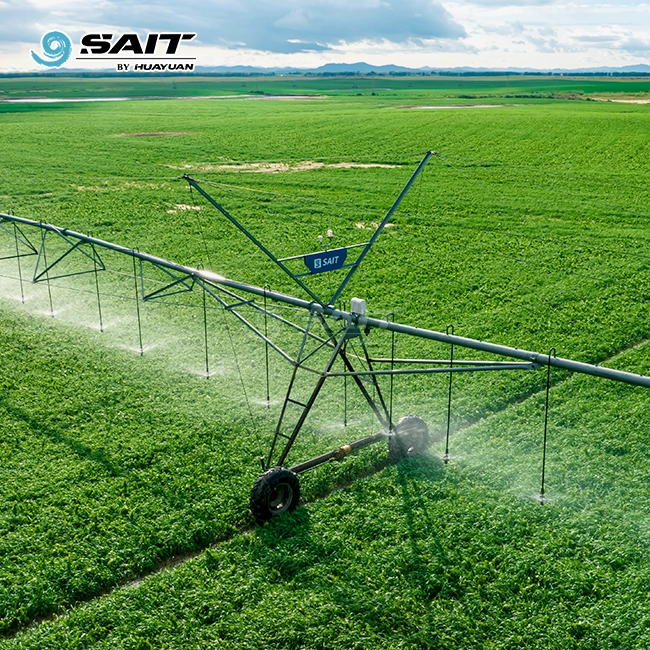
Standard sprinklers with droplets that are placed along the pivot span cover a circle very evenly, but they don't have a way to cover corner acres. Side rollout systems can fully cover rectangular fields, but they are harder to use and cost more per hectare to build than adding a center pivot end gun system to an existing pivot. Corner arm attachments are a structural alternative that adds a mechanically articulating extension that increases the effective irrigation area by 15%. HUAYUAN SAIT engineers use this option along with different end gun configurations based on the geometry of the field.
The most important things to consider when choosing an end gun are the type of barrel and how the pressure is managed. When the pivot speed changes near the field edges, variable-pressure nozzles change the throw radius on the fly. Fixed-pressure models are easier to use and require less maintenance, but they need more precise hydraulic design up front. When purchasing teams need systems for a variety of field forms, HUAYUAN SAIT's engineering team can provide site-specific span configuration, custom tower heights, and SAIT smart control integration. These are all options that standard catalog sellers do not provide.
How to Select and Procure the Right End Gun Configuration
The total cost of ownership, not just the unit price, is what drives choices about what to buy. If you buy a system that is cheaper but doesn't have good galvanizing, the right hydraulic size, or any local technical help, the costs add up quickly through rust damage, uneven use, and downtime during key growth windows.
When looking at different providers, make sure to check their paperwork on zinc coating thickness, compliance with ASABE or similar standards, and the ability to localize the control system. HUAYUAN SAIT has more than 130 patents, including 35 invention patents and 15 international patents. He also works with China Agricultural University to create R&D platforms through provincial engineering research centers. Product decisions are based on this institutional depth in a way that commodity suppliers can't copy.
For buyers in North America, it is necessary for products to meet ISO 9001 standards and have UL-listed cables and ASABE-aligned performance data. HUAYUAN SAIT offers full export documentation, OEM and ODM customization, private-label branding, and custom language localization for the control panel to meet USDA-accepted procurement standards.
Delivery lead time from the Xuzhou manufacturing hub averages one week for standard configurations. This is made possible by a hub-level transportation network that cuts down on logistics costs and transit time for both domestic and international orders.
Future Trends in Pivot Irrigation and End Gun Technology
IoT-enabled sector control, real-time soil moisture integration, and variable rate irrigation are changing how end gun systems are designed and how they are used. The SAIT Smart Control System from HUAYUAN SAIT already uses big data models for accurate Variable Rate Irrigation and works with smart farming platforms and third-party SCADA systems. BeiDou satellite location makes sure that sector activation is done correctly even in places where GPS signal quality isn't always good. Environmental concerns about water use in both North America and Europe are speeding up the use of these precise tools. The ability to activate the smart end gun is therefore both an agronomic and a compliance asset.
Conclusion
With a center pivot end gun system, a circular irrigation machine can be used to water the whole field, reclaiming corner acres and increasing the return on investment (ROI) for infrastructure. To choose the right design, you need to pay close attention to the hydraulic size, the structural sturdiness, the intelligence of the control system, and the supplier's abilities. With 20 years of experience making things, 80μm hot-dip zinc construction, SAIT smart automation, and full OEM/ODM support, HUAYUAN SAIT provides in every way. If you are in charge of 500 fields of corn or a government-wide food security project, you need to start by choosing the right production partner for your end-to-end system.
FAQ
Q1: Which crops benefit most from an end-gun system?
Row crops like corn, soybeans, wheat, and cotton, which have high input costs per hectare, benefit the most because restoring corner land directly increases the amount of food that can be harvested. Biofuel and sugarcane plantations that work on big, connected blocks also gain a lot, especially when high-clearance pivot configurations are paired with sector-controlled end-gun activation.
Q2: How often does an end gun system require maintenance?
Professional operations usually do a check once a year. The solenoid diaphragm, starter filter, and nozzle opening state are some of the most important repair spots. In places with water supplies that are high in sediment, it is best to clean the filters every six months to keep the pressure at the gun's inlet from dropping.
Q3: Can an end gun be retrofitted onto an existing pivot?
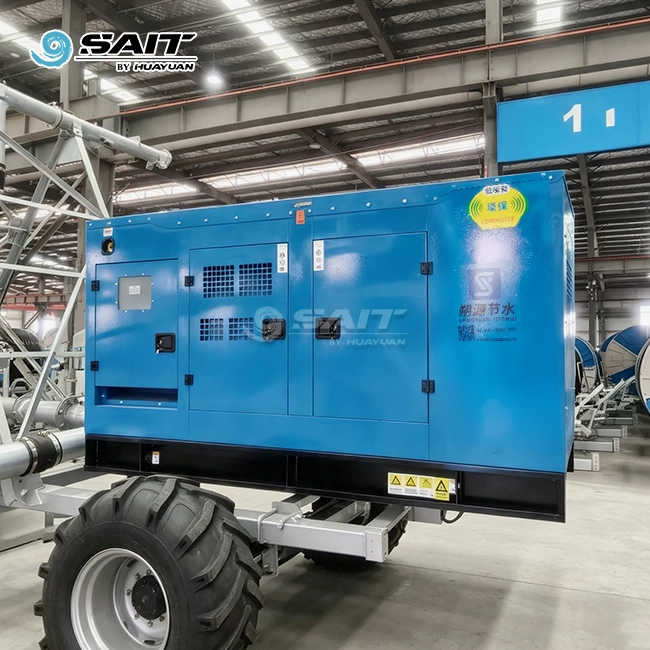
Most pivot platforms can accommodate end gun installation hardware, as long as the core hydraulic system can handle the extra flow. If the mainline pressure at the pivot end drops below 40 PSI, you need a booster pump, which usually has 2hp to 5hp. The technical team at HUAYUAN SAIT checks to see if the upgrade is possible and oversees the installation on-site.
Q4: What certifications should I require from a supplier?
Certifications like ISO 9001, ASABE standards compliance, UL-listed electrical parts, and proof of zinc coating thickness are basic needs for professional purchasing. Before a buy order is sent, regional certificates like GOST for CIS markets, SASO for the Middle East, and Australian galvanizing standards should be checked.
Connect With HUAYUAN SAIT for Your Center Pivot End Gun System
Because HUAYUAN SAIT has been making pivots for 20 years and has unique SAIT smart control technology and 80μm hot-dip zinc construction, they can make a center pivot end gun system that is durable, accurate, and large. We are a reliable company that makes center pivot end gun systems for business farms, EPC contractors, and foreign distributors. We offer OEM/ODM customization, a low minimum order quantity (MOQ) starting at one unit, and full after-sales support. To get a quote for your specific project, email our engineering team at kevin@showyirrigation.com.
References
1. Evans, R. G., & King, B. A. (2012). Site-Specific Sprinkler Irrigation in a Water-Limited Future. Transactions of the ASABE.
2. Lamm, F. R., Ayars, J. E., & Nakayama, F. S. (2007). Microirrigation for Crop Production. Elsevier.
3. Martin, D. L., Kranz, W. L., Thompson, A. L., & Liang, H. (2012). Selecting and Sizing Center Pivot Irrigation Systems. University of Nebraska–Lincoln Extension.
4. Keller, J., & Bliesner, R. D. (1990). Sprinkle and Trickle Irrigation. Van Nostrand Reinhold.
5. American Society of Agricultural and Biological Engineers. (2011). ASAE S398.1: Procedure for Sprinkler Distribution Testing for Research Purposes. ASABE.
6. Food and Agriculture Organization of the United Nations. (2014). Irrigation Water Management: Irrigation Methods. FAO Irrigation and Drainage Paper No. 45.
Get a tailored irrigation solution for your project — our engineering team is ready to support you from design to installation.