What hose diameter is recommended for a hose feed linear system?
For a hose feed linear irrigation system, the recommended supply hose diameter typically falls between 168mm (6.6 inches) and 219mm (8.6 inches), depending on flow rate demand, field length, and operating pressure. In a hose feed linear setup, the drag hose must carry enough water volume to supply the full machine span—up to 973 meters—without excessive pressure loss. Choosing the wrong diameter leads to uneven application rates and reduced irrigation uniformity. HUAYUAN SAIT's lateral move systems are factory-configured for both 168mm and 219mm main pipe diameters to match actual field conditions.
Understanding Hose Feed Linear Systems and Hose Diameter Fundamentals
To choose the right size supply hose, it's helpful to know how these systems work in the real world.
What Is a Hose Feed Linear Irrigation System?


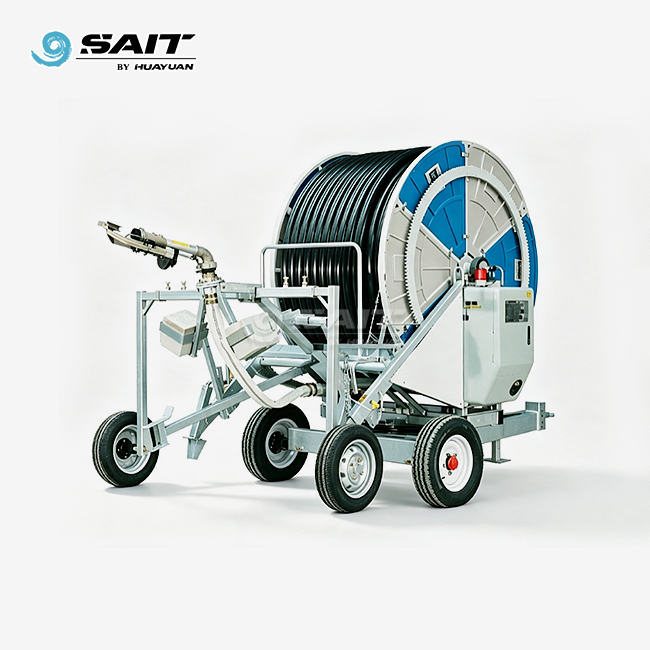
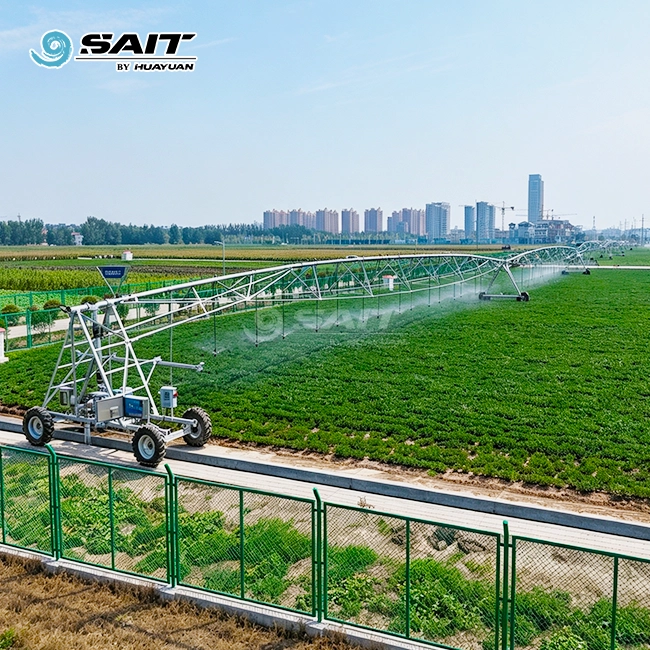
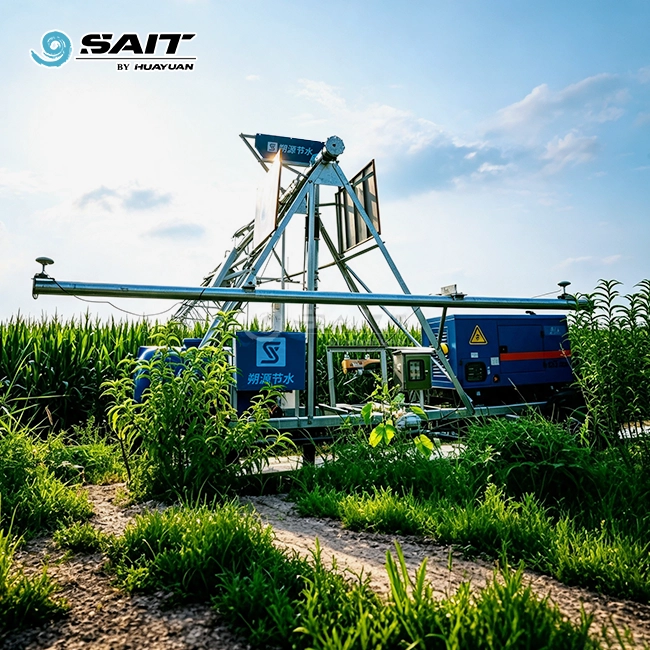
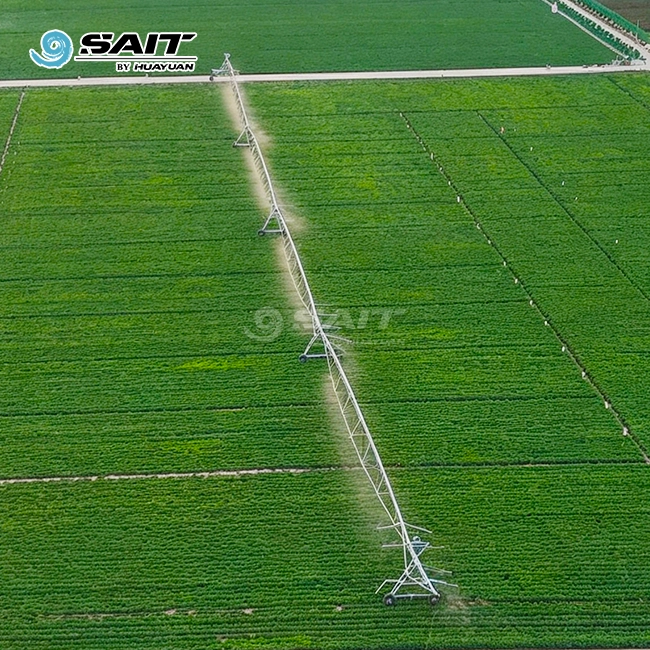
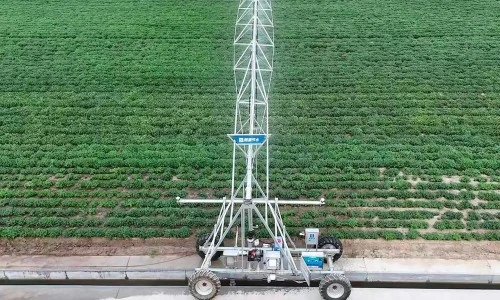
A lateral move watering machine, which is also known as a hose feed linear system, moves in a straight line that is not parallel to its frame. While a center pivot turns around a fixed point, this machine moves along the whole length of a rectangle. Water comes from either an open stream next to the field or a drag hose that links to hydrants that are set up at regular intervals. This design makes the field usable above 98% of the time, so no corners are left without watering.
Why Hose Diameter Matters in Lateral Move Systems
It's important to note that the supply hose is the hydraulic system's weak link. If the inner diameter is too small, friction losses increase over the long amount of trip length, which can be more than 3,000 meters per field, and the machine can't give each sprinkler head enough water. The main pipe widths that HUAYUAN SAIT recommends are 168 mm and 219 mm. These sizes match low-speed, low-friction flow paths that can feed machine lengths from 37.5 meters to 54.9 meters without any pressure drop fees.
Industry Terminology You Should Know
"Nominal bore," "inside diameter (ID)," and "working pressure rating" are all terms that procurement engineers often come across when they are reviewing hose choices for hose feed linear setups. When setting up a drag hose water supply, the inside width, not the outside wall size, is always the important number. A 219mm ID hose that works at 0.3 to 0.5 MPa is standard for machines that cover 150 to 240 hectares per unit.
Key Factors to Consider When Choosing the Hose Diameter
To get the width right, you have to match several field-specific factors at the same time.
Flow Rate and Field Coverage Requirements
Demand for flow goes up or down directly with machine length and application rate. A 219mm supply hose is the only way to reliably deliver a steady flow rate over long distances for a lateral move machine that covers 240 hectares at a typical application depth of 25 mm per irrigation cycle. A 168mm hose can work well with shorter machines that cover 80–120 hectares as long as the pump pressure stays within the specifications.
Operating Pressure and Friction Loss Calculations
Engineers usually use the Hazen-Williams and Darcy-Weisbach models to figure out how much pressure is lost in irrigation feed lines. A 168mm hose with normal flow rates loses about 1.5–2 times more friction than a 219mm hose carrying the same amount of fluid for every 100 meters of length. When traveling over distances of 2,000 to 3,000 meters, which is typical on large rectangular fields in the CIS and North Africa, this gap gets a lot bigger.
Compatibility with Couplings, Reels, and Fittings
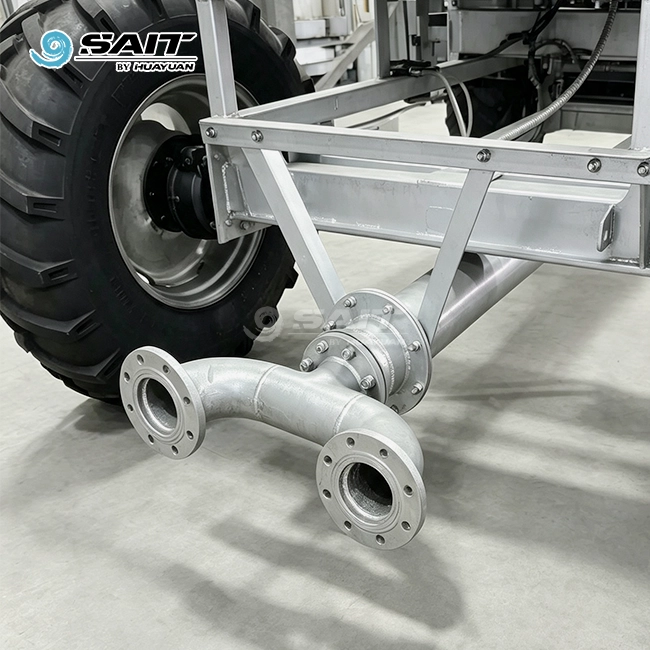
The reel and coupling gear that comes with the machine can also affect the choice of hose width. The HUAYUAN SAIT drag hose water supply is already set up to work with standard 168mm or 219mm connections. When you use non-standard hose diameters with factory couplings, you get leak points and uneven pressure. Choosing matched parts from a single supplier gets rid of these compatibility issues and makes managing spare parts over time easier.
Hose Diameter Selection Principles and Best Practices
In order to choose a sound width, there are a few simple rules that experienced irrigation experts always follow.
Avoid Undersizing—Even Marginally
Most of the time, a supply hose that is too small is to blame for uneven irrigation in lateral move systems. When friction losses lower the input pressure below the sprinkler's lowest working level, the spans at the far ends get less water than the spans at the near ends. According to research from the American Society of Agricultural and Biological Engineers (ASABE), row crops like potatoes and sugar beets lose yield when pressure changes by more than 10% across the span of a machine.
Avoid Oversizing Without Justification
An oversized hose feed linear costs more to buy, makes the drag assembly heavier, and increases the chance that it will break when the machine shuts down and the internal pressure drops. A 219mm supply hose is the realistic upper limit before diminishing results show up for most projects using machines up to 800 meters long on flat ground. 168mm setups work well in fields with shorter machines and lower application rates.
Match Diameter to Guidance and Power Configuration
The guidance mode also affects how the hose is managed. GNSS-guided (BDS/GPS dual-mode) machines move more accurately than cable- or furrow-guided systems. This means that the drag gear is under less stress when it's working. A 219 mm hose can be handled reliably on machines with precise guidance, and the coupling points won't wear out too quickly. When making purchases, this connection between accurate advice and long-lasting hoses is often forgotten.
Comparative Analysis: Drag Hose Supply vs. Canal Supply Diameter Considerations
The way diameter choices are made changes depending on whether the water comes from a stream or a drag hose.
Canal Supply: Fixed Inlet, Variable Draw
In configurations with a canal supply, water enters the machine at a fixed side point while it moves. How fast the onboard distribution system can draw from the canal depends on the width of the main pipe, which is either 168 mm or 219 mm. This set-up works well in North Africa and the Middle East, where crop rows are next to irrigation canals.
Drag Hose Supply: Dynamic Pressure Management
Different types of drag hoses pull water from spigot points that are spread out across the field. In this case, the inner diameter of the hose is what matters because the length of the hose changes as the machine goes from one hydrant point to another. Most friction loss happens when the distance between hydrants is at its widest. In this case, a 219mm pull hose always works better than a 168mm hose, especially on grounds longer than 1,500 meters.
Cost of Ownership Comparison
A hose feed linear with a 219mm hose assembly costs about 15–25% more per meter than a 168mm one. But because it lowers pressure loss, it can cut pump energy use by 10–18% over the course of an irrigation season, according to data from large-scale potato farms that did irrigation energy audits. For most projects that cover more than 100 hectares, the higher cost of the hose was more than made up for by the savings in energy over five years of use.
Practical Guide: Selecting and Procuring the Right Hose Diameter
Before they finalize the specs, procurement engineers can use this simple process.
Before looking at brochures from suppliers, get the following field information:
- Total machine length and number of spans: Machines with spans of 37.5m–54.9m and total lengths up to 973m require full hydraulic calculations before diameter selection.
- Field travel distance: Travel distances up to 3,000 meters demand careful friction loss modeling at maximum hose extension.
- Crop type and application rate: Cash crops like vegetables and potatoes typically require higher application frequencies, increasing total seasonal flow volume.
- Water supply method: Confirm whether the project uses canal supply or drag hose supply, as each method produces different pressure profiles.
- Terrain gradient: Level terrain is ideal for lateral move systems; gradients above 3% require additional pressure compensation that a larger hose diameter can partially offset.
With these numbers, your supplier can confidently tell you that the pipe diameter should be 168 mm or 219 mm. Before HUAYUAN SAIT's engineering team confirms the details of any project, they look over topographic and hydraulic data.
Once you have all of this information, ask your provider for a written hydraulic calculation that shows the predicted pressure at the farthest end of the machine when it is flowing at its fastest. This paperwork should come with any lateral move from a good maker. HUAYUAN SAIT provides expert support and on-site fitting help for all of their systems, making sure that the hoses are connected and put together correctly from the start.
Conclusion
Picking the right supply hose diameter for a hose feed linear lateral move irrigation machine is a technical choice that has direct effects on food growth, energy use, and the life of the system. For most large-scale projects, a main pipe diameter of 219 mm gives the best balance of flow rate and pressure retention over long distances of travel. 168mm configurations work well for shorter or lower-flow installations. HUAYUAN SAIT's lateral move systems come factory-set up for both sizes. They have spans from 37.5m to 54.9m, different types of guidance systems, and different ways to supply water, such as canals and drag hoses.
FAQ
Q1: Can I switch from a 168mm to a 219mm hose after installation?
Yes, but it requires replacing the coupling hardware at the machine's water inlet and the hydrant connection points. HUAYUAN SAIT supplies matched coupling assemblies for both diameters, and the retrofit process typically takes one day with a qualified technician.
Q2: How do I know if my current hose diameter is causing pressure loss?
Install a pressure gauge at the far-end span during peak operation. If the reading falls more than 10% below the sprinkler manufacturer's minimum operating pressure, your supply hose is likely undersized, or your pump output is insufficient.
Q3: Does hose diameter affect fertigation performance?
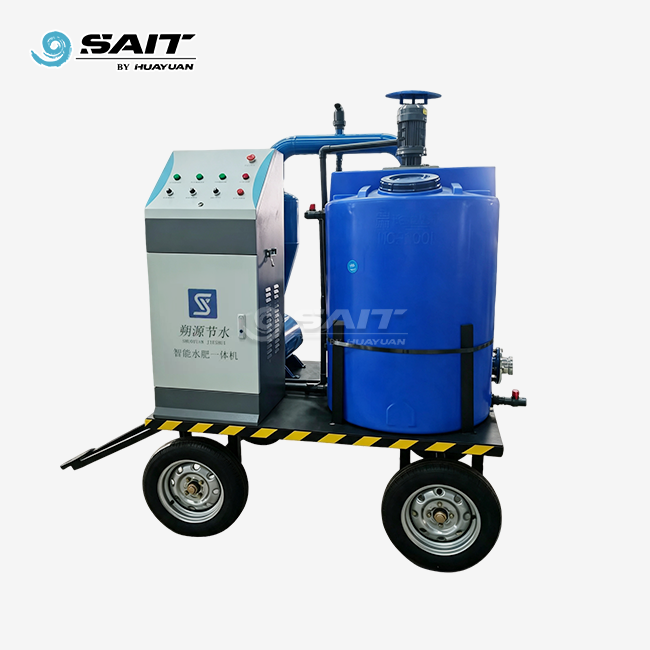
Yes. Fertigation systems inject nutrients into the main water supply line. If the supply hose creates excessive back-pressure, injection rates become inconsistent. A correctly sized hose maintains stable flow velocity, which keeps fertigation dosing accurate across the full machine length.
Q4: Are HUAYUAN SAIT's hose specifications compatible with international coupling standards?
HUAYUAN SAIT machines support standard coupling dimensions for both 168mm and 219mm hose connections. For export projects, the engineering team confirms compatibility with local fitting standards before shipment.
Get the Right Hose Configuration from HUAYUAN SAIT — Your Trusted Hose Feed Linear Supplier
HUAYUAN SAIT has over 130 patents and 20 years of experience as an irrigation engineer. They also make hot-dip galvanized steel structures that are more than 80µm thick. With our hose feed linear horizontal move tools, we can water fields evenly more than 90% of the time and completely more than 98% of the time. To get a hydraulic sizing review, project price, or OEM configuration for your particular field conditions, email our technical team at kevin@showyirrigation.com.
References
1. American Society of Agricultural and Biological Engineers (ASABE). ASABE Standards: Design and Installation of Microirrigation Systems. ASABE, 2021.
2. Keller, J., & Bliesner, R. D. Sprinkle and Trickle Irrigation. Van Nostrand Reinhold, 1990.
3. Hanson, B., Orloff, S., & Peters, D. "Monitoring Soil Moisture for Irrigation Water Management." University of California Division of Agriculture and Natural Resources Publication 21635, 2000.
4. Camp, C. R., Sadler, E. J., & Yoder, R. E. Evapotranspiration and Irrigation Scheduling. ASAE, 1996.
5. Phocaides, A. Handbook on Pressurized Irrigation Techniques. Food and Agriculture Organization of the United Nations (FAO), 2007.
6. Burt, C. M., & Styles, S. W. Drip and Micro Irrigation Design and Management for Trees, Vines, and Field Crops. Irrigation Training and Research Center, California Polytechnic State University, 2007.
Get a tailored irrigation solution for your project — our engineering team is ready to support you from design to installation.