2-wheel vs 4-wheel E-Z Tow: which is better?
When managing irrigation across hundreds of hectares, the ability to relocate your center pivot system quickly is not a luxury — it is an operational necessity. Both the 2-wheel E-Z tow and 4-wheel towable pivot designs solve this challenge, but they do so differently. The 2-wheel E-Z tow configuration excels at rapid single-span repositioning across lighter field layouts, while the 4-wheel towable system delivers structural stability for longer, heavier multi-span pivots covering expansive commercial farmland. Choosing between them depends on your field size, terrain, and relocation frequency.
Understanding 2-Wheel and 4-Wheel E-Z Tow Irrigation Systems
These two types of towable pivots are based on different engineering ideas. Purchasing managers and agricultural engineers can better match the right system to the conditions in the field when they know how each one is put together.
How the Two-Wheel Towable System Works
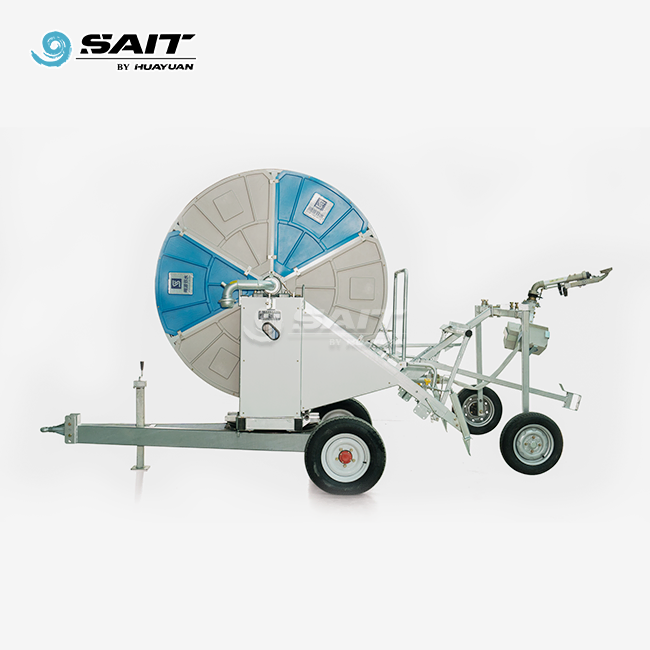
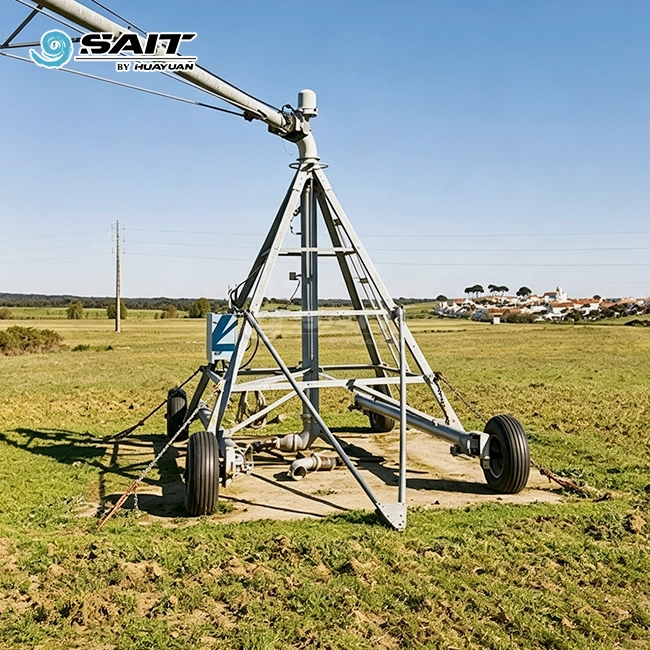
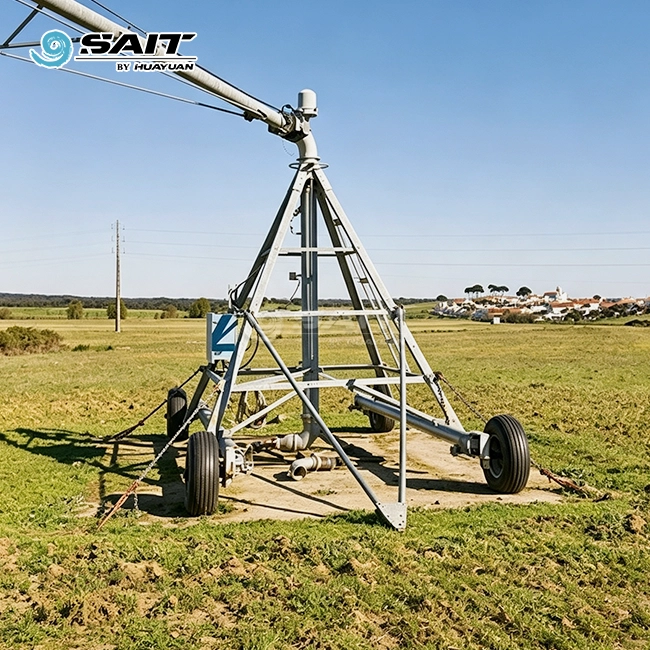
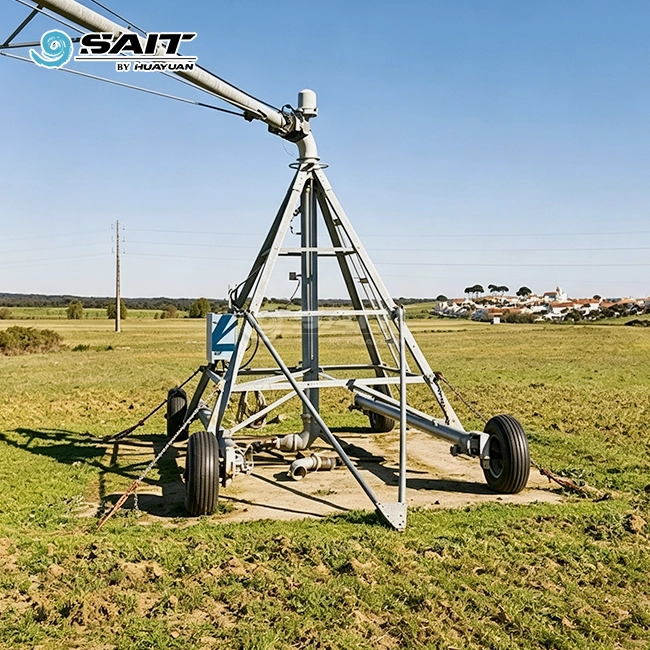
The 2-wheel E-Z tow can be used as a portable irrigation unit with a single span. A normal tractor connects immediately to the pivot point, and the whole thing moves along its own length. The 2-wheel E-Z tow design of the HUAYUAN SAIT makes it possible to move the whole thing in less than 31 minutes, which is a big help when planting and watering during short windows. With a main pipe diameter of 127mm or 168mm and a maximum machine length of 85 meters, this configuration works well for activities that need to cover a number of smaller fields without having to set up fixed pivot equipment at each site.
How the Four-Wheel Towable System Works
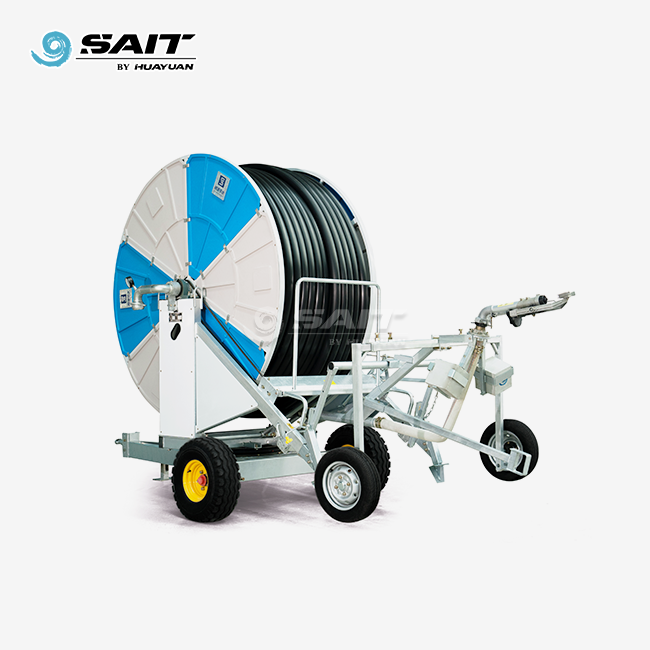
With main pipe sizes up to 219mm, the four-wheel towable irrigation system can handle much longer machine configurations—up to 457 meters in length. The four-wheel frame spreads the weight more evenly over rough or soft ground, which lowers ground pressure during tow operations. This design works well for commercial farms with 500 hectares or more of continuous corn, soybean, or cotton rotations. The pivot needs to be able to cover wide fields while staying in place during transport and operation.
Performance and Safety Comparison of 2-Wheel vs 4-Wheel E-Z Tow


At HUAYUAN SAIT, both the 2-Wheel Towable pivot system and other systems are built to the same technical standard: they are made of hot-dip galvanized steel with a zinc coating that is more than 80µm thick. This coating thickness works much better than regular galvanized parts and meets the needs for rust protection in growing areas from sub-Saharan Africa to Central Asia's wheat belts.
In terms of important performance factors, here's how the two configurations compare:
- Load capacity and machine length: The four-wheel system can handle spans of up to 457 meters in multi-span configurations with span lengths between 37.5m and 54.9m. The 2-wheel E-Z tow single-span unit, on the other hand, can handle spans of up to 85 meters with options for span lengths of up to 66.5 meters per individual span, making it flexible for fields with odd shapes.
- Terrain adaptability: The four-wheel chassis stays stable on soft sands and uneven ground, which makes it better for grounds with a range of terrain. The 2-wheel E-Z tow unit works reliably on the firmer, more stable ground that is common in single-field deployments.
- Relocation speed: A regular farm tractor can move the 2-wheel E-Z tow version in less than 31 minutes. Due to its heavier weight and longer length, the four-wheel system takes longer to set up, but it can still move within a single working shift.
- Irrigation uniformity: Both systems use HUAYUAN SAIT's BeiDou + IoT smart control technology, which makes the watering more even (above 90%) and less likely to miss (below 5%). These are performance standards that are higher than the norm in the business.
These differences have a big effect on procurement decisions. Kazakhstan's government has an irrigation program that covers more than 2,000 hectares. The program will prioritize security and coverage over quick shifting. A sugarcane farm in Brazil that works across five different blocks will choose the 2-wheel E-Z tow portable pivot because it is fast and saves money.
Installation, Maintenance, and Operational Considerations
Lifecycle cost and how easy it is to deploy both affect the total cost of ownership. Neither system needs stable anchor infrastructure, which lowers the cost of installation per acre right away compared to fixed-pivot systems.
Setup and Power Options
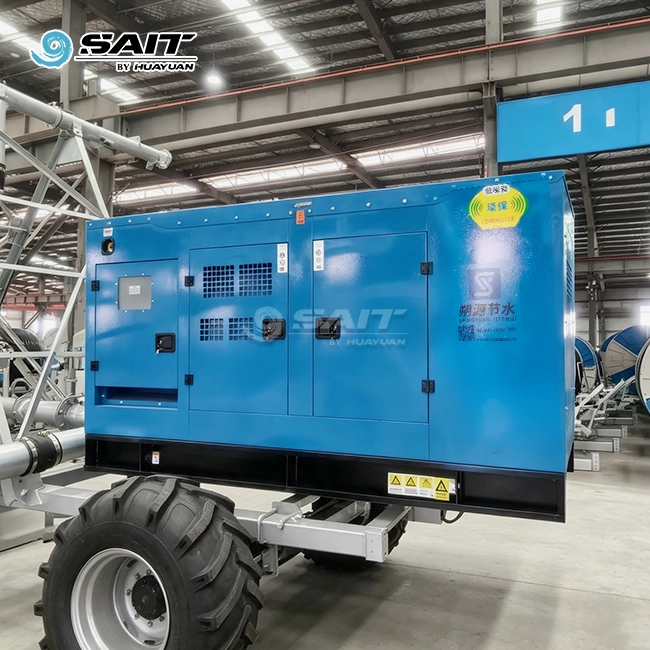
There are three ways to get power to the 2-wheel E-Z tow and four-wheel towable systems: from the grid, a diesel generator, or a photovoltaic system. This freedom is very important for farm blocks in Africa that are not connected to the grid and for remote field corners in Central Asia where extending the grid would not be possible. Wheel size choices include 11.2-24, 14.9-24, and 16.9-25 in both tubed and tubeless versions. This lets you adapt to the tires that are available in your area and the conditions of the ground.
Maintenance and Longevity
HUAYUAN SAIT makes all of its structural parts in-house. For example, it makes its own virgin PE pipes that are thicker than the industry standard, less likely to break, and free of the risks that come with recycled materials. The water turbine's 4-speed gearbox has carefully made gears that don't wear out easily and keep the speed stable over long periods of time. These aren't parts from a store; they're specially designed to last longer between services and need fewer replacements, which lowers long-term running costs.
The after-sales structure at HUAYUAN SAIT supports this: a full warranty for one year, low-cost maintenance and part replacement for three years, and a lifelong supply of spare parts at factory cost price get rid of the uncertainty that comes with buying imported farm equipment.
Decision-Making Framework: Which E-Z Tow Solution Suits Your Business?
The best 2-Wheel Towable pivot system relies on three things: the size of the field, how stable the ground is, and how often it needs to be moved. There is no one plan that is better than the other; each one meets a different set of operating needs.
The 2-wheel E-Z tow movable pivot works well in situations where one machine needs to serve several field blocks at different times. With the rapid-deploy, single-span format, you can set up pilot demonstrations for regional distributors, smallholder consolidation projects in Southeast Asia, and sugar cane plantations in Brazil. The 2-wheel E-Z tow unit can span up to 66.5 meters and have overhangs that are up to 25 meters long. It can also handle odd field shapes that fixed pivots can't do well.
The four-wheel towable system is designed for large, connected farm blocks where coverage width and structural rigidity are more important than repositioning speed. Commercial row crop farms in the US Corn Belt, state farms in Uzbekistan, and EPC companies building complete systems for 1,000-hectare or more projects always choose the four-wheel version because it makes the machine more stable and allows it to be used on more than one span.
HUAYUAN SAIT also offers optional corner arm systems that can be used with both setups. These systems can increase the effective irrigation area by up to 15% on field lines that are square or not square. Low-profile and standard span height options can handle high-clearance crops like mature corn and sorghum varieties that grow tall.
Conclusion
The choice between a 2-wheel E-Z tow and a four-wheel towable irrigation pivot comes down to matching what engineers can do with what can be done in the field. While the four-wheel system offers the structural strength and machine length required for large-scale continuous irrigation, the 2-wheel E-Z tow format offers unrivaled relocation speed and cost efficiency for multi-field operations. HUAYUAN SAIT designs both systems to meet the same quality standards for galvanizing and parts. They have 20 years of experience making things, more than 130 patents, and a supply chain that is set up to deliver on time every time. Choose the right one for your business needs to lower costs per acre and increase the life of your tools.
FAQ
Q1: Can the two-wheel towable pivot irrigate fields of different shapes?
Yes. With the available corner arm attachments and compact single-span design, the 2-wheel E-Z tow unit can effectively water square, rectangular, and irregularly shaped fields. In addition, HUAYUAN SAIT's engineering team can make unique span length arrangements between 37.5m and 66.5m to fit the shape of the site.
Q2: What power supply does the four-wheel towable system require?
The four-wheel system can be powered by grid power, a gas engine, or solar panels. For field sites that are far away or not connected to the grid, an onboard diesel engine choice cuts out all need for grid infrastructure.
Q3: How long does installation take for a first-time deployment?
Every unit from HUAYUAN SAIT comes with on-site assembly help and technical advice. Trained experts oversee the initial setup to cut down on the time needed for testing and make sure that the control system is set up correctly and in the right way.
Q4: What certifications apply to HUAYUAN SAIT's towable pivot systems?
HUAYUAN SAIT follows the rules for quality management set by ISO 9001. Export documentation packages meet international buying rules, which helps buyers in the US, the CIS region, the Middle East, and Africa who care about following the rules.
Get a Custom Towable Pivot Quote from HUAYUAN SAIT
With delivery times of as little as one week from Xuzhou's strategic logistics hub, HUAYUAN SAIT provides 2-wheel E-Z tow irrigation systems and four-wheel towable pivots directly from the factory. Our engineering team makes sure that every configuration fits your field conditions, power supply, and branding needs, whether you are a wholesale buyer or looking into OEM/ODM options. To get prices and details, email us at kevin@showyirrigation.com.
References
1. Food and Agriculture Organization of the United Nations. Irrigation Water Management: Irrigation Methods. FAO Agricultural Services Bulletin, 1988.
2. American Society of Agricultural and Biological Engineers. ASABE Standards: Design and Installation of Microirrigation Systems. ASABE, 2017.
3. Keller, J., & Bliesner, R. D. Sprinkle and Trickle Irrigation. Van Nostrand Reinhold, 1990.
4. Howell, T. A. "Irrigation Efficiency." Encyclopedia of Water Science, Marcel Dekker, 2003.
5. Phocaides, A. Handbook on Pressurized Irrigation Techniques. Food and Agriculture Organization of the United Nations, 2007.
6. Evans, R. G., & King, B. A. "Site-Specific Sprinkler Irrigation in a Water-Limited Future." Transactions of the ASABE, Vol. 55, No. 2, 2012.
Get a tailored irrigation solution for your project — our engineering team is ready to support you from design to installation.