Common Electric Drive Irrigation System Troubleshooting
When an electric drive irrigation system stops mid-cycle or behaves erratically, the financial impact on a 500+ hectare operation compounds fast. This guide addresses the most prevalent failure patterns observed in center pivot and linear irrigation systems, with diagnostic logic drawn from field maintenance records and engineering practice. Whether you manage row crops, sugar cane plantations, or government food security programs, understanding how to isolate and resolve drive-side faults keeps your operation moving — and your yield targets intact.
Understanding Common Problems in Electric Drive Irrigation Systems
Failure to Start and Erratic Tower Movement
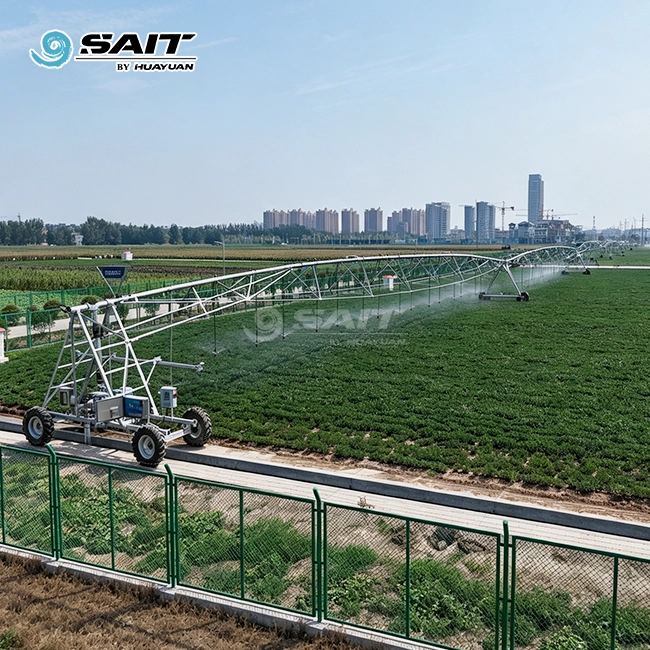
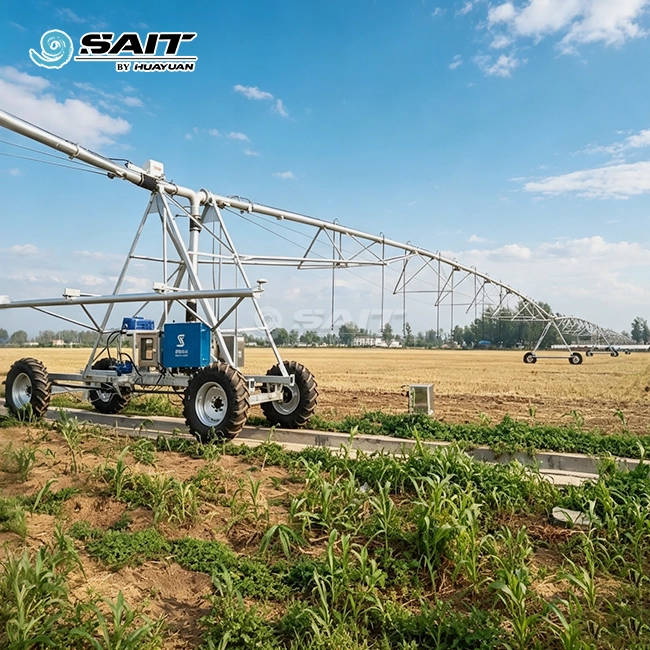
The most common problem with large-scale pivot systems is that they won't start. This is usually caused by unstable supply voltage, a tripped breaker at the tower box, or a corroded terminal connection along the protected cable run. Erratic tower movement, where one or more spans lag or surge, is usually caused by gearmotor speeds that aren't matched up or an alignment switch that is wearing out. When systems use 25.5:1 (1.5 hp) or 40:1 (0.75 hp) gearmotors, worn drive gears in 50:1 or 52:1 wheel gearboxes cause torque inconsistencies that show up as misaligned spans after two to three watering cycles.
Low Water Pressure and Uneven Application
Sprinkler nozzles that are clogged or not aligned correctly are often to blame for uneven water distribution across a pivot's covering circle, not a broken pump. With outlet spacing of 1.9 m or 2.9 m across spans from 37.5 m to 66.5 m, a single blocked emitter changes the way rain falls on several meters of crop canopy. When sediment builds up near the pivot point or at overhang transitions in the main pipeline, which comes in sizes of 5" (127 mm), 6-5/8" (168 mm), or 8-5/8" (219 mm), the pressure drops below the design threshold.
Figuring out the type of symptoms of an electric tower drive before getting any tools saves time during the diagnosis process. For electrical problems, mechanical wear, and hydraulic problems, you need to start troubleshooting at a different step.
Step-by-Step Troubleshooting Approach to Maximize System Efficiency


An organized diagnostic process stops wrong diagnoses and part replacements that aren't needed. Field engineers with a lot of experience say that every session should start with collecting data before doing an actual check.
Here is the basic troubleshooting process that has been shown to work for electric pivot systems with more than one span:
- Step 1 — Retrieve control system logs: The SAIT Smart Control System stores event logs with timestamp data on every tower movement, safety stop, and fault code. Reviewing these records before touching hardware narrows the fault zone to a specific span or electrical segment, saving hours of physical inspection time on systems with radii extending up to 800 meters.
- Step 2 — Measure voltage at each tower box: Using a calibrated multimeter, confirm 3-phase supply voltage within ±5% of the rated input at each tower. Voltage imbalance greater than 2% across phases causes gearmotor overheating and premature winding failure. Document readings at both the panel and motor terminal strips.
- Step 3 — Inspect UL-listed armored cable runs: Cable damage from rodent activity, soil movement, or improper burial depth interrupts control signals and power delivery simultaneously. Check continuity and insulation resistance. All cable specifications on HUAYUAN SAIT systems meet UL listing requirements, reducing the probability of insulation failure under field conditions.
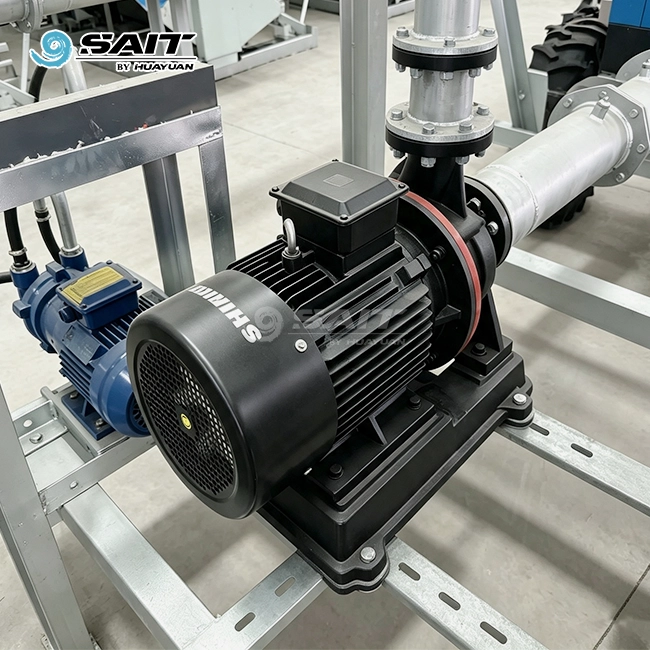
- Step 4 — Use thermal imaging on drive motors: A non-contact thermal camera identifies overheating gearmotors before they fail completely. Abnormal heat signatures on a 1.5 hp drive unit during normal load cycles suggest bearing wear or lubrication deficiency inside the wheel gearbox.
- Step 5 — Verify SAIT software diagnostics remotely: Variable Rate Irrigation settings that mismatch soil infiltration characteristics for a given zone cause pressure cycling anomalies that resemble mechanical faults. Cross-reference the irrigation schedule against sensor feedback before proceeding to component replacement.
When done in order, these steps cut down on the average time it takes to fix a fault by a lot compared to random component testing.
Maintenance Tips to Prevent Common Electric Drive Irrigation System Failures
Scheduled Electrical and Mechanical Inspections
After the season is over, during the season, and before the next season, a center pivot motor-driven irrigation system should have preventative maintenance done. Before the season starts, the cables are checked for damage, the oil levels in the gearmotors are checked, the tightness of the truss rods (20 mm and 22 mm rods need to be checked regularly), and the state of the wheels' tires in sizes 11.2-24, 14.8-24, and 16.9-24 are checked. Mid-season checks are mostly about how well the sprinkler system is working and how fast the control panel responds. As part of the routine after the season, pivot joints are cleaned, wheel gears are oiled again, and hot-dip galvanized structure parts are checked for zinc coating stability.
Monitoring how much energy is used at the main switch of an electric drive irrigation system sends out an early danger signal. Two to four weeks before a gearmotor or gearbox fails, there is usually a noticeable rise in amperage draw without a corresponding change in system load. If this deviation is caught early, it can be turned into a planned repair job instead of a field shutdown.
It's also good for business to use sustainable maintenance practices. If you compare electric pivot systems to flood irrigation, they save over 70% more water. Protecting that efficiency edge through regular repair helps with both practical cost goals and environmental compliance standards, which are becoming more important to ESG-conscious farm operators and U.S. government procurement programs.
Comparing Electric Drive Irrigation System Troubleshooting with Other Drive Systems
Diesel-powered irrigation systems need combustion maintenance like replacing the fuel filter, servicing the injectors, and checking the exhaust system. Electric drives, on the other hand, don't need any of these things. Diesel systems, on the other hand, can work without power from the grid, which is important in off-grid agricultural places that are popular in Africa and some parts of Central Asia.
Because hydraulic drive systems use fluid pressure to transfer power, finding leaks is the main job in fixing problems. It's not as accurate to isolate faults as it is in electric systems, where digital fault codes from the SAIT control platform quickly find trouble spots. Solar-powered systems have readings for the charge motor and battery bank that aren't available in electric systems that are connected to the power grid.
For large-scale commercial operations with a reliable 3-phase power supply—which is the standard configuration for HUAYUAN SAIT pivot systems on the U.S. market—electric drives offer better irrigation uniformity above 90%, lower total maintenance costs, and faster remote diagnostics through IoT integration. When comparing the total cost of ownership of different system types, procurement workers should look at more than just the unit price. They should also look at how many hours of work are spent on flaw finding and repairs over the course of 20 years.
When and How to Engage Professional Support and Suppliers?
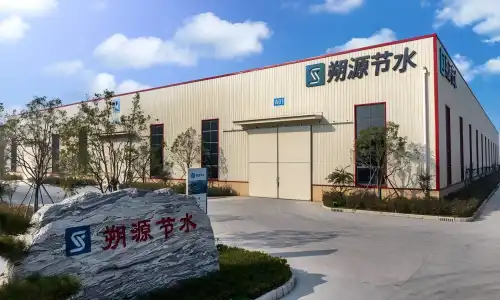
No matter how skilled the technicians are in-house, there are times when a fault needs to be fixed by a professional. Failures of control boards in the SAIT electric tower drive system, structural misalignment that goes beyond what the maker allows, and cracks in the gearbox housing all need factory-level support instead of tries to fix them in the field, which could cancel the guarantee.
When choosing a supplier for parts or repair help, make sure that the replacement parts match the original specifications. This is especially important for armored cable, gearmotors, and wheel gearboxes. Putting in parts that don't meet the specifications into an electric pivot system opens you up to risk and speeds up secondary failures. HUAYUAN SAIT offers spare parts for life at the factory cost price and has a structured after-sales framework that includes a 1-year full warranty and 3-year low-cost maintenance support.
On-site installation supervision and expert advice during testing also lower the chance of early failures caused by wrong span alignment, bad cable routing, or incorrectly set SAIT control parameters.
Conclusion
Fixing problems in an electric drive irrigation system starts with systematically figuring out what's wrong, not by replacing parts. Field teams can get things back up and running faster and for less money if they know the difference between electrical supply problems, mechanical wear patterns, and software setup mistakes. HUAYUAN SAIT systems are designed to have few faults and clear diagnostics. They are made with 80 μm hot-dip galvanized structures, UL-listed armored cabling, and the SAIT Smart Control platform. If you follow the steps in this article for maintaining these systems, you can protect both your food yield and your investment for more than 20 years.
FAQ
Q1: Does the SAIT control system support remote diagnostics?
The SAIT Smart Control System has Internet of Things (IoT) connectivity, which lets workers get problem logs, check on the state of tower movement, and change irrigation plans from afar. This feature is especially useful for systems with radii of up to 800 meters, where checking each span physically takes a lot of time.
Q2: What causes a tower to stop moving mid-cycle?
Misalignment of the alignment switch is the most typical reason. If the position of a tower moves outside of the control system's acceptable range, the safety circuit stops movement to protect the structure. Before you reset, make sure the orientation switch is set correctly and that the wire is still connected to the tower.
Q3: How often should wheel gearbox oil be changed?
Under normal working loads, 50:1 and 52:1 wheel gears should have their oil changed once a year. In seasons with a lot of use and several irrigation cycles per week, it is best to check the oil's viscosity and cleanliness in the middle of the season.
Q4: Can I operate the pivot during a power fluctuation event?
If the voltage changes by more than 5% from the rated source, the device should be paused by hand. Continuous use of an unreliable source speeds up the wear and tear on gearmotor windings and can damage the memory on the SAIT control board.
Partner With HUAYUAN SAIT — Your Trusted Electric Drive Irrigation System Manufacturer
HUAYUAN SAIT makes pivot irrigation systems that are built to last and are perfect for businesses that can't afford to be down. With 20 years of experience making direct electric drive irrigation systems, we can handle trial orders of as few as one unit or as many as 20 units for a single job. We are a clear step up from normal catalog providers thanks to our SAIT Smart Control, 80 μm hot-dip galvanized structures, and full after-sales service, which includes providing spare parts for life. To get a price on configuration right away, email our expert team at kevin@showyirrigation.com.
References
1. American Society of Agricultural and Biological Engineers (ASABE). ASABE Standards: Design and Installation of Microirrigation Systems (S526.4). ASABE, 2020.
2. Food and Agriculture Organization of the United Nations. Irrigation Water Management: Irrigation Methods. FAO Irrigation and Drainage Paper No. 45. FAO, 2019.
3. National Agriculture Library, USDA. Center Pivot Irrigation: Engineering and Management Practices. USDA Agricultural Research Service, 2021.
4. Howell, T. A. "Irrigation Efficiency." Encyclopedia of Water Science, Marcel Dekker, 2018.
5. Lamm, F. R., Ayars, J. E., & Nakayama, F. S. Microirrigation for Crop Production: Design, Operation, and Management. Elsevier, 2007.
6. Camp, C. R., Sadler, E. J., & Yoder, R. E. Evapotranspiration and Irrigation Water Requirements. ASCE Manuals and Reports on Engineering Practice No. 70. ASCE, 2016.
Get a tailored irrigation solution for your project — our engineering team is ready to support you from design to installation.