What are the benefits of double swing linear irrigation?
If you manage large rectangular fields and you're tired of leaving corners unwatered or repositioning equipment manually, double swing linear irrigation may be exactly what your operation needs. This lateral-move system travels in a straight line perpendicular to its own structure, covering over 98% of a rectangular field per pass—far beyond what a center pivot can offer. From sugar beet farms in the American Midwest to desert reclamation projects in the Middle East, this technology is changing how large-scale irrigators think about water delivery.
Understanding Double Swing Linear Irrigation Systems
What Is a Double Swing Linear System?
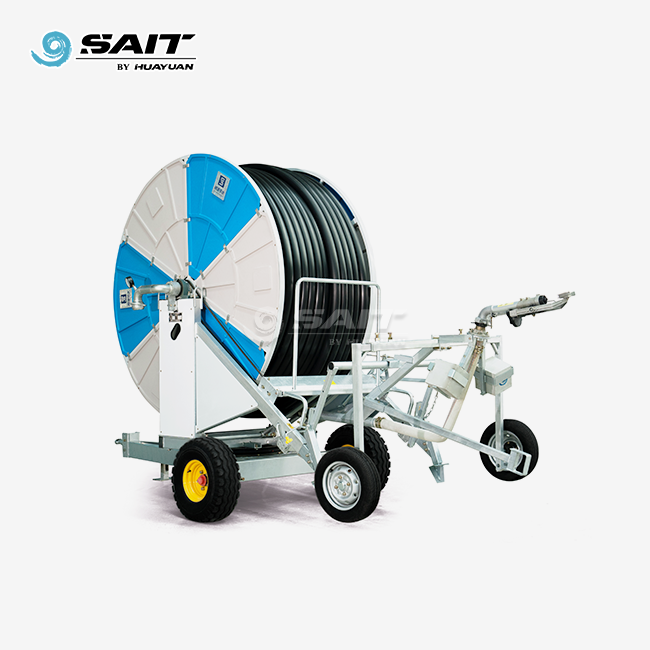
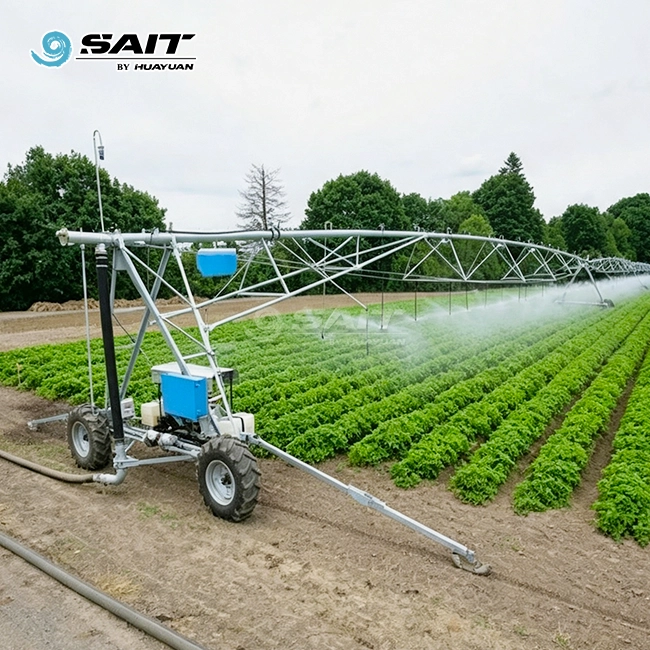
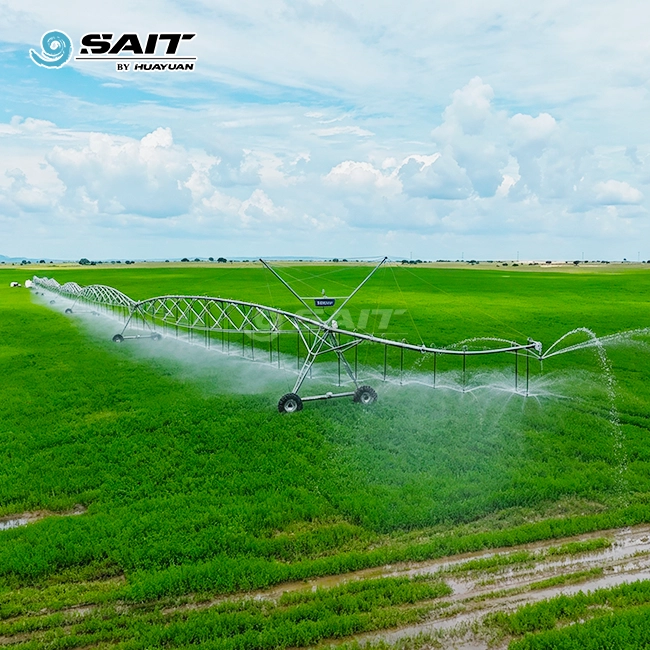
A double swing lateral move irrigator is a machine for watering plants that is made to move straight across rectangular or narrow plots. A normal center pivot rotates in a circle, but this system goes the whole length of a field, then turns 180 degrees at the field edge and goes back along a neighboring lane, watering both ways without having to stop and be repositioned by hand.
How the Swing Mechanism Works
The system can turn at both ends of a driving lane, which is what "double swing" means. The whole lateral span can swing around and realign for the return pass thanks to a special center cart and articulating joint assembly. Modern systems depend on PLC controllers and BDS/GPS dual-mode satellite guidance to perform this transition hands-free, keeping sub-inch tracking accuracy throughout the move.
Key Differences From Single Swing and Traditional Linear Systems
In a traditional linear move, one lane is irrigated, and each end has to be moved by hand. A single swing system can only turn on one end. The twin-span linear double swing configuration gets rid of both of these problems, so one machine can water two neighboring rectangular blocks in a single run. This doubles the amount of land that can be used for farming and greatly reduces the cost of work per hectare.
Core Benefits of Double Swing Linear Irrigation
What this technology does for your field coverage numbers is the best reason to use it. A well-built lateral move irrigator for rectangular areas with a length-to-width ratio greater than 2:1 can usually water more than 98% of the area. The end zones that center pivots can't reach are shown in that figure.
Here are the main benefits this system gives to farms that are run for profit:
- Near-complete field utilization: The system delivers over 98% field coverage, removing the unirrigated corner problem that costs center pivot operators 20–25% of their total field area in lost production.
- Large single-unit capacity: With a maximum machine length of 973 meters and a travel distance of up to 3,000 meters, one unit can irrigate up to 240 hectares—making it viable for operations managing 500+ hectare parcels.
- Fertigation-ready design: The system integrates directly with fertigation equipment, allowing growers of vegetables, grains, sugarcane, and nursery crops to apply water and nutrients in a single pass.
- Multiple guidance options: Furrow guidance, cable guidance, and BDS/GPS dual-mode satellite guidance are all available, giving operators the flexibility to match the guidance method to their field conditions and technical capacity.
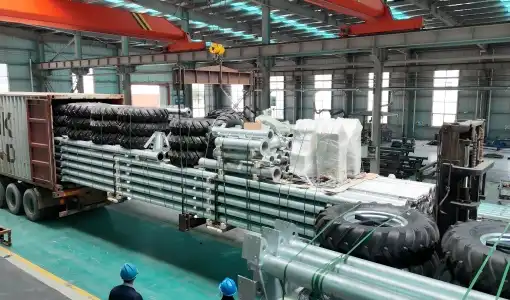
- All-terrain wheel configurations: Wheel sizes including 11.2-24, 14.9-24, and 16.9-24 in both tubeless and tubed formats allow the system to operate across varying soil moisture and terrain conditions without bogging.
These benefits directly fix the problems of lost production and inefficient use of labor that come up in businesses that still use center pivots on rectangular ground. When compared to using two separate pivot systems, the cost per irrigated hectare goes down significantly when one machine automatically covers two lanes next to each other.
Comparing Double Swing Linear Irrigation With Alternative Systems
Center Pivot vs. Lateral Move
When the field is square or almost square, center pivots work well. When used on rectangular plots, however, the circular coverage design loses 20–25% of the total field area in parts that aren't watered. That waste is completely gone with a twin-span linear horizontal move method. A lateral move is better for fields with a length-to-width ratio of more than 2:1 because it saves more water per hectare, according to research from the USDA on irrigation efficiency.
Traditional Linear vs. Double Swing


A standard linear move covers a single lane well, but each end has to be repositioned by hand, which adds to the work and raises the risk of getting it out of alignment. That step is taken away by the double swing configuration. One machine can cover two lanes per cycle, and automated end-of-field changes mean that a skilled operator is not needed for each pass, which lowers the annual running costs per acre.
Drip Irrigation Comparison
Drip systems are very good at using water efficiently on some crops, but they cost a lot to put per hectare and are hard to move when the owner of the land changes. Lateral move systems, on the other hand, can be moved between leased areas, which is a big plus for contract farming businesses that are in charge of several short-term sites.
Selecting and Procuring the Right Double Swing Linear Irrigation System
Technical Specifications to Evaluate
Buyers can choose from span lengths of 37.5m, 43.3m, 49.1m, and 54.9m to match the system setup to the width of the field. Different flow rate needs can be met by main pipes with sizes of 168mm and 219mm. Overhang lengths of 2.7m to 25m give you more reach when the limit conditions aren't straight. It's also important for buyers to make sure that the center cart position (end part or middle) fits the shape of their field.
Power and Water Supply Configuration
The system has three power options: a towed cable, a generator, and two water supply modes: canal water supply and drag hose water supply. Because it has a generator, the system can work on its own in remote areas of the CIS or sub-Saharan Africa that don't have access to the power grid. The part of the buying process that is most site-specific is choosing the right mix of power and water supplies.
Manufacturer Reliability and After-Sales Support
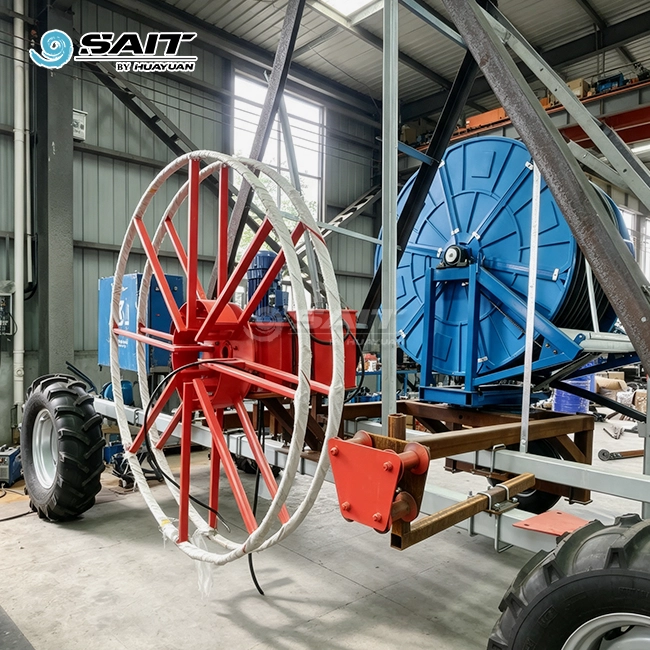
When looking for a double swing linear irrigation provider, service after the sale is just as important as the price. Look for manufacturers that offer on-site installation help, guaranties that parts will be available for more than one year, and the ability to do diagnostics from a distance. In corrosive field settings, systems that are built to ISO 12374 structural standards and have hot-dip galvanized coatings that are thicker than 80μm always do better than options with thinner coatings.
Maximizing Value Through Proper Installation and Maintenance
Site Assessment Before Installation
Before work can start, a full topographic study is needed. The system works best on flat ground. If the ground is sloped above the design limit, the drive unit selection needs to be changed based on the field elevation and the soil's ability to support weight. Most of the time, misaligned guidance happens during the first season of operation because this step is skipped.
Maintenance Schedule for Long-Term Reliability
As part of regular maintenance, the operator manual says to grease the main pivot fittings under high pressure every so often. The swing-limit switches should also be checked once a year, and the main manifold should be tested at 1.5 times working pressure. Drivetrain torque consistency checks make sure that the machine moves evenly even when the soil's moisture level changes during the growing season.
Remote Monitoring and Smart Control
Systems with a remote control electronic module let operators check on the location of machines, the amount of water applied, and fault alerts from their phones. This feature is especially useful for big lots where it's not possible to walk along the whole lateral span to check the view. Real-time data logging also helps with reporting on water audits after the season is over, which is becoming more and more important for government-funded watering programs.
Conclusion
Full rectangular field coverage without corner losses or human repositioning is a realistic issue that double swing linear irrigation answers, while center pivot systems cannot. The technology works well for big rectangular field owners, cooperatives, and government irrigation officials because it can cover more than 98% of the field, has a single-unit capacity of up to 240 hectares, and can be set up with different power and guidance systems to work with different site conditions. If you properly evaluate the site, choose the right specifications, and follow a strict maintenance schedule, the system gives you good long-term returns per hectare.
FAQ
Q1: What crops work best with a lateral move linear irrigator?
Grains, vegetables, sugarcane, potatoes, orchards, and nursery crops all perform well. The system also supports fertigation, making it suitable for high-value cash crops where precise nutrient delivery matters.
Q2: How does the system achieve over 98% field coverage?
The lateral move design travels the full width of a rectangular field in straight passes. The double swing end-of-field pivot eliminates the unirrigated corners inherent in circular pivot systems, bringing total coverage above 98%.
Q3: What guidance options are available?
Furrow guidance, cable guidance, and BDS/GPS dual-mode satellite guidance are available. The satellite option provides hands-free end-of-field transitions with sub-inch tracking accuracy.
Q4: How long does a typical system last?
Systems built with hot-dip galvanized steel above 80μm coating thickness are rated for 20+ years of field service. Annual maintenance of the swing pivot and drivetrain is the primary factor in achieving that service life.
Get a Custom Quote From HUAYUAN SAIT — Double Swing Linear Irrigation Manufacturer
HUAYUAN SAIT has been making double swing linear irrigation systems for more than 20 years. They have more than 130 patents and can make 1,800 units per year. Our systems can be shipped within a week from our facility near Xuzhou, and OEM/ODM configurations are possible. We offer a full guarantee for one year, low-cost parts support for three years, and extra parts at factory cost for life. For a site-specific configuration review, email our expert team at kevin@showyirrigation.com.
References
1. USDA Agricultural Research Service. Irrigation Water Use and Management. 2021.
2. American Society of Agricultural and Biological Engineers. ASAE S366.2: Landscape Irrigation Scheduling and Water Management. 2014.
3. Food and Agriculture Organization of the United Nations. Crop Evapotranspiration: Guidelines for Computing Crop Water Requirements (FAO Irrigation and Drainage Paper 56). 1998.
4. Camp, C.R., Sadler, E.J., & Busscher, W.J. A Comparison of Uniformity Measures for Drip Irrigation Systems. Transactions of the ASAE. 1997.
5. National Research Council. Precision Agriculture in the 21st Century: Geospatial and Information Technologies in Crop Management. National Academies Press. 1997.
6. Irrigation Association. Landscape Irrigation Best Management Practices. 2018.
Get a tailored irrigation solution for your project — our engineering team is ready to support you from design to installation.