How to stop pivot wheels from getting stuck in mud?
If your center pivot keeps stalling mid-cycle, the fix starts before the wheels ever touch saturated ground. The most effective approach combines a boom back dry wheel track solution with proper field management. By redirecting water application behind each drive tower — rather than directly in its path — the soil ahead of the wheels stays firm enough to maintain traction. HUAYUAN SAIT engineers this configuration into every system, ensuring drive units keep moving through clay-heavy soils, post-rain conditions, and high-water-volume Variable Rate Irrigation zones without manual intervention.
Understanding the Problem of Pivot Wheels Getting Stuck in Mud
Why Mud Entrapment Happens
In standard sprinkler setups, center pivot drive towers spray water continuously ahead of their path. This soaks the wheel track right through on heavy clay or silt loam soils, which are typical in the U.S. Corn Belt and Gulf Coast cotton areas. When the earth plasticity index goes over 20, the pulling effect on 14.8-24 or 16.9-24 tires can stop a 1.5hp gearmotor in its tracks, shutting down the whole system.
The Operational Cost of a Stalled Pivot
The USDA's 2022 Farm and Ranch Irrigation Survey says that when an irrigation system breaks down, it costs industrial row crop companies between $180 and $340 per hour in lost crop water and labor to fix the problem. For a farm with more than 500 hectares and several pivots, even one 4-hour stall per week costs more than $35,000 over the course of the season for a fleet of 10 units. Vertisol and Mollisol soil types, which are common in farms in Nebraska, Kansas, and the Mississippi Delta, get very big when they get wet and get deep, sticky ruts when wheels go over them over and over again. On slopes higher than 8–10%, water runoff pools in the wheel tracks, making the problem worse and raising the torque needs of the drivetrain by 30–50% above normal operating levels.
Soil Types That Worsen the Problem
Not all fields carry equal risk. Vertisol and Mollisol soil profiles — prevalent in Nebraska, Kansas, and Mississippi Delta farmland — expand significantly when wet and develop deep, sticky ruts under repeated wheel passes. On slopes exceeding 8–10% grade, water runoff concentrates in wheel tracks, compounding the saturation problem and increasing drivetrain torque demands by 30–50% above normal operating loads.
Traditional Methods vs. Modern Solutions for Mud Traction


They have used dirt wheel pads, tire chains, and wheel weights, among other things. This method mostly deals with the sign or symptom instead of the cause.
Why Traditional Fixes Fall Short
Tire chains temporarily improve grip, but they also speed up the wear on the engine and make it harder to roll on dry roads. Gravel pads need to be replaced every year, cost between $800 and $2,000 per tower position, and still fail after heavy rain. Towing a tractor by hand messes up the schedule for irrigation and needs two-person teams, which adds to the cost of work over the course of a growing season.
What a Dry Track Configuration Actually Does
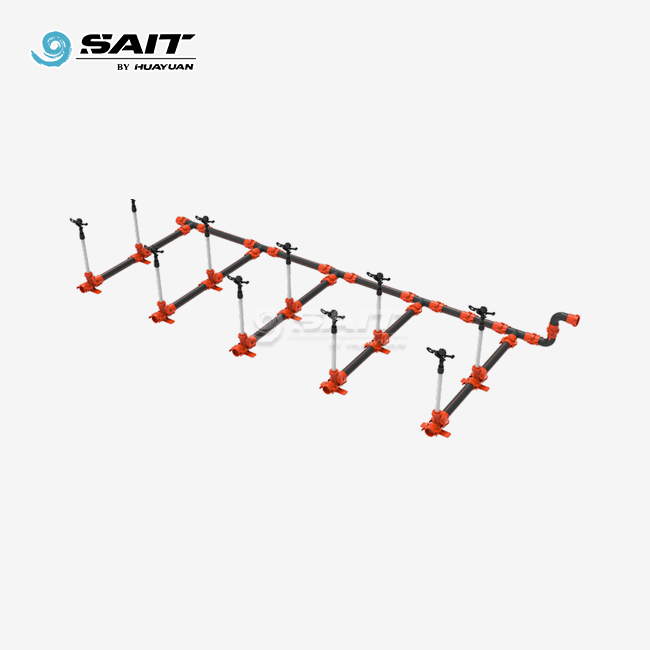
A boom-back pivot system puts directional boom extensions on each drive tower. This turns the water application 180 degrees away from the direction of travel. The water doesn't land in front of the wheels, but behind them. Because of this, the land the tower is about to go over doesn't get any watering flow. The ASABE S398.3 distribution uniformity guidelines show that this design can reduce wheel track depth by 60–80% when it is properly built with the right nozzle spacing and overlap estimates.
HUAYUAN SAIT's Engineering Approach
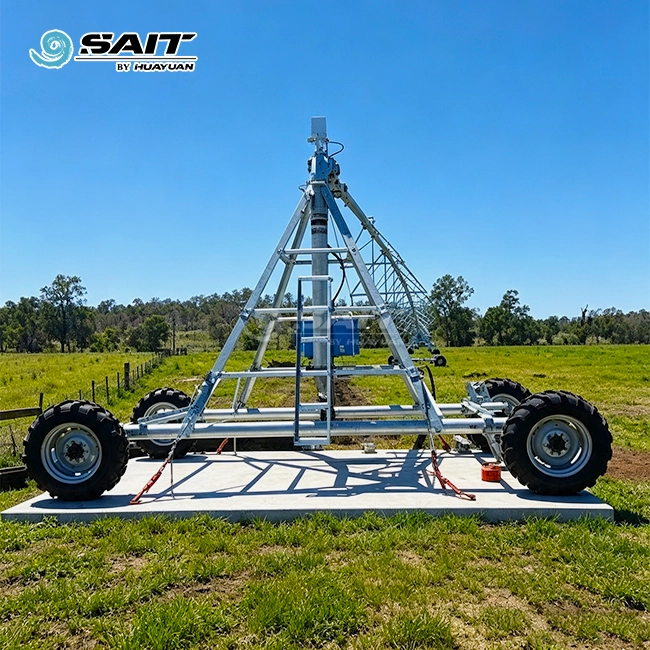
HUAYUAN SAIT uses the SAIT Smart Control System to make sure that the dry track layouts are in line with the rates at which water soaks into the ground. Instead of using a fixed offset distance, SAIT's precise irrigation algorithms figure out when to apply based on the speed of the tower, the type of soil, and the shape of the field. The system can handle span heights between 2.1m and 4.5m in normal, low, high, and ultrahigh profile designs. This gives engineers the room they need to place boom extensions properly no matter how high the crop canopy is.
Key Benefits and Features of Boom Back Dry Wheel Track Solutions
If you choose the right boom-back device, it has many technical benefits besides just keeping your wheels out of the mud.
Structural Durability Built for Long-Term Field Use
The pivot systems made by HUAYUAN SAIT are made of hot-dip galvanized steel that has a zinc coating that is at least 80μm thick. These systems meet ISO 1461 standards for rust protection in chemigation environments. The 20mm and 22mm truss rods and angle framework spread the weight evenly over spans from 37.5m to 66.5m. This structure is meant to last more than 20 years, even when it's used in irrigation water that has been treated with chemicals or in seaside growing areas with a lot of humidity.
At a glance, here are the most important performance metrics for this system:
- Pipeline options: 5" (127mm), 6-5/8" (168mm), and 8-5/8" (219mm) main pipe diameters support projects from 4 to 200 hectares per unit, with a maximum operating radius of 800 meters.
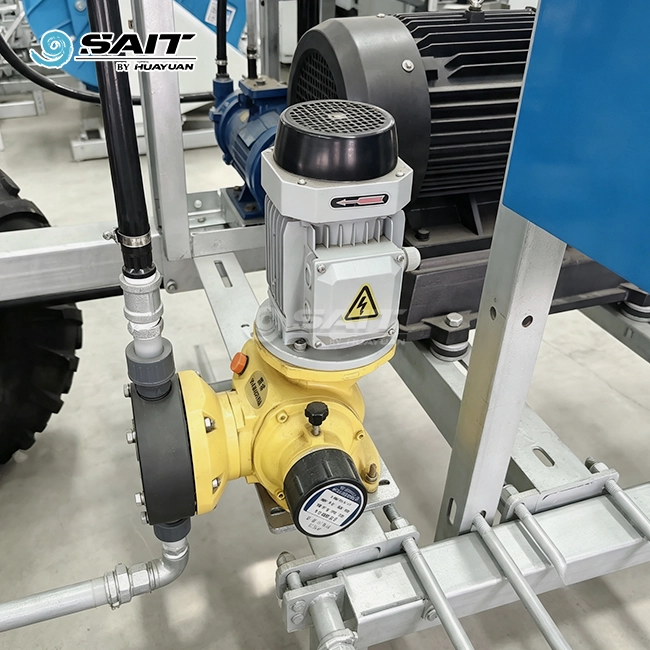
- Wheel and drive specs: Wheel sizes 11.2-24, 14.8-24, and 16.9-24 are available in tube or tubeless configurations; gearmotors operate at 25.5:1 (1.5hp) or 40:1 (0.75hp) with wheel gearbox ratios of 50:1 or 52:1 for terrain-appropriate torque.
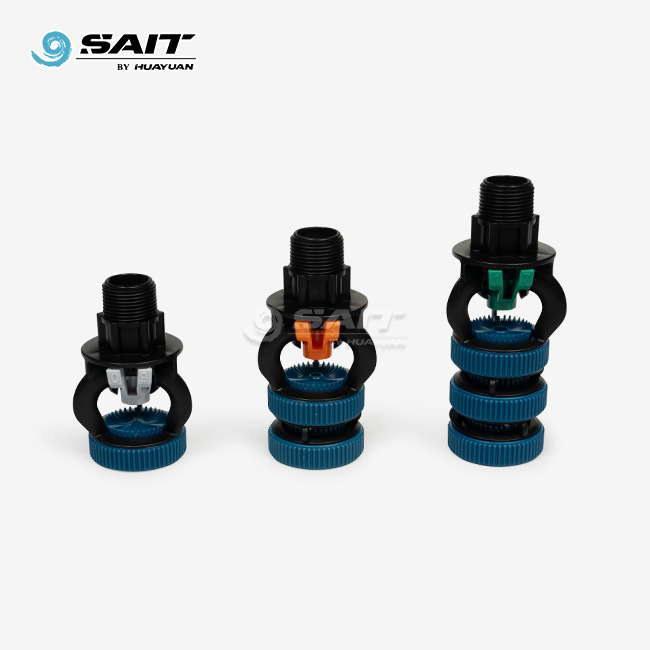
- Sprinkler and outlet flexibility: Outlet spacing of 1.9m or 2.9m (customizable) with multiple sprinkler package options supports site-specific application uniformity targets above 90%.
These factors directly lead to a lower total cost of ownership compared to competitors like Valley or Lindsay. This is especially true for businesses that buy 5 to 20 units per project, where both the cost of capital per unit and the frequency of long-term maintenance are important.
Automation That Reduces Manual Intervention
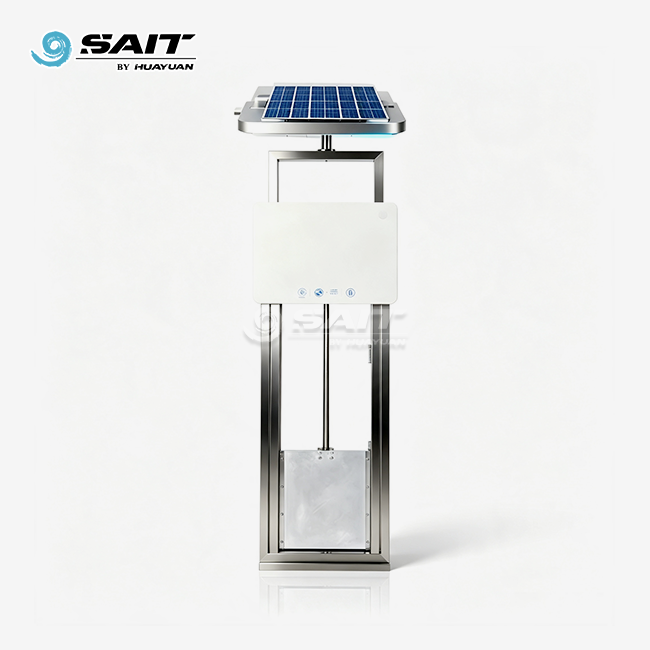
The SAIT Smart Control System can be controlled from afar, can schedule irrigation based on zones, and can use big data models that are built into farm management platforms to support variable rate irrigation. When BeiDou navigation is added, the rate of missed watering in corners drops to less than 5%, which is better than normal GPS-based systems. When the drive towers meet unexpected resistance, the system automatically stops the pivot and sends an alert before a stuck-wheel event damages the gearbox.
Water Efficiency With Measured Returns
HUAYUAN SAIT systems use over 70% less water than traditional flood irrigation. When combined with water-fertilizer operation as a single unit, this efficiency leads to measured lower input costs each growth season. Most businesses get their money back in one to three seasons after upgrading to the boom back dry wheel track solution. This is because they save money on labor costs for towing, don't have to repair their gearboxes as often, and get longer tire service life.
Installation, Maintenance, and Troubleshooting Guide
For this technology to work well in the field, it needs to be installed correctly and inspected regularly.
Step-by-Step Installation Preparation
Before putting up boom extensions, workers in the field should check that the chosen span height matches the highest crop canopy, make sure that the offset distance is between 6 and 15 feet from the main span pipe, and pressure-test the system at 10 to 20 PSI to make sure that the droplet size is the same everywhere. HUAYUAN SAIT oversees installations on-site and makes sure that all tower connections follow UL-listed armored wire standards to make sure they are safe.
Routine Maintenance Protocol
Every year, the clamp torque and fastening tools must be checked to make sure that the bolts stay in place when the span moves. Flushing the boom-end caps on a regular basis gets rid of the sediment that builds up in operations with a lot of chemigation. To make sure the coating is still strong after three to five years, the galvanization thickness should be checked. This is especially important in fields with a lot of fertilizer.
Common Issues and Quick Fixes
If a pivot stops on a dry track, the first thing to check is the accuracy of the pressure control. If the pressure drops below 10 PSI at the boom nozzle, it can cause uneven application, which can wet the forward wheel path. To get the cantilevered arm fixing plate back to ASTM A123 standards, torque it again if the position has moved. If you keep having problems with your drive, you should call HUAYUAN SAIT's technical support before replacing any gearbox parts. Most of the time, reported failures are caused by mounting issues rather than mechanical wear.
Procurement Considerations for Boom Back Dry Wheel Track Solutions
To find the right maker for this kind of system setup, you have to look beyond price lists in catalogs.
Total Cost of Ownership vs. Unit Price
A boom-back pivot system from a company with poor after-sales service may seem cheaper at first, but it will cost you more in the long run. HUAYUAN SAIT provides a full guarantee for one year, low-cost upkeep and part replacement for three years, and forever spare parts supply at factory cost. This promise directly lowers the total cost of ownership estimate for procurement teams handling groups of multiple units.
OEM and Custom Configuration Options
For custom setups like private-label branding, custom paint colors (RAL/Pantone), localized control panel language, and integration with third-party SCADA platforms, HUAYUAN SAIT will take trial orders as low as one unit. The company has been making things for 20 years and can make 1,800 systems a year. Standardized units are sent out within a week from its facility near Xuzhou, which is a logistics hub with direct rail and road freight access to China's main export ports.
What to Verify Before Placing an Order
Procurement teams should ask for proof that the product meets ISO 9001 and ASABE standards, check galvanization thickness certificates to make sure that the minimum thickness is 80μm, and make sure that spare parts will be available for at least 10 years. For U.S. buyers, make sure that the components can work with 3-phase power and are sourced in a way that is approved by the USDA before finalizing the specifications.
Conclusion
Standard sprinkler setups soak the ground right in front of the pivot wheels, which causes them to get stuck in mud. The boom back dry wheel track solution is built on the core idea of changing the direction of water supply behind the drive tower, fixing the problem at its source. This feature is integrated into systems manufactured by HUAYUAN SAIT for business farms, government building projects, and OEM distributors in the US and other countries. This is not a short-term fix; it is a long-term field answer with hot-dip galvanized construction, the SAIT Smart Control System, and full after-sales assistance.
FAQ
Q1: Does a boom-back configuration affect irrigation uniformity?
When properly designed with the right nozzle spacing and overlap estimates, it doesn't have much of an effect on the Coefficient of Uniformity. HUAYUAN SAIT systems always get 85–90% CU, which is in line with ASABE S398.3 industry standards.
Q2: Can this setup be retrofitted to existing pivot systems?
Yes. Universal mounting kits can be used with most major OEM span pipe widths, such as 5", 6-5/8", and 8-5/8" sizes. For retrofits, you don't have to replace the whole system.
Q3: How does the boom-back design handle high winds?
When compared to flexible drop hoses, the low-profile stiff plumbing design reduces swaying caused by wind. This keeps application patterns constant in open field settings where wind loads are common.
Q4: What maintenance does the system require?
Every year, the hardware is checked, the boom-end cap is flushed to get rid of sediment, and the thickness of the galvanization is checked every three to five years. This keeps the system running at its best with little downtime.
Get a Custom Quote from HUAYUAN SAIT — Boom Back Dry Wheel Track Solution Supplier
HUAYUAN SAIT designs and builds designed center pivot systems that will keep your business running, from test projects with a single unit to buying a fleet of 20 units. The company has been making boom back dry wheel track solutions for industrial farming operations in the U.S. for more than 20 years and offers factory-direct prices, full OEM customization, one-week shipping, and reliable products. To get a price for a site-specific setup, email the team at kevin@showyirrigation.com.
References
1. USDA National Agricultural Statistics Service. 2022 Farm and Ranch Irrigation Survey. USDA NASS, 2023.
2. American Society of Agricultural and Biological Engineers. ASABE S398.3: Sprinkler Distributions — Measurement and Reporting. ASABE, 2017.
3. ASTM International. ASTM A123/A123M: Standard Specification for Zinc (Hot-Dip Galvanized) Coatings on Iron and Steel Products. ASTM International, 2022.
4. ISO. ISO 1461: Hot Dip Galvanized Coatings on Fabricated Iron and Steel Articles — Specifications and Test Methods. International Organization for Standardization, 2022.
5. Lamm, F. R., Bordovsky, J. P., & Howell, T. A. Microirrigation for Crop Production: Design, Operation, and Management. Elsevier, 2007.
6. Camp, C. R., & Lamm, F. R. "Irrigation Uniformity and Water Distribution Under Center Pivot Systems." Transactions of the ASABE, Vol. 50, No. 5, 2007, pp. 1635–1644.
Get a tailored irrigation solution for your project — our engineering team is ready to support you from design to installation.