Linear Irrigation Machine improves placement and activation of soil
A linear irrigation machine moves in a straight line across rectangular fields, delivering water with measurable uniformity that directly improves soil placement and activation. When water reaches the root zone at a consistent rate, it dissolves bound nutrients, stimulates microbial communities, and reduces surface compaction — all factors that determine whether a crop thrives or stalls. This guide walks procurement managers, agricultural engineers, and equipment distributors through the mechanics, performance benchmarks, and sourcing criteria that matter most when evaluating lateral move irrigation systems for large-scale commercial farming.
Understanding Linear Irrigation Machines and Their Impact on Soil
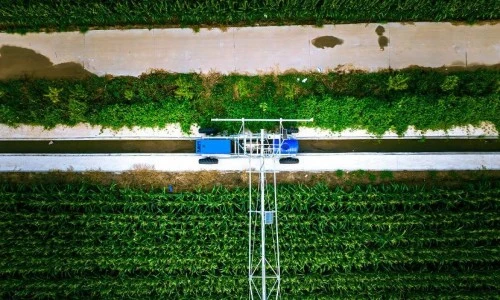
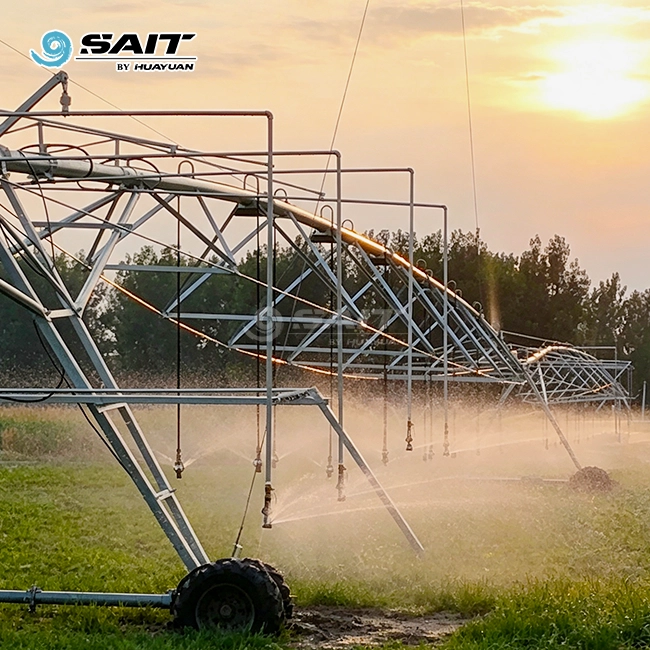
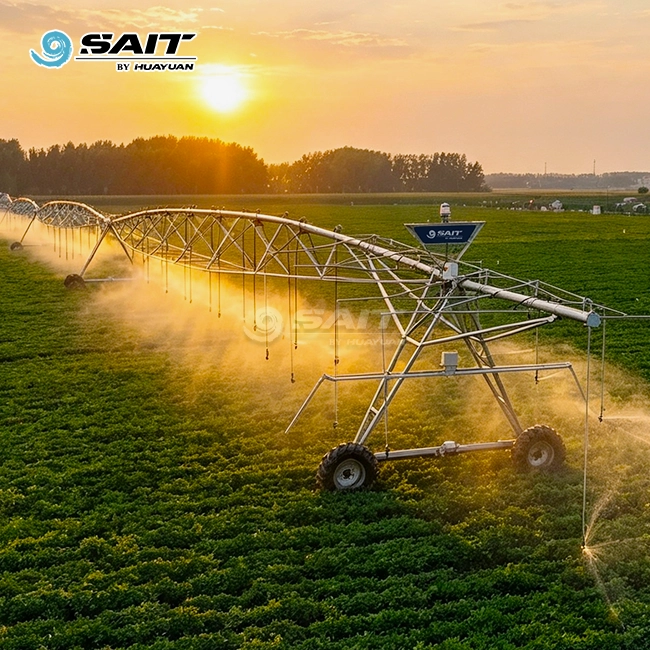
A lateral move irrigation system moves across a field in parallel passes, going against the structure of the system. This motion is very different from a center pivot, which spins around a set point and doesn't water the sides. The method keeps the soil's wetness level in the right range for enzyme activity and nutrient solubility by applying the same amount of material across the whole width of a rectangular plot, supported by a media filter to ensure water quality.
How Uniform Moisture Drives Soil Activation
According to a study published in Agricultural Water Management in 2021, even spread of water in the soil raises the amount of carbon in the soil by up to 23% compared to uneven flood irrigation. Nitrogen-fixing bacteria and mycorrhizal fungi colonize the root zone more densely when water spreads out evenly. This speeds up the breakdown of organic matter and makes phosphorus available to plants more quickly. A horizontal move system has a Coefficient of Uniformity above 90%, which means that this biological window stays open all through the growing season.
Field Coverage and Land Utilization
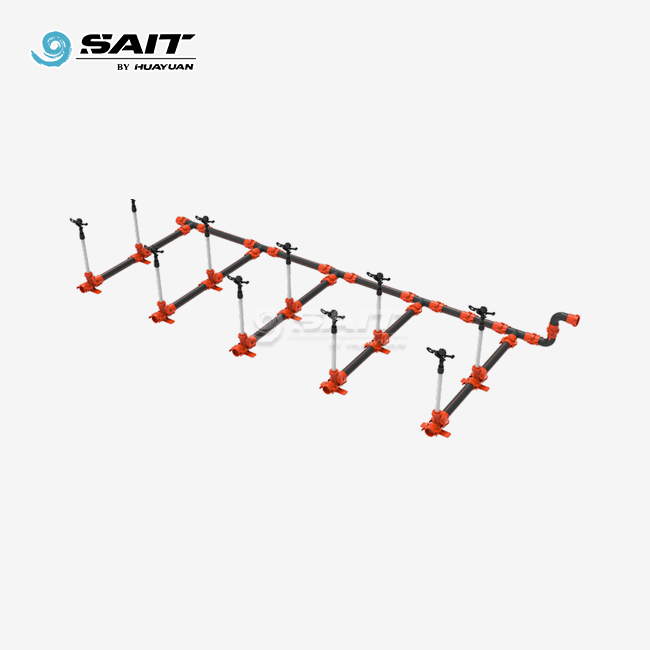
HUAYUAN SAIT's lateral move systems cover more than 98% of the field, which gets rid of the waste that comes with circular pivot irrigation in the corners. The longest machine can be 973 meters long, and it can move up to 3,000 meters. One unit can water up to 240 hectares. The span lengths can be set to 37.5 m, 43.3 m, 49.1 m, or 54.9 m, and the system works with both canal water supply and drag hose water supply, so operators can choose which method of water supply to use based on their needs.
Performance Comparison: Linear Irrigation vs. Other Technologies
It's not always easy to choose between different irrigation technologies. Each system has pros and cons when it comes to how well land is used, how much water it uses, how much automation it has, and how well the soil is taken care of. Procurement teams can justify the investment by knowing where lateral move systems and a high-efficiency media filter work better than other options.
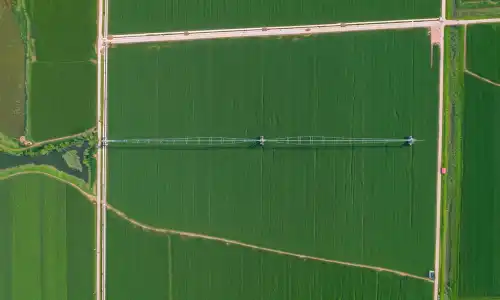
Here is a straight comparison of the four most popular types of commercial irrigation:
- Center pivot vs. lateral move: A center pivot waters a circle but not all of a square field (about 21%). Over 98% of rectangular plots can be covered by a lateral move system. This makes it the best choice for fields with a length-to-width ratio greater than 2:1. People who grow potatoes and sugar beets in the U.S. Great Plains say they were able to measurably increase yields by getting rid of corner areas that didn't get any water before.
- Drip irrigation vs. lateral move: Drip systems send water directly to the roots, but they need a lot of infrastructure below the ground that is hard to change or move. Lateral move systems are just as good at using water for row crops as other systems. They also support fertigation through the mainline, which lets soluble fertilizers be pumped evenly. This directly improves soil nutrient action without the need for extra tools.
- Traditional sprinkler vs. lateral move: set-intensity sprinkler systems apply water at set rates that may be higher than the rate at which the soil can absorb it, leading to surface runoff and compaction. A moving lateral system applies water with less force at any given time, which stops crusts from forming and makes the soil more permeable over time.
When looking at the total cost of ownership, these differences become very important. A lateral move system costs more per acre than a center pivot on circular fields, but it makes more money on rectangular plots by getting rid of land that isn't being used and supporting high-value cash crops like orchard crops, vegetables, and sugarcane.
Installation, Maintenance, and Optimization for Soil Health
The benefits this technology offers for the land can't happen without proper commissioning. No matter what its specs say, a system that isn't level, doesn't have the right nozzles, or lacks a cleaned media filter will not work as well as it should.
Guidance System Calibration
There are three types of guidance that HUAYUAN SAIT systems can use: cable guidance, furrow guidance, and BDS/GPS dual-mode satellite guidance. For big jobs that need sub-inch tracking accuracy, satellite guidance gets rid of the need to prepare the trench physically and cuts down on the work that technicians have to do during the yearly setup. Each guidance mode needs to be calibrated against a particular field boundary. HUAYUAN SAIT delivers every unit with expert support and on-site installation help.
Routine Maintenance Practices
A simple maintenance plan keeps the quality of the soil application over the life of the machine. Industry norms say that the lube should be checked every growth season and the gearbox oil should be changed every 1,000 hours of use. The HUAYUAN SAIT water turbine's 4-speed gearbox has carefully made gears that don't wear out easily. These gears keep the speed stable even when the load changes, which lowers the number of unexpected stops. The company's own-made virgin PE pipes are thicker than the industry standard and don't contain any recycled material. They don't age or break when put under constant operating pressure, so the distribution stays the same across multiple seasons.
Every system from HUAYUAN SAIT comes with a full guarantee for one year, low-cost upkeep and parts replacement for three years, and spare parts for life at the factory cost price. This promise directly lowers the lifetime risk that makes buying teams hesitant to buy complicated systems that move.
Procurement Considerations for B2B Clients
When looking for a lateral move irrigation system, you need to think about a lot more than just the unit price. Whether or not the investment achieves the desired agronomic result depends on how flexible the configuration is, how deep the supplier's manufacturing capabilities are, and the expert capacity available after the sale of the media filter and machine.
HUAYUAN SAIT has been making direct-factory linear irrigation machines for 20 years and has over 130 patents, including 35 invention patents and 15 foreign patents developed through an active research and development relationship with China Agricultural University. This level of engineering skill gives wholesalers and project creators buying benefits, which they can use:
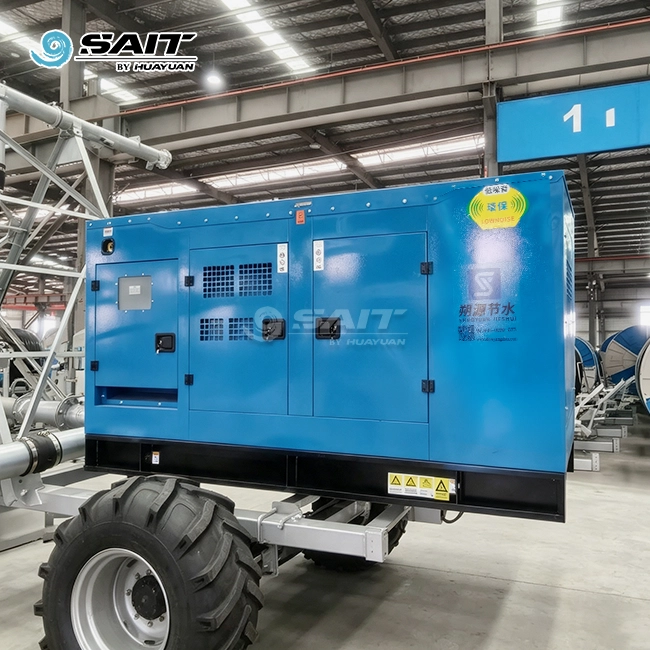
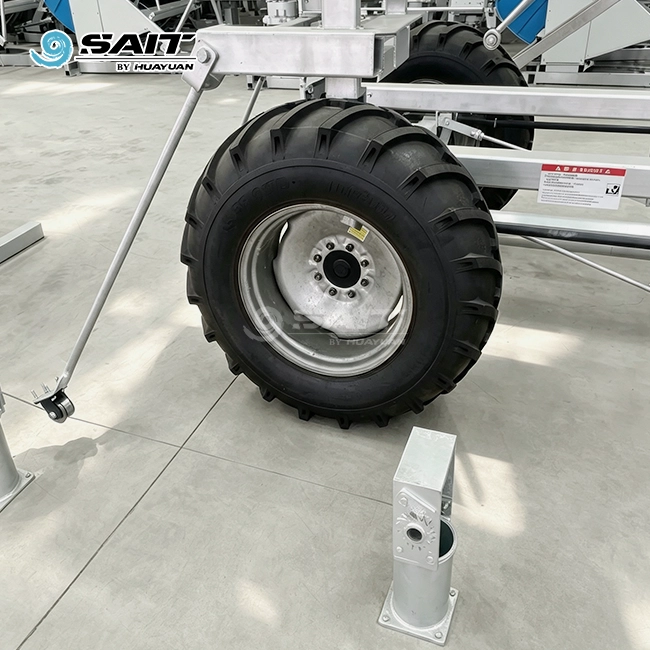
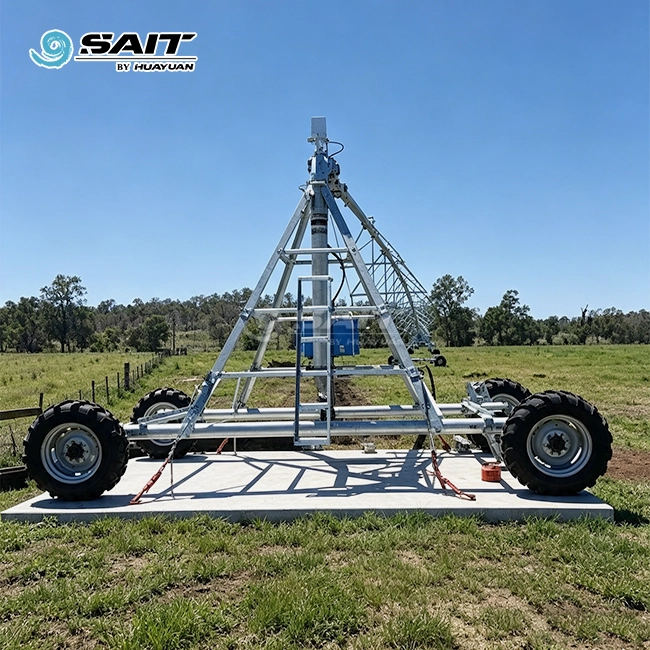
- Modular configuration: Power supply options include a towed cable and a generator for modular configuration. Wheels come in sizes 11.2-24, 14.9-24, and 16.9-24, and can be tubeless or tubed. There are two types of span height: normal and high-clearance. Because it is modular, a single platform can be used in a variety of field conditions without having to wait for custom fabrication lead times.
- OEM and ODM capability: drive units, control panels, and steering systems can all be fully integrated under a private name. Uneven field edges can be accommodated by custom span lengths, and the first test order can be as small as one unit. Custom drive unit designs can be made and shipped in 30 to 45 days.
- Hot-dip galvanized steel over 80 μm: This standard for corrosion protection goes beyond what is required by ASTM A123. It keeps structures strong in high-humidity, high-salinity, and desert environments, and it can work in temperatures ranging from -20°C to 60°C.
- Delivery advantage: HUAYUAN SAIT ships within one week thanks to a hub-level logistics network that cuts down on freight costs and transit times for both domestic and international orders. The company is located in the Huaihai Economic Zone, close to Xuzhou.
These features work together to fix the two most common problems people have when buying lateral move systems: setting them up can be hard, and there are times when they don't have enough help after they're installed.
Case Studies and Future Prospects in Soil Activation Through Linear Irrigation
A cooperative that managed adjacent rectangular parcels in an area with limited water cut the amount of irrigation water used by 30% when they switched from flood irrigation to a lateral move system. They also saw a 17% increase in potato yield, which was due to more stable soil moisture, effective media filter management, and better plant uptake of nutrients. Contract farmers in the CIS region have used diesel-generator-powered HUAYUAN SAIT units on state farm fields that are 500 hectares or more. This allowed for stable spring deployment after winter pre-delivery, which didn't require any changes to the field infrastructure.
Looking ahead, Internet of Things (IoT)-enabled soil moisture monitors that are directly connected to the electronic control system will let the application rate be changed in real time based on what's happening in the field instead of following a set of instructions. HUAYUAN SAIT's platform is already ready for this change thanks to its BDS/GPS dual-mode satellite guidance, and users can check on machines' state remotely through the SAIT platform.
Conclusion
A well-designed lateral move irrigation system does more than just deliver water; it also creates the exact, uniform moisture environment that supports crop production across every square meter of a rectangular field, turns on soil biology, and keeps fertilizer cycling stable through a reliable media filter. HUAYUAN SAIT has been making products for 20 years and has a modular platform architecture and a full after-sales structure. This makes it a technically sound and commercially reliable source for operations ranging from single-field pilots to cooperative deployments involving multiple units.
FAQ
1. Why is a lateral move system better for the health of the soil than a center pivot?
A lateral move system evenly spreads water across the whole width of a rectangular field. This keeps the soil's moisture level more regularly within the biological activation range than a pivot system, which can't reach the ends of the field and spreads water at different rates around different radii, even when utilizing a media filter.
2. Can this system support fertigation?
Yes. HUAYUAN SAIT's lateral move systems include fertigation through the pipeline. This lets soluble fertilizers be spread evenly with the irrigation water, which directly increases the supply of nutrients in the soil at the root zone.
3. How does satellite guidance improve field performance?
The BDS/GPS dual-mode guidance keeps the tracking accuracy at less than an inch without having to physically prepare the trench. This cuts down on setup time and makes sure the machine stays on a straight path across fields up to 3,000 m long.
4. How often do workers need to do maintenance?
Every growing season, the lubricant is checked, and the gearbox oil is changed after 1,000 hours of use. This keeps the drive system within the manufacturer's limits and the application constant.
5. Is the machine relocatable between fields?
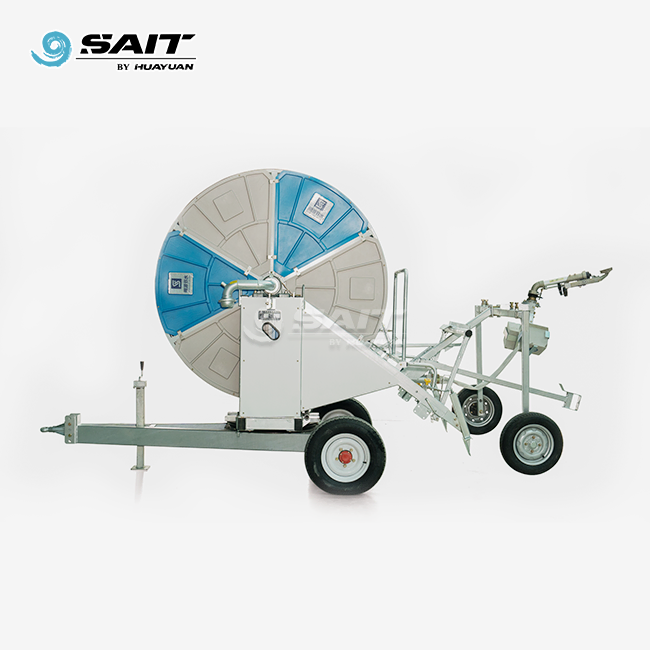
The swing-around linear irrigation type lets the machine be turned around and pulled to a nearby plot, which makes it good for contract farming businesses that are in charge of several leased land plots.
Partner with HUAYUAN SAIT for Your Next Linear Irrigation Machine Project
HUAYUAN SAIT offers factory-direct solutions for linear irrigation machines. They have been making machines for 20 years, have more than 130 patents, and can do full OEM work. Our team can help you with site-specific configuration, on-site installation support, and long-term parts availability, whether you need a single demonstration unit or a project supply of multiple units. To get a field coverage study, media filter specification, and project quote right away, email our technology team at kevin@showyirrigation.com.
References
1. Schimel, J. P., & Schaeffer, S. M. (2012). Microbial control over carbon cycling in soil.
2. Shock, C. C., & Welch, T. (2011). Drip irrigation: An introduction. Oregon State University Extension Service.
3. Evans, R. G., & Sadler, E. J. (2008). Methods and technologies to improve efficiency of water use. Water Resources Research, 44(7).
4. American Galvanizers Association. (2023). Hot-dip galvanized steel over 80 μm: A guide for specifiers.
5. Pereira, L. S., Oweis, T., & Zairi, A. (2002). Irrigation management under water scarcity.
6. Camp, C. R., Sadler, E. J., & Yoder, R. E. (Eds.). (1996). Evapotranspiration and irrigation scheduling. American Society of Agricultural Engineers.
Get a tailored irrigation solution for your project — our engineering team is ready to support you from design to installation.