How does center pivot irrigation work
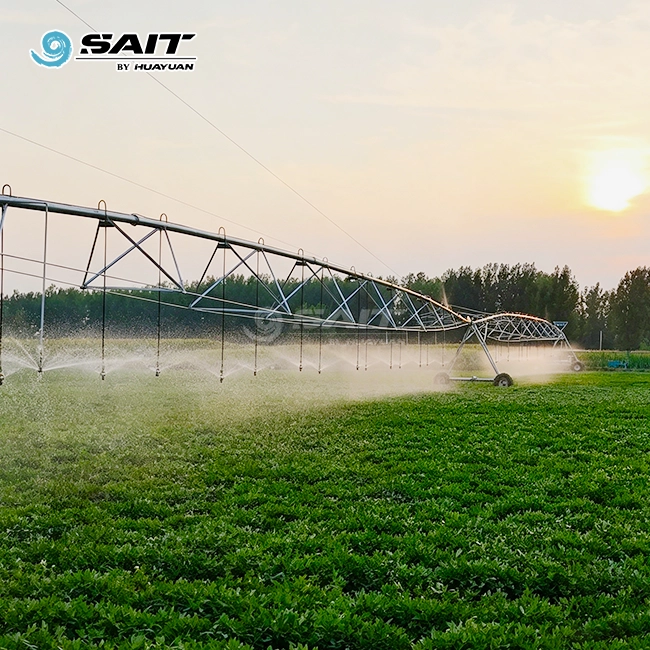
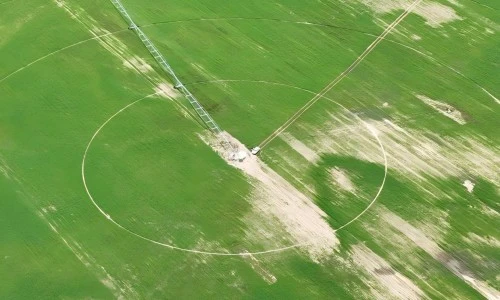
A center pivot irrigation machine works by rotating a water-carrying pipeline—supported by a series of motor-driven towers—around a fixed central pivot point. Water flows from a ground-level source through the central pivot, travels along the suspended pipe, and discharges through precision nozzles spaced along the entire span. As each tower moves in a coordinated arc, the system traces a circular pattern across the field. Modern pivot irrigation integrates automated controls, variable rate delivery, and real-time monitoring to achieve uniform water application across fields ranging from 4 to 200 hectares per unit.
What Is Center Pivot Irrigation and How Does It Work?
The Core Operating Principle
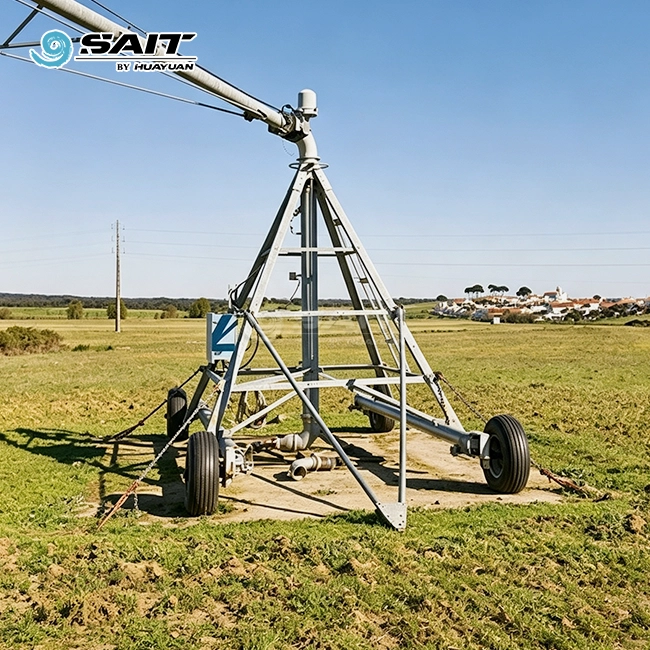
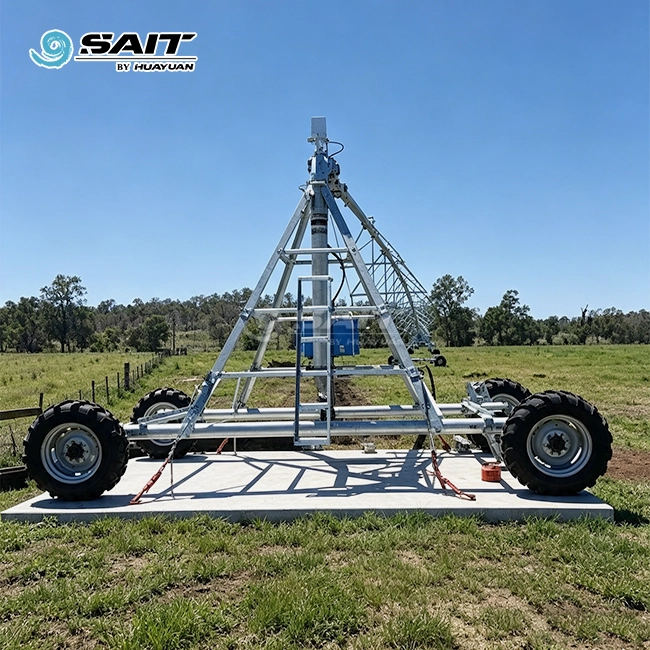
The pipeline system is supported by wheeled towers that are spread out in a regular pattern. There is an electric gearmotor in each tower that moves the wheel hub and moves the span in a continuous loop. A safety alignment system, which can be a micro-switch or GPS-guided, keeps each tower in sync with the span next to it. This keeps the center pivot irrigation Machine from bowing or being stressed. At the pivot point, water comes in from a well, a canal, or a mainline with high pressure. The water then flows outward through the pipe and out of the crop canopy through calibrated nozzles.
Key Structural Components
How reliable the system is depends on how well its structural and mechanical parts are made. Every purchase expert needs to know about these main assemblies:
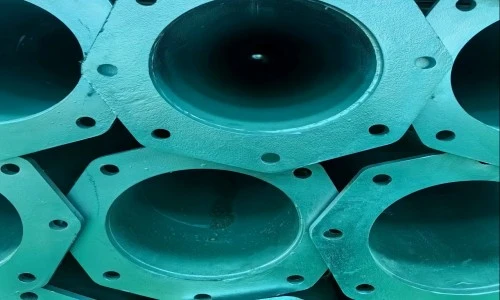
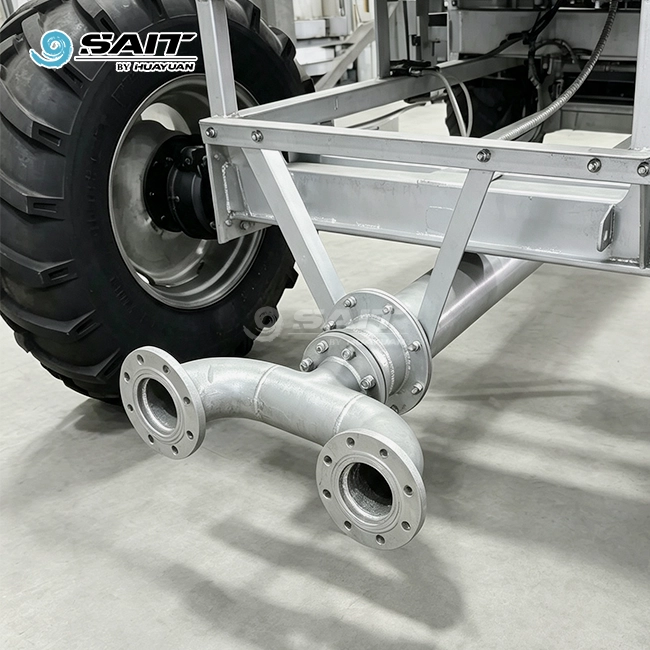
- Main pipeline: HUAYUAN SAIT has three standard pipe diameters: 5" (127mm), 6-5/8" (168mm), and 8-5/8" (219mm). All of them are made of hot-dip galvanized steel with a zinc coating of at least 80μm, which makes them resistant to corrosion in harsh outdoor environments and gives them a design service life of more than 20 years.
- Span and truss assembly: The six span lengths (37.5m to 66.5m) can be chosen. They use a precision-engineered truss rod and angle framework (with 20mm or 22mm truss rod diameters) that spreads the load evenly and keeps the structure from bowing, even at its largest operating radius of 800 meters.
- Drive towers: Gearmotors with ratios of 25.5:1 (1.5hp) or 40:1 (0.75hp) pair with wheel gearboxes with ratios of 50:1 or 52:1. Wheels come in three sizes (11.2-24, 14.8-24, and 16.9-24) and with or without tubes, so they can be used on soft, muddy, or packed-down surfaces.
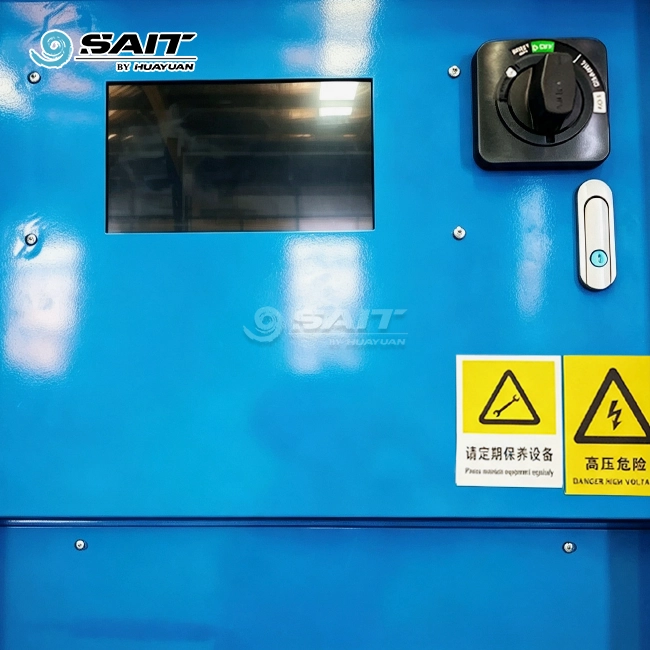
- SAIT Smart Control System: The control panel handles remote scheduling, zone-based delivery, and variable rate irrigation (VRI) through big data models and cloud connection, making sure that more than 90% of the land is watered at the same rate.
These parts work together to get rid of the uneven application rates that come with flood irrigation and to make drip systems smaller in terms of the infrastructure they need.
Benefits of Using Center Pivot Irrigation for Large-Scale Agriculture
Water Efficiency and Yield Impact
A modern center pivot irrigation machine saves more than 70% of water per irrigation cycle compared to flood irrigation. Agricultural Water Management (Shock & Welch, 2011) published research that showed sprinkler-based overhead systems consistently do a better job of applying water evenly than surface irrigation. This leads to higher crop yields and less nutrient loss.
The SAIT precision system changes the rate of delivery based on data from measuring how much water is absorbed by the soil. This way, the water is applied exactly where it is needed, rather than being spread out at a constant rate across the whole field. The ability to do integrated fertigation, which mixes water and dissolved nutrients in one pass, lowers input costs and raises crop yields.
Automation and Labor Reduction
Through the SAIT platform, one user can control multiple pivot units from afar, setting up start/stop cycles, changing irrigation zones, and getting fault reports without having to go into the field. Large business operations that take care of 500 hectares or more and government-run state farms where casual workers are hard to find will benefit the most from this level of automation.
The system can be set up in normal, low, high, and ultrahigh profile options with span heights of 2.1m, 2.9m, 3.8m, and 4.5m. It can handle row crops, sugar cane, tall-growing corn, and high-clearance biofuel plantations without any structural changes.
Key Factors in Selecting and Designing a Center Pivot Irrigation System
Site Assessment and Configuration Planning
The right span length, nozzle package, and outlet spacing (1.9m or 2.9m, adjustable) depend on the type of soil, how hydraulically conductive it is, and the shape of the field. Soils that are sandy need to be applied more often, but with smaller amounts. Soils that are clay-heavy can handle slower infiltration rates but could experience runoff if the application rate is not estimated correctly.
A corner arm attachment is very helpful for fields with irregular or square edges. Through GPS-guided arm deployment, HUAYUAN SAIT's Corner Arm System expands the irrigated area into field corners, reclaiming up to 15% more irrigable area than normal circle coverage. This fixes one of the most persistent layout problems in Linear Irrigation Machine design.
Financial and TCO Considerations
A total cost of ownership (TCO) analysis should look at the initial investment, the amount of energy used each year, the labor needed for maintenance, and how often parts need to be replaced. HUAYUAN SAIT offers an organized after-sales system to help buyers make choices. This includes a full guarantee for one year, low-cost upkeep and part replacement for three years, and lifelong factory-cost spare part supply. The factory has been making systems for more than 20 years and follows ISO 9001 standards. For standard configurations, systems are delivered within a week, which is much shorter than the usual lead time for this type of equipment.
Center Pivot Irrigation vs. Other Irrigation Systems: A Comparison for Procurement Decisions
System-to-System Performance Comparison
When procurement professionals look at mechanized irrigation, they have to choose between a number of different technologies. Drip irrigation delivers water precisely to the root zone, but it costs a lot more per acre to set up and needs clean water filters to keep the emitters from getting clogged. Center pivot irrigation machines are good at covering rectangular areas, but they need flat, straight land and more complicated water supply systems. Flood irrigation is still the cheapest way to get started, but it wastes the most water and makes crop stands that are very uneven.
Center pivot systems are the best choice for fields that are between 50 and 200 hectares because they have a Coefficient of Uniformity (CU) of more than 90%, low upkeep needs, and can be used with both fertigation and VRI upgrades.
Competitive Supplier Landscape
Valley, Lindsay, and Reinke are all well-known North American brands with strong networks of dealers in their home countries. HUAYUAN SAIT competes on the level of engineered customization and lower total cost. While standard catalog suppliers only offer fixed configurations, HUAYUAN SAIT's in-house engineering team can create custom tower heights between 2.1m and 4.5m, configure the spans to fit the site, and brand the SAIT software interface for OEM clients. These are all features that generalist suppliers don't offer at comparable prices. Direct plant supply gets rid of markups by middlemen, and Suzhou's closeness to the Xuzhou logistics hub makes foreign shipping cheap and reliable.
Maintenance, Troubleshooting, and Latest Technology Trends
Preventive Maintenance Priorities
Basic upkeep for long-lasting drivetrain performance includes changing the oil in the gearbox once a year and greasing all movable parts before the season starts. Gearboxes that are rated for 10,000 hours or more of use keep the torque constant even when the field is muddy. Specifications for armored, UL-listed cables keep electrical circuits safe from damage and water damage across the whole length of the Linear Irrigation Machine.
Wheel slips, which happen a lot when the ground is wet, can cause the motor to stop running too soon. The SAIT control system has anti-stall software that checks for wheel slip in real time and changes the speed or direction of the tower to stop deep rutting. There are high-flotation tire options (14.8-24 and 16.9-24) that help spread out ground pressure even more in areas with soft soil.
Emerging Technology Integration
When BeiDou navigation is added, corner watering gaps are filled so that the missed-area rate drops below 5%. This is a level of performance that GPS-only systems rarely reach. Telemetry that is connected to the Internet of Things (IoT) sends practical data to cloud screens. From there, agronomists and farm managers can use the data to plan when to water crops based on weather forecasts and soil sensor feeds. With this combination, pivot irrigation is no longer just a technical way to deliver water; it is now part of a larger platform for precision agriculture.
Conclusion
Center Pivot irrigation machine technology has changed from a system of mechanical sprinklers to a smart, data-connected system for managing resources. Choosing the right system setup and manufacturer partner has a big impact on the long-term value and operating performance of procurement teams that are in charge of large-scale row crop operations, government food security programs, or EPC-designed irrigation infrastructure. HUAYUAN SAIT has been making things for 20 years, has more than 130 patents, and lets OEMs make changes to their products so that they work in the real world, not just in a catalog. You should work with a person who builds to your needs, not the other way around.
FAQ
1. How much water does a center pivot system save compared to flood irrigation?
A well-set-up Center Pivot Irrigation Machine saves more than 70% more water than traditional flood irrigation because it delivers water directly above the crop canopy at rates that are designed to match the soil's ability to soak it up. When application uniformity is above 90%, there is no need for over-watering, as there is with flood methods to make up for uneven distribution.
2. Which crops are most suitable for center pivot irrigation?
Corn, soybeans, wheat, cotton, sugar cane, and biofuel feedstocks are just some of the crops that can grow in this system. High-clearance configurations with span heights of up to 4.5m can handle crops that grow tall without damaging the canopy when they are rotated.
3. Can center pivot systems handle irregular or square field shapes?
Yes, corner arm attachments use GPS to extend the irrigated area into field corners, bringing back up to 15% of the area that a regular circular pivot would miss. Overhang lengths can be customized from 2.7m to 25m to improve area coverage even more.
4. What certifications should buyers verify before procurement?
Check that the product meets ISO 9001, ASABE structural standards, and UL-listed wire requirements for the U.S. market. For international buyers, they should make sure that the product has the right regional approvals (GOST for CIS countries and SASO for the Middle East) and ask for proof that the zinc coating is at least 80μm thick, as required by ASTM A123.
5. What is the minimum order quantity for custom configurations?
HUAYUAN SAIT will take trial orders from a single unit for unique designs such as span lengths, profile heights, branded control screens, and private-label tower assemblies that are not standard.
Get Your Custom Center Pivot Irrigation Quote from HUAYUAN SAIT
Instead of off-the-shelf compromises, HUAYUAN SAIT builds engineered center pivot irrigation machines that are tailored to your specific field needs. We are a reliable pivot irrigation maker with more than 130 patents, 20 years of experience, and direct factory prices. We can help with projects that need anywhere from a single pilot unit to bulk purchases of 5 to 20 units. To get a price for a site-specific setup right away, email our technical team at kevin@showyirrigation.com.
References
1. Shock, C. C., & Welch, T. (2011). Drip irrigation: An introduction. Oregon State University Extension Service.
2. Evans, R. G., & King, B. A. (2012). Site-specific sprinkler irrigation in a water-limited future. Transactions of the ASABE, 55(2), 493–504.
3. Hedley, C. B., & Yule, I. J. (2009). Soil water status mapping and two variable-rate irrigation scenarios. Precision Agriculture, 10(4), 342–355.
4. Camp, C. R., Sadler, E. J., & Bauer, P. J. (1997). Comparison of uniformity measures for center pivot irrigation systems.
5. USDA Economic Research Service. (2019). Irrigation & Water Use. United States Department of Agriculture.
6. Lyle, W. M., & Bordovsky, J. P. (1981). Low energy precision application (LEPA) irrigation system.
Get a tailored irrigation solution for your project — our engineering team is ready to support you from design to installation.