How to Choose the Best Travelling Irrigator
Choosing the best travelling irrigator starts with understanding what your operation actually demands. A travelling irrigator is a self-propelled hose reel irrigation system that moves across a field in a straight line, retracting a high-density PE pipe while a spray gun or boom delivers water uniformly across the crop. Compared to fixed sprinkler grids or manual pipe-shifting, these machines cut labor costs significantly, deliver measurable water savings exceeding 50%, and adapt to irregular terrain. This guide walks you through every decision point — from drive type and pipe specs to brand evaluation and media filter maintenance.
Understanding Travelling Irrigators and Their Benefits
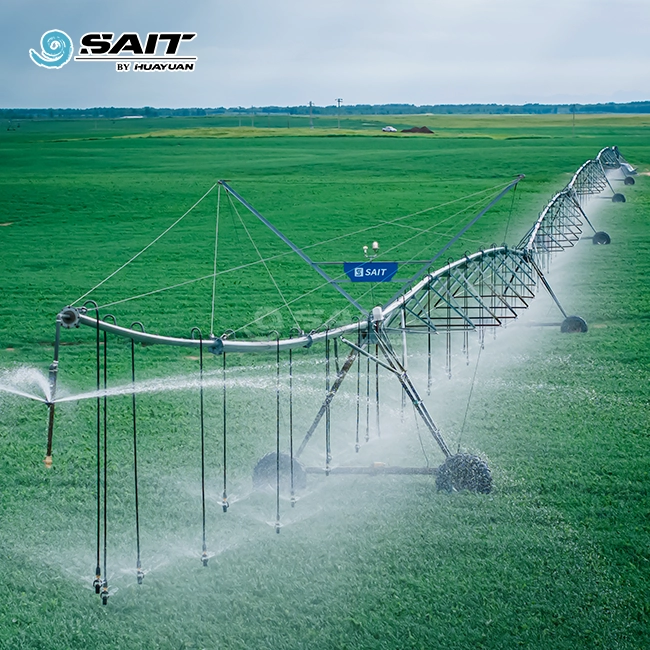
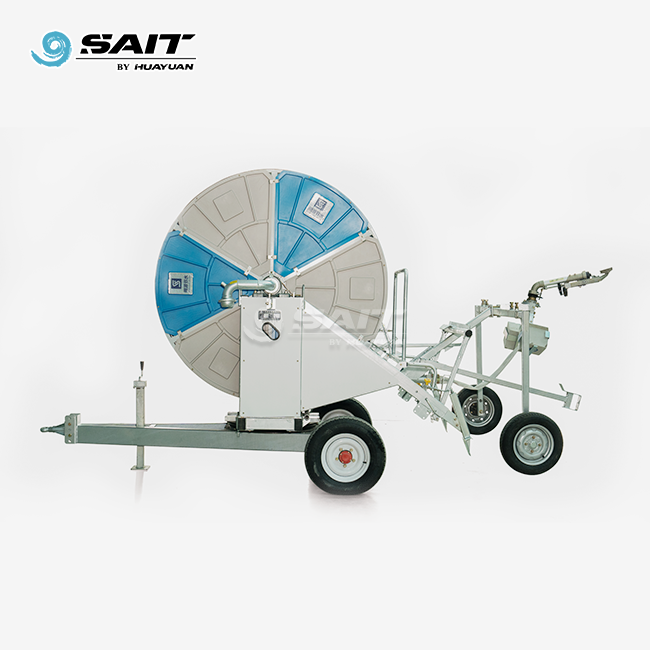
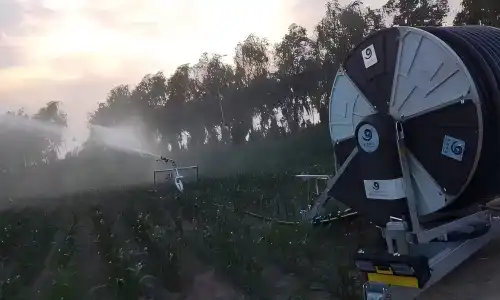
The basic idea behind a modern hose reel irrigator is simple: pressurized water comes in through a PE pipe wound on a drum, which powers a turbine or electric motor to pull the hose back at a controlled speed and feed a spray gun or boom that spreads water across the crop canopy. The speed of the retractor directly affects the depth of the irrigation. Slower travel means more water per square meter, and workers can change this quantity in real time.
Key Components That Determine Performance
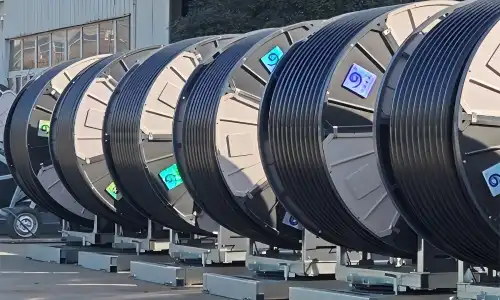
Three parts are mostly responsible for efficiency. The PE pipe must be able to withstand damage from UV light, stress, and freezing for more than 15 years if it is stored properly. Off-grid power and speed stability depend on the type of drive system used, such as a turbine, an electric motor, or a mechanical one. The size of the droplets, throw distance, and sensitivity to wind are all controlled by the spray gun or boom extension. The JP-75 and JP-90 lines from HUAYUAN SAIT have spray lengths of 24 to 46 meters and irrigation widths of 43 to 78 meters, which means they can water more than 1.33 hectares per cycle.
A well-designed machine can move pipes without taking hours of work, lower runoff by breaking up small droplets, and connect to existing pump systems without needing major civil works. This ability to be moved around is not just a convenience for medium-sized farms with 50 to 200 hectares of land or for service providers who manage multiple sites; it is a key operational benefit.
Key Factors to Consider When Choosing a Travelling Irrigator
Buying decisions depend on how well machine specs match up with conditions in the field. Before comparing stock numbers, it's helpful to make a list of four basic factors: the size of the field, how sensitive the crop is to the amount of water applied, the water flow at the source, and the availability of grid power.
Drive System: Turbine vs. Electric vs. Mechanical
For off-grid farms, the turbine drive is still the most flexible choice. It gets its power from the pressurized water source, so it doesn't need any electrical equipment at all. The HUAYUAN SAIT 4-speed water turbine gearbox has carefully made gears that don't break down easily. These gears keep the speed stable even when the hose drag load changes. This is very helpful on long runs where the drag load rises as the reel fills up. For example, the JP-90/400 type works with an inlet pressure range of 0.3 to 1.2 MPa, which gives users a lot of options even if the pump output changes with the media filter.
Electric drive models are best for businesses that need to be connected to the grid reliably and meet high noise standards. On the other hand, mechanical drive units are better for small-scale, low-cost uses where simplicity is more important than feature depth. This type of buying mistake is most often caused by picking the wrong drive type for the job site.
PE Pipe Specifications: The Make-or-Break Component
Failure of the PE pipe is the most common warranty issue for all hose reel irrigators. People who want to buy pipes should find out how thick the walls are, how they are stabilized with UV light, and whether the company uses new resin or recycled material. HUAYUAN SAIT makes its own PE pipe in-house from brand-new materials, and the wall thickness is thicker than the norm in the industry. Their pipe has been tested and proven to last more than 15 years under normal farming conditions. This is something you should write down and ask any provider for.
In addition to the material grade, check the diameter and length options that are available. With a 75mm width, the JP-75 series comes in 300, 400, and 500-meter lengths. The JP-90 series, on the other hand, comes in 300- and 400-meter lengths and is designed for higher flow rates. When you match the length of the pipe to the depth of the field, you avoid dead zones and extra repositioning.
Comparing Travelling Irrigators with Other Irrigation Systems
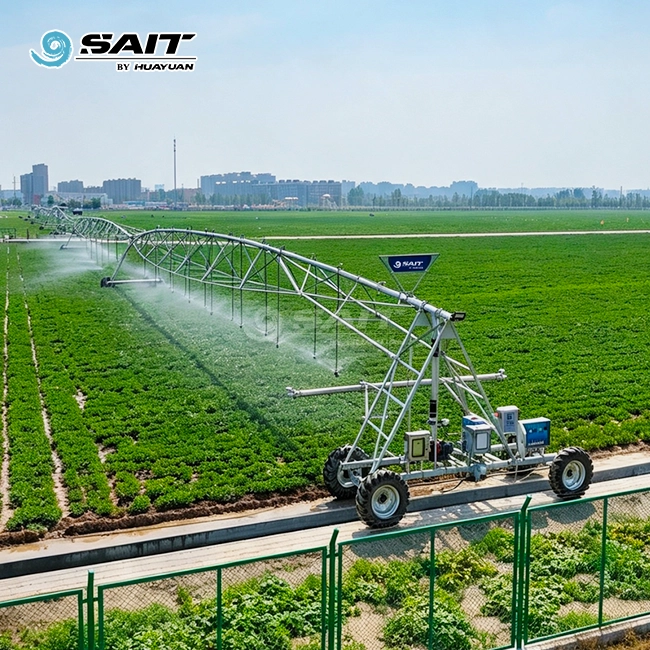
Center pivot systems work very well on flat, regular-shaped fields, but they are very expensive to buy and need permanent infrastructure. Drip irrigation is better at using water efficiently at the root zone, but it needs a lot of upkeep and can't be moved from one field to another without a lot of work. Lateral move systems are good for making rectangular plots regular, but they are also dependent on the same kinds of infrastructure as center pivots.
A hose reel traveler fills a unique need: it saves almost as much water as a drip (reductions of over 50% compared to traditional spray gun methods), doesn't need any fixed infrastructure, and can move from one field to another in less than two hours. No other system can match its cost-per-hectare efficiency at scale for operations where permanent installation is not possible because of field movement, rented land, or multi-site service contracts.
Evaluating Travelling Irrigator Brands and Models
European companies like Irrimec, Ocmis, and Bauer are in the global market. Their brands are well known, and they have dealer networks that have been around for a long time in mature markets. Their machines are well-made, but they cost more than others, which makes it hard for wholesalers on a budget and government agencies that need to buy things. HUAYUAN SAIT fills that gap by producing to the same high technical standards and having over 130 patents to back them up, including 35 invention patents and 15 international patents. They also offer direct-factory pricing and 30–45 day lead times on OEM orders.
Here are the core performance advantages buyers should verify across any shortlisted brand:
- Retraction speed consistency: The JP-75 and JP-90 series keep trip speeds between 8 and 80 m/h, based on the model. This is because the turbine gearbox keeps the same output even as hose drag rises on longer runs with a media filter.
- Spray uniformity: Coefficient of Uniformity testing should show that the spray is uniform more than 85% of the time; HUAYUAN SAIT's BeiDou + IoT combined models achieve irrigation uniformity above 90%, which lowers crop stress from uneven application.
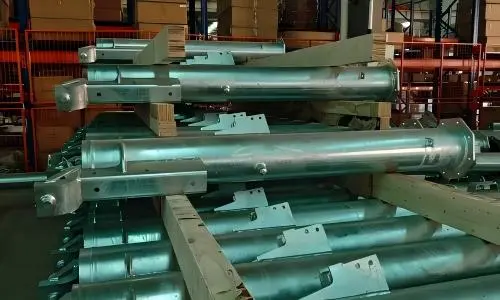
- Corrosion protection: Hot-dip galvanizing over 80 µm on all steel structures works better than normal zinc coatings in the field, so the chassis lasts longer than the average in the industry.
- After-sales parts access: HUAYUAN SAIT provides a full warranty for one year, low-cost maintenance for three years, and lifelong spare parts supply at factory cost price. This is a unique commitment in a market segment where buyers are constantly worried about the availability of parts.
These benefits directly address the operational risks that cause the most warranty claims and the highest total cost of ownership for this type of equipment. If a buyer doesn't think about the infrastructure for after-sale parts, they often find hidden costs that make the initial price advantage go away in three seasons.
Installation, Maintenance, and Troubleshooting Tips
The fastest way to make a machine last as long as possible is to install it correctly. Leveling the reel anchor point, making sure the first hose pull-out runs in a straight line under light tension, and making sure the inlet pressure is within the working range are all things that should be done to get the site ready. As a standard service, HUAYUAN SAIT provides on-site installation support and technical guidance. This cuts down on commissioning errors, which are a big reason why so many things fail early on.
Every 50 hours of operation, the PE pipe surface should be checked for kinks or cracks. Once a month, the oil level in the turbine gearbox should be checked, and every three months, the wear pattern on the nozzles should be checked because worn nozzles change the application rate and distribution uniformity beyond what is expected. To fix a common hose misalignment problem, which is also known as "snaking" in the field, you should re-tension the hose on the drum and check the position of the anchor stakes before the next run.
Conclusion
Choosing the right hose reel trip irrigator is a choice that will be used for 10 years. The most important things to check before buying are the quality of the PE pipe material, how well the drive system works with your power system, how consistent the retracting speed is, and how easy it is to get parts after the sale. Most efficiency problems that happen after the machine is bought can be avoided by making sure that the machine's specs match your field's size and crop needs. The total ownership risk of suppliers who make their own core components, hold independent certifications, and offer written parts availability commitments is significantly lower than that of suppliers who rely on commodity sourcing and media filters.
FAQ
1. What is the typical service life of a hose reel irrigator?
Under standard farming conditions, the machine frame and drive unit should last for more than 10 years. The line part can last longer than 15 years if it is made of new, UV-stabilized PE pipe and is stored properly over the winter. These numbers are for machines that are kept up and inspected at the recommended times.
2. Can these machines handle irregular or sloped terrain?
Yes. When going downhill, a braking system or slower retraction speed keeps the carriage from going over the hose. HUAYUAN SAIT machines can work in temperatures ranging from -20°C to 60°C, so they can be used in cold, dry, and humid settings.
3. How is irrigation depth controlled?
Changing the trip speed changes the depth of the irrigation. More water is applied per square meter when retraction is slower, but less water is applied when retraction is faster. The JP-90 series can go at speeds between 10 and 80 m/h, so it can be adjusted to meet the water needs of a wide range of crops.
4. What certifications should I request from a supplier?
The usual criteria are CE, ISO 9001, and the right area certifications (GOST for CIS countries and SASO for the Middle East). HUAYUAN SAIT has all the necessary export paperwork and third-party testing certificates to make sure they are in line with international purchasing rules.
Get Your Custom Travelling Irrigator Quote from HUAYUAN SAIT
HUAYUAN SAIT has been improving the way they make hose reel traveler irrigators for 20 years. They can now make 14,000 of them every year and deliver them within a week of receiving an order. You can ask our engineering team to make a standard JP-series model or a fully branded OEM traveling irrigator provider solution with custom PE pipe specs and a media filter. They can do it all. Email us at kevin@showyirrigation.com to get a custom quote, a catalog of our products, or a technical consultation. We offer discounts for large orders.
References
1. Food and Agriculture Organization of the United Nations. (2014). Irrigation Water Management: Irrigation Methods.
2. Irrigation Association. (2023). Landscape and Agricultural Irrigation Best Management Practices.
3. Plastics Pipe Institute. (2022). Handbook of Polyethylene Pipe (2nd Edition).
4. University of Nebraska–Lincoln Extension. (2020). Comparing Irrigation Systems for Agricultural Use. EC709.
5. American Society of Agricultural and Biological Engineers. (2017). ASABE Standard S436.1: Test Procedure for Determining the Uniformity of Water Distribution of Center Pivot and Lateral Move Irrigation Machines Equipped with Spray or Sprinkler Nozzles.
6. Irrigation Association. (2021). Certified Irrigation Designer Reference Manual.
Get a tailored irrigation solution for your project — our engineering team is ready to support you from design to installation.