Is a media filter worth it?
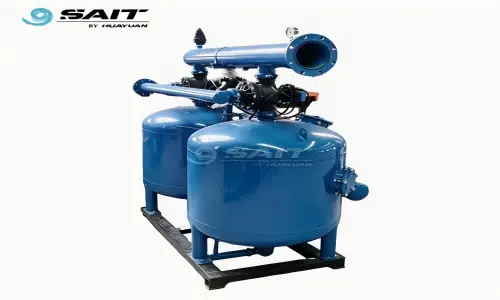
If you manage large-scale irrigation or fertigation operations, you have likely asked this question at least once. A media filter is a pressure-driven vessel packed with granular materials—silica sand, anthracite, garnet, or multi-layered combinations—that captures suspended solids, turbidity, and organic particles through depth filtration. Unlike surface filters that trap debris at a single layer, media filters use the entire bed depth to intercept contaminants, delivering far greater dirt-holding capacity. For commercial growers, orchard managers, and agricultural contractors using linear move irrigation systems, the short answer is: yes, a properly specified filtration unit is worth every dollar invested.
Understanding Media Filters: What They Are and How They Work
Since the beginning of the 20th century, granular filtration has been used to clean water in cities. It still has very important jobs to do in precision agriculture today. Three physical processes are at the heart of the mechanism: mechanical straining, settling in the bed, and adsorption on the surfaces of the media. Different types of contaminants are dealt with depending on the media that is used.
Common Types and Their Agricultural Applications
There are three main ways that farmers manage water:
- Single-media sand filters use uniform silica sand (usually 0.45–0.55 mm) to get rid of large amounts of sediment. They work best when the turbidity of the water coming in is always high, like when surface canal water feeds open-field center pivot systems.
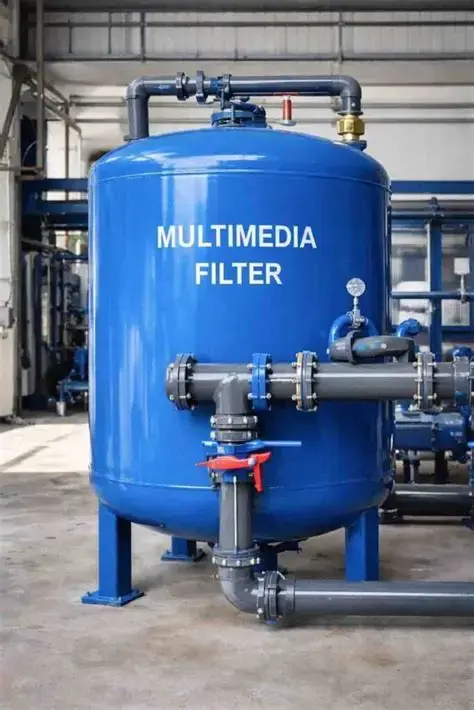
- Multi-media filters put anthracite (which is lighter and coarser) on top of sand, which is then on top of garnet (which is heavier and finer), which makes the waste better than a single-media tank of the same size. The American Water Works Association (AWWA) B100 standard says that a properly graded multi-media bed can produce effluent turbidity below 0.1 NTU when the hydraulic loading is stable.
- Activated carbon media beds target dissolved organics and chlorine residues. They are usually used as polishing stages after sand or multi-media vessels, not as primary filters on their own.
The length of time that maintenance lasts depends a lot on how well you backwash. When backwash cycles are done right, high-quality anthracite or silica sand keeps working well for three to seven years. On the other hand, catalytic media may need to be replaced sooner once their active surface sites are used up.
Evaluating the Benefits and Limitations of Media Filters
There isn't a single filter method that can fix all problems with water quality. Before committing capital, a balanced procurement decision must weigh real strengths against known weaknesses.
Where Granular Filtration Outperforms Alternatives
Granular filtering units have much lower operating costs than cartridge or bag filters with the same flow rates. In murky water, a cartridge filter needs to have its elements changed every couple of weeks. On the other hand, a properly backwashed sand bed can work for months without needing its media to be checked. Over the course of five years, large-scale fertigation settings can save a lot of money on operating costs.
Depth filtration is also better at dealing with changes in the quality of the influent. When conditions in the upper canal change after it rains, a media bed can handle the extra load without immediately blinding, but a surface-type element would need to be replaced right away.
Recognized Limitations to Plan Around
Without extra treatment steps, granular beds can't get rid of dissolved salts, heavy metals, or microbiological pathogens. If the source water has iron or manganese dissolved in it, a special adsorptive media or a cleaning stage further downstream is needed in linear move irrigation systems. Biological fouling caused by too much polymer residue can also cause the differential pressure to rise quickly, which means that chemical cleaning is needed instead of just backwashing.
Making the Right Choice: Media Filter vs. Other Filtration Methods
The right filtration method is chosen based on the flow rate, the type of contaminants, the space available, and the cost tolerance over the life of the system. When sub-5-micron discharge clarity is needed, multi-media filters work better than single-media vessels. This makes them the best choice for drip irrigation systems with narrow emitter orifices. When the flow and turbidity levels are low, cartridge filters are the most cost-effective option. However, when the flows go over 20 m³/h and the TSS levels are above 20 mg/L, they become too expensive to use.
A granular pre-filter is the main layer of safety for the membrane when used with a reverse osmosis or nanofiltration system. The International Desalination Association has published studies that show membrane replacement times can be extended by two to three times when effective pre-filtration lowers the SDI of feed water below 3. This piece of data often justifies the capital expenditure on its own.
The most important factors for agricultural procurement workers when looking at procurement criteria are the design flow rate, the goal effluent TSS, the availability of backwash water, the desire for automation, and whether the filter needs to connect to a current fertigation controller. Each of these things has a direct effect on the size of the vessel, the choice of media, and the configuration of the valves.
How to Procure and Maintain Media Filters Effectively
Mismatches between filter specs and field conditions can be expensive. Strategic supplier review stops these problems. Buyers should ask for certificates of analysis (COA) that are specific to each batch and check the sieve analysis results per ASTM C136, the attrition loss values, and the acid solubility data. Values of the Uniformity Coefficient above 1.7 in the media bed mean that the gradient is not smooth and the risk of clogging is higher.
Integration Within a Complete Fertigation System
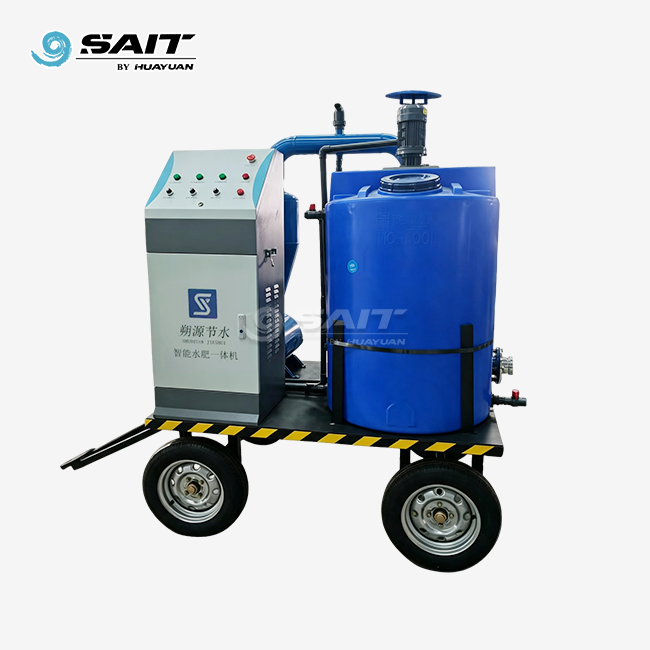
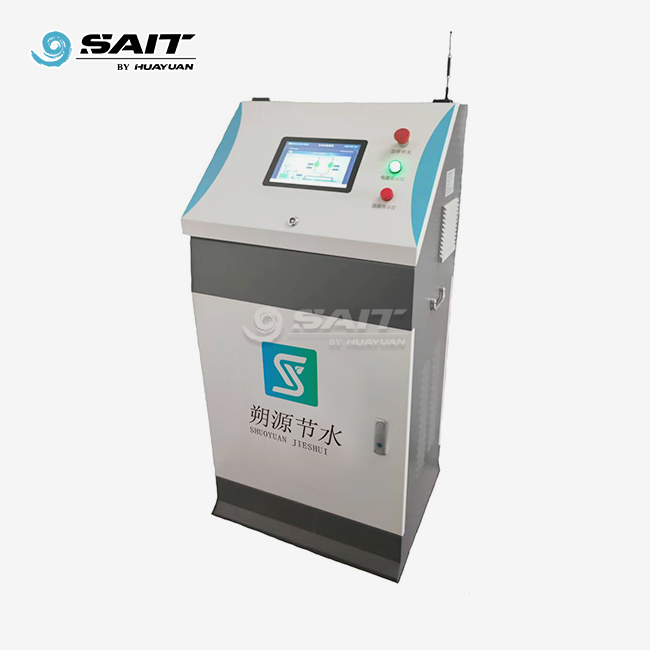
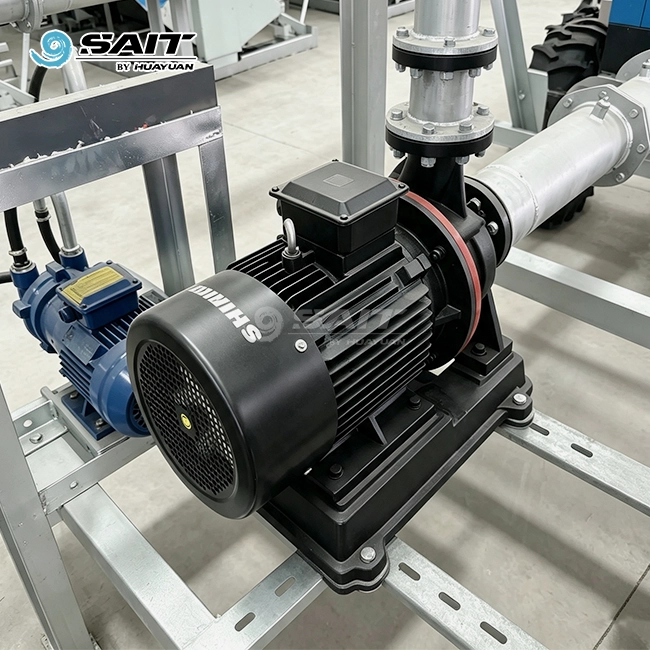
HUAYUAN SAIT's fertigation line-up builds filtration right into the system design, so there is no more trouble with integration that comes up when you buy filters and injection units from different companies. For example, the Smart Head Control System for Fertigation has a DN100 Centrifugal Filter and a DN100 Automatic Self-Cleaning Filter with a filtration accuracy of 120/130 mesh. It is paired with a DN200 main inlet/outlet connection that handles flows generated by an 11 kW stainless steel pressure pump.
Here are the main benefits that come with this built-in head unit:
- Controlling the pump, filtering the water, and injecting fertilizer are all done in one assembly. This eliminates the problems of integrating multiple vendors and speeds up the commissioning process on-site.
- Automatic self-cleaning filter operation, reducing manual maintenance burden in dirty water conditions—a critical benefit for large-scale open-field and orchard operations.
- Remote operation via mobile app with 4G wireless connection and Modbus RTU protocol, enabling operators to monitor and adjust from any location without returning to the pump station.
- Variable Frequency Drive rated at 20 kW with a two-stage surge protective device rated at 80 kA, safeguarding electronics in rural agricultural sites with unstable grids.
- Compatible with soluble solid and liquid fertilizers, supporting diverse crop nutrition programs across citrus, grape, almond, and greenhouse vegetable operations.
These benefits directly address the most persistent problems in large-scale fertigation management, including the need for frequent filter maintenance, the risk of fertilizer lines freezing, software that is hard to understand, and pumps that don't work right most of the time. The fully sealed housing and IP55 grade make sure that it will last even in dusty fields and during wet seasons.
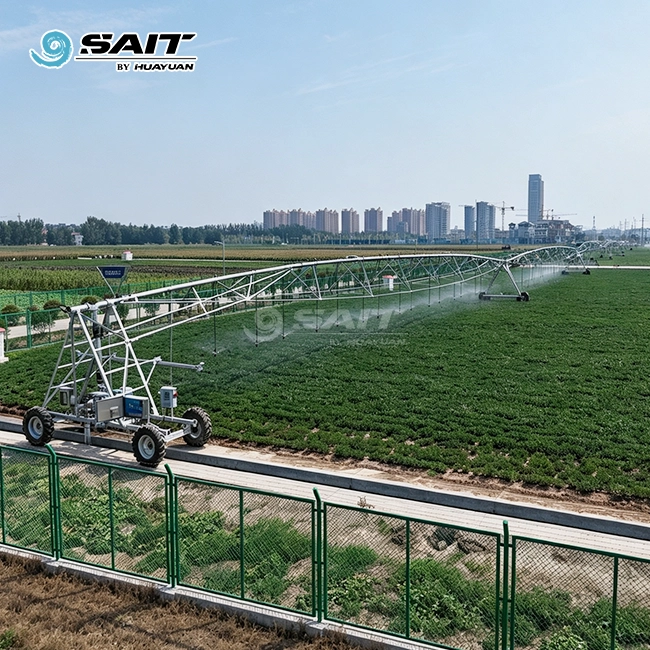
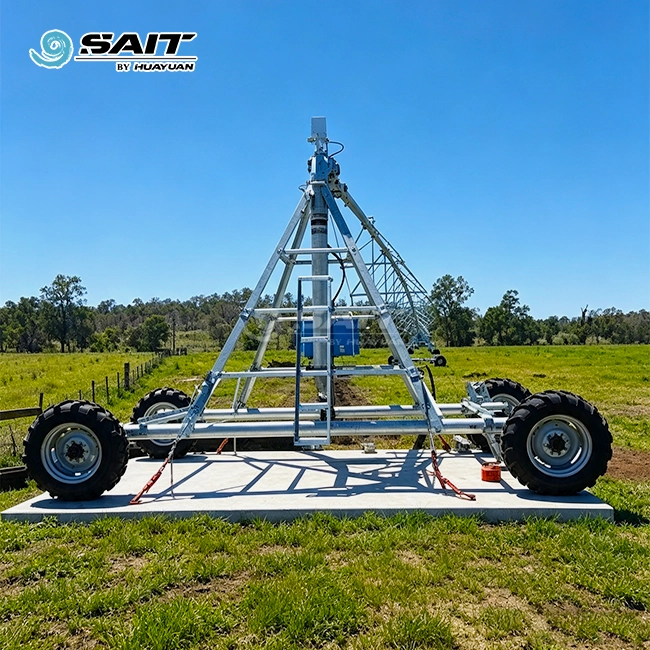
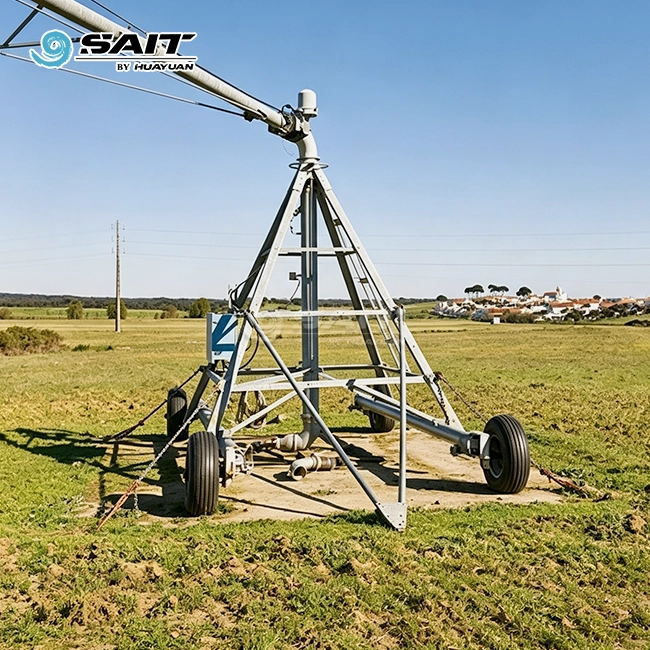
For smaller fields, the mobile Fertilizer-Irrigation linear move irrigation system works with this head unit and can deliver single-channel injection rates of 60 to 1000 L/h, which can be changed from 10% to 100% capacity. It has an ARM9-based industrial display with a resolution of 1024x600 and the ThreadX operating system. This gives it a secure, EMC/ESD-hardened interface that keeps its calibration even when electromagnetic interference from nearby motor loads occurs. This is something that many buyers don't think about until problems start happening in the field.
ROI and Long-Term Value: Is a Media Filter Worth It for Your Business?
Adding the right kind of filtration system to a fertigation line will keep the drip emitters, disk filters, and injection pump parts further down the line from wearing out too quickly because of solids that are suspended in the water. The math behind it is simple: a grower can lose thousands of dollars in yield every season because of a clogged drip line serving a mature almond block. This is a lot more than the annual cost of maintaining a sand or multi-media vessel.
HUAYUAN SAIT systems come with a full warranty for one year, low-cost upkeep for three years, and replacement parts for life at factory cost prices. These terms make the total cost of ownership much lower over the ten-year life of the system. The technical basis for each unit can be proven rather than just stated, as the company has over 130 patents, including 35 invention patents and 15 foreign patents, and 20 years of experience making things.
The next step forward in filtration ROI is the addition of smart tracking. EC/pH sensors built in, ultrasonic flow metering on the fertilizer injection channel, and cloud connectivity through the SAIT platform let procurement professionals and farm managers see how well the filtration system is working in real time. This lets them plan preventative maintenance instead of fixing problems as they happen.
Conclusion
If you have a linear move irrigation system, you can't do without a granular filtration unit. It protects every part further down the line. The filtering, pump control, and fertilizer injection functions work as a single unit instead of a bunch of loosely connected parts when they are built into a full system architecture like HUAYUAN SAIT's Smart Head Control System. Large-scale farmers and farming project contractors who look at the investment's lifecycle value instead of just the purchase price can see that it regularly pays off through less downtime, longer component life, and more accurate delivery of nutrients.
FAQ
1. How often does a sand or multi-media filter need backwashing in agricultural use?
Backwash regularity is based on the viscosity of the influent and the flow rate of the system. When the difference in pressure across the vessel reaches 0.05 to 0.07 MPa, most farm setups start backwash cycles. In clean groundwater systems, backwashing once a day might be enough. During busy watering times, surface water sources with higher loads of suspended solids may need more than one run per day.
2. Can a media filter handle fertilizer solution carryover?
Standard grainy beds are made to remove suspended solids from the water side upstream of the entry point. The main sand or multi-media vessel shouldn't let the fertilizer solution go through. Filters further down the line, like the automatic self-cleaning filter in HUAYUAN SAIT's head unit, protect the drip lines after the injection.
3. What mesh accuracy is adequate for drip irrigation systems?
Most companies that make drip emitters say that filtering up to 120–200 mesh should be done before their products. In HUAYUAN SAIT's Smart Head Control System, the DN100 Automatic Self-Cleaning Filter works at 120/130 mesh, which is a reliable level for normal drip and micro-sprinkler setups.
4. How does filter performance affect EC and pH sensor accuracy?
Solids in the measurement stream can stick to sensor probes and cause results to change over time. Upstream filtration that works well directly increases the time between sensor calibrations and maintains EC/pH accuracy, which is a very important part of precise nutrient management programs.
Get a Custom Media Filter Configuration from HUAYUAN SAIT
HUAYUAN SAIT designs and builds fertigation and linear move irrigation systems that work well on a large scale. We are a trusted media filter maker with over 130 patents and 20 years of experience making filters. We set up single-channel and twin-channel systems for greenhouses, orchards, and open-field operations. We can do OEM and ODM, deliver in one week, and provide on-site operating support. To get prices and details, email our technical team at kevin@showyirrigation.com.
References
1. American Water Works Association. (2011). AWWA B100-11: Granular Filter Material. AWWA.
2. International Desalination Association. (2020). IDA Desalination Yearbook 2020–2021. Media Analytics Ltd.
3. Bucks, D. A., & Nakayama, F. S. (1986). Trickle Irrigation for Crop Production: Design, Operation, and Management.
4. Food and Agriculture Organization of the United Nations. (2002). Deficit Irrigation Practices — FAO Water Reports 22. FAO.
5. ASTM International. (2019). ASTM C136/C136M-19: Standard Test Method for Sieve Analysis of Fine and Coarse Aggregates.
6. Nakayama, F. S., Bucks, D. A., & Clemmens, A. J. (1984). Assessing trickle emitter application uniformity.
Get a tailored irrigation solution for your project — our engineering team is ready to support you from design to installation.