Is a single-span pivot right for small or irregular fields?
If you manage a small or oddly shaped field, you have probably wondered whether a standard center pivot is simply too large for what you need. The short answer is yes — a single span small fields irrigation system is built precisely for plots where full-scale multi-tower pivots waste money, miss corners, and deliver poor water uniformity. HUAYUAN SAIT's single-span pivot covers 4 to 200 hectares per cycle, operates on 3-phase power, and reaches a maximum radius of 800 meters, making it a practical choice for fragmented land parcels, specialty crop blocks, and pilot irrigation projects alike.
Understanding Single-Span Irrigation for Small and Irregular Fields


What Makes a Single-Span System Different
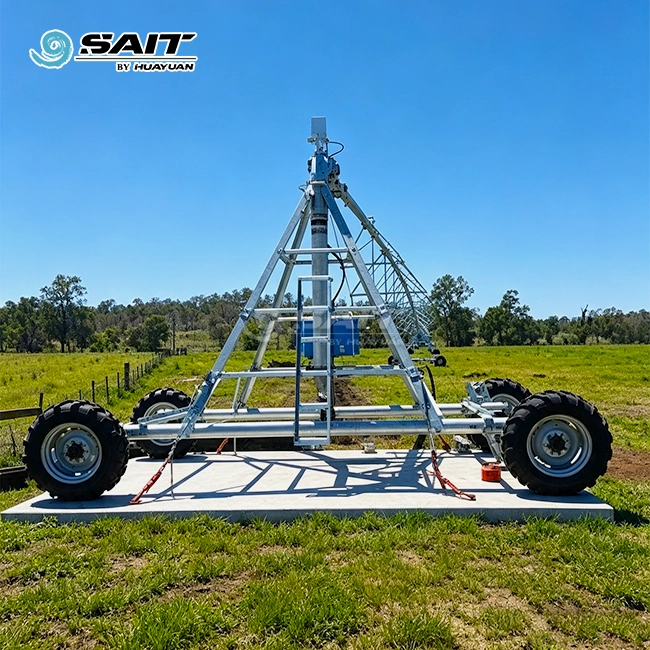
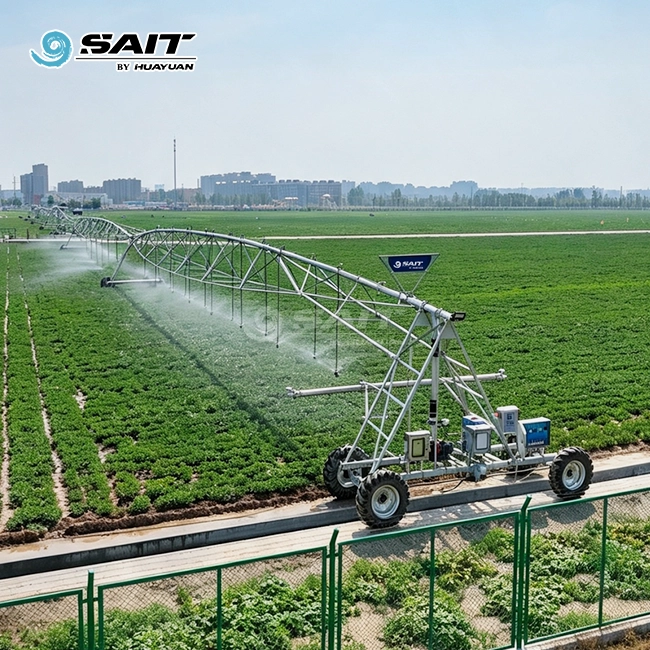
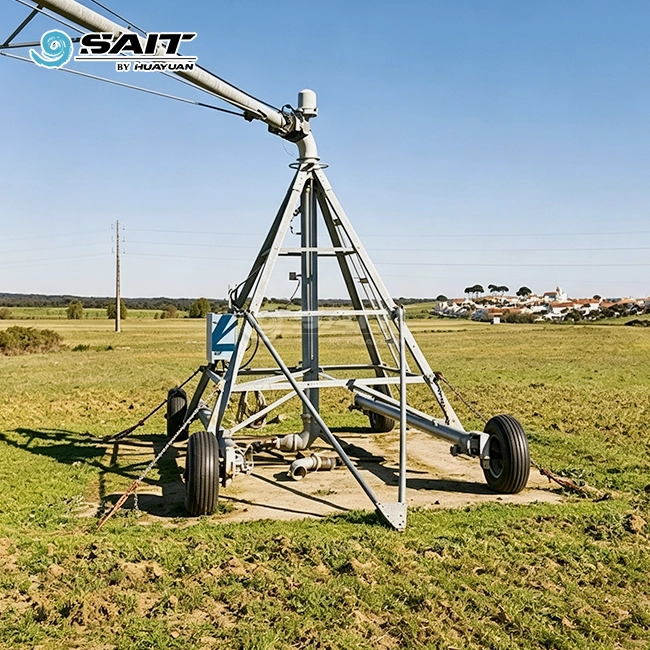
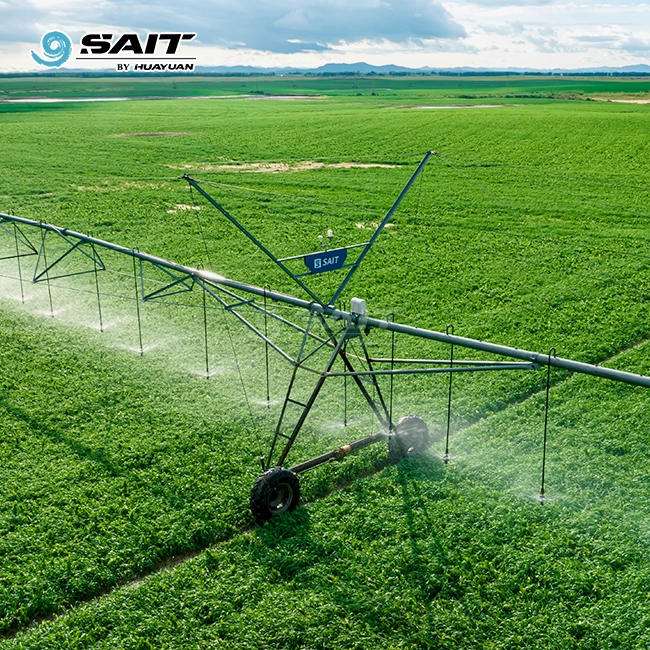
There is one structural span between a center pivot point and a single drive block in a single-span pivot. Unlike multi-tower systems made for rings of 50 hectares or more, this setup keeps the mechanical complexity low while still distributing automatic, pressurized water. The HUAYUAN SAIT unit comes in span lengths of 37.5 m to 66.5 m, and overhead additions of up to 25 m, so you can get the coverage you need without making the installation too complicated.
Profile Options for Different Crop Heights
For single span small fields irrigation, the four clearance profiles that HUAYUAN SAIT has are standard (2.1 m), low (2.9 m), high (3.8 m), and ultrahigh (4.5 m). This means that the same structural platform can be used for corn, vegetables, sugarcane, and high-clearance specialty crops. Picking the right profile keeps the canopy from getting in the way and lowers the risk of crop damage during rotation, which is especially important in high-value horticultural blocks.
How the SAIT Control System Handles Irregular Geometry
The SAIT Smart Control System uses BeiDou navigation and IoT-based zone mapping to water uneven fields with a rate of less than 5% missed irrigation and a level of uniformity above 90%. On the same platform, you can schedule irrigation, monitor it from afar, and use variable-rate application. The optional corner arm addition improves the effective irrigated area by up to 15% for fields that aren't exactly round. This directly fixes the coverage gap that makes users of regular pivots unhappy.
Comparing Single-Span Irrigation with Other Methods in Small Fields
Single-Span Pivot vs. Center Pivot on Small Plots
A full multi-tower center pivot on a 10-hectare field is like sending one package with a freight truck. The cost of capital per hectare goes up sharply, and the soil is packed down over a bigger area by tire ruts caused by multiple drive towers. Most of that mechanical redundancy is taken away by a single-span unit. The USDA Agricultural Research Service says that automated irrigation systems are 30–50% more efficient at applying water than surface ways. A single-span system of the right size can achieve this level of efficiency without spending too much on structure.
Single-Span Pivot vs. Drip Irrigation
Drip systems are very accurate at delivering water, but they require a lot of work to set up, flush, and replace the emitter lines every year. Drip lines can be hard to keep up with on pasture or row crop plots where the canopy cover changes quickly with the seasons. An adjustable single-span pivot with exit spacing of 1.9 m or 2.9 m can achieve the same level of regularity (above 90% according to ISO 11545) while covering the same area with a lot less work per irrigation cycle.
Single-Span Pivot vs. Flood Irrigation
Small farms still use flood irrigation because it's cheap to set up, but 40–60% of the water that is used is lost to flow and deep percolation. The single-span system by HUAYUAN SAIT saves over 70% more water per cycle than the old ways of dealing with floods. That number directly leads to lower pumping costs and less nutrient loss, two things that make the payback time much shorter for businesses with high input costs.
Key Design Considerations for Single-Span Irrigation on Small Farms
Choosing the Right Span Length and Pipe Diameter
HUAYUAN SAIT has six different span lengths and three different main pipeline diameters: 5" (127 mm), 6-5/8" (168 mm), and 8-5/8" (219 mm). A smaller diameter works for low-flow well supplies on 4–15 hectare plots, while an 8-5/8" pipe can handle higher-volume jobs on plots up to 200 hectares. When you match the pipe width to the well output, you stop pressure loss at the outer nozzle bank. This is what usually leads to poor uniformity in systems that are too small.
Structural Integrity Across Uneven Terrain
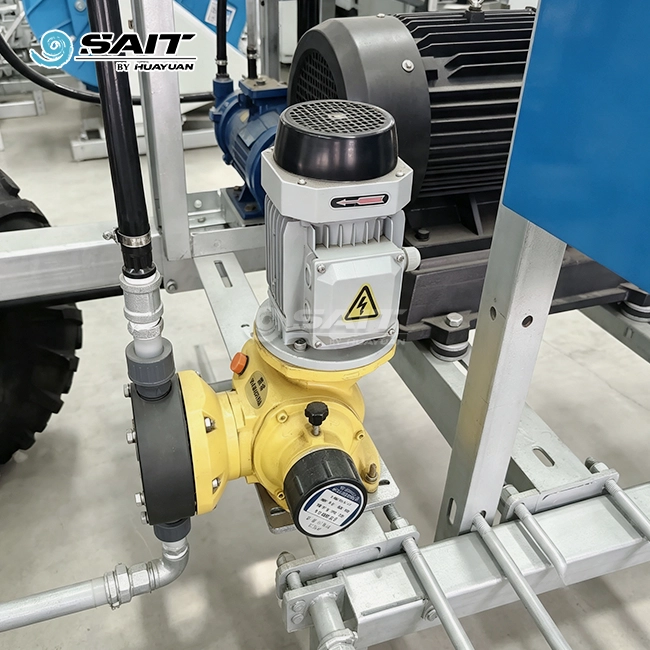
With truss rods that come in 20 mm and 22 mm widths, the span stays straight even when it's loaded, and the slope is up to 15%. You can choose wheels in sizes 11.2-24, 14.8-24, and 16.9-24, with or without tubes. This lets the drive tower float well on sandy or soft ground. The gearmotors (25.5:1 at 1.5 hp or 40:1 at 0.75 hp) provide torque that is calibrated to field conditions. This means that the travel speed stays the same no matter how steep the terrain is.
Sprinkler Package and Soil Infiltration Matching
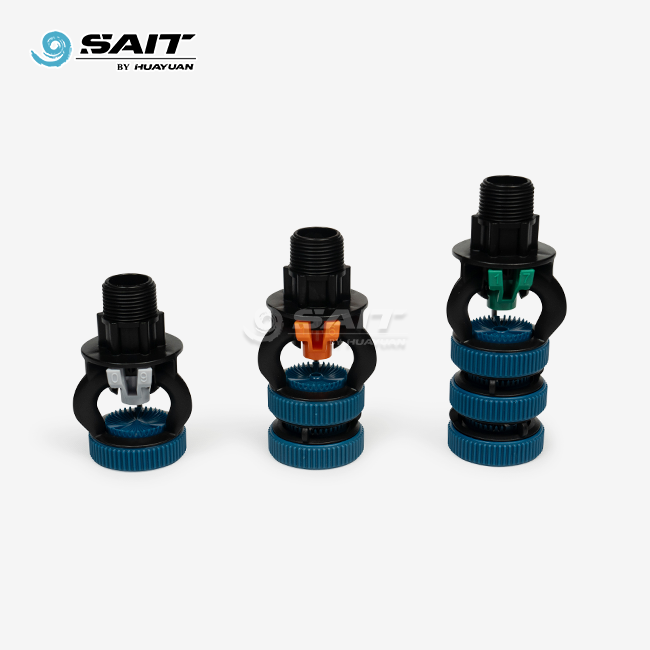
The SAIT system chooses the sprinkler spacing and application rate based on how well the soil absorbs water, which stops runoff on clay-heavy profiles and stops under-application on coarse sands. HUAYUAN SAIT's own-made PE pipes are thicker than standard products on the market, less likely to break, and made from virgin material with no recycled content. This means that the wall thickness and flow rates stay the same over the full service life.
Procuring and Installing Single-Span Irrigation Systems: What B2B Clients Should Know
Customization Depth and OEM Options
HUAYUAN SAIT will take pilot orders for custom configurations from a single unit. Under OEM/ODM terms, you can choose the span length, profile height, language of the control panel, paint color (RAL/Pantone matched), and private label branding for tower boxes. For private design jobs, NDAs are the norm. If you are a distributor making your own line of products, the SAIT software interface can have your brand name on it, and all technical instructions will be sent to you in the language you choose.
After-Sales Structure and Spare Parts Commitment
For single span small fields irrigation, a 20-year service life backed by hot-dip galvanizing with a zinc covering thickness of at least 80 μm makes replacements much less often over the lifecycle. HUAYUAN SAIT offers a full guarantee for one year, low-cost upkeep for three years with part replacement, and spare parts at the factory cost price for life. Armored cable that is listed by UL runs through the whole system, and the wheel gearboxes (50:1 and 52:1 ratios) are designed to last a long time between fluid changes.
Delivery Timeline and Logistics Advantage
The HUAYUAN SAIT building is right next to Xuzhou, which is a major hub in the Huaihai Economic Zone and has direct train, highway, and port links. Standard shipping time for set units is one week, and the company can make 1,800 pivot and linear systems every year. Every order for U.S. importers comes with full ASABE-compatible paperwork and ISO 9001 compliance records.
Real-World Applications and Brand Differentiation
Seed Research and High-Value Vegetable Blocks
B2B seed companies use HUAYUAN SAIT single-span units to keep separate irrigation zones on small plots next to each other, since different types of plants need different amounts of water at different times. With SAIT zone-based control, you can change the schedule for each plot from a computer, so you don't have to go back to the field. When vegetable farmers switched from drip irrigation to single-span automation, they saved money on labor costs because the system moves itself and digitally records every watering event.
Government and EPC Project Applications
HUAYUAN SAIT's single-span units have been used as test installations by agricultural engineering companies looking for turnkey systems for government-funded food security projects before they commit to orders for multiple towers. One unit for custom builds is the low MOQ that keeps project risk low. The company has over 20 years of manufacturing experience and over 130 patents, including 35 invention patents and 15 international patents. These patents give procurement officers the technical information they need to submit bids and check for compliance.
Why HUAYUAN SAIT Stands Apart from Valley and Lindsay
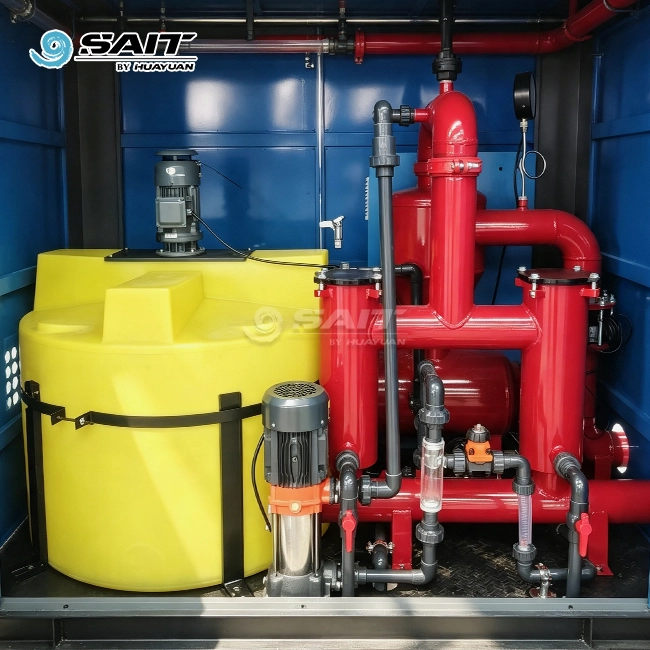
HUAYUAN SAIT is different from catalog-only providers because they offer on-site installation guidance, custom planning for non-standard field geometry, and combined fertigation packages all under one supply agreement. The BeiDou-based corner arm system fills in the coverage gaps that regular Valley and Lindsay catalogs can't do without charging a lot more. Direct factory supply gets rid of the dealer profit, which keeps the total cost of ownership lower over the life of an asset, which is 20 years.
Conclusion
For single span small fields irrigation, a single-span pivot delivers real value when your field is too small, too irregular, or too high-value for a standard multi-tower center pivot to justify. HUAYUAN SAIT's system covers 4 to 200 hectares, saves over 70% more water than flood irrigation, and carries a structural design built for a 20-year service life. With flexible span lengths, four profile heights, BeiDou-assisted uniformity above 90%, and full OEM capability, it is a practical option for commercial farms, EPC contractors, and distributors entering precision irrigation markets.
FAQ
Q1: What is the minimum field size for a single-span pivot?
HUAYUAN SAIT's single-span system is efficient starting at approximately 4 hectares per cycle. For plots between 4 and 15 hectares, the compact span configuration delivers faster ROI than drip systems for most row crop scenarios.
Q2: Can the system be configured for irregular field boundaries?
Yes. The optional corner arm attachment increases effective irrigated area by up to 15% on square or irregular parcels. The SAIT BeiDou navigation system maps irregular boundaries and adjusts travel arc accordingly, keeping the missed-irrigation rate below 5%.
Q3: What power source does the system require?
The drive towers operate on 3-phase electric power. Gearmotors run at either 1.5 hp (25.5:1 ratio) or 0.75 hp (40:1 ratio), keeping energy consumption low. Diesel generator integration is available for off-grid installations.
Q4: How does single span small fields irrigation compare to drip on maintenance?
Single-span pivot systems require annual inspections of gearbox oil levels, tire pressure, and nozzle regulators. Drip systems require more frequent emitter flushing and line replacement. For seasonal row crops, the single-span approach typically results in lower annual maintenance hours.
Request a Custom Quote from HUAYUAN SAIT — Single Span Small Fields Irrigation Supplier
Twenty years of work have been put into making HUAYUAN SAIT single span small fields irrigation systems that work in real fields. We are a reliable supply partner for procurement teams because we can deliver in one week, do full OEM work, offer spare parts for life, and help with installation on-site. You can email our team at kevin@showyirrigation.com to get a field inspection, product specification sheet, or project price right away.
References
1. USDA Agricultural Research Service. Center Pivot Irrigation: System Performance and Water Use Efficiency. 2019.
2. American Society of Agricultural and Biological Engineers (ASABE). ASABE Standard S436.1: Test Procedure for Determining the Uniformity of Water Distribution of Center Pivot and Lateral Move Irrigation Machines. 2021.
3. Food and Agriculture Organization of the United Nations (FAO). Irrigation Water Management: Irrigation Methods (FAO Irrigation and Drainage Paper No. 45). 2020.
4. International Organization for Standardization. ISO 11545: Agricultural Irrigation Equipment — Centre-Pivot and Moving Lateral Irrigation Machines with Sprayer or Sprinkler Nozzles — Determination of Uniformity of Water Distribution. 2009.
5. Evans, R. G., & King, B. A. Site-Specific Sprinkler Irrigation in a Water-Limited Future. Transactions of the ASABE, 55(2), 493–504. 2012.
6. Camp, C. R., Sadler, E. J., & Yoder, R. E. (Eds.). Evapotranspiration and Irrigation Scheduling. American Society of Agricultural Engineers. 1996.
Get a tailored irrigation solution for your project — our engineering team is ready to support you from design to installation.