How does a hose feed linear system work?
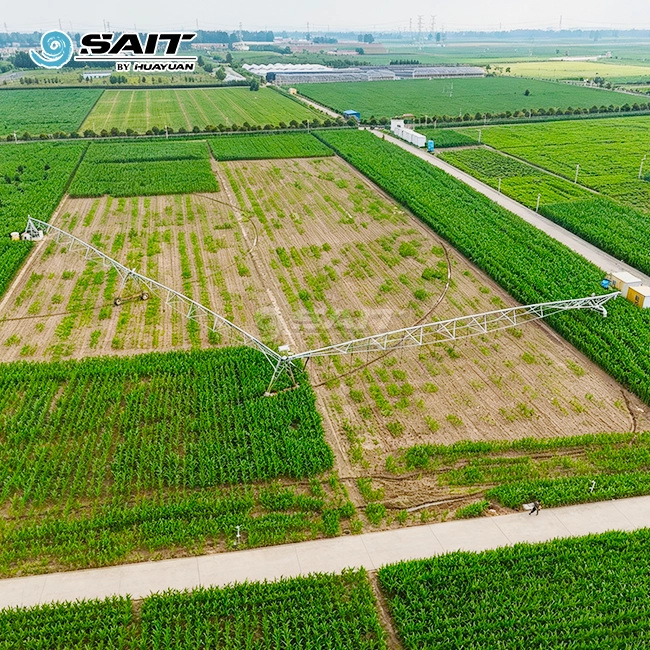
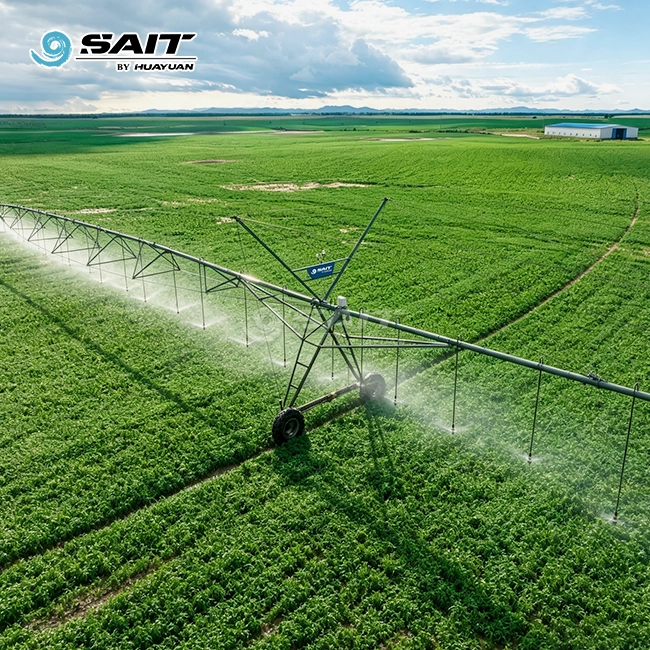
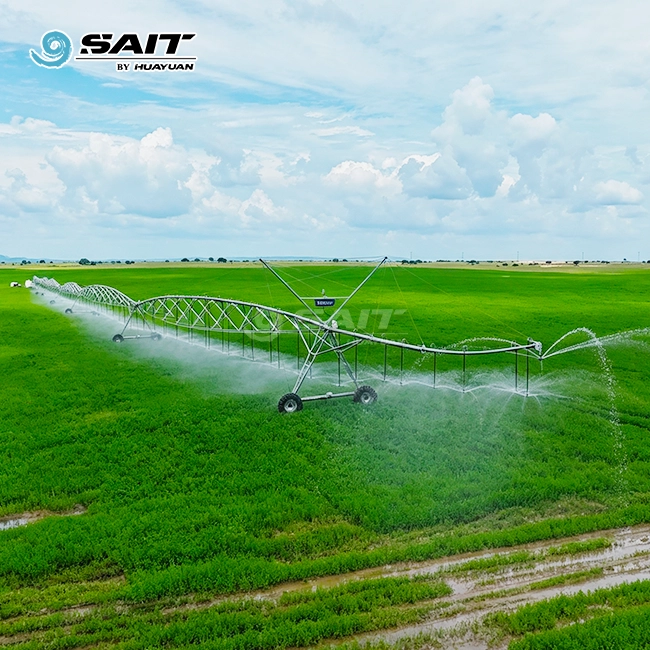
A hose feed linear irrigation system moves in a straight line across a rectangular field, pulling water through a large-diameter flexible hose connected to a stationary hydrant or canal. As the machine travels perpendicular to its own structure, the drag hose uncoils behind it, feeding pressurized water directly into the distribution pipeline overhead. This continuous, self-propelled motion allows the hose feed linear system to irrigate long, narrow fields with a coverage rate exceeding 98%, making it a practical solution for operators who need consistent, corner-to-corner water delivery without the wasted area typical of center pivot systems.
How a Hose Feed Linear System Works: The Core Mechanism


To understand how it works, you need to look at three parts that are all connected: delivering water, moving the machine, and guiding the field.
Water Enters Through the Drag Hose
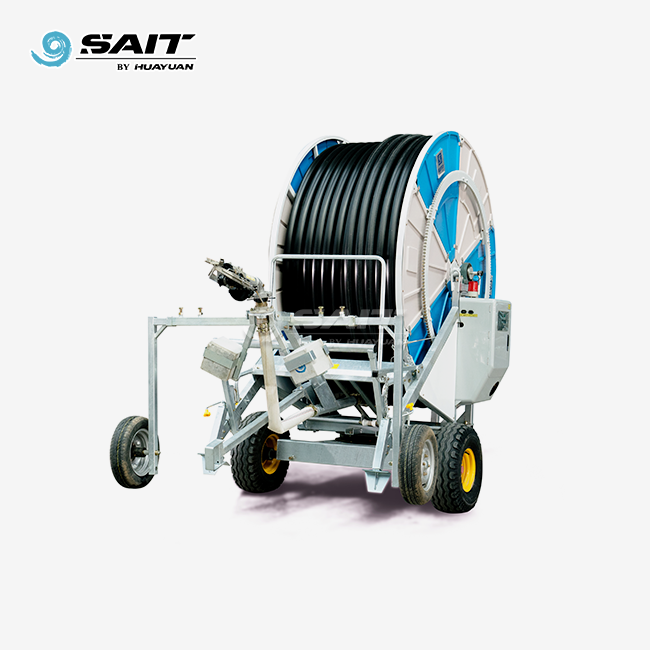
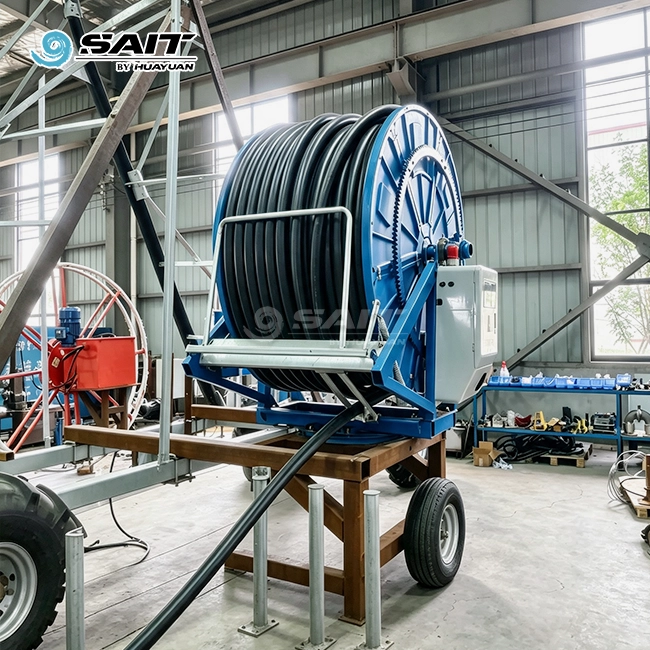
From a canal or spigot, water flows through a main pipe with a width of 168mm or 219mm and into the lateral's overhead distribution line. The bendy drag hose lies flat on the ground between the hydrant connections. As the machine moves forward, it can stretch up to 3,000 meters. The pressure stays the same along the whole run because the hose joins at a set water source instead of a joint that can move.
The Machine Travels in a Straight Line
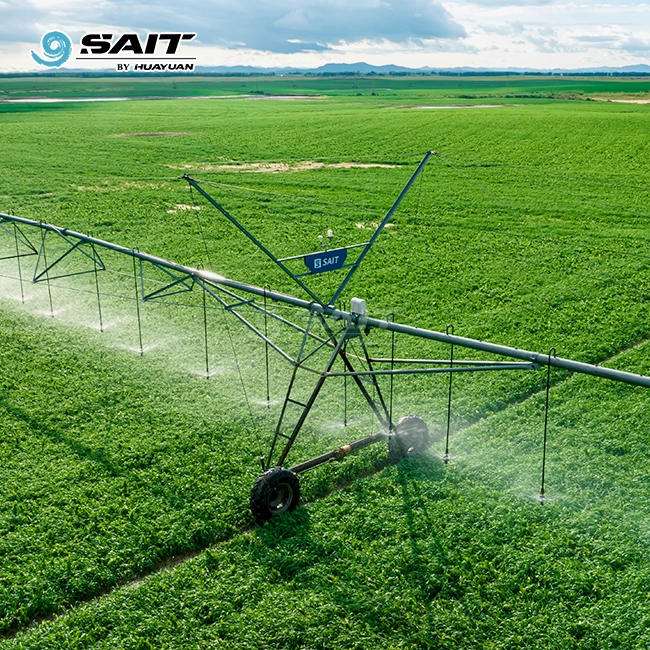
The span structure moves forward at a steady, controlled speed thanks to self-propelled drive units that come with either two or four wheels. An electric control device makes sure that each drive tower works with the units next to it. The machine can be as long as 973 meters and cover up to 240 hectares per unit. It can work on spans that are 37.5 meters, 43.3 meters, 49.1 meters, or 54.9 meters long.
Guidance Keeps the Path Accurate
When a drag hose lateral needs to complete an accurate straight-line journey, a safe guidance method to find its way is required. There are three choices for operators: guidance by furrow, guidance by cable, or guidance by satellite using BDS/GPS dual-mode positioning. It's best to use the satellite choice on flat, featureless land where physical guides wouldn't work, and it has a missed watering rate of less than 5%.
Field Performance and Coverage Advantages
It's not enough to just know how the system works. The real value is shown by how much land it watered that can be used.
98%+ Field Utilization on Rectangular Land
Center pivot systems don't water the triangular corners of every square field. Water is put on every row by a horizontal move machine that goes from end to end across the whole field width. The coverage rate is higher than 98% in areas with a length-to-width ratio of more than 2:1. This means that more useful hectares are grown each season.
Crops That Benefit Most
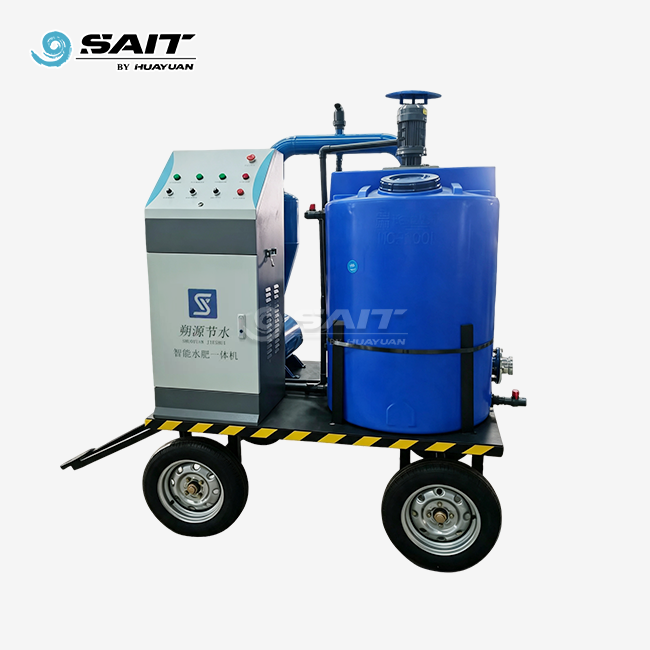
It can be used with many different cash crops. The even application works well for sugar beets, potatoes, vegetable row crops, grain, sugarcane, orchards, and nurseries. The system also works with fertigation, which means that liquid fertilizer can be mixed with the water and spread out evenly over the whole field in one pass.
High-Clearance Option for Tall Crops
Most row crops can be grown with standard height spans, but taller plants like sugarcane or corn can be grown with a high-clearance span choice without any damage. With overhang lengths ranging from 2.7m to 25m, the machine can reach the edge of the field without having to move the main structure.
Configuration Options That Match Your Field Conditions
People who work in very different areas like this type of system because the setup can be changed to fit the conditions where it's used, instead of causing the field to fit a fixed machine.
The HUAYUAN SAIT lateral move platform has the following main setup variables:
- Water supply mode: Canal water supply works where open channels run alongside the field; drag hose supply suits fields served by buried hydrant systems or remote pump stations.
- Power supply mode: Towed cable connects to a grid supply for low operating cost; a generator set powers the machine independently in remote areas with no grid access.
- Guidance mode: Furrow, cable, or satellite (BDS/GPS dual-mode) guidance options cover all terrain types and operator skill levels.
- Drive unit type: Two-wheel lateral, four-wheel lateral, or swing-around configurations address different soil bearing capacities and field boundary shapes.
- Wheel size: Three options—11.2-24, 14.9-24, and 16.9-24—in tubeless or tubed tire formats distribute machine weight appropriately across soft or firm soils.
These choices come from a single modular base, which makes it easier to handle extra parts and makes long-term upkeep simpler for a business with more than one unit.
Maintenance and Long-Term Reliability
The hose feed linear lateral move system moves items over long distances, so even short maintenance breaks can turn into extended downtime. The machine operates reliably season after season because you know what to check for.
Routine Checks Before Each Season
Check the drag hose for wear on the surface, especially where it connects to other parts of the machine and goes across the edge of the field. Check the tire pressure on the drive wheels and look at the main duct joints to make sure they are properly sealed. Follow the manufacturer's instructions for lubricating the drive unit gearboxes and make sure the guidance system is calibrated before the first run of the season, whether it's a cable or satellite system.
Addressing Common Field Problems
Guidance drift, which is when the machine slowly moves away from the goal path, is the most common practical problem. This is generally caused by cable tension loss in devices that use cables. Signal confusion near power lines or rows of trees can make satellite-guided units make small course changes. The electronic control system automatically alerts the operator to alignment problems, and they can fix them from a distance without having to stop the machine.
Structural Protection in Harsh Environments
The drag hose lateral has all its structural steel parts fitted with a hot-dip galvanized coating that is thicker than 80µm. This coating layer works better than regular spray galvanizing and makes the structure usable in places with a lot of salt, humidity, and sand. The method works reliably between -20°C and 60°C, which covers the temperature range from winters in Central Asia to summers in the Middle East.
Procurement Considerations for Distributors and Project Developers
When first looking at a drag hose lateral, buyers often only focus on the upfront cost of the machine and fail to account for other factors that impact the total cost of the operation. It is just as crucial to have the appropriate water supply infrastructure, guidance calibration, and local technical support as it is to choose the right equipment.
HUAYUAN SAIT offers both OEM and ODM configurations, so wholesalers don't have to buy a set design. Instead, they can choose the type of drive unit, guidance method, power source, and span length that work best for their project. First orders can start with just one or two units to test in the field. Once the performance is confirmed, full project orders can be placed. HUAYUAN SAIT has more than 130 patents, including 35 invention patents and 15 foreign patents. These were created with help from China Agricultural University and local engineering research centers.
There is on-site control during installation, operator training in the language of the buyer, and online diagnostics through the SAIT platform as part of the normal service plan. After the sale, there is a full guarantee for one year, low-cost upkeep and part replacement for three years, and spare parts for life at the original cost price.
Conclusion
When you combine straight-line machine travel with a flexible water supply connection, you get a hose feed linear irrigation system that can evenly water rectangular fields that center pivot systems can't. Because the system is made up of separate parts—options for water supply, power, guidance, and drive units—it can be used in a wide range of situations, from cooperative farms that get their water from canals to remote projects to clean up deserts. The lateral move method gives farmers a clear edge on rectangular land because it maximizes field utilization at over 98%, allows for fertilization, and covers up to 240 hectares per unit.
FAQ
Q1: What is the difference between a drag hose lateral move and a canal-fed lateral move?
A drag hose system pulls a large flexible hose across the field from a fixed hydrant, making it suitable for fields without open water channels. A canal-fed system draws water directly from a parallel irrigation channel running alongside the field. Both supply methods work on the same machine platform, so the choice depends on your existing water infrastructure.
Q2: How accurate is the satellite guidance system?
The BDS/GPS dual-mode satellite guidance option achieves a missed irrigation rate of less than 5% and maintains irrigation uniformity above 90%, which is significantly better than most cable-guided systems in large, open fields.
Q3: Can the system handle fertigation?
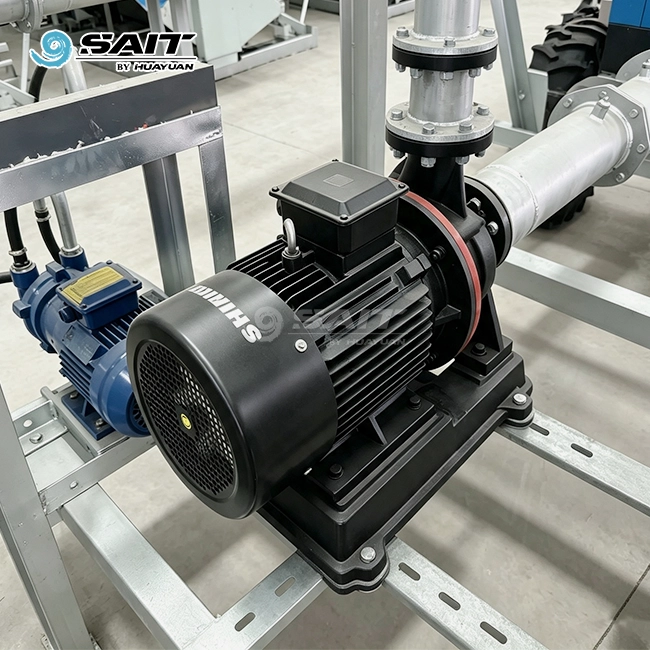
Yes. The distribution pipeline integrates with standard fertigation injection equipment. Liquid fertilizer mixes with irrigation water at the pump station and distributes evenly across the full span during each pass.
Q4: What span lengths are available?
Standard span lengths are 37.5m, 43.3m, 49.1m, and 54.9m. Custom span configurations are available for fields with irregular boundary dimensions.
Contact HUAYUAN SAIT — Your Hose Feed Linear Irrigation Manufacturer
We at HUAYUAN SAIT have been making agricultural irrigation equipment for 20 years. We can make 1,800 units a year and deliver them in as little as a week from our facility near Xuzhou. If you have a rectangular grain farm and need a standard hose feed linear, which is a drag hose lateral system, or if you need a special GNSS-guided setup for a desert reclamation project, our team will help you find the right one. To get a quote for a project, email kevin@showyirrigation.com.
References
1. Irrigation Science – Pereira, L.S. et al., "Crop Water Requirements and Irrigation Scheduling," Irrigation Science, 2002.
2. Agricultural Water Management – Keller, J. & Bliesner, R.D., "Sprinkler and Trickle Irrigation," Agricultural Water Management, 1990.
3. Transactions of the ASABE – Evans, R.G. & Sadler, E.J., "Methods and Technologies to Improve Efficiency of Water Use," Transactions of the ASABE, 2008.
4. Biosystems Engineering – Playán, E. & Mateos, L., "Modernization and Optimization of Irrigation Systems to Increase Water Productivity," Biosystems Engineering, 2006.
5. Journal of Irrigation and Drainage Engineering – Camp, C.R., "Subsurface Drip Irrigation: A Review," Journal of Irrigation and Drainage Engineering, ASCE, 1998.
6. FAO Irrigation and Drainage Paper No. 56 – Allen, R.G. et al., "Crop Evapotranspiration: Guidelines for Computing Crop Water Requirements," Food and Agriculture Organization of the United Nations, 1998.
Get a tailored irrigation solution for your project — our engineering team is ready to support you from design to installation.