How to fix two-wheel linear misalignment?
When a two-wheel linear irrigation system drifts off its intended travel path, the consequences show up fast: uneven water distribution, accelerated tire wear, and potential structural stress on the span connections. Fixing misalignment starts with confirming which guidance mode the machine uses — furrow, cable, or satellite — then inspecting the drive unit's steering micro-switch or GNSS receiver, checking wheel toe alignment, and recalibrating the control system. On HUAYUAN SAIT lateral move systems, the BDS/GPS dual-mode guidance reduces correction frequency significantly, but mechanical checks remain essential each season.
Understanding Two-Wheel Linear Misalignment
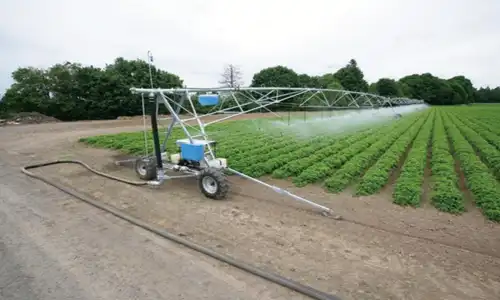
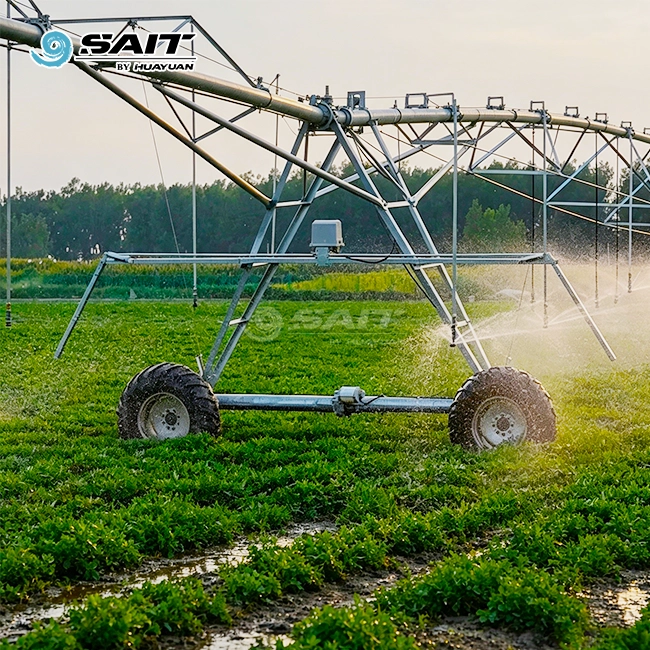
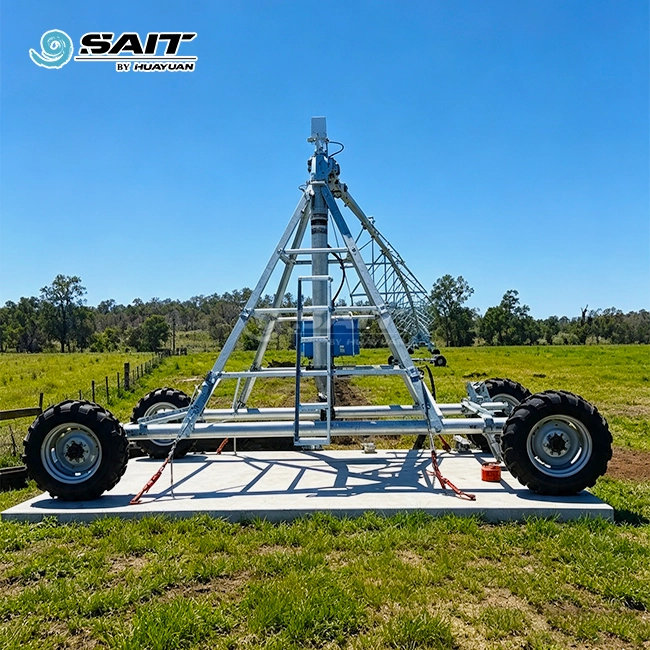
A two-wheel lateral move irrigator moves across rectangular fields in straight, parallel runs that are not parallel to its span structure. When the cart goes off that line, even by a few centimeters, the impacts build up over a 3,000-meter distance.
What Misalignment Looks Like in the Field
There is a diagonal "crab walk" pattern in the ground behind the drive cart that is the clearest early sign. Also, you might see dry spots on one side of the field while the other side has too much water. Both of these signs show that the cart is no longer following its guiding point.
How It Affects Water Uniformity
A Christiansen Uniformity Coefficient (CUC) above 90% means that the horizontal move system is well-tuned. When nozzle positions aren't lined up correctly with crop rows, uniformity goes down, and yields are lost. According to a study released in 2019 in Agricultural Water Management, a 5% drop in the regularity of irrigation is linked to a 3–7% drop in the yield of cash crops when water is limited.
The Role of the Guidance System
For a compact linear irrigator, there are three ways to guide two-wheel systems: furrow tracking, hidden wire recognition, or satellite-based steering (BDS/GPS). There is a different calibration range for each method. Satellite guidance has the tightest correction loop, usually within ±2.5 cm. Furrow guidance, on the other hand, depends a lot on the condition of the trench and the amount of water in the soil.
Root Causes of Two-Wheel Linear Misalignment
It's rare for misalignment to have just one cause. Whenever I look at field reports from big operators, I find that the issue is usually a mix of mechanical wear, the way the land is shaped, and lack of upkeep.
Mechanical Wear on Drive Components
The drive axle has bearing play that lets the wheel toe in or out while it's moving. Over one or two seasons, worn gearbox seals also let lubrication leak out, which makes the difference in friction between the left and right drive motors even bigger. This makes the cart pull to one side, which the steering system has to keep adjusting but can't do in the end.
Terrain and Soil Variability
Wet or irrigated areas make one wheel sink deeper than the other, which changes the steering shape in the middle of the pass. Fields with a cross-slope of more than 2% put a constant load on the frame of the cart from the side. HUAYUAN SAIT systems are made to work reliably from -20°C to 60°C and with some changes in grade, but landscape survey data should be used to plan the initial placement.
Installation and Calibration Errors
For two-wheel linear irrigation, if the initial cable burial depth is wrong or the furrow ditch is not centered properly, the guide reference will be off-center from the first day. A guidance wire that was put in 15–20 cm off-center during testing was the cause of many misalignment calls. This is why having on-site installation help is important: mistakes made during setup get worse with each pass.
Step-by-Step Approach to Fixing Two-Wheel Linear Misalignment
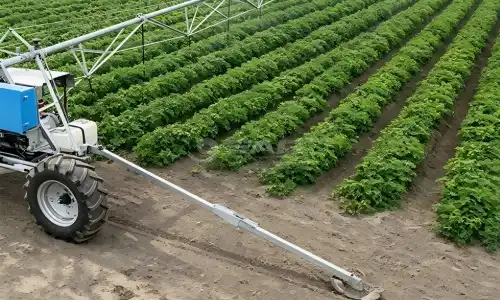
Structured fix steps save time and keep problems from happening again. Do these steps in the right order instead of going straight to the gearbox adjustments.
Step 1 — Confirm the Baseline Reference
Look over the guide reference again before touching any motor part. For systems with cables, use a signal detector to make sure the cables are running straight and at the right depth (usually 300–450 mm). For satellite-guided systems, make sure the antenna on the GNSS device is level and not blocked, and make sure the correction signal is turned on. Before you move on to hardware, setting up a proven reference gets rid of the guide system as a variable.
Step 2 — Inspect Wheel Toe and Bearing Condition
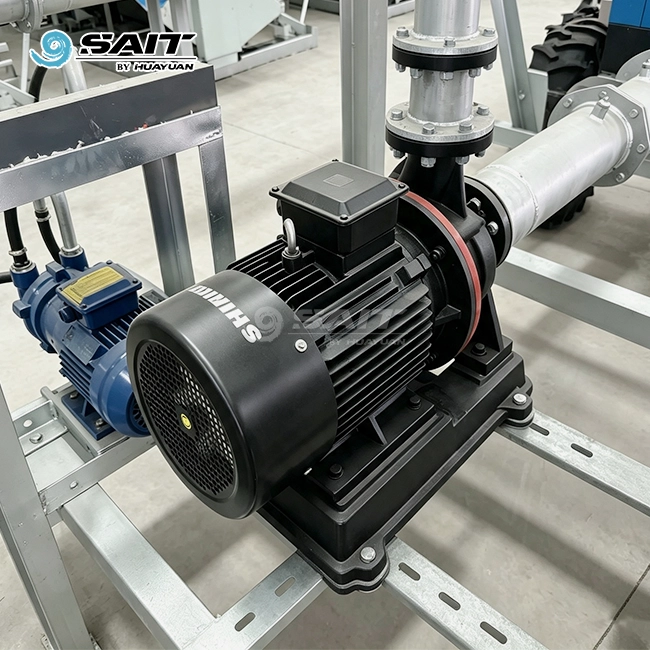
For both drive wheels, use a straight edge and tape to measure the toe angle. Make sure the cart is on level ground. Toe variation should be less than or equal to 0.5°. Spin each wheel by hand and listen for rough bearings. If you can hear play in a bearing, you should replace it right away. Delaying replacement causes damage to the axle that costs a lot more to fix. The water turbine 4-speed gearbox on HUAYUAN SAIT drive units has carefully made gears that don't wear down easily. Before putting the unit back together, check the output shaft seal for oil leaks.
Step 3 — Recalibrate the Steering Control System
After making mechanical fixes, go to the electronic control panel and start the system's auto-calibration process. On most electronic control systems, this is done by driving slowly for 50 to 100 meters while the steering sensor records data on any deviations. With the remote control option, the technician can walk next to the cart and watch the tracking happen in real time without stopping the calibration run. Write down the results and then compare them to the manufacturer's alignment error standard.
Comparing Two-Wheel Linear Alignment with Other Irrigation Systems
When procurement teams know where two-wheel lateral move systems stand in comparison to other technologies, they can more accurately estimate the needs for maintenance.
Center Pivot vs. Lateral Move Alignment Demands
Since the middle pivot spins around a set point, alignment is a radial problem. The outer spans only need to stay within the arc tolerance. A two-wheel lateral move has to stay in a straight line across the whole field width, which means that the guidance calibration has to be more precise. But the lateral move pays off with field coverage above 98%. This is because it gets rid of the corner waste that costs center pivot workers up to 20% of fertile land.
Drip and Sprinkler Systems
For a compact linear irrigator, alignment is not a maintenance item for drip and ceiling spray systems because their drive units don't move. But these systems come with their own problems, like clogged emitters, pressure loss over long runs, and high per-acre placement costs. For rectangular fields larger than 50 hectares, the lower per-hectare operating cost of a lateral move system and its compatibility with fertigation typically offset the alignment upkeep it requires.
2024 Manufacturer Innovations
HUAYUAN SAIT's BDS/GPS dual-mode guidance, which is backed by more than 130 patents, including 35 idea patents, directly solves the problem of alignment adjustment frequency. The built-in IoT platform keeps track of steering corrections made for each pass. This lets operators tell the difference between a problem with the guidance calibration and a problem with the bearing wear before either of them damages the crop.
Procurement Considerations: Buying and Maintaining Two-Wheel Linear Irrigation Systems
How often imbalance problems happen and how much they cost to fix are directly affected by the choices that were made before the buy.
Before you sign a buy order, you should think about these main things:
- Guidance system selection: GNSS-guided systems reduce terrain-related misalignment corrections. For fields above 100 hectares or with variable soil texture, the added cost of satellite guidance pays back within two seasons through reduced labor and correction downtime.
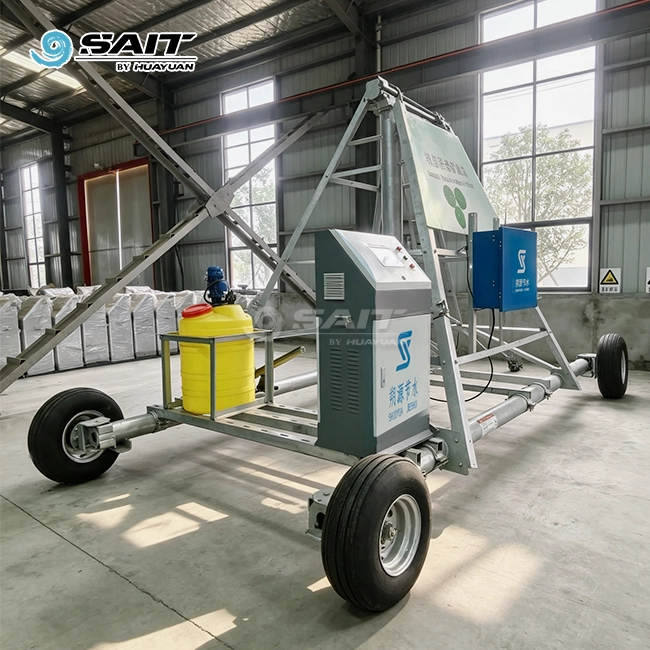
- Drive unit configuration: HUAYUAN SAIT offers 2-wheel and 4-wheel drive unit options with single-beam or double-beam frames. Soil bearing capacity data from a topographic survey should drive this decision — undersized drive units on soft soil are a primary cause of chronic misalignment.
- Span and tire selection: Available wheel sizes (11.2-24, 14.9-24, 16.9-24) affect ground pressure and tracking stability. High-flotation tires reduce soil compaction and minimize wheel sinking on moist ground.
- After-sales parts access: HUAYUAN SAIT provides lifelong spare parts supply at cost price, with a 1-year full warranty and 3-year low-cost maintenance program. For operators managing 3–10 units across multiple parcels, parts standardization across the fleet is a direct cost control measure.
These things affect the total cost of ownership a lot more than just the price of the car. The best way to avoid imbalance is to put money into the right setup from the start.
Conclusion
For two-wheel linear irrigation, misalignment can be fixed by following a step-by-step process: first, check the guidance reference; then, check the mechanical parts; and finally, recalibrate the control system. Regular maintenance, checking the ground before installation, and choosing the right steering system all greatly lower the number of times that corrections need to be made. With BDS/GPS dual-mode guidance and IoT-based diagnostics, HUAYUAN SAIT's flexible lateral move platform gives operators the tools they need to keep straight-line accuracy over field runs of up to 3,000 meters. With 20 years of manufacturing knowledge and on-site installation help, it's easier than most operators think to get from a misaligned problem to reliable operation.
FAQ
Q1: How often should I inspect wheel alignment on a lateral move system?
At the start of each irrigation season and after any event where the cart went over a soft or wet patch, check the toe alignment and bearing condition. A visible check in the middle of the season is also recommended for people who use the system a lot and run daily rounds.
Q2: Can misalignment cause permanent damage to the system?
Yes. When misalignment lasts for a long time, it puts uneven stress on the drive axle, span connections, and gearbox. If you don't fix it, it can lead to wear cracks in the axles and structural damage at the span joint brackets, which are repairs that cost a lot more than regular alignment correction.
Q3: Are there automated detection options for early misalignment warnings?
The remote control system and IoT platform for HUAYUAN SAIT keep track of how often the direction is corrected per pass. Before it can be seen in the field, a quick rise in correction events lets workers know about a mechanical or calibration problem that is starting to happen.
Q4: What guidance system is best for sandy or desert terrain?
Satellite guidance (BDS/GPS dual-mode) works best in sandy areas where furrow walls fall apart, and underground wires move around. The missing watering rate for HUAYUAN SAIT's GNSS-guided systems is less than 5%, which is very important for projects that are trying to restore deserts.
Partner with HUAYUAN SAIT for Two-Wheel Linear Irrigation Systems
With over 130 patents, 20 years of manufacturing experience, and a modular platform that can be configured for any field condition, HUAYUAN SAIT provides two-wheel linear irrigation supplier solutions. Our systems come with a 1-year guarantee, a 3-year maintenance program, and free extra parts for life for furrow, cable, and BDS/GPS dual-mode guiding. You can email our technical team at kevin@showyirrigation.com to ask for a review of the field configuration or a product demonstration.
References
1. Agricultural Water Management — Pereira, L.S. et al. (2019). Irrigation uniformity and crop yield response under deficit irrigation.
2. Irrigation Science — Evans, R.G. & Sadler, E.J. (2008). Methods and technologies to improve efficiency of water use in lateral move systems.
3. Transactions of the ASABE — King, B.A. & Kincaid, D.C. (2004). Sensor and control systems for precision irrigation management in lateral move equipment.
4. Biosystems Engineering — Hedley, C.B. & Yule, I.J. (2009). Soil water status mapping and its relevance to variable rate irrigation in rectangular field systems.
5. Journal of Irrigation and Drainage Engineering (ASCE) — Dukes, M.D. & Perry, C. (2006). Uniformity testing of variable rate irrigation equipment and guidance system calibration protocols.
6. Applied Engineering in Agriculture (ASABE) — Lyle, W.M. & Bordovsky, J.P. (1981). Low energy precision application (LEPA) irrigation system design and lateral move equipment alignment considerations.
Get a tailored irrigation solution for your project — our engineering team is ready to support you from design to installation.