How far can a ditch feed linear irrigation system operate from the canal?
A ditch feed linear irrigation system can typically operate up to 3,000 meters from the water source canal in a single travel pass. The machine draws water continuously from an open channel running parallel to its path, using an onboard pump to maintain pressure throughout the run. Systems like those from HUAYUAN SAIT support a maximum machine length of 973 meters and can cover up to 240 hectares per unit. Actual reach depends on ditch design, pump capacity, field slope, and pipe diameter — all variables that proper hydraulic engineering can control.
Understanding Ditch Feed Linear Irrigation Systems


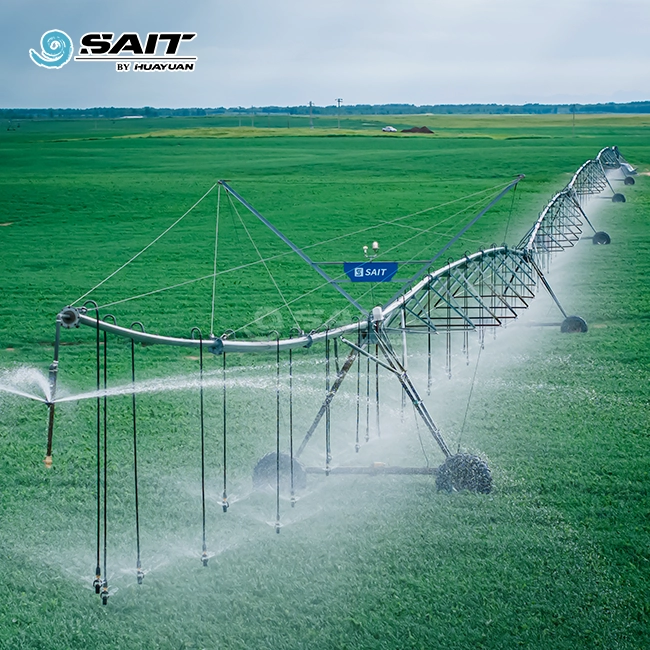
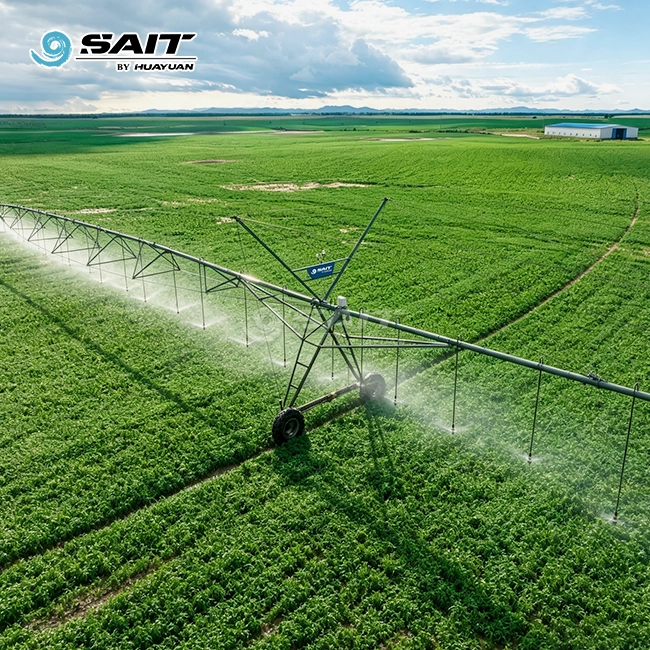
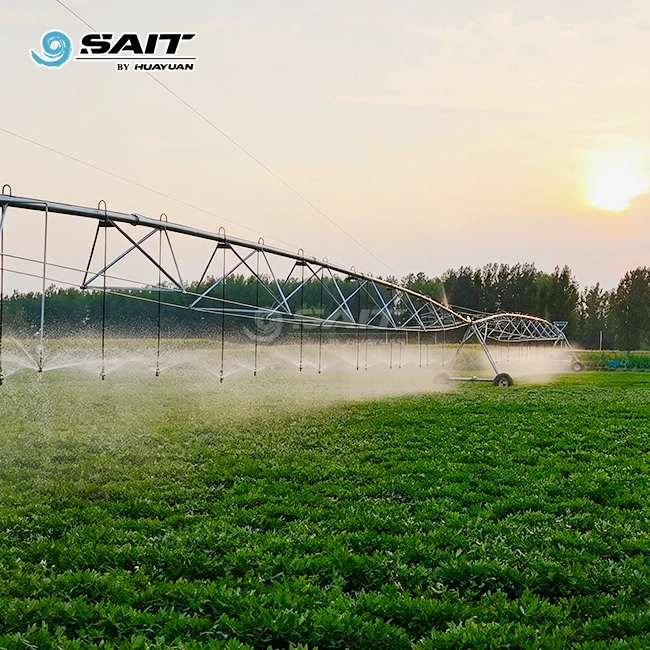
A ditch feed linear system moves in a straight line across square fields, getting water from an open canal running parallel to it at all points along its path. Other horizontal move setups are limited by the hose drag, but this design gets rid of that problem.
How Water Moves from Canal to Crop
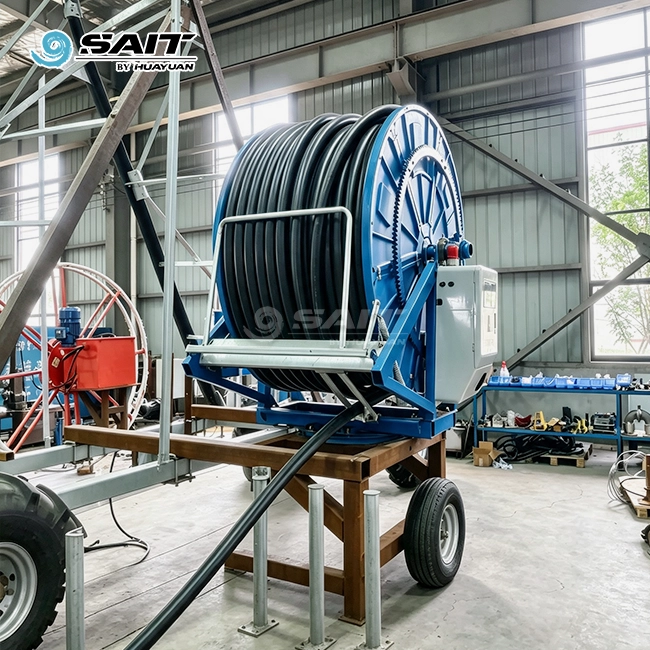
It puts a floating intake unit right in the feed ditch of the machine. The intake moves along with the lateral move, constantly pulling water into the main span pipeline through a suction pipe. Pipe sizes of 168 mm and 219 mm allow for high flow rates without the pressure drop that often happens in systems with long distances of pipes.
Key System Components
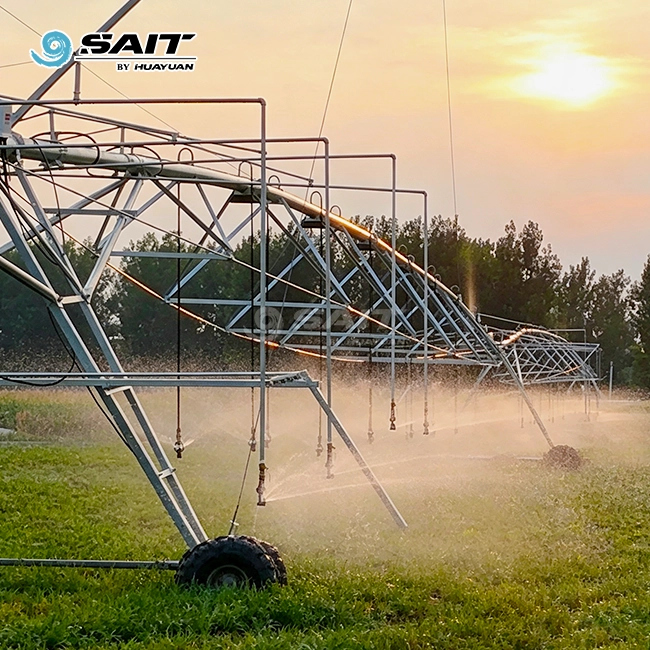
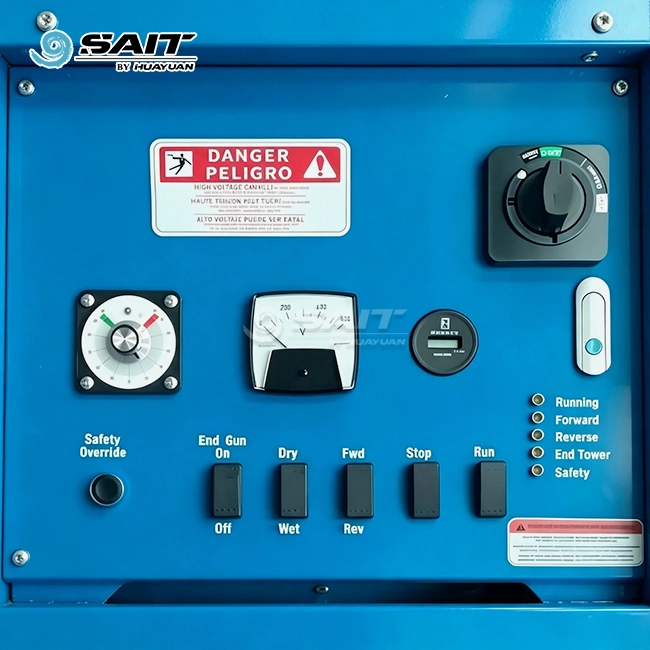
The main parts are stainless steel spans that range in length from 37.5 m to 54.9 m, an input screen that cleans itself, an onboard pump, an electronic control panel, and drive towers that come with wheels in sizes 11.2-24, 14.9-24, and 16.9-24. Every part works together to make sure that water flows evenly from the ditch to the sprinkler heads above the crops.
Why Rectangular Fields Benefit Most
The best use of this open-ditch irrigation arrangement is in fields with a length-to-width ratio greater than 2:1. The machine moves across the field in a straight line, irrigating more than 98% of the surface area. This gets rid of the waste in the corners that makes center-pivot systems hard to use on rectangular plots.
Factors Influencing Maximum Operating Distance from the Canal
The 3,000-meter trip distance is possible if everything is set up correctly, but there are a number of field factors that directly affect how far the system can work and still keep the irrigation regularity above 90%.
Hydraulic Design and Pipe Sizing
Drag loss is controlled by the slope of the ditch, the height of the inlet, and the diameter of the main pipe. When the slope is low, a 219 mm main pipe keeps pressure for a long distance much better than smaller pipes. Before deciding on a pump size, engineers usually compare the NPSHR (Net Positive Suction Head Required) to the depth of the ditch.
Soil Type and Field Gradient
Clay soils don't let water move side to side easily, which raises the risk of ponding near the wheels. To keep the spans from becoming out of alignment, fields with gradients above 5–6% need high-torque drive motors and universal joint couplings. The system can adapt to uneven field edges without losing its ability to cover them by using overhang setups that range from 2.7 m to 25 m.
Maintenance Practices That Protect Reach
Most of the time, pressure loss and coverage failure are caused by a suction screen that is clogged. The 30-mesh intake filter is checked every day, and the structure of the span joints is checked every so often. This keeps the system working at its full travel distance. The hot-dip galvanized finish over 80 εm on HUAYUAN SAIT steel parts protects them in high-humidity canal settings so they last a long time.
Comparing Ditch Feed Linear with Other Irrigation Methods on Operational Reach
Knowing when the canal-fed lateral move works better than other options helps procurement teams make the right case for the investment.
The most popular large-scale irrigation methods are shown below side by side:
- Gated pipe systems require manual repositioning every 12–24 hours and cannot cover more than 200–400 meters per setup without significant labor input. They are low-cost but do not scale for 200+ hectare plots.
- Drag hose lateral move systems are limited by hose length, typically 400–600 meters of travel before the hose must be repositioned. They also cause soil compaction along the drag path, which is a persistent problem on fine-textured soils under potato or sugar beet production.
- Center pivot systems are well-suited for square fields but irrigate only about 78% of a true square plot, leaving corners dry. On rectangular fields with ratios beyond 2:1, this waste compounds significantly.
All three of these problems are fixed by the ditch feed linear move system. It covers up to 3,000 meters of journey, gets over 98% field coverage on rectangular plots, and gets rid of the need to carry hoses. A shared supply canal can serve several units at the same time, which lowers the cost of infrastructure per hectare for farming cooperatives that are in charge of several neighboring parcels.
Practical Installation and Procurement Insights for Operational Efficiency
Preparing the site carefully before the first irrigation pass is needed to get the full 3,000-meter operational range.
Site Grading and Canal Preparation
During the whole travel distance, the supply ditch should always be at least 0.4 to 0.5 meters deeper than what the pump needs for minimum suction. Telescopic suction lines can handle changes in water level of up to 5 meters, but a stable canal grade makes the entry assembly less stressed.
Guidance System Selection
There are three types of guidance modes: cable guidance, furrow guidance, and BDS/GPS dual-mode satellite guidance. RTK-GPS direction is best for fields with trip distances longer than 1,000 meters. For long runs, it stops cumulative span misalignment that would make coverage less even by fixing steering drift to within ±10 cm in real time.
Power Source Matching to Field Location
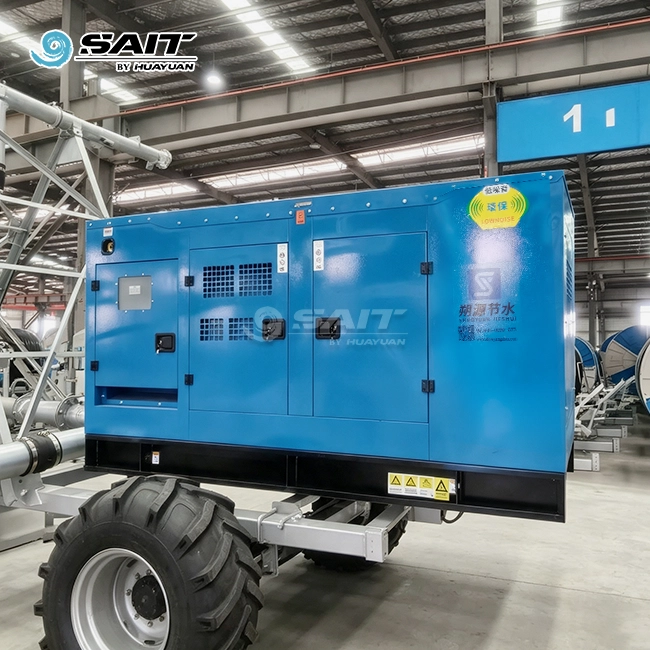
Generac-powered drive units work well in remote fields that can't connect to the power grid. Towable cable power supplies are helpful in fields that are close to electrical infrastructure because they save money on fuel and shorten the time between engine maintenance visits. The HUAYUAN SAIT platform can handle both setups on the same base machine, which gives procurement teams the freedom to work on different project sites.
Real-World Cases and Performance Verification
Large-scale potato and sugar beet farms in Central Asia and North Africa have proven that open-ditch irrigation canal-fed lateral move systems can move crops 2,500 to 3,000 meters per watering cycle. Measured Coefficient of Uniformity (CU) values in these deployments always went above 90%, even when there was a lot of wind, which would normally make uniformity fall below accepted levels when placing sprinklers the old way.
Performance Metrics That Matter
- Field coverage rate: >98% on rectangular plots
- Maximum machine length: 973 meters
- Maximum travel distance: 3,000 meters per pass
- Irrigation area per unit: up to 240 hectares
- Missed irrigation rate: <5% using BeiDou-guided drive alignment
Technology Improvements Extending Operational Range
Over 98% of the field is covered on rectangular plots
BeiDou tracking and IoT-based remote diagnosis are both built into the HUAYUAN SAIT platform. From a mobile interface, operators can check the pump pressure, span alignment, and water application rates. This way, they can catch flow problems early, before they shorten the effective travel distance. This feature is especially useful for big government irrigation projects that don't have a lot of people on-site.
Conclusion
A well-designed ditch feed linear system can reliably go up to 3,000 meters from the supply canal and keep the uniformity of the irrigation above 90%. You can control the important factors like pipe width, pump size, field gradient, and guide accuracy by planning how the system is built. With more than 130 patents and more than 20 years of experience making machines, HUAYUAN SAIT's machines are built to work in all of these areas. This technology gives rectangular field operators, cooperatives, and large-scale project developers a field coverage rate and travel distance that no center-pivot system can match on plots that aren't round.
FAQ
Q1: How far can a ditch feed linear system realistically travel in one irrigation cycle?
The system can make a 3,000-meter travel pass in normal field conditions with a well-kept supply canal and the right-sized pump. Actual distance depends on how steep the field is and how stable the water level is in the ditch.
Q2: What pipe diameter should I specify for maximum operational reach?
For spans longer than 600 meters, a major pipe width of 219 mm is suggested. Compared to the 168 mm choice, it cuts down on friction loss by a lot, keeping the pressure at the far end of the machine the same.
Q3: Can the system handle uneven terrain?
Yes. The drive units are made to work with field gradients of up to 5–6%. When that level is crossed, high-torque motors and special connections are needed. HUAYUAN SAIT lets you choose the right drive unit for your spot by using data from a topographic study.
Q4: What guidance system works best for long-distance travel?
BDS/GPS dual-mode satellite guidance keeps the alignment within 10 centimeters the whole way. This level of accuracy is especially important for runs longer than 1,500 meters, where small turning mistakes add up.
Request a Quote from HUAYUAN SAIT — Ditch Feed Linear Supplier
For more than 20 years, HUAYUAN SAIT has helped with irrigation work on five continents. Our ditch feed linear machines can work on up to 240 hectares per unit and go 3,000 meters per pass. They come with a full guarantee for one year, and extra parts will always be available at the factory price. Our team is ready to help you whether you need a basic setup or an OEM build that is made just for your site. To start planning your project right away, email us at kevin@showyirrigation.com.
References
1. Irrigation Association. Landscape and Agricultural Irrigation Best Management Practices. 2021.
2. Food and Agriculture Organization of the United Nations. Irrigation Water Management: Irrigation Methods. FAO Irrigation and Drainage Paper No. 45. 1988 (revised 2020).
3. Shock, C.C., & Welch, T. Drip Irrigation: An Introduction. Oregon State University Extension Service. 2013.
4. Evans, R.G., & Sadler, E.J. "Methods and Technologies to Improve Efficiency of Water Use." Water Resources Research, 44(7). 2008.
5. Howell, T.A. "Irrigation Efficiency." Encyclopedia of Water Science. Marcel Dekker. 2003.
6. Camp, C.R., Sadler, E.J., & Yoder, R.E. (Eds.). Evapotranspiration and Irrigation Scheduling. American Society of Agricultural Engineers. 1996.
Get a tailored irrigation solution for your project — our engineering team is ready to support you from design to installation.