How much field area can a hose reel irrigator irrigate?
A single hose reel traveler can cover more than 1.33 hectares (approximately 3.3 acres) per irrigation cycle. With PE pipe lengths ranging from 300 to 500 meters and irrigation widths of 43 to 78 meters depending on the model, one machine handles substantial acreage without permanent infrastructure. The actual coverage depends on pipe length, spray range, travel speed, and nozzle size. For medium-to-large farms, one well-configured unit can serve 15 to 30 hectares per season through repeated repositioning.
Understanding Hose Reel Irrigators and Their Coverage Capacity


How a Hose Reel Traveler Works
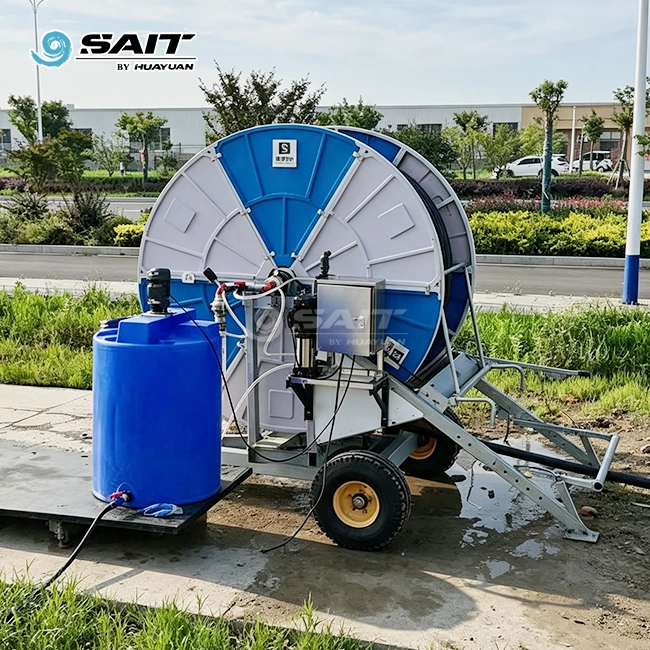
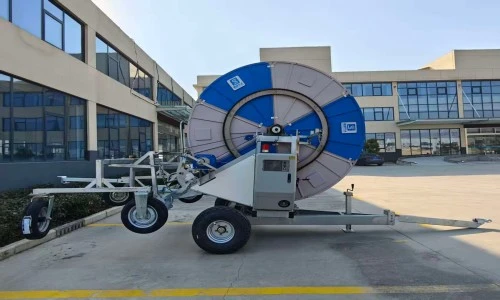
A hose reel traveler has a high-density PE pipe through which pressurized water flows to power an internal turbine. The turbine pulls the sprinkler cart across the field at a controlled speed while retracting the hose. The water comes out of a squirt gun or boom nozzle and spreads out over the crop cover as small drops. You can change the depth of the irrigation by changing the speed of the retractor. A slower trip speed means that more water is sprayed per unit area. This self-propelled system gets rid of the need to move the pipes by hand after each run.
Key Factors That Determine Coverage Area
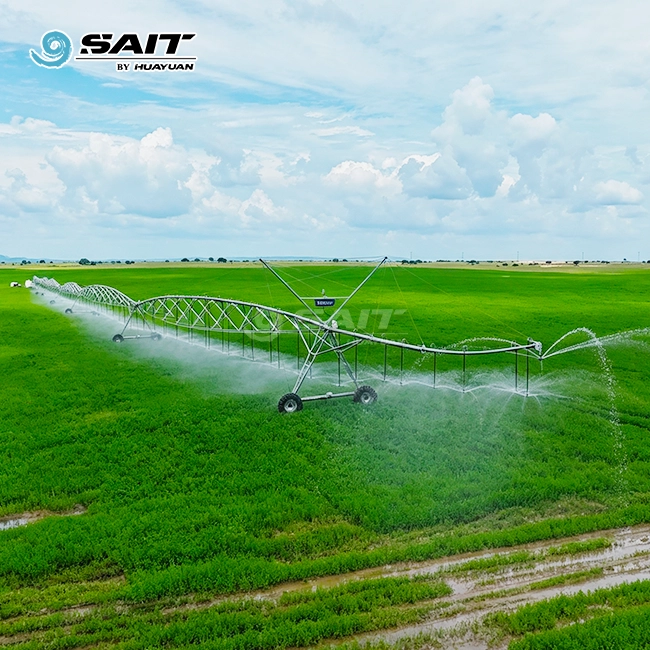
The area that is watered per run is directly set by three factors: The length of the PE pipe (how far the cart can go), the width of the irrigation (which is based on the diameter and pressure of the nozzles), and the number of runs that can be done each day. With a 400-meter pipe length and a 78-meter irrigation width, the JP-90/400 model can water about 3.12 hectares in a single pass. If farmers move the machine twice a day, they may be able to water 6 hectares or more, depending on the shape of the field and the flow of water.
Coverage Across Common Field Types
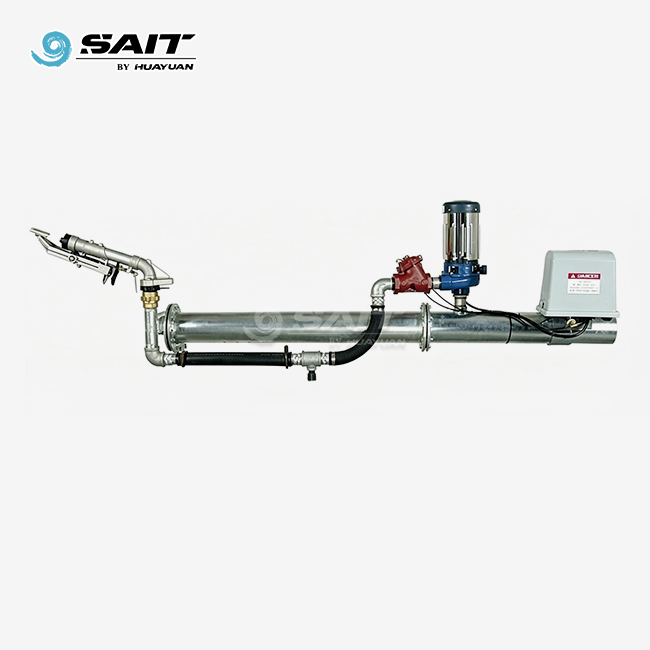
The water reel's high-clearance cart and wide spray circle are good for row crops like corn and potatoes. On football grounds and golf courses, boom-type carriages are used to spread the grass evenly across flat, wide areas. For precise application, vegetable growers with smaller plots choose shorter pipe models (JP-75/300). Each time, the machine changes the size of its irrigation area by switching between boom and single-gun setups, changing the travel speed from 8 to 80 m/h, and changing the tip size.
Comparison of Hose Reel Irrigators with Traditional Irrigation Systems
Water Use Efficiency
Fixed sprinkler lines and flood irrigation often send water in odd patterns and have efficiency rates below 60%. When compared to regular spray guns, a turbine-driven reel irrigator saves more than 50% of the water used, and it spreads the water evenly by more than 90%. Fine spray atomization lowers the amount of water that evaporates from the surface, and the controlled application rate (>7 mm/h for 75mm models and >8 mm/h for 90mm models) better meets the water needs of crops than open-channel methods.
Portability vs. Fixed Infrastructure Cost
Permanent underground pipe networks cost a lot of money to set up and can't be moved when crop trends change. That problem is solved by a movable tourist system. Agricultural service companies often put one machine on a van and work on farms for several clients in the same week. Because there is no buried infrastructure, insurance costs are lower, and permits are granted faster in most U.S. counties.
Maintenance Demands Compared
Fixed center-pivot systems need regular maintenance on the tower gearbox and alignment checks over long distances. The most complicated parts of a reel irrigator are the turbine gearbox and the hose-layering scroll bar, which can both be reached from the ground. As part of regular maintenance, the internal strainer is cleaned, the turbine seals are oiled, and the swivel joint is checked. This simple service schedule cuts down on downtime and makes sure that operating costs stay the same throughout the season.
Maximizing Irrigation Coverage: Installation and Maintenance Insights
Field Layout Planning for Full Coverage
Make a map of the field's edges and figure out how far apart the lanes should be using the machine's effective watering width before the first run. For a JP-90/400 with a width of 78 meters, space the parallel lanes 70 meters apart to allow 10% overlap. This keeps the strips from drying out between passes. Place the reel unit on a flat, firm surface close to a water source. Use the ground stakes that come with it to keep the frame from moving while it is being retracted.
Routine Maintenance That Prevents Coverage Loss
Most of the time, people forget to line the hose-layering device (scroll bar) on their hose reel traveler. It causes pressure spikes that make the next run of spray less consistent if the PE pipe is wound unevenly on the reel drum. Every 10 hours of use, check the tracking of the scroll bar. Also, check the automatic shut-off sensor at the end of each lane to make sure the drive turns off properly when the cart reaches the reel. This will keep the hose from overrunning and possibly getting kinked.
Water-Saving Adjustments in the Field
Lowering the tip pressure by a small amount (within the range of 0.25 to 0.5 MPa) slows down the droplets and stops them from drifting by about 20% on days with a mild breeze. When you combine this with a slower travel speed, water stays in the root zone instead of running off. Together, these two changes can raise the effective water use efficiency above 85%, which is very helpful in places that are prone to drought or when water supply is limited.
Selecting the Right Hose Reel Traveler Based on Field Area and Application Needs
Model Selection by Field Size and Crop Type
There are five main types in the HUAYUAN SAIT line, each one designed for a different field size. Here are the main criteria that will help you choose:
- JP-75/300: 75mm pipe, 300m length, spray range 24–44m, irrigation width 47–74m. Suited for fields up to 50 hectares with moderate water pressure (0.5–1 MPa inlet).
- JP-75/500: 75mm pipe, 500m length, covers longer field strips. Inlet pressure 0.6–1.1 MPa. Ideal for elongated row-crop fields needing fewer repositioning stops.
- JP-90/400: 90mm pipe, 400m length, spray range 24–46m, irrigation width 43–78m, flow rate up to 48.4 m³/h. Best for high-volume applications on large farms (100–200 ha) with strong pump systems.
These models come with both single-gun carriages and multi-sprinkler boom attachments, so contractors can change the sprinkler setup to fit the crop height and row spacing of each client farm.
One of the most common mistakes people make when buying this kind of thing is picking the wrong pipe width. When buyers buy pipes that are too small, there is too much friction loss. This lowers the nozzle pressure below the minimum level and cuts the spray range by 15–25%. Before making an order, you should always make sure that the pipe width matches the pump output.
Bulk Procurement and OEM Options
HUAYUAN SAIT can put OEM branding on the water reel's frame, control panel, and PE pipe for resellers and rental companies that buy 10 to 50 units. The wait time is 30 to 45 days. For an extra 10–25%, you can get PE pipes made to your exact specs, such as ones that are resistant to UV light and safe for food. Third-party test certificates (CE, ISO, SASO) are sent with every order, and ISO 9001 approval makes sure that each batch is the same.
Future Trends and Innovations in Hose Reel Traveler Irrigation
IoT and Smart Control Integration
When BeiDou navigation is paired with IoT sensors, reel irrigators can now see where they are in the field at all times and change their speed instantly based on data about how wet the soil is. HUAYUAN SAIT's systems get an irrigation rate of less than 5% missed in uneven and cornered fields, which has always been a problem for traditional travelers. A mobile app for remote tracking also lets workers control many machines on different farms from a single screen.
Advanced PE Hose Materials
The virgin-grade PE pipe that is being made now is thicker than standard pipe in the industry and doesn't contain any recycled materials. This means that it can last longer than 15 years with the right UV protection and winter drainage. Pipe that stays flexible at –20°C is being worked on right now to solve seasonal problems in northern U.S. states, Canada, and markets in the CIS region where freeze-thaw cycles used to cause hoses to break early.
Corner Arm Systems for Irregular Fields
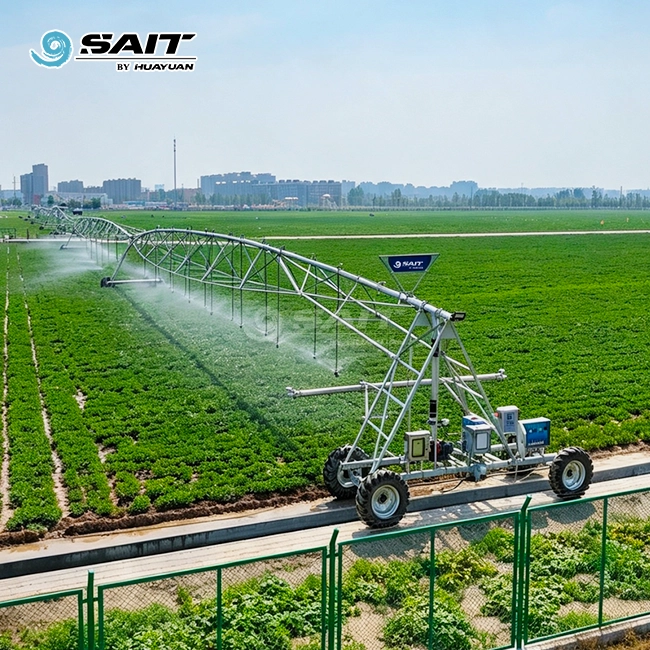
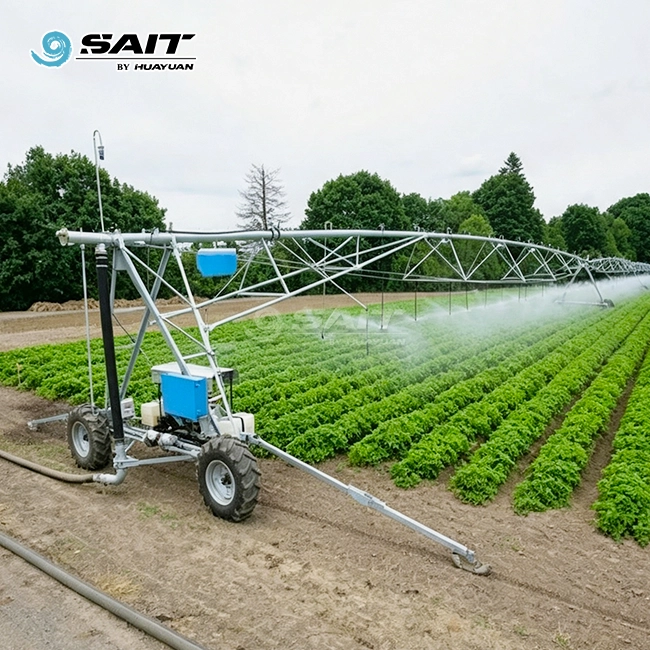
When used on square or irregular fields, a Corner Arm attachment improves the area that can be irrigated by 15% by spraying into parts of the field that normal riders miss. This addition cuts down on the number of times machines need to be moved each day and shortens the overall irrigation cycle time on farms in the U.S. where field shapes are based on county road grids instead of crop geometry.
Conclusion
Most buyers don't realize how much ground a hose reel traveler covers at first. A single unit can serve farms from 15 to over 100 hectares per season, with pipe lengths up to 500 meters, watering widths up to 78 meters, and the ability to move in less than an hour. These machines are a good buy for farmers, workers, and equipment dealers because they save more than 50% of water, last longer than 10 years, and can be configured in a variety of ways. Finding the right model for your field size and water supply is the first step to getting the most coverage.
FAQ
Q1: How many acres can one machine irrigate per day?
With a JP-90/400 model running two passes daily, a single machine covers approximately 6 hectares (roughly 15 acres) per day, assuming standard travel speeds and adequate water pressure.
Q2: What is the minimum water pressure needed to operate a turbine-driven reel irrigator?
Most turbine models require 0.3 to 0.5 MPa (approximately 3 to 5 bar) at the inlet. The JP-90/400 can start at 0.3 MPa, making it suitable for lower-pressure pump systems.
Q3: How long does the PE pipe last?
High-quality virgin PE pipe with UV stabilization lasts more than 15 years when drained before freezing and stored out of direct sunlight during off-season months.
Q4: Can these machines handle uneven terrain?
Yes. Wide-track tires and a low-center-of-gravity frame manage moderate slopes well. Severe gradients may require additional anchoring of the reel unit during operation.
Get a Custom Coverage Plan from HUAYUAN SAIT
HUAYUAN SAIT has been making hose reel traveler equipment for 20 years. Farms, contractors, and wholesalers in all four countries trust their products. Our team can pick the right model size for your field size, water supply, and crop type. We can ship it from our plant near Xuzhou in just one week. If you need a hose reel traveler, we can help. Contact us for a free price, no matter how many you need or if you want to buy in bulk. Email our team at kevin@showyirrigation.com to get in touch with us.
References
1. Food and Agriculture Organization of the United Nations. Irrigation Water Management: Irrigation Methods. FAO, 2019.
2. Camp, C.R., Sadler, E.J., & Yoder, R.E. Evapotranspiration and Irrigation Scheduling. American Society of Agricultural Engineers, 1996.
3. Hanson, B., Orloff, S., & Peters, D. "Sprinkler Irrigation of Row Crops." University of California Division of Agriculture and Natural Resources Publication, 2000.
4. Keller, J., & Bliesner, R.D. Sprinkle and Trickle Irrigation. Van Nostrand Reinhold, 1990.
5. Evans, R.G., & Sadler, E.J. "Methods and Technologies to Improve Efficiency of Water Use." Water Resources Research, 2008.
6. International Organization for Standardization. ISO 8224-1: Traveller Irrigation Machines — Laboratory and Field Testing Methods. ISO, 2003.
Get a tailored irrigation solution for your project — our engineering team is ready to support you from design to installation.