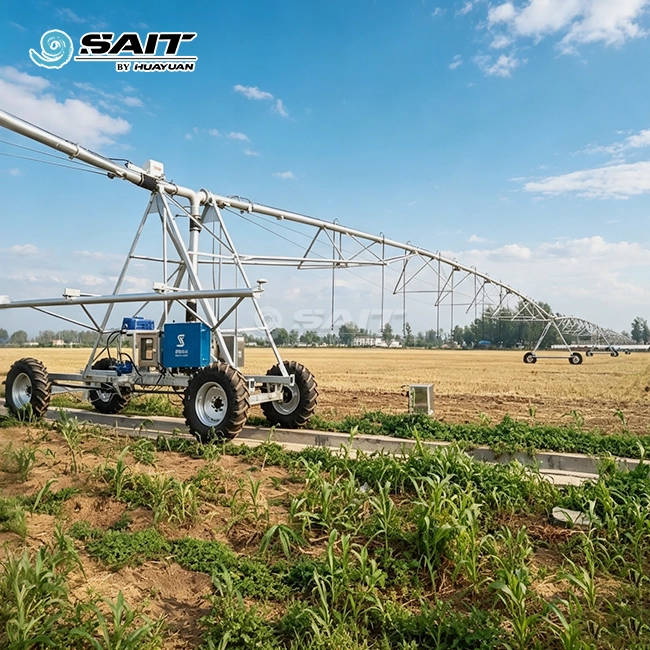
How to troubleshoot an electric hose reel irrigation motor?
When your hose reel irrigation-electric model stops working mid-season, every hour of downtime costs you water, yield, and labor. The fastest way to troubleshoot an electric hose reel irrigation motor is to work through a structured sequence: confirm power supply integrity, inspect the PLC or control panel for fault codes, check the drive motor and wiring connections, then examine the PE pipe and reel drum for mechanical obstructions. This four-step approach resolves more than 80% of field failures without specialist tools.
Understanding the Electric Hose Reel Irrigation Motor


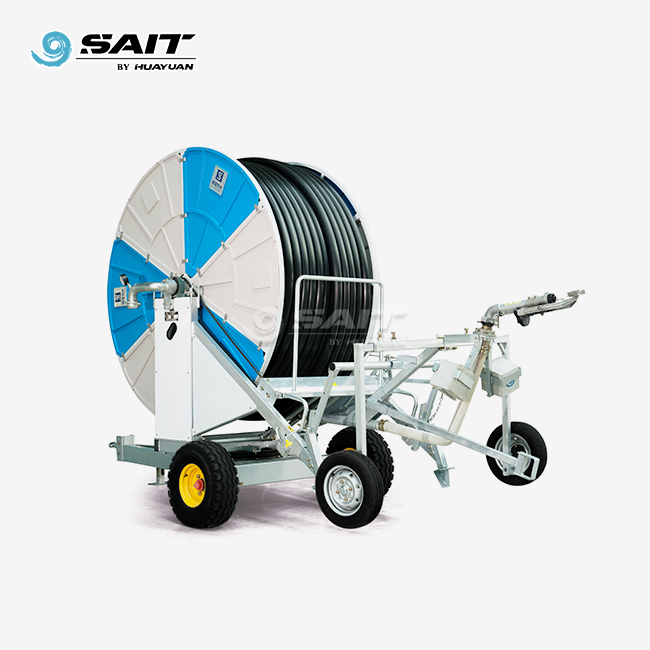
Before diagnosing a fault, you need to know what you are actually working with. An electric hose reel irrigator replaces the traditional water-turbine drive with a dedicated electric motor and PLC-controlled retraction system. That separation of drive from fluid dynamics is what makes the electric model so reliable on farms where water pressure fluctuates.
How the drive system works
A high-torque Brushless DC (BLDC) motor winds the PE pipe back onto the drum at a precisely controlled speed. The PLC adjusts motor RPM in real time as pipe layers accumulate on the drum, keeping retraction speed constant from the first meter to the last.
Role of the PE pipe
High-density polyethylene pipe carries pressurized water from the inlet to the spray gun nozzle. On HUAYUAN SAIT's JP-series models, PE pipe diameters of 75 mm and 90 mm are available in lengths from 300 m to 500 m, with a rated service life exceeding 15 years. Pipe integrity directly affects both water pressure at the nozzle and motor load.
Key electrical components
In an electric driven hose reel, the control panel, limit switches, end-of-run sensors, and the motor itself are the four electrical nodes most likely to develop faults. Understanding how these components interact helps you pinpoint problems quickly rather than testing components at random.
Identifying Common Problems with Electric Hose Reel Irrigation Motors
When something goes wrong in the field, it can be either electrical or mechanical. It takes a lot less time to diagnose when you know which category to use.
Electrical fault symptoms
The motor either won't turn on at all, trips a breaker as soon as it starts, or runs at different speeds without any pattern. You can use a multimeter to check the motor terminals to see if the supply voltage is in the right range. High-torque motors can't start when the voltage drops more than 10% below the limit on the plate.
Mechanical fault symptoms
If you hear grinding or knocking sounds when the drum retracts, if the drum turns on and off, or if you can see PE pipe kinking, these are all signs that there are mechanical problems. Field-deployed units break most of the time because things get stuck between the pipes. This happens when it rains a lot and dirt gets on the drum.
Diagnostic tools you should have on hand
You only need a digital multimeter, a handheld infrared thermometer (to make sure the motor isn't getting too hot), and the unit's working log to find most problems. Most PLC screens keep fault records. When you need to find a circuit fault quickly, it helps to have the wiring diagram from the owner's manual close by.
Step-by-Step Troubleshooting Process
You won't miss a simple upstream cause while looking for a complex downstream sign if you follow a set plan.
Step 1 — Document the symptom precisely
For a hose reel irrigation-electric model, write down the unit's retraction speed, its input pressure (in MPa), and any trouble codes that appeared on the PLC screen when the problem occurred. For JP-90/400 units, the pressure that goes into them should be between 0.3 PA and 1.2 MPa. The issue is quickly found if it's not in this range.
Step 2 — Inspect power and control wiring
Check the main power breaker, the circuit connections on the control panel, and the motor lead lines for any rust or loose contacts. One of the main reasons motors trip on and off in the field is a loose ground connection. You can check for this in just two minutes.
Step 3 — Clear mechanical obstructions and test the drive chain
Here's how to tell if the drum is bound: turn it by hand. Grease the gears or drive chain if they won't move. If the motor stops when it's under load even though the drum can spin freely, it's probably because of the winding resistance. Use a multimeter to make sure, and then compare the number to what it says on the tag.
For most issues, these three steps are enough to fix them on your own. After the unit is back up and running, make sure it is stable by running it through one full retraction cycle at low flow. Only then should it be put back on full-field duty.
Best Practices for Maintaining Electric Hose Reel Irrigation Motors
It always costs more to fix something after the fact than to keep it in good shape. Don't change the schedule for your electric-drive irrigation system. It will work at full capacity all season.
Taking care of your motor in these ways will keep it running well for a long time:
- Monthly electrical inspection: Check all terminal connections and wiring insulation for wear, especially where cables pass through the frame. Tighten any loose terminals and replace any cracked insulation before it causes a short circuit.
- Seasonal lubrication: Apply manufacturer-specified grease to the drive chain, gear set, and drum bearings before the irrigation season begins and again at midseason for high-use units. Proper lubrication reduces friction load on the motor and extends bearing service life.
- PE pipe condition check: Inspect the full pipe length for surface cracking, kinking, or UV degradation at the start and end of each season. HUAYUAN SAIT's self-produced virgin PE pipe is thicker than the industry average and contains no recycled material, which significantly reduces premature cracking risk.
- Control panel firmware and sensor verification: Test limit switches and end-of-run sensors each season. A failed end-of-run sensor is a primary cause of mechanical damage during final retraction.
They take about two hours of work per unit per season, but they keep plants from dying in the middle of the season, which would mean the field would be closed for at least one day. Plan them for times when there isn't much demand for them so that there is still water for crops when they need it the most.
Choosing the Right Electric Hose Reel Irrigation Motor for Your Operation
It's not always possible to use the same electric driven hose reel for different tasks. If you match the unit's specs to the job site, you won't have to buy something that doesn't work well and costs more.
Match PE pipe length to your field geometry
Since a 300-meter pipe waters a different area than a 500-meter pipe, the pressure that goes into the pipe needs to be changed to match. There should be 0.6 to 1.1 MPa of pressure coming in for the JP-75/500 model, but 0.5 to 1 MPa for the JP-75/300 model. If you don't match the length of the pipe to the output of your pump, the tip will always be under pressure.
Consider spray width and crop type
The boom-type carriage with many sprinklers spreads the water more widely and makes the drops smaller, which is better than a single gun for use on vegetables and other specialty crops. Each JP-series machine can water an area of 47–78 m³, which is more than 1.33 ha, depending on the type and width of the tip.
Evaluate total cost of ownership, not just unit price
A machine usually lasts more than 10 years, and PE pipes last more than 15 years in units that are kept in good shape. More often than not, a more expensive unit that needs to be replaced will cost more over ten years than a cheaper one that has better features like surge protection, UV-resistant pipe, and a full spare parts program.
Conclusion
A hose reel irrigation-electric model is easy to figure out what's wrong with it. First make sure there is power, then read the PLC trouble codes, check the lines, and remove any mechanical blocks. This will fix most problems right away. When you do planned maintenance and full repairs at the same time, you protect your irrigation investment for as long as the unit lasts.
FAQ
Q1: How long does an electric hose reel irrigation motor typically last?
In the business world, a well-kept unit's motor assembly lasts for eight to twelve years. For HUAYUAN SAIT's JP-series types, the PE pipe is made of brand-new polyethylene and doesn't have any recovered material in it. More than 15 years of service life is written on it.
Q2: What is the most common cause of motor failure?
Most motor trips and failures to start in open fields are caused by end connections that are too loose or rusted. If you check the terminals on the control panel for five minutes once a month, you can avoid most of these problems.
Q3: Can I troubleshoot the PLC control panel myself?
Yes. The PLC keeps track of the problem history numbers, which can be seen on the control panel's screen. Before you open any electrical box, compare the code to the operator's manual to find the fault's source. If you can't get past the terminal block, you should call your service provider.
Q4: How does the electric model handle low water pressure?
As long as the water pressure stays in the middle of its rating range, the electric model's retracting speed stays the same. This is because the drive system is not dependent on water pressure.
Get a Quote on HUAYUAN SAIT Electric Hose Reel Irrigators
For more than 20 years, HUAYUAN SAIT has been making watering systems with hose reels. In about a week, our plant in Suzhou sends them out. We are the direct factory for hose reel irrigation-electric models. We offer OEM and ODM designs, a 1-year full guarantee, 3-year low-cost parts support, and extra parts at factory cost for life. Send us an email at kevin@showyirrigation.com to get a quote.
References
1. Food and Agriculture Organization of the United Nations. Irrigation Water Management: Irrigation Methods. FAO, 2021.
2. American Society of Agricultural and Biological Engineers. ASABE Standard S436.1: Test Procedure for Determining the Uniformity of Water Distribution of Center Pivot and Lateral Move Irrigation Machines Equipped with Spray or Sprinkler Nozzles. ASABE, 2019.
3. International Organization for Standardization. ISO 8224-1: Traveller Irrigation Machines — Part 1: Laboratory and Field Test Methods. ISO, 2003.
4. Shock, C. C., & Welch, T. Drip Irrigation: An Introduction. Oregon State University Extension Service, 2016.
5. Evans, R. G., & King, B. A. "Site-Specific Sprinkler Irrigation in a Water-Limited Future." Transactions of the ASABE, Vol. 55, No. 2, 2012.
6. Polak, P., & Sivanappan, R. K. Low-Cost Drip Irrigation and Sprinkler Systems for Small Farms. International Development Enterprises, 2018.
Get a tailored irrigation solution for your project — our engineering team is ready to support you from design to installation.