PU vs. PE hose: which is more durable?
Irrigation and industrial hose material: What to use? The answer depends largely on the environment in which the hose is used. Compared to the typical PE hose, a polyether-type PU hose has better resistance to abrasion, greater flexibility at low temperatures, and better resistance to hydrolysis, making it the ideal choice for hose-reel irrigators in wet and changeable climates. However, PE hose has better tensile strength and pressure retention over extended distances. The proper choice depends on your application's mechanical requirements, its moisture exposure, and its expected service life.
Understanding Polyether-Type PU Hose and Polyester (PE) Hose
Before comparing how long something will last, it's helpful to know what it is made of at the molecular level.
What Is a Polyether-Type PU Hose?
Polyether-type PU hose is made of thermoplastic polyurethane (TPU) based on polyether. It is based on polymers that are resistant to decomposition in the presence of water and humidity. This makes it stable in areas that are always moist, while other hose materials might degrade. It performs well at temperatures from -40°C to +80°C and remains flexible at - 40°C. It has a Shore A hardness of 95A to 98A; thus, it does not kink, and it does not lose its bend radius.
What Is a PE Hose?
Polyethylene (PE) hose is made from high-density or linear low-density polyethylene resins. It has a high tensile strength and can withstand high working pressures for a long time. This is why it is the main line hose reel irrigators use to convey water. PE pipe for irrigation is normally rated for service from 0°C to 60°C. Pure PE pipe (not manufactured from recycled materials) is stronger, less brittle, and will last more than 15 years in the field.
Key Physical Property Differences
The two materials are at opposite extremes of the scale of ability. The finest of the bunch for flexibility, wear resistance and resistance to the formation of germs is polyurethane hose. PE hose is the best for tensile stiffness, stable pressure performance, and cost per metre. Neither is always superior; it is the situation that determines which characteristic is most significant.
Durability Comparison: PU vs. PE Hose from a Performance Perspective


Understanding performance differences requires looking at measurable data, not just general claims.
Abrasion and Flexibility
Data from published wear tests shows that Polyether-based PU hose is 3 to 5 times more abrasion-resistant than conventional rubber or PVC hose. It bends and bends without breaking the surface. In contrast, PE hose is more resistant to repetitive mechanical stress, but it also becomes more brittle at bends under low temperatures or when coiled incorrectly on a reel drum.
Chemical and Hydrolysis Resistance
Accelerated hydrolysis tests at 70°C and 95% relative humidity for 100+ hours show no detectable loss of tensile strength for the polyether PU hose. PE hose is resistant to most agricultural chemicals but is not rated for the same hydrolysis. Polyester-based PU hose (not polyether) generally becomes brittle after a few months in high humidity environments or in aquatic applications – this failure mode is avoided by polyether chemistry.
Pressure Ratings and Service Life
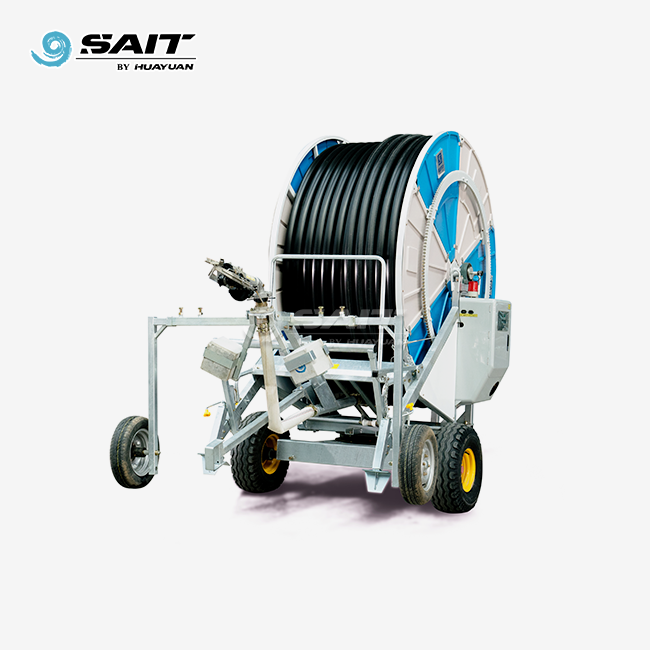
Huayuan Sait PE pipe for hose reel irrigators is designed for continuous use in the field for 15+ years and withstands inlet pressures of 0.3-1.2 MPa depending on the pipe diameter. In the drive mechanism, a polyether PU hose withstands mechanical and hydraulic stresses over rapid retraction cycles to support travel rates of 8-80 m/h without fatigue failure. The lifetime of a system using PE for the high-pressure water gearbox and PU for the retraction drive is higher than the lifetime each material alone can provide.
Industry Applications and Use Cases: Matching Hose Types to Needs
Even in the same irrigation machine, the two types of hoses are used for different things.
Where Polyether PU Hose Excels
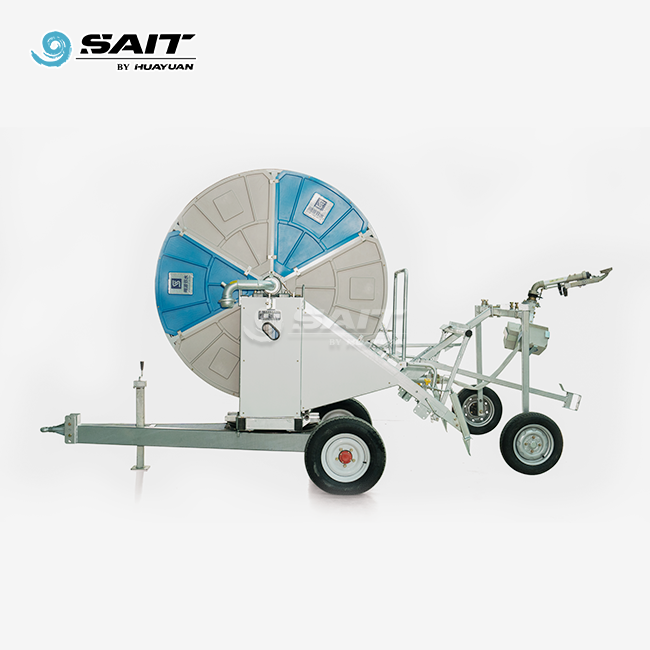
When the hose needs to bend, flex, and retract many times without wearing down, polyether PU tubing works best. In hose reel irrigators with a water turbine drive, the PU drive hose has very low flow rates but a high return speed. This design means that the hose has to be wound up and down many times over the machine's lifetime. It's also good for air automation, areas where food is processed and cleaned, and cold storage robots where low temperatures and moisture are constant stresses.
Where PE Hose Excels
High-pressure water is sent from the reel to the spray gun nozzle through PE pipe, which is about 300–500 meters long. It is the main part of field irrigation because it can withstand long-term internal pressure and UV damage (in UV-stabilized grades). For models like the JP-75/300 through JP-90/400, 75 mm or 90 mm PE pipe is used for irrigation lengths of 300–500 meters, sprinkler flow rates of up to 50 m³/h, and irrigation widths of 43–78 meters. A polyether-type PU hose can also be considered for applications requiring suitable hose performance. For these models to work, the pipe walls must be the same thickness all the way along the pipe's length.
Multi-Crop and Contractor Applications
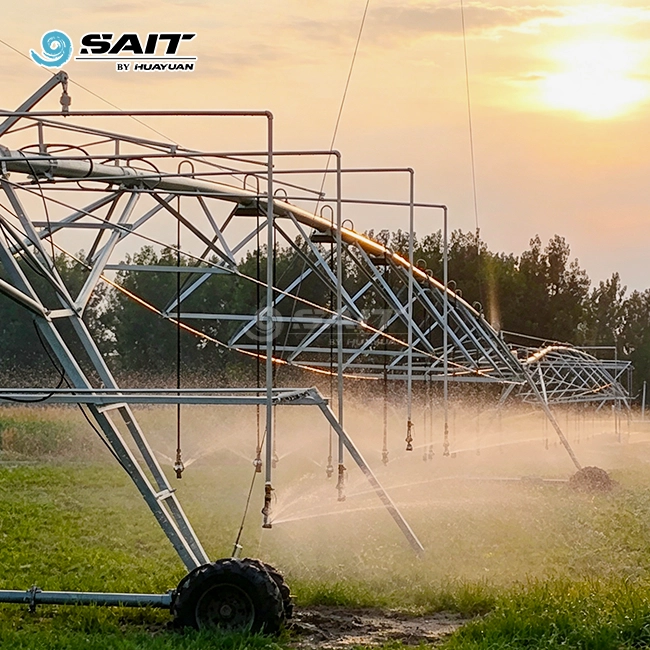
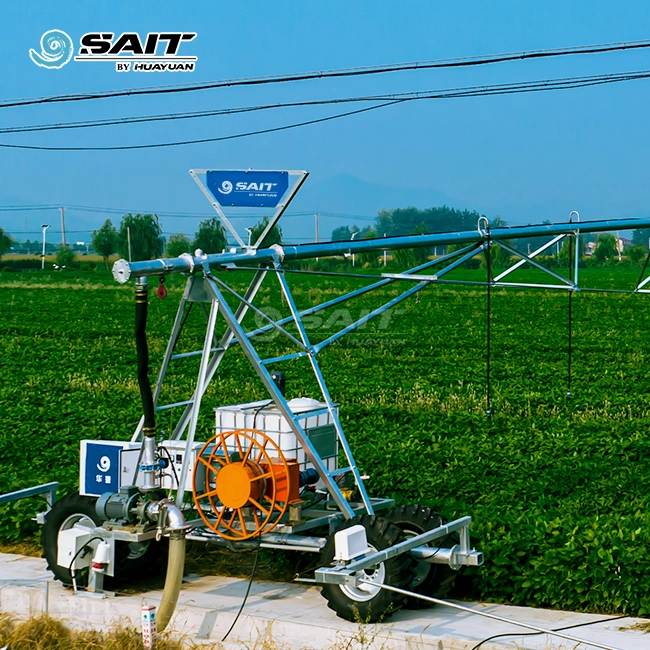
For agricultural service companies moving hose reel irrigators between several farms, equipment that may be moved around a lot without new infrastructure is needed. A rugged PE gearbox pipe and flexible polyurethane drive hose accommodate single-gun sprinkler carriages and multi-sprinkler boom setups. With the use of one piece of equipment, the contractors can irrigate more than 1.33 hectares in a single irrigation cycle and save over 50% water as compared to conventional spray guns.
Procurement Considerations for Durable PU and PE Hoses
Finding the right material for a hose isn't just a technical choice; it's also a supply chain choice.
Certifications and Quality Standards
Any seller of irrigation hose parts that is worth their salt should have ISO 9001 certification and test reports from a third party. Some of the tests that need to be done on polyether-type TPU hose are rapid hydrolysis testing, making sure the dimensions are accurate to within ±0.05 mm, making sure the burst pressure is at least 3:1 safety factor, tension testing according to ASTM D412, and low-temperature impact testing. When buying PE pipe for farming use, buyers should insist on guarantee paperwork for at least 8 years and proof that no leftover resin was used in the extrusion process.
Supplier Evaluation Criteria
When looking at different suppliers, buyers should think about how much they can produce each year (this affects the reliability of lead times), whether they can extrude pipes with custom diameters, and whether they can get spare parts for as long as the machine lasts. For distributors who private label equipment for more than one market, batch consistency across OEM orders is a must. Wholesale buying teams can get more useful information from suppliers who offer cross-reference parts charts and non-disclosure agreements for private turbine designs.
Cost of Ownership vs. Unit Price
Polyether polyurethane hose line costs more per meter than regular polyester PU options because it costs more to make polyether polyol resins. Still, the polyether grade has a lower total cost of ownership over a 10-year machine life because it doesn't need to be replaced as often and is less likely to break down in humid environments. The price per unit of PE pipe is lower, but it needs to be properly UV-stabilized before it can be used outside.
Making the Final Choice: PU or PE Hose for Maximum Durability?
The weight you put on a hose will determine how long that hose lasts.
Here’s a side-by-side list of the major trade-offs:
- -40°C to +80°C working range; hydrolysis resistance; appropriate for high-cycle retraction drive mechanisms; resistant to microbial development; somewhat higher unit cost. Polyether-type PU hose: 3–5 times the abrasion resistance of PVC/rubber.
- PE hose: Tensile strength advantage for high-pressure water transmission. 15+ year service life in UV-stabilised grades. Cost-effective per metre for long-run pipe. Preferred for sustained pressure applications of up to 1.2 MPa. Less flexible at sub-zero temperatures.
The most durable type of hose reel irrigator uses both types of material to do their different jobs: polyether TPU hose for the drive and retract system and heavy-wall fresh PE pipe for the water line. That is exactly how the JP-series hose reel sprinklers were intended. Both materials are supplied with rigorous quality controls and a long-term warranty.
Medium-sized farmers, equipment contractors, and rental companies directly consider these trade-offs when choosing what to acquire. The best solution, in terms of the lowest failure rate and the longest machine life, is to select material according to the mechanical work and not to select one material for the whole system.
Conclusion
Choosing between PU hose and PE hose isn't that straightforward. Polyether-type pu hoses are more resistant to wear, tear, breakdown in water, and low-temperature flexibility. For long lengths of gearbox, the PE hose is the best choice because it has the best tensile strength, constant pressure performance, and cost per metre. The most durable irrigation systems use both materials in combination where they function best. When purchasing teams consider hose reel irrigators, understanding these distinctions helps keep guarantee claims down, reduces care costs, and increases machine life beyond the normal 10 years.
FAQ
Q1: What is the operating temperature range of polyether-type PU hose?
Polyether-based thermoplastic polyurethane hose operates reliably from -40°C to +80°C. Long-term exposure near the upper limit may reduce the rated working pressure, so applications running consistently at high temperatures should use a de-rated pressure specification.
Q2: How does polyether PU hose compare to rubber or PVC in abrasion resistance?
Polyether PU hose typically shows three to five times greater abrasion resistance than rubber or PVC alternatives in standardized wear testing. This makes it the preferred choice for drive components in hose reel irrigators that retract repeatedly across abrasive terrain.
Q3: What is the typical lifespan difference between PU and PE hose in irrigation systems?
In hose reel irrigator applications, PE transmission pipe made from virgin resin carries a rated service life of 15+ years. Polyether PU drive hose in the same system typically matches the 10+ year machine service life when properly maintained and not exposed to temperatures beyond its rated range.
Q4: Is polyether PU hose safe for food or potable water contact?
Yes, provided the specific TPU resin is FDA-compliant or certified under EU 10/2011. Polyether chemistry resists microbial growth, which is an added benefit in food-processing and sanitary irrigation applications.
Ready to Source a Proven Polyether-Type PU Hose Supplier?
HUAYUAN SAIT has spent 20 years manufacturing hose reel irrigators backed by 130+ patents and ISO 9001 quality certification. Our JP-series machines integrate polyether-type PU hose with virgin PE pipe in a single proven system — available in OEM and ODM configurations with one-week standard delivery. Contact our team at kevin@showyirrigation.com to request product specifications, sample units, or a wholesale quote tailored to your market.
References
1. Brydson, J. A. Plastics Materials. Butterworth-Heinemann, 1999.
2. Mark, J. E. Polymer Data Handbook. Oxford University Press, 2009.
3. Rosato, D. V., & Rosato, M. G. Plastics Technology Handbook. Springer, 2012.
4. American Society for Testing and Materials. ASTM D412: Standard Test Methods for Vulcanized Rubber and Thermoplastic Elastomers — Tension. ASTM International, 2021.
5. ISO. ISO 9001:2015 — Quality Management Systems: Requirements. International Organization for Standardization, 2015.
6. Chattopadhyay, D. K., & Webster, D. C. "Thermal stability and flame retardancy of polyurethanes." Progress in Polymer Science, Vol. 34, No. 10, 2009.
Get a tailored irrigation solution for your project — our engineering team is ready to support you from design to installation.