How to Match Boom Length to Nozzle Spacing in Hose Reel Irrigation-Boom Spray
Matching boom length to nozzle spacing in a hose reel irrigation-boom spray system is one of the most practical decisions a procurement manager or field engineer will make. Get it right, and you achieve a uniformity coefficient above 90%, water savings exceeding 50%, and consistent crop coverage across every pass. Get it wrong, and you face dry strips, waterlogged zones, and wasted pumping costs. This guide walks through the core principles, installation steps, and maintenance routines that keep your system performing at its best.
Understanding the Relationship Between Boom Length and Nozzle Spacing
What Boom Length Actually Controls
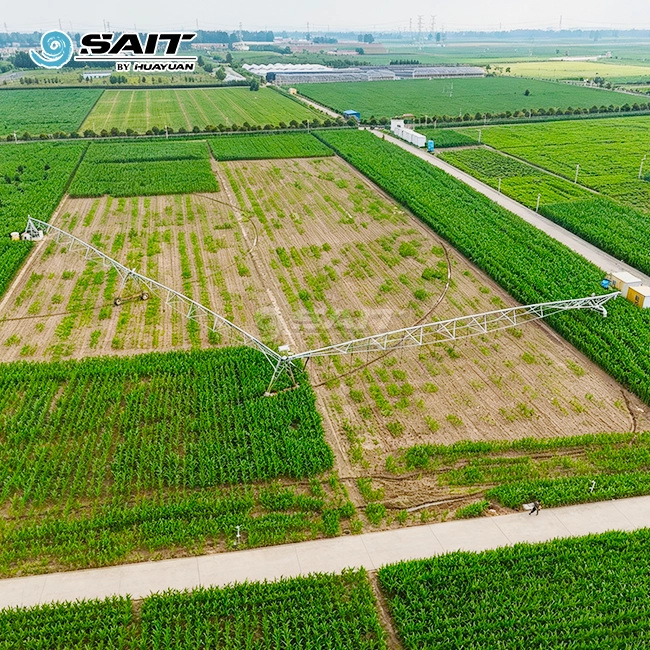
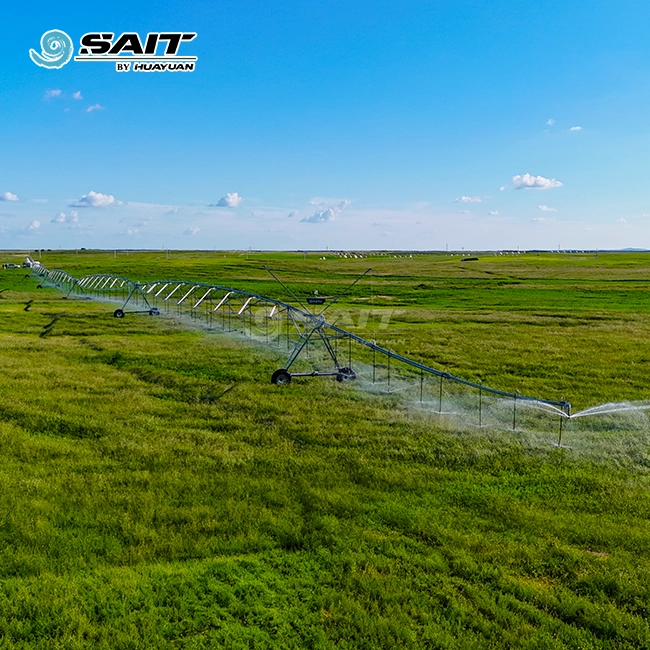
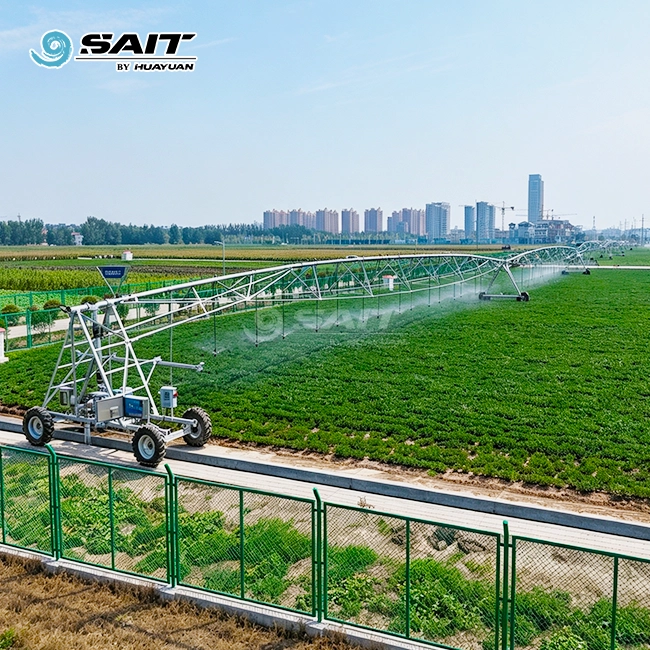
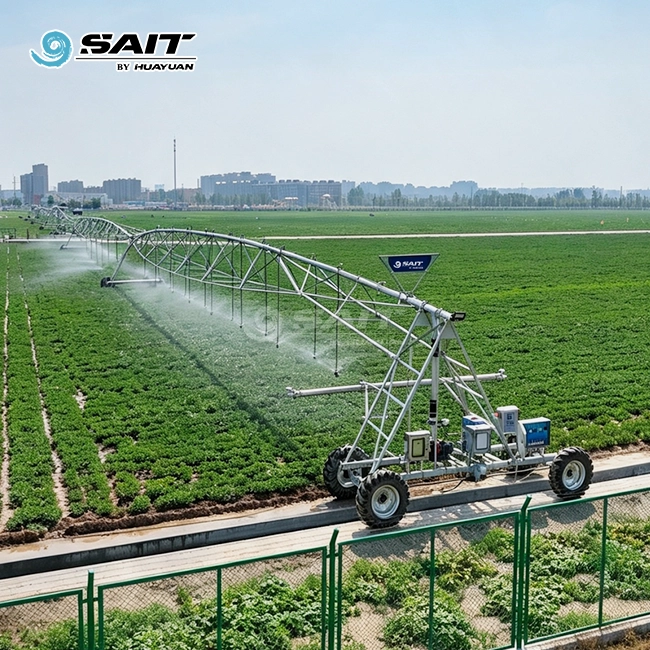
The total irrigation swath is set by the length of the boom on each pass of the traveler. A longer boom covers more ground per lane of traffic, so fewer lines are needed, and less work needs to be done. But if the boom is too long for the water pressure, the end nozzles won't put out much water, and the water won't be spread out evenly across the width.
How Nozzle Spacing Shapes Water Density
The distance between the nozzles controls how often water is sprayed along the boom. For fine-mist applications on delicate plants like leafy greens and seedlings, the spacing should be closer, usually between 0.5 m and 1 m. For field crops, where the goal is for roots to go deeper, farther apart by 1 to 1.5 m works better. The distance between each nozzle must match its wetted radius at the pressure you can use.
The Industry Measurement Standard You Should Follow
Most professional buyers use ISO 8224, which describes uniformity testing procedures for traveler irrigation machines. It is okay if the Uniformity Coefficient (CU) is above 85%; for high-value crops, it should be above 90%. To reach that goal, the boom length and boom nozzle spacing must be calculated together, not separately.
Key Principles for Matching Boom Length to Nozzle Spacing


Start With the Nozzle's Wetted Diameter
Every company that makes nozzles puts out a wetted diameter at a certain pressure. To get even coverage, the distance between the nozzles should be set to about 50–60% of the width when it is wet. Say, a nozzle that wets a 4 m diameter at 0.3 MPa shouldn't be more than 2.0–2.4 m away from the one next to it.
Calculate Boom Length From Field Width and Travel Lane Spacing
After setting the nozzle spacing, the boom length will be based on the target lane spacing. For driving lanes that are 60 m long and want 10% overlap on each side, your boom should cover at least 66 m in total. Divide that number by the distance between your nozzles to get the number of nozzles. Then, add the structural end sections to get the final length of the boom.
Account for Pressure, Wind, and Terrain
Variables are added by real fields. Because of friction loss in the supply pipe, the operating pressure at the nozzle goes down as the boom gets longer. When the wind speed is above 4 m/s, spray flow changes the pattern of the rain, which makes it more important to space the nozzles closer together. When the ground is sloped, the self-leveling pendulum mechanism of the boom needs to work properly. If it doesn't, the nozzles at one end will be closer to the canopy and make a different pattern of droplets than the nozzles at the other end.
Step-By-Step Installation and Adjustment Guide
Field Mapping Before You Install Anything
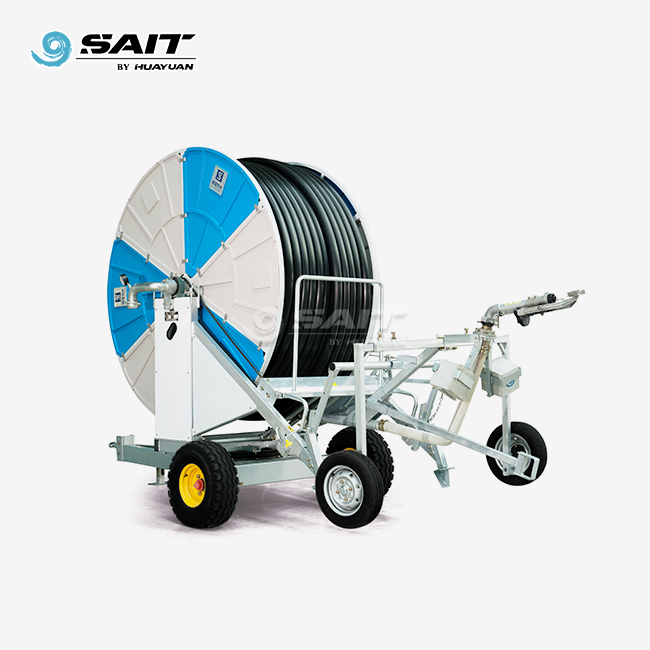
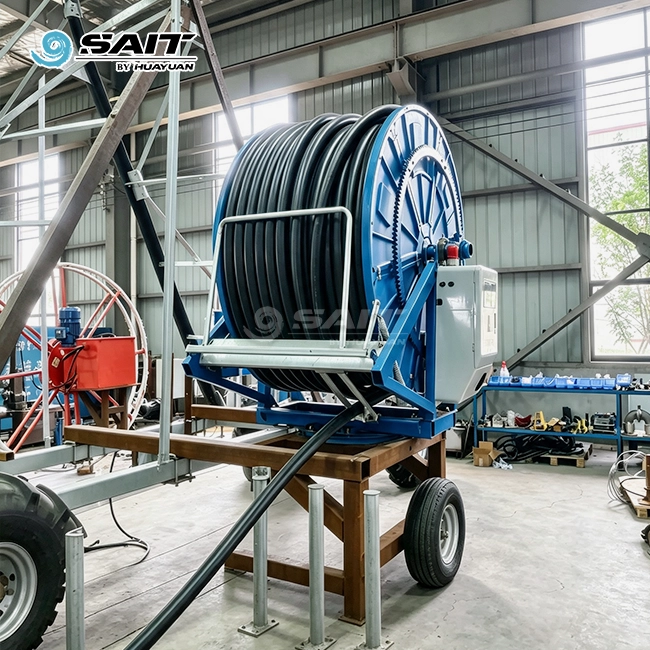
Before putting up a single nozzle, walk around the field and write down its length, width, slope, and any obstacles you find. Mark the routes you want to take. Check that the length of your PE pipe is enough by measuring the distance from the water supply point to the farthest lane. The JP series from HUAYUAN SAIT has PE pipe lengths ranging from 300 m to 500 m (models JP-75/300 to JP-75/500), which is enough for most medium-sized field setups.
Mounting Nozzles and Setting Boom Length
Place the nozzles where you thought they would go and make sure that the seat of each nozzle is level with the boom rail. Make sure that all of the fittings are tightened to the rated torque to stop micro-leaks that change the output of each nozzle. Nozzle diameters for the JP-90/400 type run from 14 mm to 28 mm, so you can change them to meet the water needs of different crops without having to switch out the boom frame in a hose reel irrigation-boom spray system.
Testing and Fine-Tuning the Spray Pattern
Run the system at the planned inlet pressure, which could be anywhere from 0.3 MPa to 1.2 MPa based on the model, and take data from catch cans along a line that is not parallel to the boom. If your CU drops below 85%, first check to see if the nozzles are jammed, then check the pressure at the boom outlet, and finally, reevaluate the spacing if there is a lot of pressure loss along the boom. The HUAYUAN SAIT JP-90 series has a travel speed range of 10 to 80 m/h. Changing the retraction speed lets you change the application depth without changing the way the nozzle is set up.
Comparison: Hose Reel Irrigation vs. Boom Spray – Matching Considerations
System Flexibility and Portability
A regular hose reel traveler with one gun sprays water in a circle and needs a lot of pressure (usually 4.5 to 8 bar) to reach its spray radius. A traveler with a boom works at 2.5 to 4.5 bar at the nozzle. This lowers the pump's energy need by 30 to 50 percent and lessens the effect on the dirt surface. The boom system also works in winds of up to 7–9 m/s, which is too fast for a single gun to shoot accurately.
Boom Length Standards vs. Single-Gun Coverage
Single-gun travelers cover a large area from a single point, but their radial distribution is not uniform. With the HUAYUAN SAIT setup, boom systems can cover up to 40 m of width. With the JP model range, they can reach irrigation lengths of 47–78 m and keep the profile of the rainfall much more even. This difference in uniformity is very important for people who grow vegetables and take care of sports fields.
Cost and Maintenance Tradeoffs
While boom systems with boom nozzles cost more up front than single-gun setups, the cost of water per hectare goes down a lot. Each irrigation cycle of a HUAYUAN SAIT hose reel irrigator waters more than 1.33 ha. The average machine service life is more than 10 years, and PE pipe lasts more than 15 years. Because it lasts longer, the total cost of ownership figure strongly favors the boom arrangement for any business that runs more than one season.
Troubleshooting and Maintenance Related to Boom Length and Nozzle Spacing
Diagnosing Uneven Water Coverage
The most common trouble in the area is uneven coverage. The two most common reasons are a partially clogged nozzle and a drop in pressure along a long boom. Do a catch-can test along the whole width of the boom and then compare the results. If the drop from the center to the ends of the nozzles is more than 15%, it means that there is too much friction loss. To fix this, you may need to switch to a supply line with a bigger diameter or cut the boom length by one section.
Nozzle Cleaning and Pressure Checks
Nozzles should be cleaned at least once a season and every time fertigation solutions are used. Before each season, HUAYUAN SAIT suggests that PE hydrostatic testing be done at 1.5 times the rated working pressure to make sure the pipes are still in good shape. Every year, the turbine efficiency test should be done to make sure that the withdrawal speed variation stays below 2%, which is important for making sure that the application depth is the same.
When to Request Custom Configurations
HUAYUAN SAIT offers OEM and custom ODM configurations if a standard boom length doesn't work with your field's shape or if a certain crop needs a nozzle package that isn't in the standard range. You can get custom boom sizes, nozzle packages, and UV-resistant PE pipe specs. If you ask, you can also get third-party CE and ISO 9001 certificates.
Conclusion
The quality of the water spread, the health of the crops, and the cost of operation are all directly affected by how well the boom length and opening spacing are matched in a hose reel irrigation-boom spray system. Setting the distance between the nozzles to 50–60% of the wetted diameter is the main rule. Then, use your goal lane spacing to figure out the length of the boom. Make changes based on the wind and the pressure drop along the boom. Before the full season starts, use catch-can testing to make sure that CU is above 85%. The JP series from HUAYUAN SAIT has the pressure range, pipe length choices, and nozzle freedom to work in most field setups. It also comes with service and parts availability that will protect your investment for more than ten years.
FAQ
Q1: How often should nozzle spacing be inspected?
At the start of each season and after moving or transporting the boom carriage, check the spacing and placement of the nozzles. When towing, the nozzle mounts can move a few centimeters, which is enough to leave dry spots on crops that are easily damaged.
Q2: Can boom length be adapted for different crops on the same farm?
Yes. Boom sections that are easy to attach and detach let you change the working width between crops by making it shorter or longer. With a nozzle diameter range of 14–28 mm on the JP-90/400 model, you can change nozzle sizes without having to replace the boom frame. This means that one machine can do both cropping tasks.
Q3: What brands offer customizable hose reel boom spray systems?
HUAYUAN SAIT makes the whole JP series. The PE pipe diameters are 75 mm and 90 mm, and the pipe lengths are 300 m to 500 m. The company also offers different types of drives, such as water turbines. They have been making things for 20 years, can make 14,000 units a year, and use ISO 9001 quality management. They can deliver both standard and OEM-configured units in one week.
Q4: What is the minimum flow rate the turbine drive handles?
HUAYUAN SAIT's turbine-drive models can pull back quickly even when the flow rate is low. The JP-90/400 can handle sprinkler flow rates as low as 10 m³/h, which means it can be used in places with limited water.
Get Your Boom Spray Configuration Right With HUAYUAN SAIT
HUAYUAN SAIT is a reliable company that has been making hose reel irrigation-boom sprays for 20 years. They have more than 130 patents and their structures are 80 μm hot-dip galvanized to withstand tough field conditions. Our JP line comes with a full guarantee for one year, low-cost parts support for three years, and spare parts at factory cost for life. Get in touch with our technical team to get advice on the right boom length and nozzle spacing for your field. To get a quote right away, email us at kevin@showyirrigation.com.
References
1. Food and Agriculture Organization of the United Nations. Irrigation Water Management: Irrigation Methods. FAO Irrigation and Drainage Paper No. 45, 1988.
2. International Organization for Standardization. ISO 8224-1: Traveller Irrigation Machines — Part 1: Laboratory and Field Test Methods. ISO, 2003.
3. Keller, J., & Bliesner, R. D. Sprinkle and Trickle Irrigation. Van Nostrand Reinhold, 1990.
4. Dechmi, F., Playán, E., Cavero, J., & Martínez-Cob, A. "Wind Effects on Solid Set Sprinkler Irrigation Depth and Yield of Maize." Irrigation Science, 2003.
5. Tarjuelo, J. M., Montero, J., Honrubia, F. T., Ortiz, J. J., & Ortega, J. F. "Analysis of Uniformity of Sprinkle Irrigation in a Semi-Arid Area." Agricultural Water Management, 1999.
6. Evans, R. G., & King, B. A. "Site-Specific Sprinkler Irrigation in a Water-Limited Future." Transactions of the ASABE, 2012.
Get a tailored irrigation solution for your project — our engineering team is ready to support you from design to installation.