How to Automate a Travelling Irrigator and Choose the Best Hose Length
One of the most practical improvements a farm operation can make is automating a travelling irrigator. While a spray gun or boom evenly distributes water over crops, a travelling irrigator moves across a field in a straight line, reeling in a PE pipe. Add motorised drives, flow sensors, and IoT-enabled controllers, and you take the uncertainty out of scheduling, reduce labour hours, and apply water at the precise appropriate pace. Those advantages are compounded by the selection of the proper hose length to match system pressure with field dimensions to avoid pressure loss and safeguard pipe life.
Understanding Travelling Irrigators and Automation Basics
Before buying or upgrading any irrigation equipment, it helps to understand what each system type does and where automation adds the most value.


Core Types of Travelling Irrigators
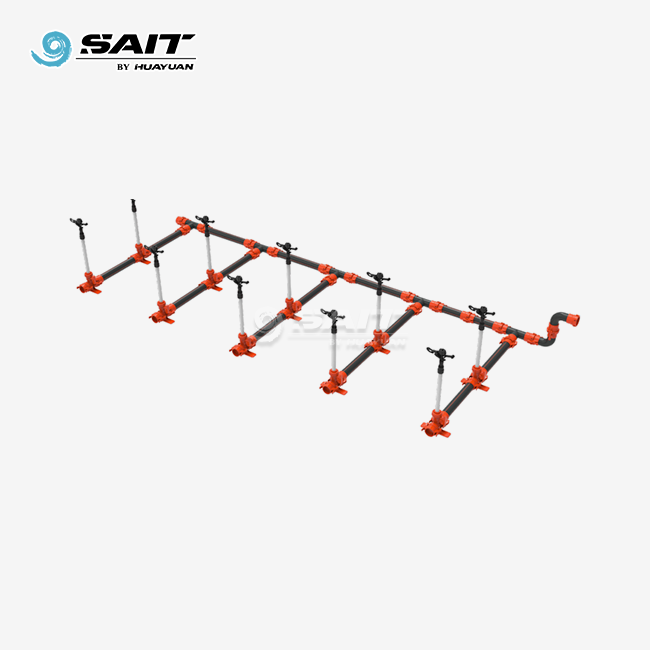
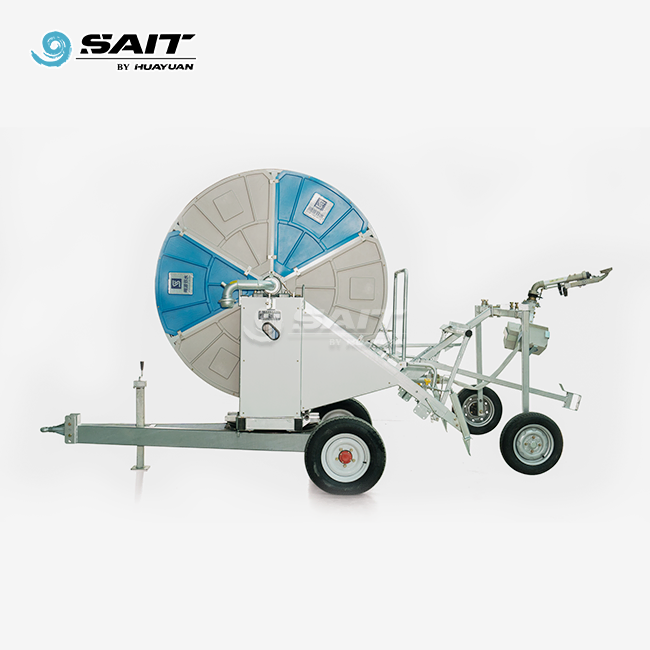
There are three primary arrangements in commercial agriculture. Hose reel irrigators store a flat or round polyethylene pipe on a drum and retract the spray carriage as the drum winds in. Cable reel machines use a steel cable to draw the carriage rather than a hose. Hose drum systems are suited to high-flow operations on wide areas and coil large-diameter pipe. The most common hose reel types provide portability with accurate depth control.
Why Manual Operation Falls ShortManual methods require staff to move equipment numerous times every shift, resulting in both labour cost and schedule inconsistencies. Studies from the Food and Agriculture Organization show that unplanned irrigation timing can impair water consumption efficiency by 20-30% compared to automated scheduling. On a 100-hectare enterprise, that inefficiency is directly wasted input cost and uneven crop moisture.
Automation Technologies That Matter
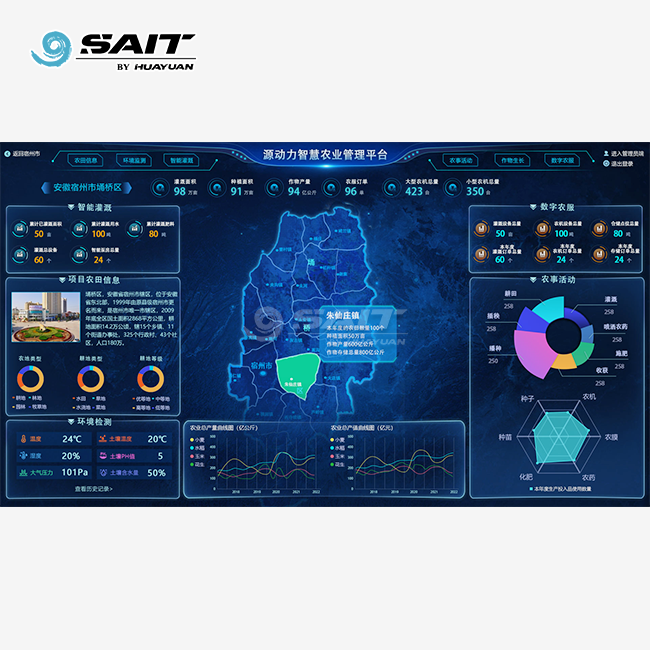
Now, motorised turbine drives, pressure compensating valves and cellular-connected controllers allow you to schedule a full irrigation pass from anywhere. HUAYUAN SAIT’s hose reel systems leverage BeiDou and GPS positioning technology to minimise missed-irrigation corners to under 5% and irrigation uniformity to over 90%, both well above the average in the industry generally, while reducing the need to manually manage the drag hose during irrigation.
How to Automate a Travelling Irrigator — Step-by-Step
Structured approaches keep expensive fixes from having to be made later. The steps below are easy to follow.
Step 1 — Define Your Operational Objectives
Firstly, jot down the size of the field, how much water the crops need, the input pressure available, and the number of irrigation lanes in each field. HUAYUAN SAIT JP-series are working at inlet pressures of 0.3 MPa to 1.2 MPa. To avoid difficulties, make sure the output of your pump is equal to those numbers before buying it.
Step 2 — Select Core Automation Components
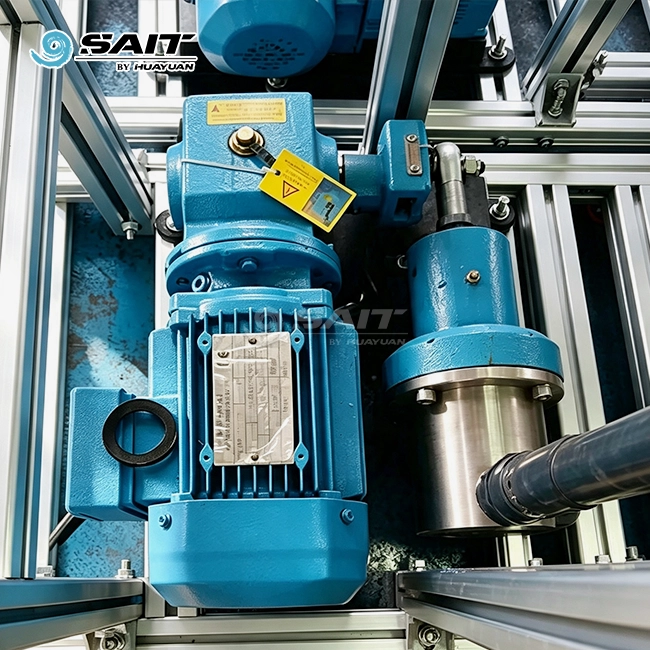
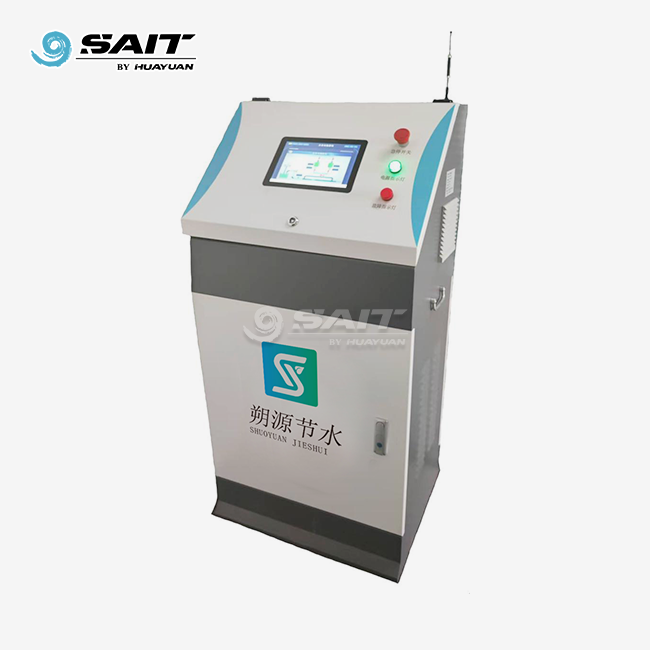
Any automated setup is based on 3 basic pieces. First, choose a motorised drive such as a water turbine, an electric motor, or a mechanical gearbox according to the flow rate and the availability on the grid. Secondly, install flow and pressure monitors at the inlet-processor connection point for real-time data. Third, connect to a central IoT controller that enables you to plan things remotely, receive alerts about dangers, and log data. These three sections operate together over the whole length of the hose to keep the travel speed and the application rate the same.
Step 3 — Integrate, Test, and Calibrate
The Coefficient of Uniformity (CU) is best determined by doing a catch-can test across the irrigated strip after the physical installation is completed. ISO 8224-1 stipulates that travelling watering equipment should have a CU of not less than 80%. Check the automated shut-off as the carriage approaches the reel and compare the travel speed with the measured application depth.
Choosing the Best Hose Length for Your Travelling Irrigator
Hose length directly controls how much ground one machine covers per setup, how much pressure drops along the line, and how long each irrigation pass takes.
Short Hose (up to 300 m)
The JP-75/300 and JP-90/300 variants respectively carry 75 mm and 90 mm diameter PE pipe at 300 m lengths. These setups are suitable for paddocks and irregular plots that need to be moved around often. The inlet pressure requirement is 0.5 MPa, which is compatible with ordinary centrifugal pumps. The shorter run keeps pressure drop controllable and retraction time within restricted scheduling limits.
Medium Hose (400 m)
The JP-75/400 and JP-90/400 cover an effective irrigation length of 400 m. The JP-90/400 provides a sprinkler flow rate between 10 and 50 m³/h, an irrigation width of 43–78 m, and a travel speed range of 10–80 m/h with a single pass. The 400 m arrangement is preferred by service contractors who maintain several farms of different field sizes because of its flexibility.
Long Hose (500 m)
The JP-75/500 travelling irrigator covers 75 mm pipe for 500 m with a somewhat greater minimum inlet pressure of 0.6 MPa. One machine irrigates more than 1.33 ha per irrigation cycle, and with water savings of more than 50% compared to traditional spray guns, the operational cost per hectare is considerably less. This length is ideal for broadacre grain, maize and pasture operations where time spent repositioning is a priority to be kept to a minimum.
Comparison of Travelling Irrigator Types and Hose Lengths for Different Applications
Before picking a system type, you need to take a good look at the conditions in the field, your budget, and your ability to do maintenance.
Travelling Irrigators vs. Center Pivots and Drip Systems
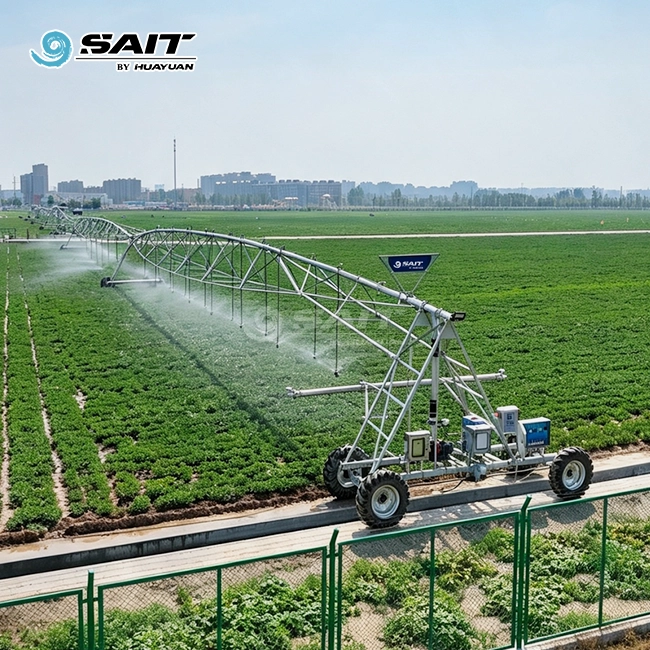
Best for square or circular fields, center pivots require a fixed setup and a lot of capital to buy. Drip watering is exact at the root zone, but the filters need to be cleaned periodically and cannot move quickly. Because it is movable, requires no fixed trenching, and can water both straight and curved strips (which center pivots cannot accomplish at all), the hose reel irrigator is in the middle. The hose reel machine is the ideal option for medium-sized farms (50 to 200 ha) as it is movable and less expensive to set up.
Application-Specific Hose Length Benchmarks
These are the suggested settings for common uses:
- Vegetable and speciality crops (50-80 ha): JP-75/300 or JP-75/400; fine atomisation at 16-22 mm nozzles preserves delicate foliage and gives uniform moisture.
- Pasture and grain (100–200 ha): JP-90/400 or JP-75/500; greater irrigation width of 43–78 m means more ground covered per pass with fewer repositioning stops.
- Sports turf and golf courses: JP-90/300 with boom spray attachment; maximum spray width of 40 m and low operating pressure reduce wind interference and surface compaction.
- Service contractors (multi-farm operations): JP-75/400 provides the optimum compromise between portability, pressure range, and spare parts availability for a wide range of site circumstances.
These suggestions are based on real operating parameters from HUAYUAN SAIT's JP-series specification sheet and data collected in the field from similar deployments.
Maintenance Tips and Troubleshooting for Automated Hose Reel Irrigators
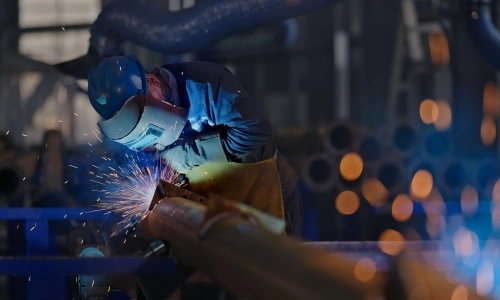
An automatic system is only as effective as the program that takes care of it.
Routine Inspection Checklist
Every 50 hours of use, check the PE pipe and drag hose for surface cracks, kinks where the drum enters, and joint leaks. HUAYUAN SAIT's own virgin PE pipes are thicker than standard market pipes and don't contain any recycled material. They have a documented service life of more than 15 years, but only if they are stored out of direct sunlight when the season is over.
Sensor and Controller Calibration
Over time, pressure sensors move around. At the start of each watering season, compare the inlet pressure monitors to a standard gauge to make sure they are still accurate. Check to see if the automatic shut-off circuit responds within the time frame set by the manufacturer. Most of the time, hose overrun and drum damage are caused by a delayed shut-off.
Troubleshooting Common Faults
"Snaking" of the hose is usually caused by an uneven first pull-out or a loose anchor stake. Changes in the speed of retraction are usually caused by worn turbine drive gears. The HUAYUAN SAIT 4-speed water turbine gearbox has specially made gears that don't wear down easily. These gears keep the speed stable across the full pressure range, which makes that failure mode much less likely. If the problem can't be fixed in the field, you can get real spare parts by calling an approved service point. The company sells spare parts at the factory cost price for as long as the machine is in use.
Conclusion
Making the right choice about the length of PE pipe and automating a hose reel irrigator go hand in hand. A travelling irrigator with automation gets rid of the need for workers and makes sure that the application depth stays the same over long irrigation runs. Pressure stability, field coverage per cycle, and repositioning frequency are all affected by the length of the hose. With 300 m to 500 m layouts and 75 mm and 90 mm pipe diameters, the HUAYUAN SAIT JP-series meets all of the needs of medium-sized farms, contractors, and turf care. If you choose the right model and set up your automation correctly, you'll have a system that saves water, lowers costs, and works well for more than ten years.
FAQ
Q1: How does automation improve water use efficiency in a travelling irrigator?
The exact amount of water applied per square meter is controlled by automation, which also controls the speed of the travel. An IoT-connected controller changes the speed based on pressure input in real time. This keeps the material from being too thick or too thin in the same pass. Data from the field constantly shows that automatic systems use 20–30% less water than their manual counterparts.
Q2: What hose length works best for irregular or non-rectangular fields?
Shorter line lengths (300 m setups) make it easier to move things around on uneven plots. The HUAYUAN SAIT Corner Arm System increases the area that can be irrigated by 15% on square or uneven fields. It does this by directly filling in the coverage gaps that regular hose reel machines leave at corners.
Q3: Can I retrofit an existing manual hose reel irrigator with an automation kit?
Most of the time, yes. A mechanical drive unit and sensor package can be added to an existing machine that has a standard drum frame and an inlet link that works with the new ones. This way, the whole machine doesn't have to be replaced. Before buying retrofit parts, make sure the inlet pressure range and drum width are compatible.
Q4: What is the average PE pipe lifespan on these machines?
Under standard storage and use settings, HUAYUAN SAIT's virgin PE pipes have been shown to last more than 15 years. The machine chassis has a hot-dip galvanized coating above 80 μm that protects it from corrosion and makes it last for more than 10 years on average.
Ready to Source a Travelling Irrigator? Contact HUAYUAN SAIT
Every hose reel travelling irrigator that HUAYUAN SAIT makes is backed by our 20 years of manufacturing experience and more than 130 patents. We can make up to 14,000 units a year and can deliver them in as little as one week. We can handle both standard wholesale orders and full OEM/ODM customization. Our after-sales service includes a full guarantee for one year, low-cost upkeep for three years, and spare parts at factory cost for life. Find a company that sells traveling irrigators and stands behind their products. To get a price or talk about technology issues, email us at kevin@showyirrigation.com.
References
1. Food and Agriculture Organization of the United Nations. Irrigation Water Management: Irrigation Methods. FAO, 2020.
2. International Organization for Standardization. ISO 8224-1: Travelling Irrigators — Part 1: Laboratory and Field Test Methods. ISO, 2003.
3. Irrigation Association. Landscape Irrigation Best Management Practices. Irrigation Association, 2021.
4. Phocaides, A. Handbook on Pressurized Irrigation Techniques. FAO, 2007.
5. Camp, C.R., Sadler, E.J., & Yoder, R.E. (Eds.). Evapotranspiration and Irrigation Scheduling. American Society of Agricultural Engineers, 1996.
6. Von Bernuth, R.D. "Simple and Accurate Friction Loss Equation for Plastic Pipe." Journal of Irrigation and Drainage Engineering, ASCE, 1990.
Get a tailored irrigation solution for your project — our engineering team is ready to support you from design to installation.