How Do Empty-Tank Alarms Work in a Twin-Channel Fertilizer Injection System?
In a twin-channel fertilizer injection system, empty-tank alarms work by using level sensors—typically float, optical, or pressure-based—installed inside each fertilizer reservoir. These sensors continuously transmit real-time level data to the system's central controller. When either tank drops below a preset threshold, the controller triggers an alert through visual indicators, audible signals, or a mobile app notification. This allows operators to respond before fertilizer flow is interrupted. Because each channel is monitored independently, the system can identify exactly which tank needs attention without pausing the entire fertigation cycle.
Understanding the Role of Empty-Tank Alarms in Dual-Channel Fertigation
A dual-channel fertigation system has two different tanks for fertilizer. These tanks are often known as Tank A and Tank B. The different nutrients are meant to be delivered without being mixed too quickly. Solutions that are high in calcium and solutions that are high in phosphate will split if they are mixed before they go into the stream. The nutrients are better absorbed when they are kept separate until the injection point. This also keeps the precision metering lines from getting clogged.
Alarms that go off when the tank is empty are the first line of defense against nutrient gaps that happen by accident. You would have to check tanks by hand all the time without them if you were in charge of a 500-acre fruit farm or a multi-zone hydroponic greenhouse. This is a lot of work that doesn't scale well and can lead to mistakes.
This is what these alarms really protect you from:
- Crop nutrient deficiency: A tank running dry mid-cycle leaves crops without one half of their nutrient program for the remainder of that irrigation event, which directly affects leaf development and fruit set.
- EC and pH drift: When one injection channel stops delivering solution, the electrical conductivity of the irrigation water drops below the target range. In closed hydroponic systems, this shift can stress sensitive root zones within hours.
- Pump dry-run damage: Metering pumps and plunger pumps running without liquid can overheat and fail, generating repair costs that far exceed a missed refill.
After reading about these risks, it's clear that keeping an eye on an empty tank is not just a nice-to-have; it's a must for any serious fertigation operation using a twin-channel fertilizer injection system that wants to be trusted.
How Do Empty-Tank Alarms Work? Technical Working Principle Explained
The sensor is where the detection process begins. There are three main types of sensors that are used in professional fertigation tools:
Float-Based Level Sensors
The level of the liquid makes a float switch move up and down. When the float drops to the low-level trigger point, an electrical circuit is either closed or opened. This tells the processor something. For simple liquid fertilizers, float sensors work well and don't cost much. But they need to be cleaned every so often when they come in contact with solutions that are thick or starting to crystallize.
Optical and Capacitive Sensors
Changing the medium or how light bends is one way these tools can tell if there is liquid. They don't have any parts that work. They are faster than mechanical floats and work well with acidic or foamy fertilizer pools. Optical sensors work very well in systems that pump acid solutions through tubes that are covered with Viton.
Pressure and Ultrasonic Sensors
High-tech systems use ultrasonic level transmitters that are placed on top of the tank opening. This gives them a reading of the steady level: the distance between the sensor face and the top of the liquid. The processor keeps this data and also sends a low-level warning when there is, say, 20% left and a stop-injection alarm when there is 5%. People who work with this step-by-step method have time to make a replacement without having to stop in case of an emergency.
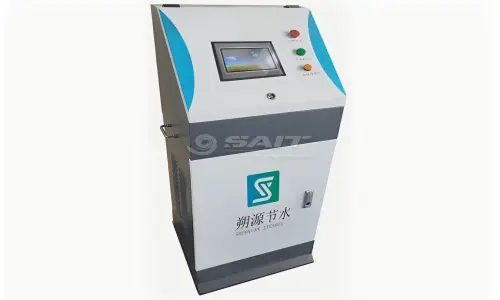
When the sensor fires, it goes to the main processor. In the HUAYUAN SAIT twin-channel fertilizer injection system, an ARM9-based industrial controller handles sensor inputs through a number of I/O channels. Alerts are sent to both the local tablet (1024x600 resolution, industrial-grade EMC/ESD protection) and the mobile app over 4G. You can connect to third-party SCADA systems through the RS485 communication port, which also lets you connect to centralized software for farm management.
Benefits of Integrating Empty-Tank Alarms in Dual-Channel Systems
Users always report three kinds of measurable gain when automatic level tracking is turned on.
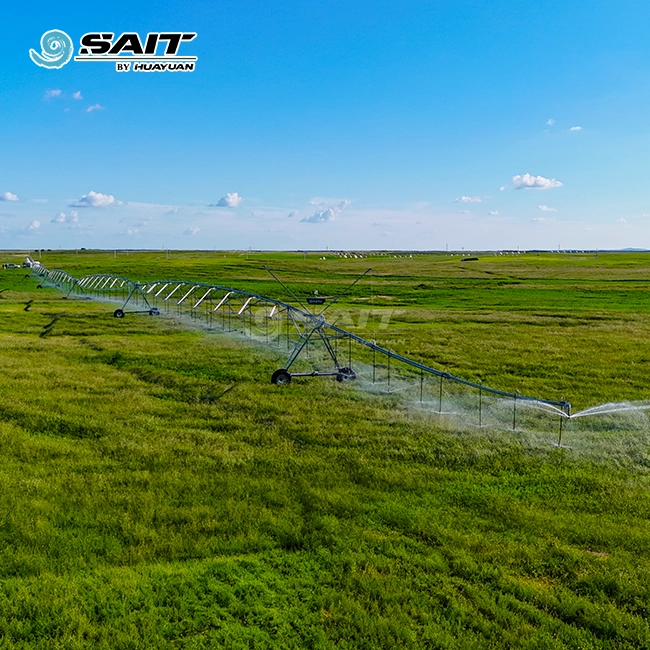
To begin, the less work starts right away. On a large open-field farm that uses center pivot or linear irrigation, it takes two to four hours of staff time each day to check several fertigation stations by hand. With automatic alarms, that time can be used for more important tasks.
On top of that, a twin-channel fertilizer injection system helps reduce waste fertilizer. Operators can plan to fill the tank again when the watering cycle stops if they know ahead of time that it is empty instead of finding out after the fact. This stops partial-dose cycles, which happen when one nutrient is used without the other one. This makes it less likely that you'll need to use it again, which saves you money on chemicals.
For the third time, the system is online longer. A study published in Biosystems Engineering found that unplanned fertigation interruptions in drip-irrigated vegetable systems reduced marketable yield by 8–14% per event, based on the stage of crop growth. Alarms that sound early cut down on the number of times these things happen.
People who run farms, gardens, or work on government projects can really make more things with these perks. Most of the time, stopping one unexpected time of irrigation loss on a 300-acre almond block or a large tomato greenhouse makes the alarm system worth more than it costs.
Installation and Maintenance Tips for Empty-Tank Alarm Systems
Most people don't realize how important it is to know where to put monitors. If you put the float monitor too close to the inside of the tank, it could give you wrong information while it's being filled. Things that stir or aerate will interfere with an ultrasonic monitor if you put it right on top of them. Most of the time, manufacturers will tell you how high to place the sensor based on the size of the tank. Most complaints about false alarms will go away if you follow these steps when setting up the system for the first time.
When you do regular maintenance, you should check these three things:
- Cleaning the surface of the sensor: Float bodies and optical windows get mineral layers and manure salts on them over time. You should clean the sensors once a month with clean water or a weak acid rinse if there is a lot of scale.
- Chosen the warning level: The shape of the tanks can change how the sensors work if they are moved or changed. There needs to be a new calibration of the low-level setpoints every time the layout of the tanks changes.
- Sensor surface cleaning: Fertilizer salts and mineral deposits accumulate on float bodies and optical windows. A monthly flush with clean water—or a mild acid rinse for heavy scaling—keeps sensors reading accurately.
- Alarm threshold calibration: Tank geometry can change sensor behavior if tanks are replaced or repositioned. Recalibrate low-level setpoints whenever tank configuration changes.
- Controller connection inspection: Vibration from pump operation can loosen terminal connections over time. A quarterly check of all sensor wiring terminations at the controller panel prevents intermittent signal faults.
Some electronic monitors don't work well in outdoor settings because of dust and water. The HUAYUAN SAIT system's fully protected IP55-rated cabinet design keeps these things out.
Choosing the Right System: What B2B Buyers Should Evaluate
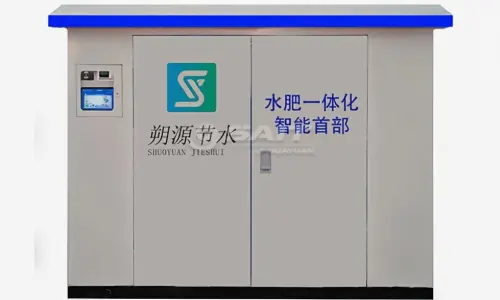
When buying, teams look at different fertigation equipment options; they usually compare four things: how accurate the injection is, how automated it is, how much maintenance it needs, and how much it costs to own everything.
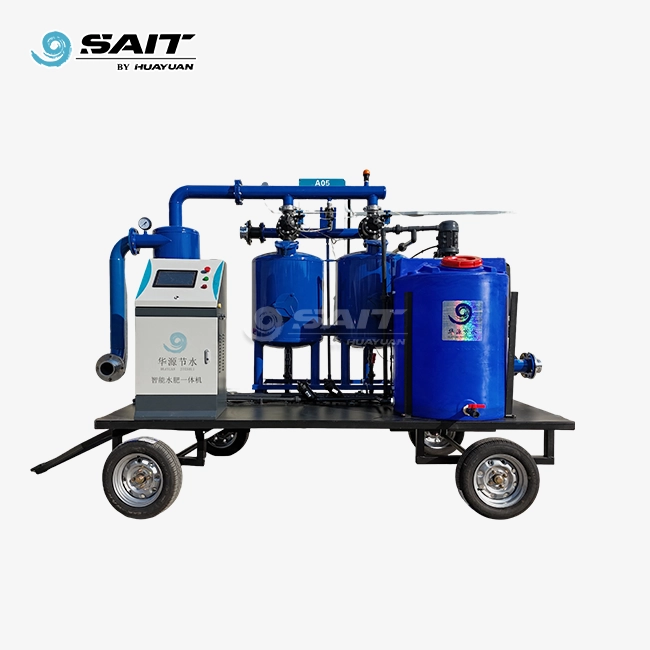
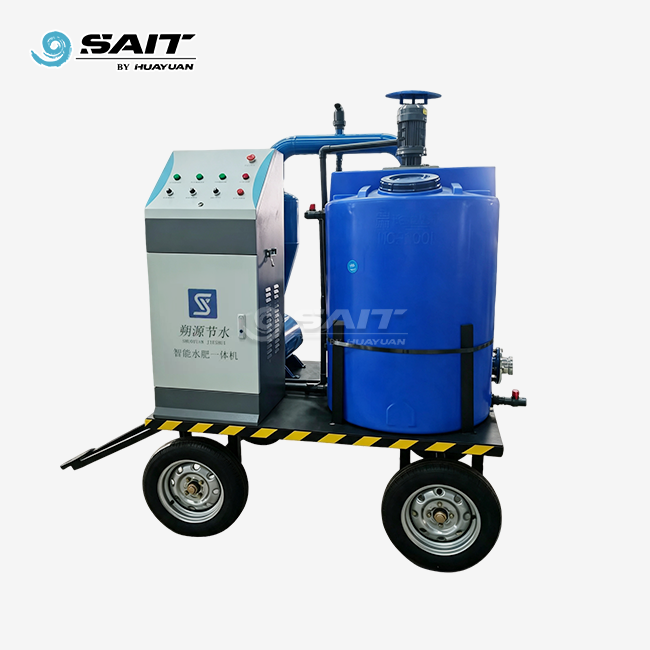
This is all taken care of right away by the HUAYUAN SAIT twin-channel fertilizer injection system. The system can handle up to 1,000 L/h of injection per channel and can be fine-tuned to work at 10% to 100% of its rated flow. Since its working pressure is between 0.2 and 0.7 MPa, it can be used with most center pivot, linear, and drip irrigation systems without the need for an extra pump. You can watch and make changes from anywhere with the 4G remote. This is very helpful for dealers who have to set up more than one greenhouse for different clients or for contractors who are in charge of more than one government-funded greenhouse project at different locations.
Based on a DN115 ultrasonic flowmeter, the Smart Head Control System for Fertilization can inject between 100 and 1,000 L/h through a single channel. It has a stainless steel pressure pump that puts out 11 kW of power and a two-stage DN100 centrifugal plus automatic self-cleaning filter stack with 120/130 mesh accuracy for big setups that need more flow. This gadget can connect straight to current SCADA systems thanks to its 10-inch capacitive tablet, Modbus RTU communication, and two RS485 ports.
One of the main worries people have when they want to buy equipment from a company outside of their home market is that they might not offer professional support or help with installation. Both versions come with this.
Conclusion
Alarms that go off when a tank is empty turn a possible crop loss into a maintenance task that can be done. A twin-channel fertilizer injection system keeps an eye on each tank separately and sends out alerts before the fertilizer runs out. This saves time and makes sure that the right amount of nutrients is delivered. Sensors that check the level, mobile app alerts, and controller integration all work together to give managers of commercial greenhouses, orchards, and large-scale row crop farms a clear operational edge. When combined with a well-thought-out dual-channel injection platform, they form the monitoring core of any automatic fertigation system that works well.
FAQ
Q1: Can empty-tank alarms be retrofitted to an existing fertigation system?
Yes, most of the time. Moving or seeing sensors that work with normal electrical outputs can be added to tanks that are already there as long as the processor has I/O ports. Make sure that the type of sensor data and the controller's input standard work with each other before you buy.
Q2: Do empty-tank alarms affect fertilizer dosing accuracy?
They don't change the doses themselves, but they keep things from getting less accurate. It doesn't take long for the pumping ratio between Channel A and Channel B to change when one tank runs out of fuel. Because the warning goes off before the flow stops, this doesn't happen.
Q3: How often do sensors require recalibration?
It is standard for continuous-level ultrasonic sensors to be set up against a known tank amount once a year. A lot of the time, float devices don't need to be set up. But they should be checked every six months to make sure they can move easily.
Q4: What happens to the irrigation cycle when an alarm triggers?
What makes the system work is how the controller is set up. The watering cycle can be stopped all at once or just the injection can be stopped while the water supply keeps going. When the system is first set up, workers pick which answer to use.
Partner With HUAYUAN SAIT for Your Next Fertigation Project
HUAYUAN SAIT has been making twin-channel fertilizer injection systems for 20 years and has more than 130 patents to back them up. Our systems can be sent out within a week from our plant in Suzhou, and we can make any changes you want. We guarantee every unit for a year, offer low-cost maintenance for three years, and offer spare parts at factory prices for life. Our team can be reached at kevin@showyirrigation.com to get a price quote or talk about your project plan. When you need to buy twin-channel fertilizer injection systems, you can trust our company. We can help your business from the test order stage all the way through full-scale deployment.
References
1. Phogat, V., Skewes, M. A., Cox, J. W., & Simunek, J. (2013). Evaluation of water movement and nitrate dynamics in a dripper irrigated almond orchard. Agricultural Water Management, 169, 44–55.
2. Bralts, V. F., & Kesner, C. D. (1983). Drip irrigation field uniformity estimation. Transactions of the ASAE, 26(5), 1369–1374.
3. Incrocci, L., Thompson, R. B., Fernandez-Fernandez, M. D., De Pascale, S., Pardossi, A., Stanghellini, C., Rouphael, Y., & Gallardo, M. (2020). Irrigation management of European greenhouse vegetable crops. Agricultural Water Management, 242, 106393.
4. Bar-Yosef, B. (1999). Advances in fertigation. Advances in Agronomy, 65, 1–77.
5. Hanson, B. R., Hopmans, J. W., & Simunek, J. (2008). Leaching with subsurface drip irrigation under saline, shallow groundwater conditions. Vadose Zone Journal, 7(2), 810–818.
6. Zotarelli, L., Dukes, M. D., & Morgan, K. T. (2010). Interpretation of soil moisture content to determine soil field capacity and avoid over-irrigating sandy soils using soil moisture sensors. University of Florida IFAS Extension, AE460.
Get a tailored irrigation solution for your project — our engineering team is ready to support you from design to installation.