How can pivot irrigation affect climate
Center pivot irrigation machines directly influence local and regional climate conditions in ways that many large-scale operators overlook. By altering evapotranspiration rates, soil moisture profiles, and surface albedo across hundreds of hectares, pivot irrigation reshapes the microclimate above and around treated fields. Research from the U.S. Great Plains show measurable cooling effects and increased humidity downwind of heavily irrigated zones. At the same time, energy-intensive pumping operations contribute to greenhouse gas emissions unless renewable energy is integrated. Understanding these dynamics allows procurement teams and farm operators to make smarter, more sustainable infrastructure investments.
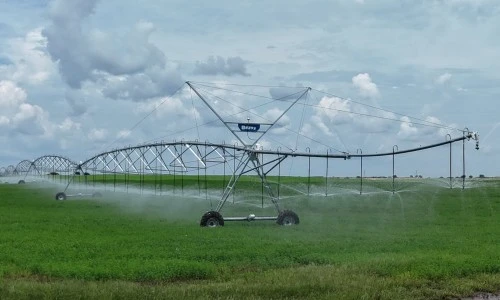
Understanding Pivot Irrigation and Its Environmental Context
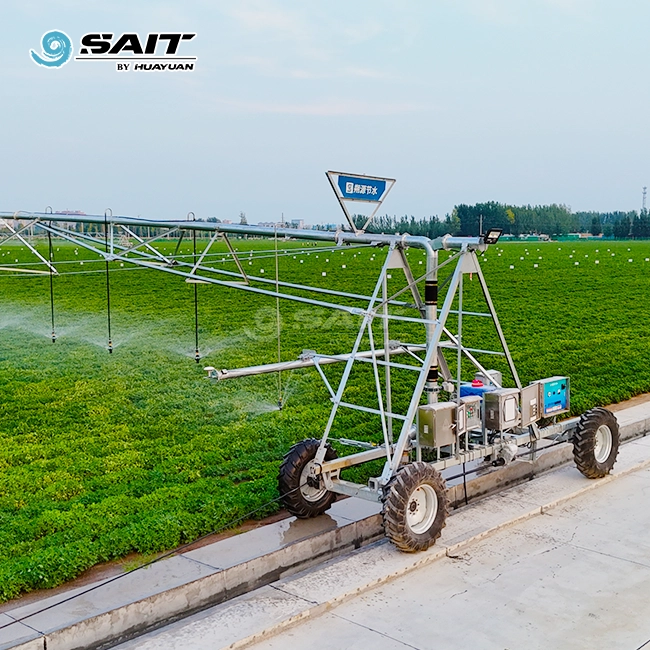
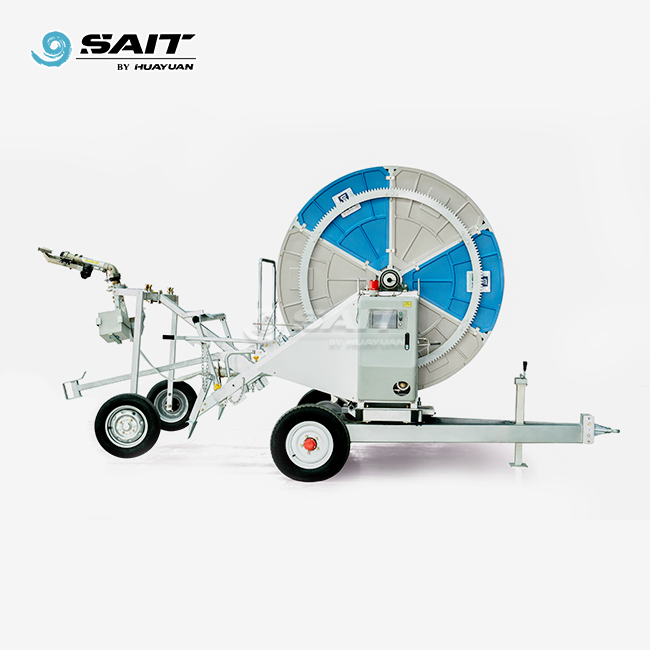
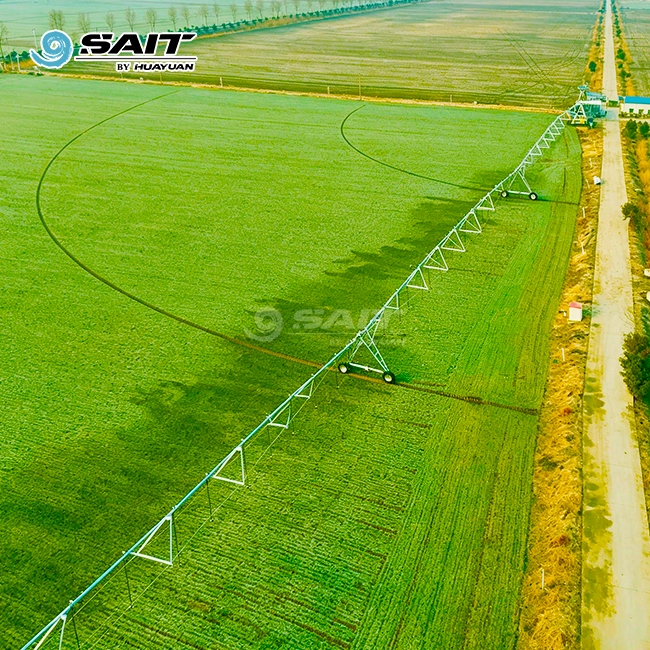
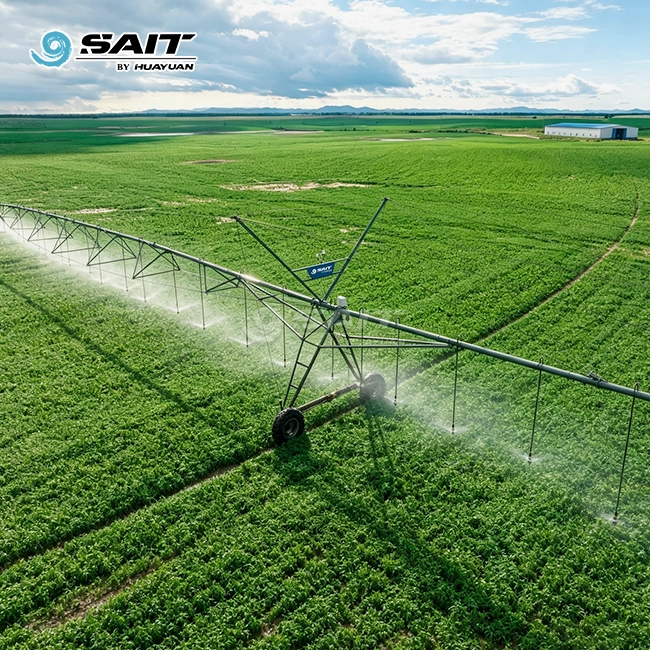
These days, center pivot irrigation machines aren't just pipes that turn. They are made up of structural engineering, precision nozzle technology, and automated control platforms, all built into one rotating machine that can work on up to 200-hectare areas at a time. Since the 1950s, when the first commercial models came out, the industry has come a long way toward better water management and less waste of resources.
What Makes Center Pivot Systems a Preferred Choice in Industrial Agriculture
Large-scale row crop farms in the U.S. Corn Belt and across the Great Plains use mechanized center pviot irrigation machines because it solves the three biggest problems they have: a lack of workers, uneven water distribution with flood irrigation, and using a lot of water compared to the amount of crops they produce. A single irrigation machine unit with low-pressure nozzle packages and the ability to change the flow rate can provide water uniformity coefficients of more than 90%, which meets ASABE performance standards.
A center pviot irrigation machine's operating area also has effects on the environment. Electric motors, water pumps that get water from groundwater, and the sheer amount of water used on a large scale all change the landscape in ways that can be measured and that go far beyond the field limit.
Climate Impacts of Pivot Irrigation: Water Usage and Soil Health
When compared to flood irrigation, center pivot irrigation machines waste a lot less water. Studies show that surface flood methods use 30–50% more water per unit of crop yield than well-managed center pivot irrigation machines. This lowers the stress on area aquifers and helps keep watersheds stable, especially in semi-arid places like the High Plains, where groundwater loss is a known issue.
How Evapotranspiration Changes Under Pivot Irrigation
The rate of evaporation and transpiration goes up when big areas are regularly watered from above. Latent heat is released when water evaporates from the top of the soil and transpires through crop covers. This cools the air in the area during times when irrigation is most common. In the summer, satellite images of Nebraska's irrigated districts show that the surface temperature drops by 1 to 3°C in heavily irrigated areas compared to nearby dryland fields.
There is, however, a catch to this limited cooling. High soil wetness that lasts for a long time changes the activity of microbes, the stability of soil aggregates, and the movement of nitrogen in ways that can help or hurt long-term soil fertility, depending on how the land is managed. By planning irrigation times that work with the SAIT precise system's ability to change to different soil infiltration rates, operators can keep the soil's structure throughout the year and avoid waterlogging and compaction.
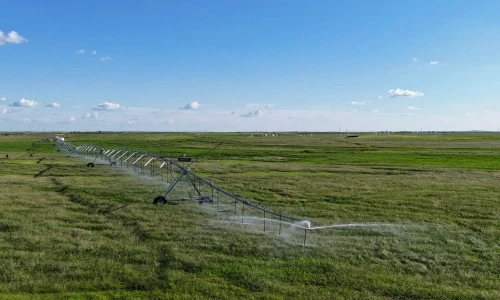
Energy Consumption and Carbon Footprint of Pivot Irrigation Systems
Most of the greenhouse gas emissions that come from center pivot irrigation machine operation are caused by the use of energy. Most of the energy used in a linear irrigation machine goes into pumping water from aquifers or surface sources against changes in elevation and pressure. About 2% of all the energy used in the U.S. goes to irrigation, and center pivot irrigation machines are the most common type of technology used in that area.
Reducing Emissions Through Automation and Efficient Drive Technology
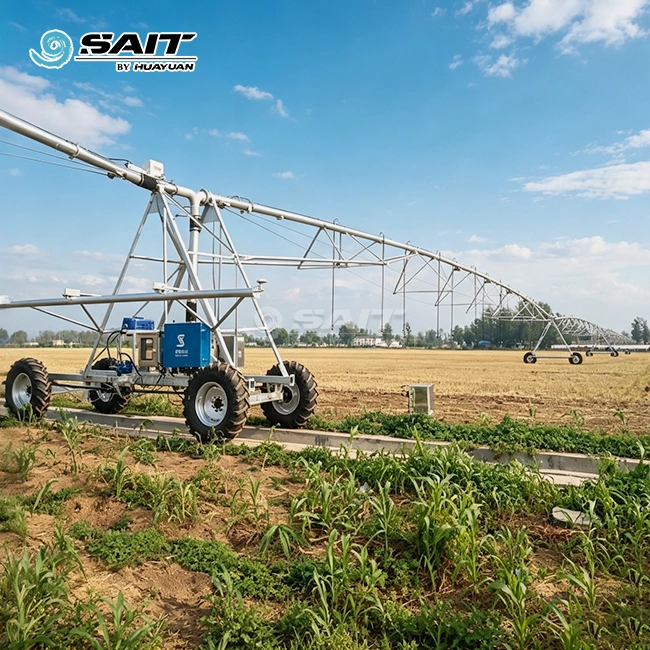
Getting automated irrigation to leave less of a carbon footprint can be done in two main ways: by precisely scheduling when to pump and by making the drive system more efficient. Both are taken care of by HUAYUAN SAIT center pivot irrigation machines. The SAIT Smart Control System lets you schedule watering from afar and use variable-rate irrigation based on zones, which cuts down on run time that isn't needed. The drive motors have 0.75hp or 1.5hp and gear ratios of 25.5:1 and 40:1. This lets you precisely control the speed and waste as little energy as possible while the machine is turning.
Here are the core technical attributes that contribute to energy-efficient operation:
- Precision variable rate irrigation (VRI): Big data models built into the SAIT platform change application rates in real time based on readings of soil wetness, stopping too much application and cutting down on the total number of pumping hours needed each season.
- Low-pressure nozzle packages: Running the system at a lower pressure lowers the load on the pump, which lowers electricity use without affecting the even spread.
- Remote monitoring and scheduling: Operators can control watering processes from anywhere, so they don't have to be turned on by hand, and the machines run for less time when they're not being used.
These capabilities collectively reduce operational energy demand and give procurement teams a measurable advantage when calculating total cost of ownership against competing systems.
Technological Innovations Driving Climate-Friendly Pivot Irrigation
The use of precision agriculture has completely changed what linear irrigation machine equipment can do in terms of being resilient to climate change. With IoT sensors, BeiDou navigation, and AI-driven scheduling platforms, operators can change their plans based on real-time soil and weather conditions instead of sticking to set schedules that don't take into account changes.
HUAYUAN SAIT's Technical Architecture for Climate-Adaptive Operation
HUAYUAN SAIT has built its product line around the idea that accuracy comes first. Over 130 patents, including 35 invention patents and 15 foreign patents, were created with the help of China Agricultural University and local engineering research centers. This means that each irrigation machine has a lot of technical depth. The BeiDou + IoT control platform keeps uniformity above 90% and achieves a missed watering rate below 5%. This solves the corner coverage problem that has traditionally limited center pivot irrigation machine efficiency in square and irregular areas.
When compared to normal circle coverage, the Corner Arm System increases the irrigated area by up to 15% by extending coverage into field corners. This improvement cuts down on the amount of land that needs to be irrigated per unit that is installed. This increases the amount of water that can be used and makes operations more efficient on non-circular parcels.
All of this technology is built on hot-dip galvanized steel that has a zinc coating that is at least 80μm thick. This is a higher standard than regular galvanized parts and means that the structure will last at least 20 years in harsh temperatures ranging from -20°C to 60°C. There are three main diameters for pipeline options: 5" (127mm), 6-5/8" (168mm), and 8-5/8" (219mm). The span lengths range from 37.5m to 66.5m, and the tower heights range from 2.1m to 4.5m to accommodate different crop canopy heights, such as the high clearance needs for corn and sugarcane.
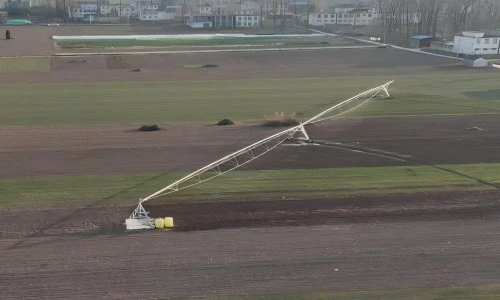
Comparative Analysis: Pivot Irrigation vs. Other Irrigation Methods on Climate Impact
Drip irrigation is always the most efficient way to use water because it gets water straight to the roots with very little loss through evaporation. However, it is too expensive to use on the scale needed for 500 hectares or more of row crops and needs a lot of upkeep. Flood irrigation is still popular in low-income farming areas, but it causes a lot of runoff, soil erosion, and groundwater drawdown compared to the amount of water that is used.
Center pivot irrigation machines are a good compromise between two extremes. They cover a large area quickly—one HUAYUAN SAIT pivot irrigation machine can water up to 200 hectares per irrigation cycle—and use over 70% less water than traditional floodways. The downside is that it uses more energy per unit than drip, but smart timing through the SAIT platform makes that difference much smaller in real life. The pivot irrigation machine is still the most deployable and scalable solution for large-scale commercial operators, EPC contractors, and government agricultural programs when comparing how much water it saves, how much labor it saves, and how much crop it produces per hectare.
Conclusion
Center piovt irrigation machine changes the local climate by changing evapotranspiration, lowering surface temperatures in irrigated areas, and changing how soil moisture moves across big farming landscapes. How well each system is designed and run has a big effect on the environmental footprint. Whether a center pivot irrigation machine is a climate risk or an advantage is directly related to its low-pressure nozzle designs, precision control platforms, and structural longevity. HUAYUAN SAIT systems are designed to work on the right side of that equation. They use smart automation and tried-and-true structural engineering to help farmers be productive and responsible with resources.
FAQ
1. Does center pivot irrigation cause local temperature changes?
Yes. Surface temperatures drop by 1 to 3°C in irrigated areas of the United States during the summer watering times, according to research. Higher evapotranspiration causes this to happen because more water escapes from the land and through crop canopies, releasing heat into the lower atmosphere with the linear irrigation machine.
2. Can pivot irrigation contribute to greenhouse gas emissions?
No, not directly. For pumping to work, you need either electricity or gasoline, and most power plants release carbon into the air. Precision scheduling and variable rate irrigation cut down on pump run time that isn't needed, which lowers the energy demand and emissions for each season.
3. How does irrigation uniformity affect climate impact?
If the soil is more uniform, it takes less water to reach the target moisture level. This means that less water is taken from the aquifer, pumped, and run off into nearby waterways. HUAYUAN SAIT systems achieve uniformity levels above 90%, which directly supports operations that use fewer resources.
4. What role does fertigation play in climate-smart irrigation?
Integrating fertilizer delivery into the irrigation system cuts down on the need for separate mechanical fertilizer applications. This saves tractor fuel, lowers emissions per hectare, and improves the root zone's ability to absorb nutrients.
Partner With HUAYUAN SAIT — Trusted Center Pivot Irrigation Manufacturer
HUAYUAN SAIT delivers precision center pivot irrigation machine solutions backed by 20 years of manufacturing experience, 130+ patents, and a SAIT Smart Control System that reduces water use by over 70% versus flood methods. With hot-dip galvanized steel at 80μm+ coating, a 20-year service life, and full OEM/ODM customization from 1-unit pilot orders to 20-unit project contracts, we meet the rigorous standards of commercial farm operators and government procurement teams alike. Contact our technical team today at kevin@showyirrigation.com to request specifications and project pricing.
References
1. Kueppers, L. M., Snyder, M. A., & Sloan, L. C. (2007). Irrigation cooling effect: Regional climate forcing by land-use change.
2. American Society of Agricultural and Biological Engineers. (2017). ASABE Standard S436: Test Procedure for Determining the Uniformity of Water Distribution of Center Pivot and Lateral Move Irrigation Machines Equipped with Spray or Sprinkler Nozzles.
3. Evans, R. G., & Sadler, E. J. (2008). Methods and technologies to improve efficiency of water use.
4. U.S. Energy Information Administration. (2021). Irrigation & Energy Use in the U.S.
5. Postel, S. L. (2000). Entering an era of water scarcity: The challenges ahead. Ecological Applications, 10(4), 941–948.
6. Food and Agriculture Organization of the United Nations. (2020). The State of Food and Agriculture 2020: Overcoming Water Challenges in Agriculture.
Get a tailored irrigation solution for your project — our engineering team is ready to support you from design to installation.