Corner Arm System Benefits Modern Industrial Applications
A corner arm system in precision irrigation represents one of the most impactful engineering advances for large-scale farming operations. Conventional center pivot sprinklers trace a circular path, leaving the corners of square or rectangular fields consistently unwatered — a loss that can reach up to 21% of total field area. HUAYUAN SAIT's corner arm system resolves this directly, extending irrigated reach into the edges and irregular boundaries that standard pivots miss. The result is measurably higher land utilization, tighter water management, and a stronger return on every irrigated hectare.
Understanding the Corner Arm System and Its Agricultural Value
It is known and proven that there is a pain point. A normal 160-acre quarter-section field that is watered by a normal pivot leaves about 30–34 acres in the corners without water. During a full growing season, that untreated land means lost crop growth and money spent on land.
Because it has a GPS/BDS-guided swing arm extension attached to the farthest end of the center pivot, HUAYUAN SAIT's pivot corner arm takes this into account. As the main pivot turns, the arm automatically spreads out when it gets close to a field corner and pulls back in when the pivot returns to its normal circular shape. BeiDou (BDS) navigation controls the whole process. The wheel tracks are accurate to within 15 cm, which is good enough for respecting field limits without any help from an assistant.


Why GPS/BDS Guidance Changes the Equation
In older cable-guided corner systems, Corner arm installation cost was high because induction wires had to be buried along the edges of the fields. These wires were expensive to install and hard to keep up. With BDS satellite tracking, none of that equipment is needed at all. The SAIT system constantly reads real-time positioning data, which changes the angle of the arm and the output of the sprinklers in milliseconds. It is this level of response that allows for even water spread in fields that aren't straight lines, like those found in the Midwest and Great Plains of the United States.
Design and Material Engineering Behind the SAIT Corner Arm
Durability in field equipment isn't a coincidence; it's built that way on purpose. The HUAYUAN SAIT corner arm pivot system is based on a structural theory that spreads mechanical force evenly across the drivetrain. This keeps individual parts from wearing out over time when used in different seasons.
In terms of structure, these are the main benefits of this system:
- 168 mm main pipe diameter with self-produced virgin PE pipe material — thicker wall tolerance than industry-standard components, anti-aging, fracture-resistant, and manufactured without recycled material risks that compromise long-term structural integrity.
- Track roller connection with enlarged rollers and new wear plates — this proven configuration delivers exceptional articulation durability across varied soil surfaces, including the soft or waterlogged soils common after irrigation cycles.
- Wide-profile T-bar mounting brackets — engineered specifically for high-wind stability, this design keeps the span geometry rigid under lateral load, a practical necessity in open, exposed agricultural terrain.
- Dual-tower bracket drive unit — the controllable drive unit with this configuration achieves what SAIT describes as industry-leading structural strength, while simultaneously reducing the steering load on each individual drive motor.
- Hot-dip galvanizing over 80 μm — this zinc coating thickness substantially exceeds ordinary galvanized components, forming a high-performance barrier against corrosion that extends service life in humid, saline, or chemically active soil environments.
Together, these engineering decisions lower the system's overall wear and tear, lower the number of times it needs to be serviced, and make it work for many more years than 20 years in normal field conditions.
Intelligent Sprinkler Control: How Variable Rate Irrigation Works
Durability doesn't mean much if you don't have good water management logic. HUAYUAN SAIT builds its SAIT variable rate watering platform right into the corner arm system design, which makes it possible to have precise nozzle-level control across the whole span.
Programmable Solenoid Valve Architecture
There are 48 separate solenoid valves in the system, and each one controls a different spray gun. The control platform turns each gun on and off at exact times while the BDS positioning system figures out where the arm is in relation to the field boundaries. This pulse modulation gives each zone just the right amount of flow—no extra application in transition zones and no dry holes at the corner border. Because of this, the consistency of watering is above 90%, which is something that HUAYUAN SAIT always does, even though the industry average is often below 80%.
End Irrigation Coverage
For terminal coverage, the system comes with both an end nozzle and an end gun. Depending on how the field is set up and the working pressure, the shooting range can go as far as 81 to 110.7 meters. With this range, even the deepest corner zones will be covered enough so that they don't need extra watering runs. The standard span height is 2.1 m, but custom heights between 2.1 m and 4.5 m are also possible for high-clearance crops like sugar cane and tall biofuel varieties.
Procurement Comparison: Why HUAYUAN SAIT Stands Against Established Brands
When purchasing teams look at center pivot corner arm providers, they usually compare them to Valley, Lindsay, and Reinke, which are the three biggest manufacturers in North America. Total cost of ownership, availability of spare parts, clarity of the control system, and dependability after the sale are all important factors to consider when comparing.
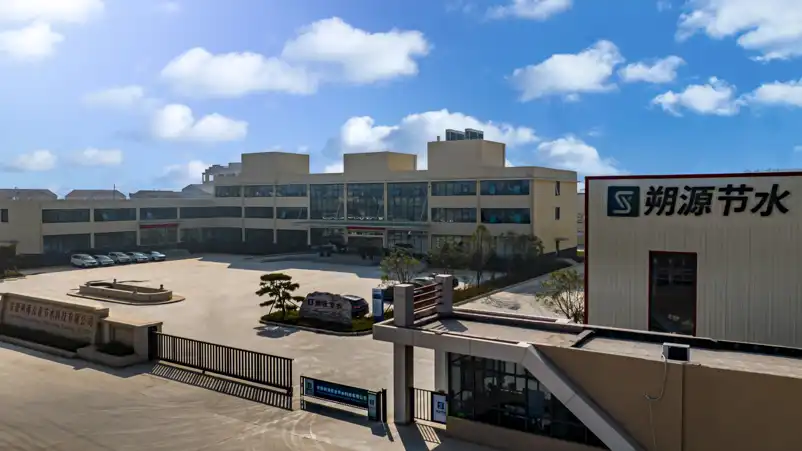
HUAYUAN SAIT looks at this Corner arm installation cost comparison from the point of view of manufacturing. He has over 130 patents, including 35 invention patents and 15 international patents, and has built an R&D platform with China Agricultural University on top of the infrastructure of a provincial engineering research center. The company is well-known for its work in important national R&D projects. This is based on technical facts that can be checked, not just marketing speak.
When it comes to total cost of ownership, HUAYUAN SAIT's direct plant supply model gets rid of the middlemen and offers competitive unit prices on common 5", 6-5/8", and 8-5/8" pipe diameters. Standard configurations have an average lead time of one week for delivery from the facility next to Xuzhou. This is a much shorter cycle than the 60–90 day timelines that buyers usually face. Because it is in the Huaihai Economic Zone, it has easy access to logistics hubs and lower freight costs for both domestic and international shipments.
After the sale, there is on-site installation help, a full warranty for one year, low-cost part replacement for three years, and lifelong supply of spare parts at cost price. OEM and private-label customers can place pilot orders with just one unit, work with engineers under NDA, and have the control panel localized in the buyer's preferred language. For example, in the North American market, English is used because USDA-compatible specifications and ASABE compliance are standard requirements for procurement.
Conclusion
A GPS-guided pivot corner arm system is a good choice for industrial farming because it can water up to 21% more land per pivot, make irrigation more even than 90% of the time, and is built to last for twenty years of hard field use. The HUAYUAN SAIT corner arm irrigation system has 48-unit individual solenoid control, 80 μm hot-dip galvanized construction, and flexible OEM manufacturing all in one compact package. This method should be carefully considered by procurement professionals, farm contractors, and equipment sellers who want to find a technically sound alternative to well-known names.
FAQ
Q1: How does the corner arm handle irregular or non-rectangular field boundaries?
With an accuracy of ±15 cm in wheel track, the BDS guidance system reads real-time location data all the time. The control platform compares the position of the arm to a field boundary model that has already been loaded. It then automatically changes the arm angle and nozzle output. The 48 separate solenoid valves handle irregular boundaries. They pulse on and off separately to match the water application exactly to the field geometry without the operator having to make any changes while the machine is running.
A2: What happens if the BDS signal is interrupted during a pivot cycle?
There is a backup mode built into the SAIT control device. When the quality of the positioning signal drops below the operating threshold, the system safely pulls back the corner arm and stops the pivot movement to keep the boundaries from being crossed or too much force being applied. This action saves both the field's equipment and the land borders next to it.
Q3: Can the corner arm system be retrofitted to an existing center pivot?
Compatibility depends on how strong the current pivot is and how the control panel is set up. During the pre-order planning stage, HUAYUAN SAIT's engineering team checks to see if a retrofit is possible. For all custom and retrofit designs, on-site installation guidance is available.
Q4: What maintenance schedule does the swing joint require?
Every year, you should check the mechanical swing joint and turning seals. It is suggested that working parts be oiled every 500 to 1,000 hours of operation. A lifelong supply of extra parts at the factory cost price keeps upkeep costs low for the whole system's life.
Connect with HUAYUAN SAIT — Corner Arm System Manufacturer
HUAYUAN SAIT makes factory-direct center pivot corner arm systems. Each one is backed by 20 years of engineering progress. We support custom configurations, OEM branding, and on-site installation for farming businesses around the world, from small trial sales of one unit to large-scale project purchases. Get in touch with our technical team right away to get field-specific specs or a reasonable price. Email us at kevin@showyirrigation.com.
References
1. Evans, R. G., & King, B. A. (2012). Site-Specific Sprinkler Irrigation in a Water-Limited Future. Transactions of the ASABE.
2. Camp, C. R., Sadler, E. J., & Busscher, W. J. (1997). A Comparison of Uniformity Measures for Drip Irrigation Systems. Transactions of the ASAE.
3. Kranz, W. L., & Eisenhauer, D. E. (1990). Traveling Irrigation Gun Application Uniformity. Applied Engineering in Agriculture, ASABE.
4. Food and Agriculture Organization of the United Nations. (2014). Crop Evapotranspiration: Guidelines for Computing Crop Water Requirements. FAO Irrigation and Drainage Paper No. 56.
5. Howell, T. A. (2001). Enhancing Water Use Efficiency in Irrigated Agriculture. Agronomy Journal, American Society of Agronomy.
6. National Engineering Handbook, Part 623 — Irrigation. (2016). Center Pivot Irrigation System Design and Management. USDA Natural Resources Conservation Service.
Get a tailored irrigation solution for your project — our engineering team is ready to support you from design to installation.