Can a four-wheel lateral move handle slopes? Load capacity guide
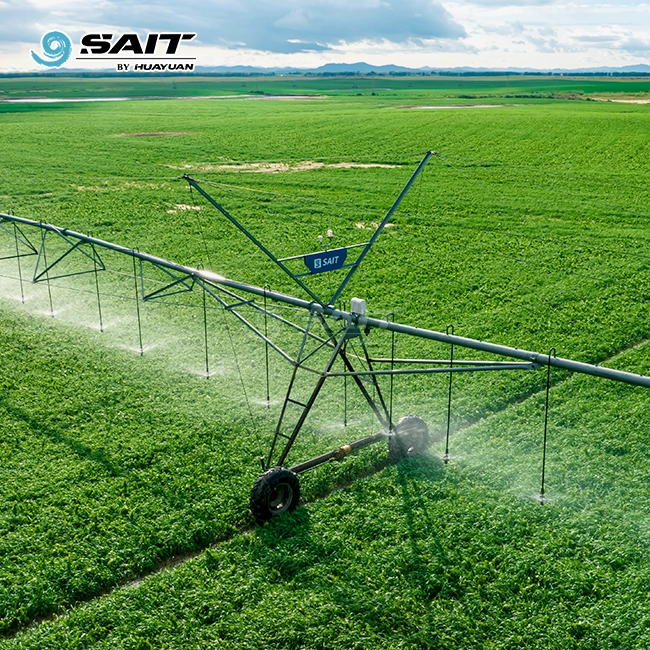
A four-wheel lateral irrigation system is a linear-move machine that travels perpendicular to its frame, delivering water in straight passes across rectangular fields. Unlike center pivots, it achieves field coverage exceeding 98%, eliminating unirrigated corners. Many operators ask whether this machine can handle sloped terrain. The short answer: yes, within defined grade limits. Understanding load capacity, tire selection, and guidance configuration is what separates a well-matched system from a costly mismatch in the field.
Understanding Four-Wheel Lateral Systems and Slope Challenges


Before you judge how well a machine works on a hill, you should know how it was built and where the ground really puts stress on it.
How the System Moves
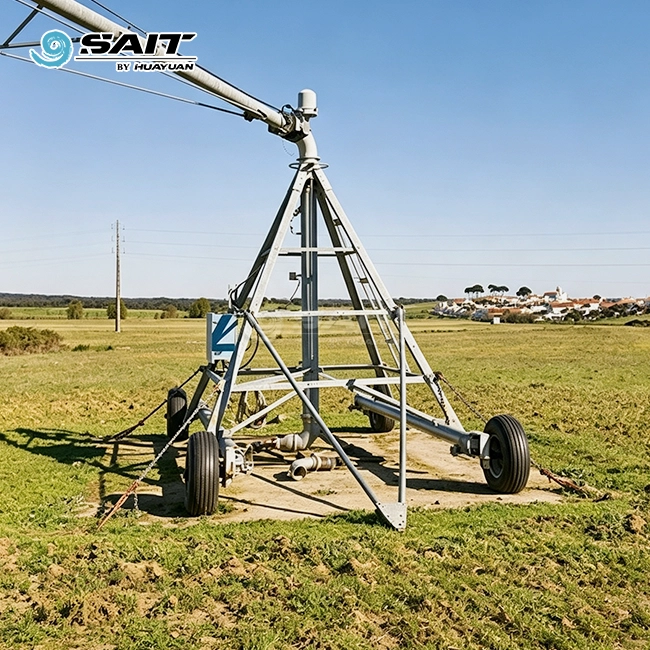
A lateral-move irrigator moves along a machine length that can reach up to 973 meters on drive towers that are spaced out at standard span lengths of 37.5 meters, 43.3 meters, 49.1 meters, or 54.9 meters. Each tower has powered wheels that move in sync with each other. This coordination is easy to do on flat ground. Even a 3–5% grade on a slope adds lateral drift forces that the guidance system has to keep adjusting for.
Where Slope Creates Mechanical Stress
The two most direct effects of slope loading are on the drive unit's shaft power demand and the frame's lateral bending stress. Each tower feels different ground reaction forces when the machine goes up or down a hill. This mismatch gets worse when gaps are filled with water. When HUAYUAN SAIT systems are put together, the 168mm and 219mm main pipe diameters are made with wall thickness tolerances that take these changing loads into account.
How Hydraulic Uniformity is Affected
For four-wheel linear machines, when a machine works on a hill, the water flow inside a span pipe changes. At the valve heads, spans going downhill get a little more pressure than spans going uphill. If you don't use pressure-compensating emitters or carefully design the nozzle package, distribution uniformity, which is measured by the Coefficient of Uniformity (CU), can drop by 90%. This is the difference between adequate irrigation and precision irrigation. It has been proven that HUAYUAN SAIT methods keep CU above 90%.
Analyzing Four-Wheel Lateral Load Capacity and Slope Adaptability
On hills, load capacity is not a single number. Your answer will depend on how the tire size, axle rating, frame stiffness, and water supply method weight all work together.
Tire Selection and Ground Bearing Pressure
The size of the tires you have has a direct effect on how load moves over wet or soft ground on a hill. The HUAYUAN SAIT four-wheel lateral systems come with three wheel sizes: 11.2-24, 14.9-24, and 16.9-24. The wheels can be ordered with or without tubes. When going down a hill, bigger tires lower the ground-bearing pressure, which keeps the tires from rutting on clay soils. If the ground is mostly dirt and the slope is more than 3%, the 16.9-24 option is the best pick.
Drive Unit Torque and Slope Grade Limits
When it comes to four-wheel drive configurations, most lateral move manufacturers set a working slope limit of 8%, which is about 4.6°. Most two-wheel systems can only go up to 5%. The four-wheel drive cart has more torque because the traction is spread across four points of contact, which makes wheel slip less likely on hills. The four-speed gearbox in HUAYUAN SAIT's water engine has carefully made gears that don't wear down easily and keep the speed stable even when the load changes because of changes in the slope.
Frame Strength and Span Configuration
Frame fatigue on slopes builds up over time, not just during one pass. Hot-dip galvanized structural steel with a coating depth of more than 80μm protects against corrosion and keeps the structure's integrity when slopes are wet and put a lot of stress on it. Operators can choose from standard height and high-clearance span options to match the crop height needs, such as tall sugarcane or row vegetables, without affecting the machine's center of gravity on grades.
Comparing Four-Wheel Lateral Systems to Other Options on Sloped Terrain
When picking the right watering system for sloping land, you need to be honest about what each one can and can't do.
Four-Wheel Lateral vs. Center Pivot on Slopes
Center pivot systems work well on hills because each tower only needs to stay in line with the pivot point. They don't need to be fixed for horizontal drift. But pivots waste land because they don't water all of it; 15–21% of a rectangular field stays dry. A four-wheel lateral irrigation system with GNSS satellite control (BDS/GPS dual-mode) works just as well on a sloped rectangular field as a pivot while making up for the lost field area. For businesses that value every hectare economically, this difference can be seen in the revenue they generate.
Four-Wheel Lateral vs. Drip Irrigation on Slopes
Drip systems can handle rough terrain without worrying about their mechanical stability, but they cost a lot more per hectare and need a lot of attention when it comes to filtration. If the slope is more than 8%, drip may be a better choice. Below that level, a lateral move irrigator can water 240 hectares per unit and can integrate fertigation straight through the main pipeline. This makes it a much more scalable choice for big rectangular fields that grow grains, vegetables, or sugarcane.
Energy and Cost Efficiency on Slopes
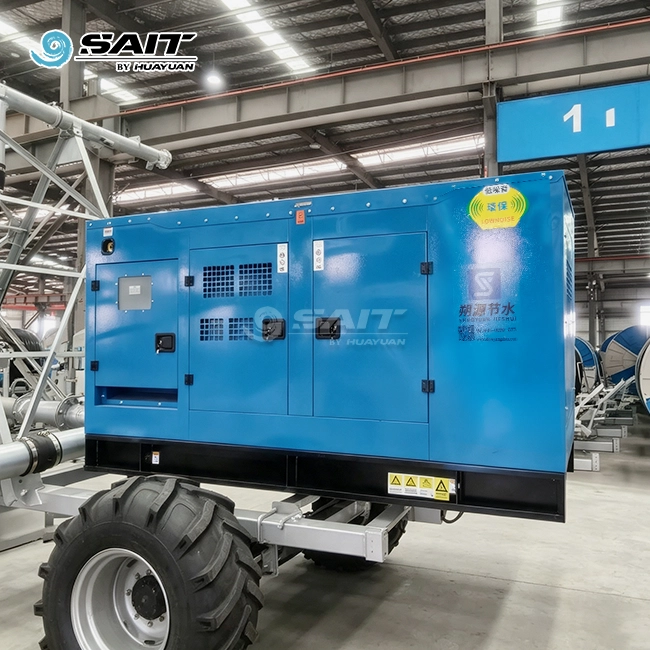
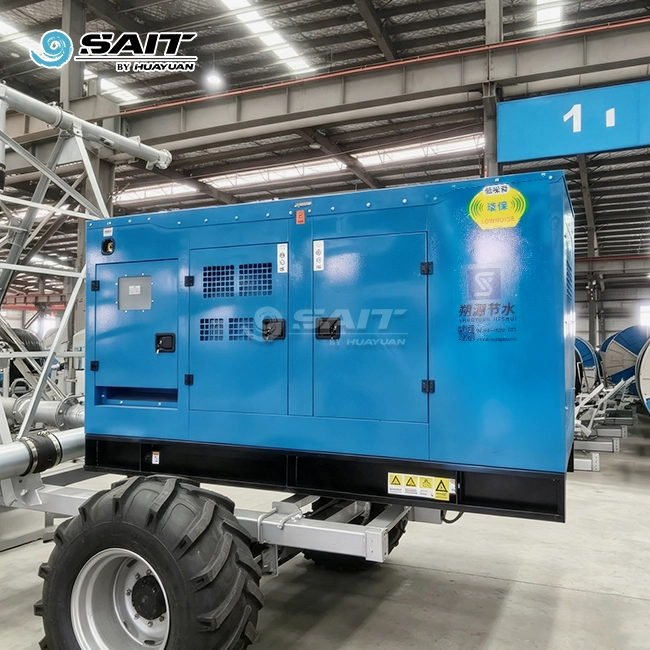
When operating on a slope, the drive motor needs 10–20% more energy than when operating on flat ground. This depends on the grade and the resistance of the dirt. You can get power from either a towed cable system that is linked to the grid or a generator that is built into the vehicle for use in remote areas. The generator choice makes hill operation possible in Kazakhstan or in remote parts of North Africa that don't have access to the power grid. Operators should take this extra energy need into account when comparing systems' per-hectare irrigation cost models.
Maintenance and Operational Tips to Optimize Performance on Slopes
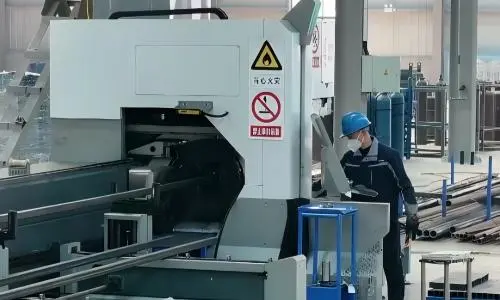
A machine with better specs that hasn't been taken care of will not handle hills as well as one that has.
Tire and Drive Unit Inspection Schedule
When watering steep areas, you should check the tire pressure before each soak. Under-inflation on a grade makes the sidewalls bend and heat build up, which speeds up wear. Check the oil in the drive unit engine once a month during the busy season, and change all of the oil at the beginning of each irrigation season. Every 200 hours of use, the wheel bearing play should be checked. Going up and down slopes puts more cyclic stress on the bearings than running on flat ground.
Guidance System Calibration on Grades
When the machine is used on a slope, all three guidance modes—furrow guidance, cable guidance, and satellite guidance—need to be calibrated for that specific field. You can be sure that GNSS satellite guidance using BDS/GPS dual-mode will work best on grades since it doesn't depend on real points that may move or wear away. A full-length test pass with real-time lateral deviation monitoring should be part of the calibration process. The goal is to have a maximum deviation of ±10 cm over the whole travel length.
Troubleshooting Slope-Induced Issues
For four-wheel linear systems, wheel speed differences between uphill and downhill towers are a common problem on hills that must be fixed automatically by the control system. If the alignment monitor overcorrects, check the settings for how sensitive it is. When water is applied unevenly across spans, it's usually because of changes in pressure, not worn nozzles. Check the pressure regulator at the water intake point first. Real-time tracking is possible with both the normal electrical control system and the remote control system option. This means that these problems can be found quickly.
Procurement Guidance: Selecting the Right System for Sloped Terrain
To choose the right machine, you need to make sure that the specs match the conditions on the job site instead of buying something that fits a general standard.
Key Selection Criteria
Before choosing a system, every buying choice should take these important factors into account:
Field gradient measurement: Commission a topographic survey before specifying drive unit torque ratings. Fields with gradients above 5% require the 16.9-24 tire option and may need center cart positioning reviewed.
Water supply method compatibility: Canal water supply suits fields with irrigation channels running parallel to the travel path. Drag hose supply is more practical for isolated fields on grades where canal infrastructure is absent.
Guidance mode selection: GNSS satellite guidance is the recommended choice for sloped fields where physical guidance references (trenches or cables) may shift due to soil movement.
Together, these three factors show whether a system will work reliably or need expensive changes to be made in the field after installation.
HUAYUAN SAIT System Configurations for Slope Applications
HUAYUAN SAIT has span lengths ranging from 37.5m to 54.9m and overhang lengths ranging from 2.7m to 25m. These lengths can cover field boundary irregularities that are common in sloped terrain. Customers can choose the type of drive unit, guidance mode, water supply method, and power source in a single order, without having to wait for a special build. For distributors who need private-label products, OEM and ODM options are available.
Conclusion
For four-wheel lateral irrigation, if the system is set up properly, it can handle hills up to an eight percent grade. Real-world performance depends on factors like tire selection, the drive unit's torque capacity, the guidance mode, and how well the equipment is maintained. The 98%+ coverage rate of this lateral move irrigator makes up for the more complex slope-matched configuration compared to other options for rectangular fields where land efficiency is important. For businesses that value every hectare economically, this difference translates directly to their revenue.
FAQ
Q1: What is the maximum slope a four-wheel lateral irrigator can handle?
Most four-wheel lateral move systems can safely move on slopes of up to 8%, which is about 4.6°. After this point, wheel slip, frame stress, and changes in pressure all work together to make the vehicle less effective. The realistic limit is affected by things like the type of dirt, the size of the tires, and the weight of the system.
Q2: Does slope affect water distribution uniformity?
Yes. If the tip packages aren't matched to the change in elevation, pressure changes across lengths on a grade can bring the Coefficient of Uniformity below 90%.
Q3: Which guidance mode works best on sloped fields?
GNSS satellite guidance with BDS/GPS dual-mode is the most dependable way to go up and down grades because it doesn't rely on physical marks that can move when the ground moves or wears away.
Q4: Can the system be relocated between fields?
Yes. Moving from one field to another is possible with many lateral move configurations. When the new field has a significantly different slope, the drive unit wheel design and cart placement should be looked at again.
Get a Slope-Ready Lateral Move Quote from HUAYUAN SAIT
HUAYUAN SAIT has been making lateral move irrigators for 20 years. They are built to work in tough field conditions. Our four-wheel lateral irrigation systems are shipped within a week from our plant near Xuzhou. They come with a full guarantee for one year, a low-cost servicing program for three years, and spare parts that are supplied at cost price for life. Get in touch with our team to talk about your field gradient data and get a system specification that fits your needs. To connect with a four-wheel lateral irrigation supplier ready to support your project, email us at kevin@showyirrigation.com.
References
1. Gilley, J. R., & Mielke, L. N. (1986). Mechanical performance of lateral-move irrigation systems on sloped terrain. Transactions of the ASAE.
2. Food and Agriculture Organization of the United Nations. (2002). Deficit Irrigation Practices: FAO Water Reports No. 22. FAO.
3. Keller, J., & Bliesner, R. D. (1990). Sprinkle and Trickle Irrigation. Van Nostrand Reinhold.
4. National Engineering Handbook, Part 652 — Irrigation Guide. (2006). United States Department of Agriculture, Natural Resources Conservation Service.
5. Camp, C. R., Sadler, E. J., & Busscher, W. J. (1997). A comparison of uniformity measures for drip and linear-move irrigation systems. Transactions of the ASAE.
6. Allen, R. G., Pereira, L. S., Raes, D., & Smith, M. (1998). Crop Evapotranspiration: Guidelines for Computing Crop Water Requirements — FAO Irrigation and Drainage Paper 56. FAO.
Get a tailored irrigation solution for your project — our engineering team is ready to support you from design to installation.