What is a skid pivot? Your Comprehensive Guide
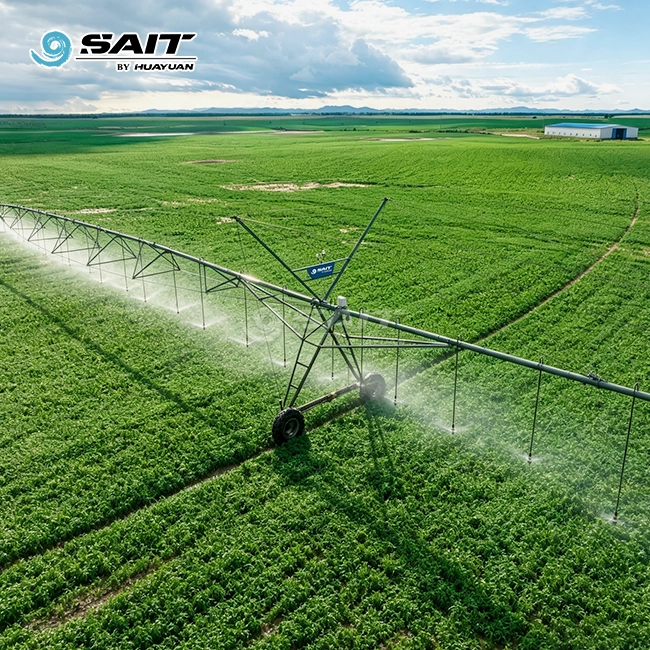
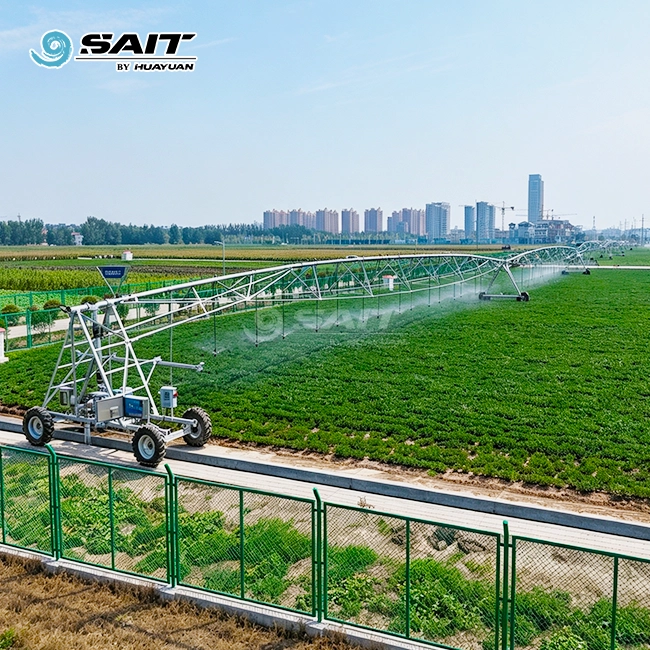
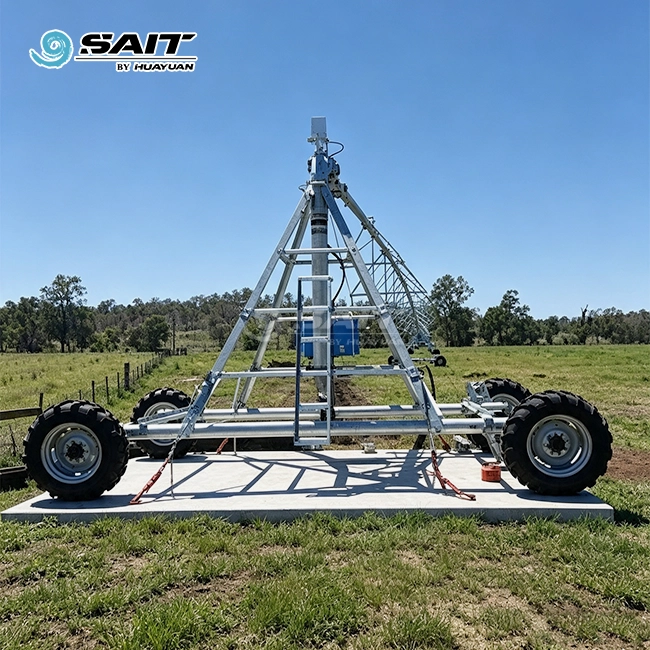
A skid pivot is a precision-engineered mechanical interface that serves as the central anchor point of a center pivot irrigation system. Mounted on a skid-style base frame, it allows the entire lateral pipeline assembly to rotate radially around a fixed water supply point, distributing water uniformly across large agricultural fields. Unlike rigid joint systems, a skid pivot absorbs torsional stress and accommodates uneven terrain, enabling continuous rotational movement while maintaining structural integrity and uninterrupted fluid flow. For commercial farming operations and irrigation project developers, understanding how this component works is foundational to selecting the right system.
What a Skid Pivot Actually Does in Large-Scale Irrigation
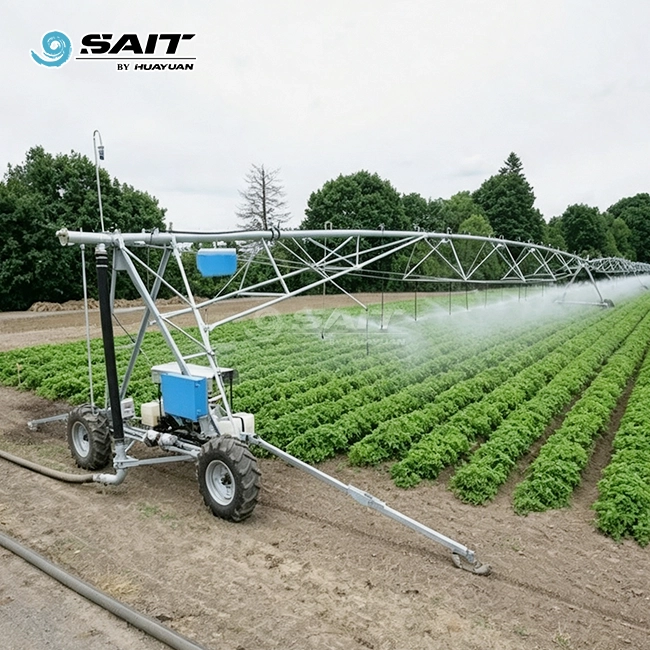
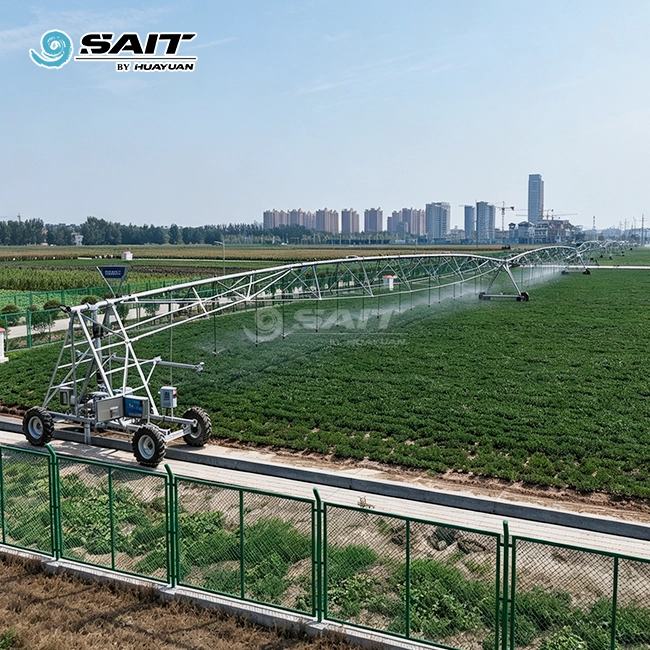
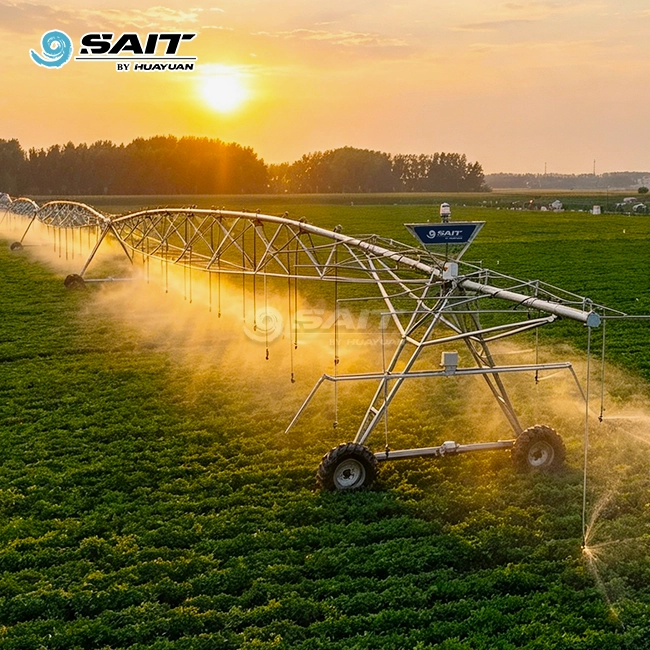
"Skid pivot" refers to both a base frame that is mounted on skids and a central pivot joint. They work together to create the load-bearing center around which an entire irrigation channel turns. In farming, this means that one unit can water anywhere from 4 to 200 hectares per cycle, which is a size that can't be reached with flood irrigation without wasting a lot of water.
The Mechanical Core: How Rotation and Stability Coexist
The pivot joint has to deal with both vertical and horizontal shear forces at the same time, while also making sure that water flows freely from the mainline to the spinning pipeline. To get a low friction coefficient, usually less than 0.1, high-performance pivot systems use torsion-resistant steel construction and bearing housings that lubricate themselves. The skid base spreads the weight over a larger contact area, which keeps the ground from sinking under the anchor point. This is especially helpful in areas where the soil is soft or clay-heavy, like in river delta farming areas.
Profile Configuration and Span Engineering
The soft soil irrigator skid-mounted center pivot system from HUAYUAN SAIT has four profile height options: 2.1m, 2.9m, 3.8m, and 4.5m. This means that it can be used in a wide range of situations, from low-clearance wheat fields to high-clearance sugarcane plantations. There are three main pipe diameters: 5" (127mm), 6-5/8" (168mm), and 8-5/8" (219mm). Span lengths range from 37.5m to 66.5m. The 20mm and 22mm diameters of the truss rods evenly distribute the load across each span, which keeps the structure from sagging when the water level changes during operation. The system can cover an area up to 800 meters across, which means that it can water up to 200 hectares from a single pivot point.
How Skid Pivots Compare to Traditional Fixed-Base Pivot Systems?


A lot of people who are looking at center pivot systems come across both skid-mounted and concrete-footer anchor setups. The difference is important for operations and for the bottom line.
A concrete-anchor pivot is set in place in one field site. It needs to be torn down, dug up, and poured again, which can cost more than $8,000 per move. A skid pivot, on the other hand, is made to be moved around. Over a 5–7 year deployment cycle, this setup saves agricultural engineering companies a lot of money when they work on multiple field parcels.
These two types of pivot bases are structurally different in the following ways:
- Terrain adaptability: Up to 5–10 degrees of angle float can be handled by the skid base without putting any twisting stress on the main truss system. This is important in fields with mild slope changes, since hard concrete anchors would put a lot of stress at the base joint.
- Corrosion resistance: HUAYUAN SAIT's skid frame is hot-dip galvanized with a zinc layer that is at least 80μm thick, which is thicker than the standard 55μm that many competing models use. This choice in engineering directly increases the service life to 20 years or more, even in environments that are wet, salty, or high in UV light.
- Mobility for multi-field deployment: Operators who are in charge of non-contiguous parcels can move the same unit between fields between growing seasons to get the most out of each unit's capital.
These structural benefits help with a real operational problem: costs get stuck in fixed irrigation systems that can't adapt to changing land-use trends. That problem is solved by a well-designed skid pivot.
Installation, Maintenance, and Terrain Considerations
Long-term performance is either guaranteed or harmed by the way things are installed. The skid pivot base needs to be put down on flat, compacted ground, and laser-leveling tools must be used to make sure that the vertical pivot axis is straight across from the rotation plane. If the fitting isn't done right, the cumulative bending loads are transferred into the pivot box, which speeds up bearing wear before it's time.
Maintenance Protocol for Extended Service Life
When you do routine repairs on the pivot joint and the wire system, you keep them in good shape mechanically and electrically. Key intervals include lubricating the pivot bearing housing every three months, checking the armored UL-listed cable for jacket abrasion every year, and checking the performance of the gearmotor every six months. There are two ratios for HUAYUAN SAIT's gearmotors: 25.5:1 (1.5hp) and 40:1 (0.75hp). The wheel gears come in two sizes, 50:1 and 52:1. Matching the gearmotor ratio to the size of the field and the resistance of the dirt stops power overload, which can shorten the life of the drive tower.
SAIT Smart Control: Precision Beyond Manual Scheduling
The SAIT Smart Control System turns the skid pivot assembly from a mechanical irrigator into a precision tool that is connected to data. It combines BeiDou navigation, Internet of Things (IoT) connections, and big data models to support Variable Rate Irrigation that is set to the way the earth actually soaks up water. The rate of missed watering in corners is less than 5%, and the regularity of irrigation is more than 90%. These are performance standards that are much higher than the industry average. The platform allows for remote scheduling, zone-based irrigation control, and combined fertigation management. This makes it much less dependent on big commercial operations for labor.
Procurement Guide: Evaluating Skid Pivot Suppliers for B2B Projects
Choosing a soft soil irrigator through smart choices about how to buy irrigation equipment can have big financial effects in the future. If you set up a system today, it should be making money 15–20 years from now. This means that comparing suppliers is more like doing your research than just looking at a book.
The following factors show what experienced buyers of agricultural projects look for in a skid pivot manufacturer:
- Certification and standards compliance: Buyers in North America must have ISO 9001 certification and standards that are in line with ASABE. Over 130 patents have been issued to HUAYUAN SAIT. These include 35 invention patents and 15 international patents. They were earned through collaborative study with China Agricultural University and with help from provincial engineering research centers.
- OEM and customization capability: Irrigation wholesalers and EPC companies in the region often need private-label setups. The HUAYUAN SAIT factory offers full OEM service, including custom control panel language, RAL/Pantone color matching, branded tower assemblies, and SCADA integration. They also accept pilot orders from a single unit.
- After-sales infrastructure: The total cost of ownership for this system is lower over its lifetime thanks to a 1-year full guarantee, a 3-year low-cost maintenance program, and a lifetime supply of spare parts at the factory cost price. This is a key difference from rivals whose support windows are limited.
- Delivery reliability: HUAYUAN SAIT can make 1,800 pivot and linear systems every year and has a logistics hub next to Xuzhou's main train and road freight network. This means that they can meet competitive wait times for both domestic and international orders.
All of these things lower the risk of buying throughout the whole project lifecycle, from the first start to decades of field operation.
Conclusion
A skid pivot is more than just a base for building. It is the engineering base that decides how well, consistently, and how long a center pivot irrigation system works over its whole life. To choose the right setup for the field shape, soil conditions, crop profile, and climate, you need to know a lot about technology and be able to trust your source. When someone asks HUAYUAN SAIT about a project, they can use their 20 years of experience making things, their own smart control technology, and their full OEM capabilities. The right pivot foundation is important for every hectare of land that is irrigated, whether you are setting up a business 500-hectare farm or designing a government-funded irrigation scheme.
FAQ
Q1: What is the typical maintenance interval for a skid pivot system?
The housing for the central bearing should be oiled every three months, and the electrical cables and seals should be checked once a year. The performance of gearmotors should be checked every six months. Consistently following these intervals stops premature wear and supports the 20+ year design lifespan.
Q2: How does a skid pivot perform on uneven terrain?
The skid pivot base design allows for an angled float of up to 5–10 degrees. This means that the base can tilt a little without putting stress on the main truss. Because of this, it works well in fields with moderate gradient variation.
Q3: Can a skid pivot system be relocated between fields?
Yes. A skid-mounted pivot base is different from concrete-anchor systems because it is made to be moved. This makes it a good option for owners who need to manage a lot of separate parcels during the same growing season without spending a lot of money.
Q4: What certifications should I verify when sourcing a skid pivot supplier?
Before committing to a supplier, the most important things to check are that they meet ISO 9001 standards, that their standards are in line with ASABE standards for North American projects, and that they have the right regional certifications, like GOST for CIS markets or SASO for Middle Eastern purchases.
Partner With HUAYUAN SAIT — Your Trusted Skid Pivot Supplier
HUAYUAN SAIT designs and builds engineered center pivot systems that work well on an industrial scale and last a long time. Our 80μm hot-dip galvanized construction, SAIT Smart Control accuracy, and full OEM customization make up our skid pivot systems. They are backed by 20 years of manufacturing experience. We can take trial orders from a single unit, and our shipping lead times are set to fit the needs of the project. To get specs and project prices right away, email our expert team at kevin@showyirrigation.com.
References
1. American Society of Agricultural and Biological Engineers (ASABE). ASABE Standards: Design and Installation of Microirrigation Systems. ASABE, 2021.
2. Food and Agriculture Organization of the United Nations. Irrigation Water Management: Irrigation Methods. FAO, 2020.
3. Keller, Jack, and Ron Bliesner. Sprinkle and Trickle Irrigation. Van Nostrand Reinhold, 1990.
4. National Research Council. Irrigation-Induced Water Quality Problems: What Can Be Learned from the San Joaquin Valley Experience. National Academies Press, 1989.
5. Shock, Clinton C., and Cedric A. Shock. Efficient Irrigation Scheduling. Oregon State University Extension Service, 2012.
6. USDA Natural Resources Conservation Service. Chapter 11: Sprinkler Irrigation, Part 623 National Engineering Handbook. USDA, 2016.
Get a tailored irrigation solution for your project — our engineering team is ready to support you from design to installation.