Linear vs center pivot: which is right for my field?
If you manage a large rectangular field and wonder whether a linear irrigation system or a center pivot makes more sense, the answer depends largely on your field's shape. Center pivots work well for circular or near-square plots, but they leave up to 20% of a rectangular field without water. A lateral move irrigation system travels in a straight line across the full width of your field, achieving over 98% field coverage. For sugar beet growers, potato farmers, vegetable row crop operators, and desert reclamation projects, that difference in coverage alone can determine your seasonal yield.
Understanding Linear and Center Pivot Irrigation Systems
How a Linear Move System Works
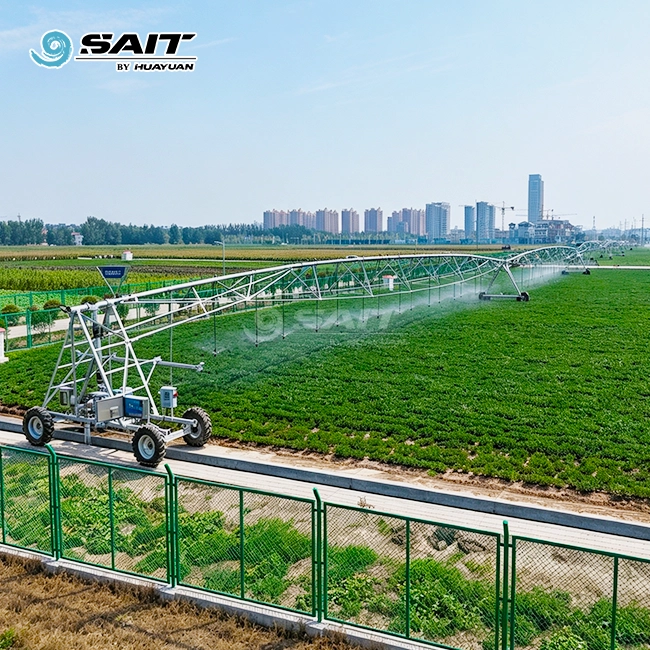
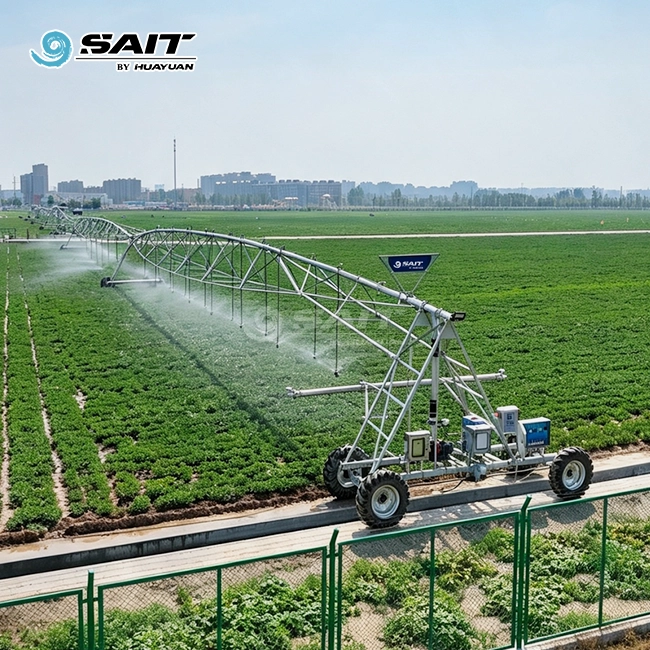
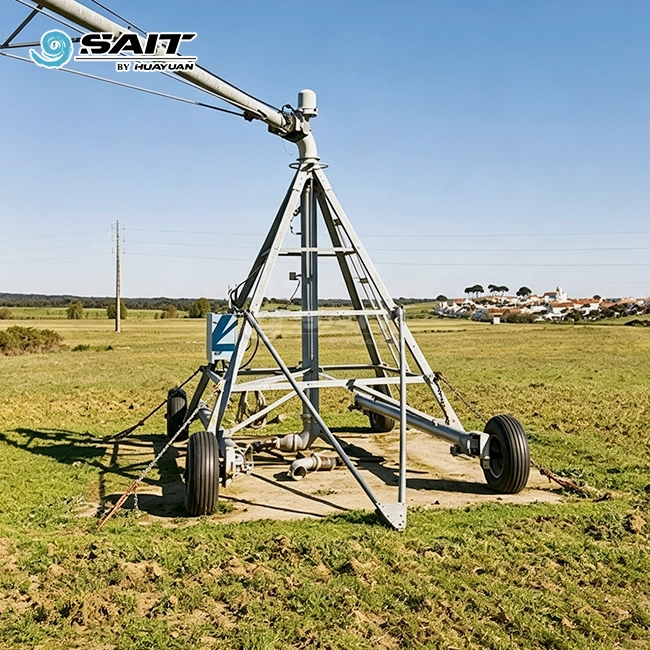
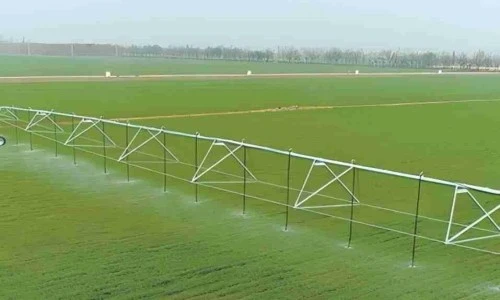
A lateral move irrigator moves back and forth across a rectangular plot perpendicular to its own structure. The longest part of the HUAYUAN SAIT model is 973 meters long, and it can travel up to 3,000 meters and water up to 240 hectares per unit. There are different span configurations (37.5 m to 54.9 m) and extension choices (2.7 m to 25 m), so you can get a perfect fit for your field.
How a Center Pivot Works
A set anchor point is turned by a center pivot, which sprays water in a circle. It works well on fields that are round or have a gentle slope, and it's usually easier to set up than a lateral system. The circular water pattern, on the other hand, keeps the corners of rectangular fields dry. A middle pivot leaves about 11 hectares of a normal 64-hectare square field without water.
Guidance and Water Supply Differences
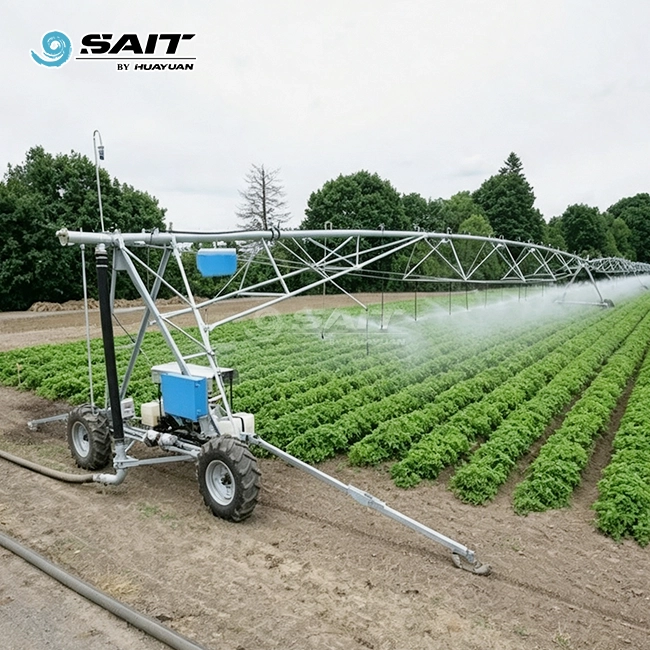
The HUAYUAN SAIT lateral move system, a form of lateral irrigation, has three types of guidance modes: cable guidance, furrow guidance, and BDS/GPS dual-mode satellite guidance. Canal water supply and drag hose water supply are two ways to get water. Power comes in through a towed wire or an on-site generator, which gives workers options in remote areas that don't have access to the power grid.
Comparing Linear and Center Pivot Irrigation Systems


Field Coverage and Water Efficiency
When the length-to-width ratio is above 2:1, the lateral move method really does better than a middle pivot. The HUAYUAN SAIT design has an irrigation consistency rate of over 90% and a missed-irrigation rate of less than 5%, which are both higher than the average for the business. The USDA's Agricultural Research Service says that irrigation systems with uniformity coefficients above 85% can save up to 15% of the water that other systems use.
Capital Cost and Long-Term ROI
On circular fields, center pivots usually cost less per acre up front. The corners of rectangular land that aren't irrigated, on the other hand, lower your effective yield base and, over time, your net return on investment. Operators who manage several adjacent rectangular parcels through a cooperative can share a single lateral move system across several plots. This spreads the cost of infrastructure and makes the business much more profitable.
Automation and Fertigation Capability
Both types of systems can automatically set times, but the HUAYUAN SAIT lateral move has an extra electronic system that can be controlled by a remote in addition to the normal control panel. It also works with fertigation integration, which means that water and fertilizer can flow through the same pipe run at the same time. This saves time and money, cuts down on chemical waste, and helps with precise nutrient control for valuable crops like veggies, sugarcane, and nursery stock.
Operational Considerations for B2B Clients
Installation Complexity and Technician Requirements
Setting up lateral move systems is more accurate than setting up center pivots. A skilled technician is needed to calibrate a guidance system, especially one that works with both BDS and GPS. HUAYUAN SAIT offers on-site installation supervision and operator training in the buyer's language, which takes away this problem for project contractors and distributors who haven't used the technology before.
Maintenance and Parts Availability
A linear irrigation system, also referred to as a lateral move system, needs to have its gearbox lubricated every few months and its oil changed after 1,000 hours of use. Every unit comes with a full one-year warranty from HUAYUAN SAIT, low-cost part replacement for three years, and free factory-cost spare parts for life. This commitment to long-cycle parts solves one of the most common problems that large-scale farm operations have with buying things.
Durability in Harsh Environments
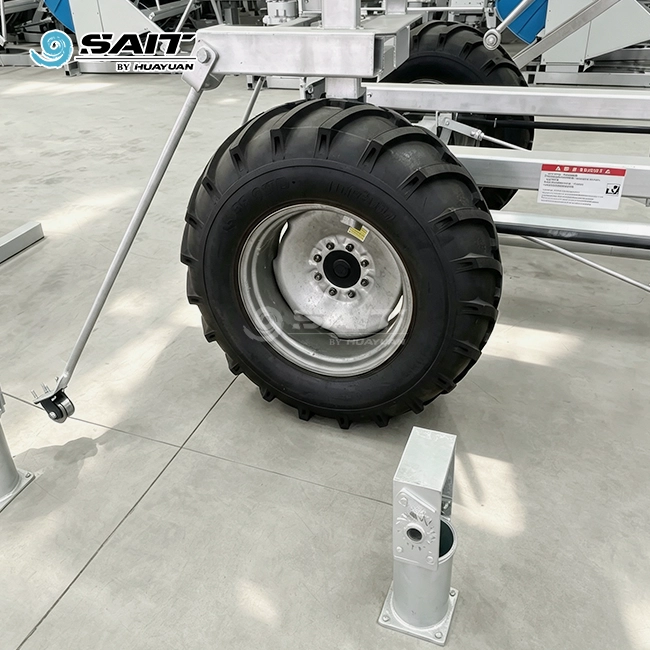
All of HUAYUAN SAIT's steel frames are hot-dip galvanized over 80 µm, which meets high standards for performance against rust. The machinery works reliably from -20 °C to 60 °C, so it can be used in both the very hot summers of desert projects in the Middle East and the very cold winters of state farms in the CIS. You can choose from wheels with or without tubes that fit different types of ground, like soft, sandy, or heavy clay. The wheels come in sizes 11.2-24, 14.9-24, and 16.9-24.
Case Studies and Real-World Applications
Rectangular Row Crop Fields in the U.S. Midwest
In the West and Midwest of the United States, big potato and sugar beet growers often find that center pivots leave corner areas that need to be watered by hand or left alone. If you change your 200-hectare rectangular plot to a lateral move system, you can reclaim 30–40 hectares of land that wasn't being irrigated before. This directly increases the amount of land that can be used for farming without adding more land. With the HUAYUAN SAIT swing-around linear configuration, the machine can automatically move to the other end of the field and go back the way it came.
Desert Reclamation in Arid Regions
In desert farming projects in North Africa and the Middle East, every square meter of land is valuable because it costs a lot to prepare. A lateral move irrigator that covers 98% or more of the field gives a measurable return on land development investment that a center pivot can't match in square or rectangular plots. You can get HUAYUAN SAIT units with both BDS/GPS guidance and a generator power source, which are both common needs for sites that are not connected to the power grid in the desert.
Agricultural Cooperatives Managing Multiple Parcels
A group that runs five 40-hectare rectangular fields next to each other can set up a single long-span lateral irrigation move system to serve each lot in turn. The four-wheel lateral move design lets you move from one plot to another, which makes it useful for groups and contract farming companies that rent land instead of owning it forever.
Decision-Making Guide: Which System Fits Your Field?
Field Shape Is the Primary Filter
A middle hinge is easier to use and costs less if your field is square or round. If your field is rectangular and has a length-to-width ratio greater than 2:1, a horizontal move method will cover your land better and waste less money each season. Standard span lengths in the HUAYUAN SAIT product line range from 37.5 m to 54.9 m. This gives engineers the freedom to set up a system that fits uneven field edges without having to do expensive site engineering.
Power Supply and Remote Access
When there is no power from the grid, the generator power choice on HUAYUAN SAIT systems is useful. In the CIS and sub-Saharan Africa, where farms are far away and towed-cable connections aren't realistic, diesel-powered setups are popular. Making sure there is a power source early on in the planning stages of buying avoids delays during installation.
Crop Type and Irrigation Frequency
With the HUAYUAN SAIT system's high-clearance span options, tall crops like maize and sugarcane can be grown without damage from travel passes. Standard height gaps work well for crops that are lower, like beets and veggies. Fertigation compatibility helps crops that do better when fertilizer is applied at different times during the growing season. This lowers the total cost of inputs over the course of the growing season.
Conclusion
There are three things that determine whether a linear irrigation system, specifically a lateral move model, or a center pivot is better: the shape of the field, the goals for using the land, and the ease of operation. For rectangular fields, cash crop farmers, and projects where every hectare of watered land directly affects income, a lateral move irrigator provides better coverage and input efficiency that can be measured. Center pivots are still a good choice for circle or nearly square plots where getting water is easier. The best way to get better water production and a better long-term return on your irrigation investment is to match the type of system to the shape of the area.
FAQ
Q1: Can a lateral move system handle mild slopes?
Yes. Modern designs for lateral moves have flexible span joints and high-flotation tire choices that let them work on slopes of up to about 10–15%, based on the length of the span and the state of the land. The supplier can set up the right wheel and joint if you confirm the field's gradient data before you place your order.
Q2: How does the machine stay on track across a long field?
There are three ways to guide the HUAYUAN SAIT system: physical furrow tracking, buried cable sensing, and BDS/GPS dual-mode satellite guidance. Each method finds changes in position and changes the speeds of each tower to get them back in line. If drift goes over a certain safety level, the system stops itself automatically.
Q3: What water supply options are available?
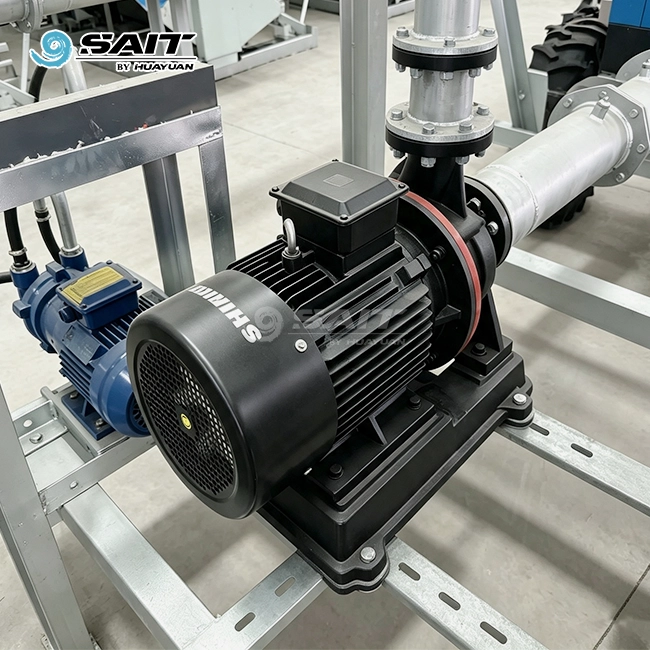
A pump on board the canal draws water from an open ditch next to the field. A mainline hydrant with pressure is connected to a drag hose supply. Canal supply works best for large fields with irrigation canals next to them, while drag hoses work best for fields that aren't as wide or that already have pressure infrastructure in place.
Q4: How long does the equipment last?
With regular upkeep and an 80 µm hot-dip galvanized frame, the main machine frame should last twenty to twenty-five years. HUAYUAN SAIT offers replacement parts for life at the cost of the plant, so there is no risk of parts going out of style during the long service life.
Get the Right Lateral Move System from HUAYUAN SAIT
HUAYUAN SAIT makes linear irrigation systems in a direct factory and has been making them for 20 years. They have over 130 patents and can make 1,800 units a year. Each machine comes with on-site installation help, a full warranty for one year, and low-cost upkeep for three years. Our engineering team is ready to help you whether you need a basic setup or a lateral move irrigator that is fully customized for the way your field is laid out. To get a field coverage study and project price, email us at kevin@showyirrigation.com.
References
1. Keller, J., & Bliesner, R. D. Sprinkle and Trickle Irrigation. Van Nostrand Reinhold, 1990.
2. USDA Agricultural Research Service. Irrigation Water Use. Economic Research Report, 2019.
3. Howell, T. A. "Irrigation Efficiency." Encyclopedia of Water Science, Marcel Dekker, 2003.
4. Camp, C. R., Sadler, E. J., & Yoder, R. E. Evapotranspiration and Irrigation Scheduling. American Society of Agricultural Engineers, 1996.
5. Hanson, B., Orloff, S., & Peters, D. "Monitoring Soil Moisture for Irrigation Water Management." University of California Division of Agriculture and Natural Resources Publication, 2000.
6. Evans, R. G., & Sadler, E. J. "Methods and Technologies to Improve Efficiency of Water Use." Water Resources Research, Vol. 44, American Geophysical Union, 2008.
Get a tailored irrigation solution for your project — our engineering team is ready to support you from design to installation.