Linear Irrigation Machine Benefits for Large-Scale Farming
When managing hundreds of hectares of rectangular cropland, water distribution efficiency can determine whether a season is profitable or painful. A lateral travelling irrigator machine — also called a linear move irrigation system — travels in a straight line perpendicular to its structural frame, delivering uniform water application across the entire field width. Unlike center pivot systems that leave unirrigated corners, lateral move systems achieve field utilization rates exceeding 98%, making them the practical choice for large-scale rectangular plots growing sugar beets, potatoes, vegetables, grains, and sugarcane.
Understanding Linear Irrigation Machines and Their Core Benefits
What Makes Lateral Move Systems Different
Instead of rotating around a fixed point, a Travelling Irrigator moves across a field all the time. This design gets rid of the geometric waste that comes with circular irrigation. For example, a field that is 800 meters wide loses about 21% of its area to corners that aren't watered when using a pivot system. The Lateral Travelling Irrigator from HUAYUAN SAIT can move up to 240 hectares per unit and has a maximum machine length of 973 meters and a maximum journey distance of 3,000 meters.
Three types of structures can be used with this system: Two-Wheel Travelling Irrigator, Four-Wheel Travelling Irrigator, and Swing-Around Travelling Irrigator. Each setup works well in different types of terrain and meets different working needs. This gives buying teams real freedom.


These are the main technical specs that describe performance at scale:
- Span lengths: The span lengths are 37.5m, 43.3m, 49.1m, and 54.9m, and the overhang can be anywhere from 2.7m to 25m. This lets you precisely calibrate the coverage for fields with irregularly shaped edges.
- Guidance modes: There are three types of guidance modes: Furrow Guidance, Cable Guidance, and BDS/GPS Dual-Mode Satellite Guidance. The satellite option provides sub-meter tracking accuracy, which is very important for fields bigger than 500 hectares where even small lateral drift adds up over time.
- Water supply modes: There are two types of water supply: canal water supply and drag hose water supply. Both can work with open-channel and pressurized trunk infrastructure.
- Power supply modes: There are two types of power supply modes: towed cable and generator. This means that the system can work in remote places that don't have access to the power grid, which is a big plus for activities in Central Asia and sub-Saharan Africa.
- Electronic control: Standard Electrical Control System or Remote Control System, with diagnosis made possible by the Internet of Things (IoT) through the SAIT platform.
These requirements directly lead to operational independence. A Lateral travelling irrigator that is controlled from a distance and guided by BDS or GPS can work with little on-site labor, which can cut down on costs on big commercial farms where trained labor is expensive.
Comparing Linear Irrigation with Other Irrigation Methods
Coverage Efficiency vs. Center Pivot Systems
According to figures from the USDA, center pivot irrigation makes up about 70% of the market for automated irrigation in the US. A pivot system, on the other hand, leaves a lot of land unirrigated on rectangular fields with a length-to-width ratio greater than 2:1. This is land that the user still pays taxes and input costs on. That same rectangular field is covered by a Travelling Irrigator that uses more than 98% of the space. On a 200-hectare farm, this can restore more than 30 hectares of useful land.
Evenly applying water is just as important. The systems made by HUAYUAN SAIT have a Coefficient of Uniformity (CU) of more than 90%. This is possible because the precise nozzle kits are set up to work with the field's slope and crop canopy height. High-clearance gaps let tall crops like corn and sugarcane grow without getting in the way of the structure.
Linear vs. Drip and Overhead Sprinkler Systems
Drip irrigation is very good at using water efficiently, but it takes a lot to set up and is hard to move from one season to the next. A towable Travelling Irrigator is a great option for contract farming businesses that work on leased land because the asset goes with the user. Overhead sprinkler systems cover a lot of ground, but they can't match the unity of use and automation depth of a current Travelling Irrigator that can also do fertigation.
Maintenance, Installation, and Efficiency Optimization
Protecting Your Investment Over the Long Term
How long a Lateral Travelling Irrigator works at its best depends on how well it was installed and how well it is maintained. Every unit that HUAYUAN SAIT sells comes with on-site installation help and expert advice to make sure that the alignment sensor calibration, nozzle package verification, and drivetrain commissioning are all done properly before the unit is handed over.
Routine maintenance priorities that operators should schedule include:
- Gearbox service: To keep the planetary gears from wearing out, the lubricant should be checked every season, and the oil should be changed completely every 1,000 hours of operation.
- Galvanization inspection: HUAYUAN SAIT hot-dip galvanizes all steel structures over 80 µm thick, which is much more than the ASTM A123 baseline norm. Check the coating's integrity once a year, especially on drive unit frames that come into contact with soil.
- Guidance system calibration: GPS/BDS dual-mode systems need to check their position from time to time, especially after seasonal transport. Before each season, cable guidance systems need to have their tension checked.
- Pressure leakage test: A pressure leakage test is done to make sure that the couplers and seals are still in good shape before the irrigation season starts. The system is pressurized to 1.5 atmospheres.
When these rules are followed consistently, they support the 15-year or longer service life that big investments need. This is what HUAYUAN SAIT promises with a full guarantee for one year, low-cost upkeep and part replacement for three years, and spare parts for life at the original cost price.
Factors to Consider When Procuring Linear Irrigation Machines
Matching System Configuration to Field Reality
It is risky to buy a lateral travelling irrigator without first doing a thorough topographic study. The ability of the soil to support weight directly impacts the choice of drive unit. For example, 4-wheel drive configurations can handle soft or wet soils that would leave a 2-wheel unit stuck. The span's flexibility needs are based on the field grade, and HUAYUAN SAIT's engineering team makes site-specific drive unit suggestions based on survey data that is sent in.
Choosing a power source has long-term effects on costs. Generator-powered units use more fuel and aren't connected to the power grid, which is a good trade-off for desert cleanup projects in North Africa or the Middle East that are far away. When operations are close to existing power lines, where hourly energy costs are more important than capital flexibility, towed cable configurations work well.
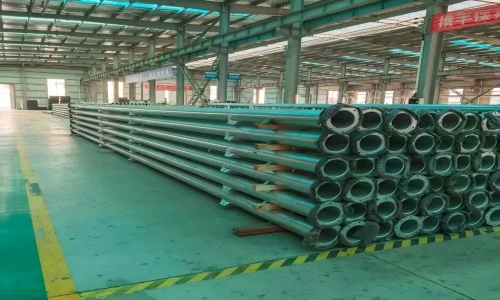
Choosing between 168mm and 219mm for the main pipe diameter changes the amount of friction loss over long distances. When machines are close to 800 meters long, the 219mm choice lowers the amount of energy needed by the pump and makes the application more even at the end of the run .
HUAYUAN SAIT has over 130 patents, including 35 invention patents and 15 foreign patents, and has been making things for 20 years. This gives buyers trust. The company's BeiDou + IoT clever control technology gets rid of the problem of missed watering in corners that common systems have, with a rate of less than 5%.
Case Studies and Future Outlook for Large-Scale Farming
Agricultural groups in Kazakhstan and North Africa that take care of rectangular plots next to each other have shown that sharing Travelling Irrigator infrastructure lowers the cost of irrigation capital by 15–25% per hectare compared to putting separate pivot systems on each plot. Multiple shorter systems are replaced by a single 973-meter machine that covers 240 hectares. This simplifies repair contracts and spare parts storage.
IoT-enabled monitoring, variable rate applications, and satellite-based tracking of water stress are being used more and more in irrigation. The HUAYUAN SAIT platform and remote control system let operators add these features without having to replace the core hardware. This is because the modular platform allows for software updates as precision agriculture standards change.
Conclusion
Large farms with rectangular land have to make a clear choice: they can either accept the coverage losses that come with circular irrigation or spend money on a lateral travelling irrigator that is designed to work with the shape of the field. The Travelling Irrigators made by HUAYUAN SAIT can meet all kinds of large-scale business needs. They have field utilization above 98%, BDS/GPS dual-mode guidance, modular power and water supply setups, and a maximum machine length of 973 meters. These systems give measured results over multiple crop seasons and are backed by 20 years of manufacturing experience, strict galvanization standards, and full after-sales support.
FAQ
1. What crops benefit most from lateral move irrigation?
It's very good for sugar beets, potatoes, vegetables, grains, sugarcane, and orchard crops. The system has high-clearance span choices and adjustable nozzle packages that can be used with both low-canopy row crops and tall specialty crops without affecting the regularity of the application.
2. How does the guidance system maintain straight-line travel over long distances?
There are three types of guidance modes: cable guidance uses an underground wire, furrow guidance uses a trench, and BDS/GPS dual-mode satellite guidance uses real-time location to change the speeds of each tower. The satellite choice gives you accurate readings to within a few meters over distances of more than 500 meters.
3. Can the machine be relocated between fields?
Yes. The machine's swing-around design lets it be turned around and towed to a nearby plot by a tractor. This makes it ideal for contract farming on leased land where irrigation equipment needs to move with the farmer.
4. What maintenance does the drive system require?
It is recommended to check the lubricant every season and change the oil completely every 1,000 hours of use to keep the engine from wearing out and the power level consistent across all drive towers.
Partner with HUAYUAN SAIT — Trusted Linear Irrigation Machine Supplier
Huayuan Sait offers tried-and-true travelling irrigator technology, 20 years of manufacturing experience, 130+ patents, and prices that come straight from the factory. Our team plans the layout of the field, oversees the installation, and does remote diagnostics. This is everything a big business needs from a reliable maker of Travelling Irrigators. To get a configuration proposal that fits your needs, email kevin@showyirrigation.com with the size of your field and the details of your project.
References
1. Food and Agriculture Organization of the United Nations. (2020). Irrigation and Drainage Paper 66: Crop Evapotranspiration – Guidelines for Computing Crop Water Requirements. FAO.
2. USDA National Agricultural Statistics Service. (2019). Farm and Ranch Irrigation Survey (2018). USDA NASS.
3. Evett, S. R., Tolk, J. A., & Howell, T. A. (2003). A Field Comparison of Net Radiation Calculation Methods. Agricultural and Forest Meteorology, 103(1–2), 227–240.
4. Smidt, S. J., Haacker, E. M., Kendall, A. D., & Hyndman, D. W. (2016).
5. Dechmi, F., Playán, E., Cavero, J., Faci, J. M., & Martínez-Cob, A. (2003). Wind Effects on Solid Set Sprinkler Irrigation Depth and Yield of Maize.
6. Keller, J., & Bliesner, R. D. (1990). Sprinkler and Trickle Irrigation. Van Nostrand Reinhold.
Get a tailored irrigation solution for your project — our engineering team is ready to support you from design to installation.