How to move a towable pivot between fields?
Moving towable pivots between fields is more straightforward than most farmers expect. The process involves shutting down the irrigation system, securing all spans and hydraulic connections, attaching the pivot to a 60–100 HP tractor, and towing it along a pre-mapped route to the next field. Once positioned, operators realign the pivot center, reconnect the water supply, and run a test cycle before resuming irrigation. With HUAYUAN SAIT's four-wheel towable systems, a full relocation typically takes under 60 minutes, making multi-field irrigation genuinely practical for commercial operations.
Understanding Towable Pivot Irrigation Systems
Before we talk about the move itself, it's helpful to know what makes these machines different from ones with set center pivots.
What Is a Towable Pivot System?


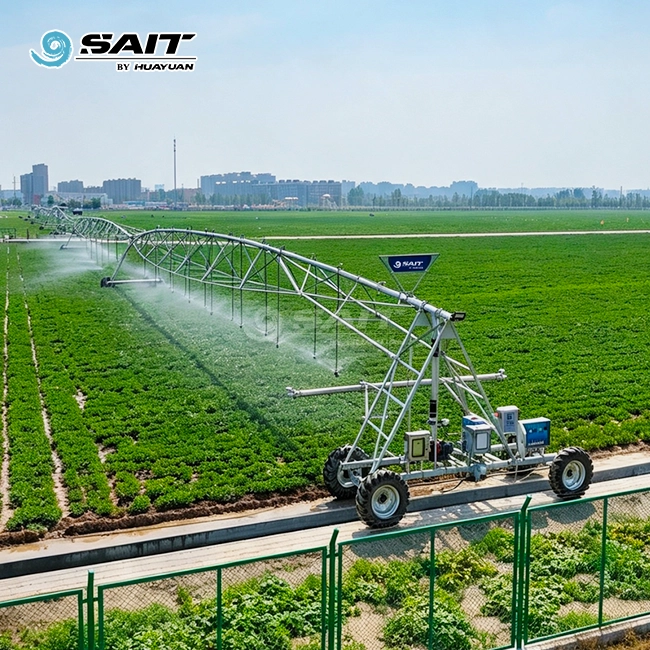
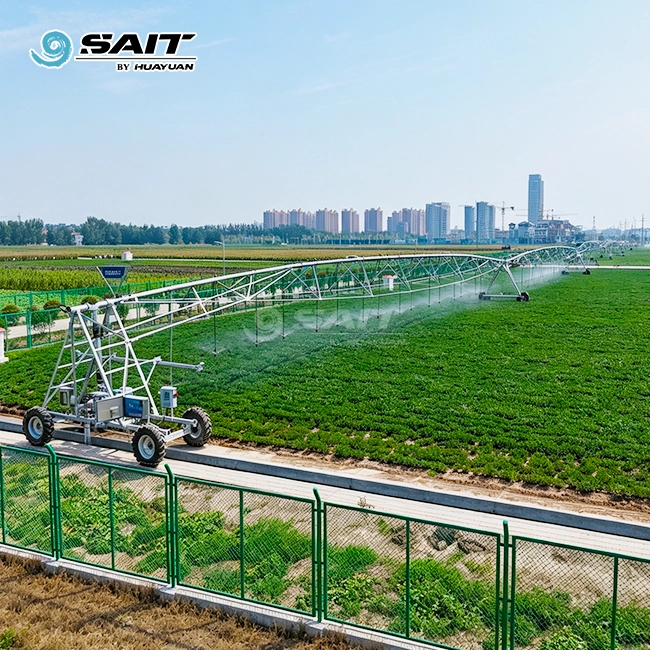
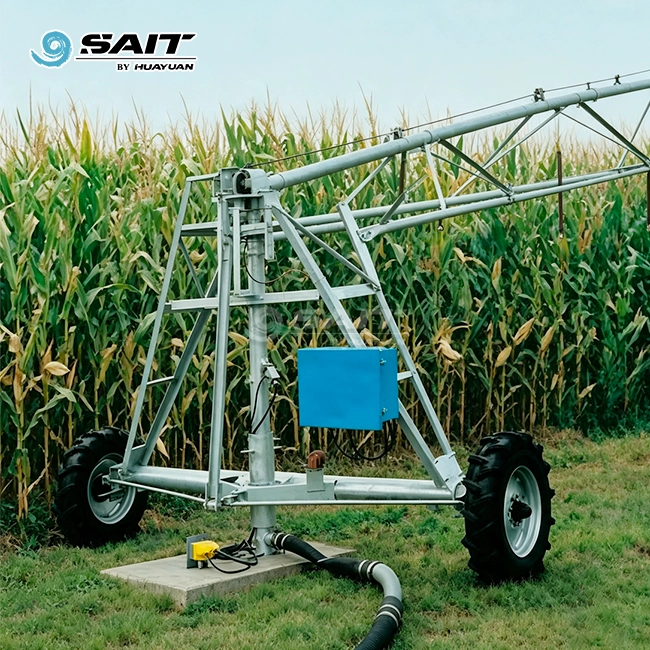
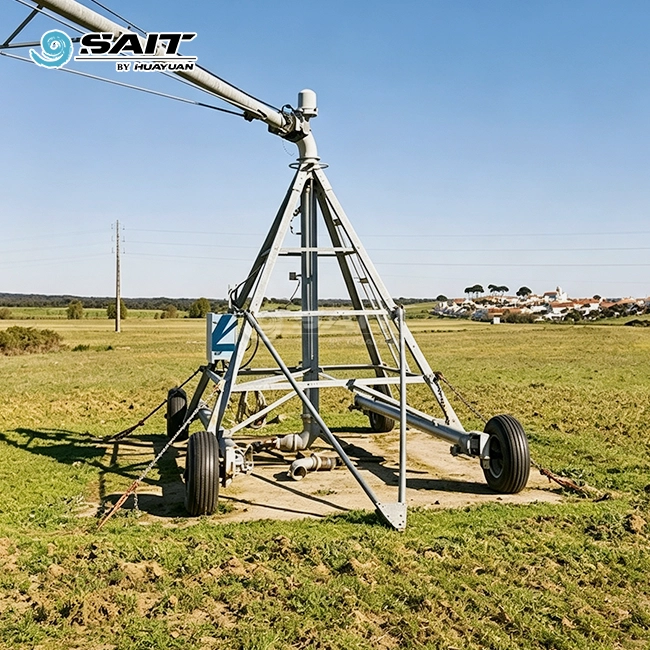
A towable pivot is an irrigation system with a center pivot that is placed on a mobile frame or towable hub assembly. Instead of being permanently fixed to one area, a normal farm tractor can be used to move the whole machine, including the spans, drive units, and control tower. HUAYUAN SAIT has two main types of configurations: the Easy Towable Single-Span Irrigation System is made for fields up to 85 meters long, and the Four-Wheel Towable Irrigation System can go up to 457 meters long.
Key Components That Enable Mobility
The swivel pivot point has an internal water-seal mechanism that keeps the hydraulics working properly while still letting the point turn fully. Heavy-duty towable hubs let the wheels turn 90 degrees so they can be used for transport. Between 37.5 meters and 66.5 meters long, the spans have main pipes that are 127 mm, 168 mm, or 219 mm wide. You can choose from tires in sizes 11.2-24, 14.9-24, and 16.9-24, with or without tubes.
Cost and Efficiency Advantages Over Fixed Pivots
When you use one machine to water multiple fields, the cost of installation per hectare is much lower than when you put in separate fixed or towable pivots on each plot. A portable center pivot system spreads capital costs over a larger productive area, lowering the break-even point per irrigated hectare. This is helpful for businesses that manage fragmented land holdings or rotate crops across several fields each season.
Preparing Towable Pivots for Field Movement
A quick 45-minute move is different from an expensive breakdown in the middle of a country road if you are not ready. The machine and the planting program are both safe when there is a strict pre-move routine.
Pre-Move Inspection Checklist
Before turning off the water, check these things in a planned way:
- Tire condition and pressure: Check all four tires for cuts and damage to the sidewalls, and make sure they are properly inflated. HUAYUAN SAIT systems offer tubeless tire choices that lower the risk of getting a flat tire while traveling.
- Structural fasteners: Check that all the truss rod bolts, span couplers, and tower junction hardware are tight on the structural fasteners. Even though hot-dip galvanized steel (with an 80μm+ zinc coating) doesn't rust, it does become loose over time from vibrations.
- Hydraulic and water line integrity: Close all drain valves and make sure there are no cracks or leaks in the swivel seals before the tow starts.
These checks, which can be done by an experienced two-person crew in about 20 minutes, stop most problems that happen during transport.
Selecting the Right Towing Vehicle
Most towable pivots from HUAYUAN SAIT need a tractor with between 60 and 100 HP and enough hydraulic power to move the pivot jacks and keep the span's weight in check while it's being moved. For the full-length four-wheel system at 457 meters, it's best to use a tractor with more horsepower and four-wheel drive on wet or uneven ground. Make sure the tow hitch's rating meets the manufacturer's recommended pull load.
Route Planning and Terrain Assessment
Plan the route ahead of time. To keep structures from falling over or jackknifing, don't put them on slopes that are steeper than 15%. Take note of any areas of soft soil that have been wet recently, drainage ditches, or power lines that are above the machine's reach. You can choose between a low-profile span and a standard-height span. Make sure your unit has enough space before deciding on a route.
Step-by-Step Guide to Moving a Towable Pivot Between Fields
The real moving process follows a set order. Leaving this order out causes extra risk that isn't needed.
Phase 1 — Shutdown and Securing
Turn off all of the electronics that control the system. If the unit has a remote control, make sure it has received the "stop" order before going near any spans. Use the manual drain valves to get rid of any remaining water in the main pipe. This will cut down on weight and keep hydraulic pressure from being a surprise. Use the transport locks that come with the span joints to lock them all.
Phase 2 — Towing to the New Field
Connect the tractor to the tow hitch in the middle of the axle. One last walk along the whole span to make sure all the transport locks are in place and that none of the hoses are dragging on the ground. On field roads, keep your speed below 8 km/h, and slow down to walking speed on rough ground. On bends and small field access roads, it's safer when the tractor driver and a spotter at the back can talk to each other on a two-way radio.
Phase 3 — Reinstallation and Test Cycle
Place the center of the towable pivots over the new water intake point. Lower the jacks, use the built-in level monitor to make sure the center tower is level, and connect the water supply line. Turn on the electronic control system again. Depending on your setup, this could be the standard electrical control system or the remote control system. Before starting the full irrigation operation again, run one full test cycle at low speed to make sure the alignment is even.
Troubleshooting Common Issues While Moving Towable Pivots
Machines have problems even when they are well taken care of. It's helpful to know what to look for in the field.
Hydraulic Leaks After Relocation
Most leaks that happen after a move are caused by worn swivel seals. If water leaks out of the pivot center joint after it has been reconnected, stop the machine right away and look at the water-seal assembly inside. At HUAYUAN SAIT's plant, hydraulic pressure testing at 150% of working pressure makes sure that seals are solid before they are shipped, but seals need to be replaced every so often. For each machine, keep an extra seal kit on hand.
Wheel Alignment and Tracking Errors
During the first test cycle after the move, if the spans move inward or outward, the hubs on the towable pivots may not have fully returned to the 0° operating position. Before turning on the drive motors, make sure that each hub has been locked into place by hand. Wheel alignment calibration makes sure that hubs lock safely at both 0 and 90 degrees. If tracking mistakes keep happening, please contact HUAYUAN SAIT technical support.
Structural Distortion Checks
Look at the truss assembly to see if it has any racking or twisting that happened during transport over rough terrain. It is suggested that pivot point welds be inspected without damaging them every 10 moves or after any event involving sudden changes in terrain. The high-tensile hot-dip galvanized steel spans made by HUAYUAN SAIT meet ASTM A123 standards. They provide the basic structure, but the actual travel loads depend on the conditions at the site.

Optimizing Towable Pivot Field Moves for Operational Efficiency
Not only can faster towing make things more efficient, but so can sticking to a schedule and combining different technologies.
Strategic Scheduling Around Crop Cycles
Plan to move towable pivots early in the morning, when the dirt is still cold from the night before and can hold more weight. This will keep tires from sinking into soft fields. Align the machine's move schedule with the calendars for each crop's growth stage so that it gets to the next field just as the crop starts to need the most water. This level of accuracy has a direct effect on yields for row crops like corn and soybeans.
GPS and Remote Monitoring Integration
The SAIT smart control system by HUAYUAN SAIT combines BeiDou tracking and Internet of Things (IoT) technology. It achieves an irrigation regularity rate of above 90% and a missed-irrigation rate of below 5%. With the remote control system option, workers can check on the system's position and performance from a mobile device, so they don't have to go to the spot to check on it every time they move. It is very helpful to be able to do this when using a single portable pivot unit to manage three or more fields.
Power Supply Flexibility Across Fields
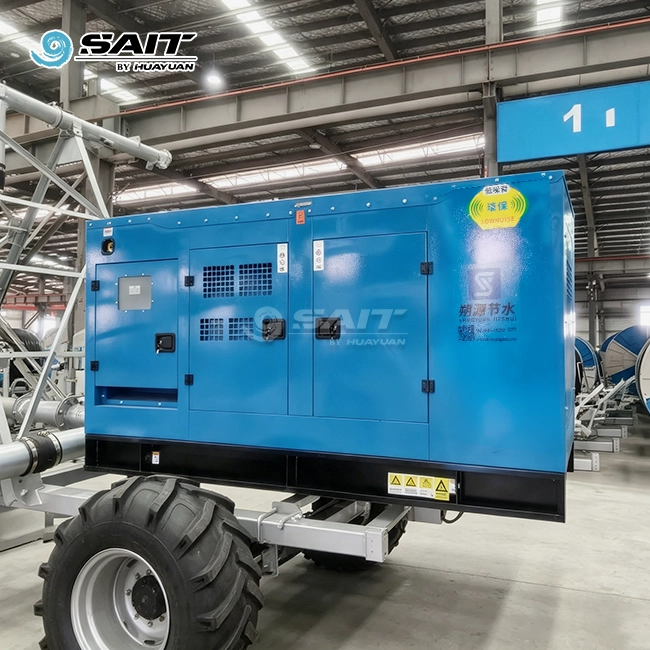
There isn't always grid power at every landing field. HUAYUAN SAIT systems can get power from three sources: the grid, a diesel generator, or a photovoltaic system. This means that operators can move to plots that aren't connected to the grid without having to wait for electrical infrastructure to be set up. This versatility cuts down on the time needed between moves.
Conclusion
When teams follow an organized routine for preparation, transport, and reinstallation, moving a towable pivot between fields is easy and can be done again and again. The economics are simple: for towable pivots, using one machine to water multiple fields lowers the cost of installation per acre while keeping consistency above 90%. With the right planning, scheduling, and inspection after the move, commercial farms can keep downtime to less than two hours per move. With 20 years of experience making things, over 130 patents, and hot-dip zinc construction that goes up to 80µm, HUAYUAN SAIT makes sure that these systems work in a wide range of field situations for their entire service life.
FAQ
Q1: How long does it take to move a towable pivot between fields?
Two experienced operators can usually move a normal three-span system in two to four hours, which includes getting it ready, transporting it, and putting it back together again. HUAYUAN SAIT's design aims for single-span units to be moved completely in less than an hour.
Q2: What tractor size is needed for towing?
For most setups, you'll need a tractor with 60–100 HP and enough hydraulic power to handle the pivot jacks and span weight.
Q3: Can these systems handle slopes during transport?
Moving things should stay on slopes that are less than 15% grade. Tipping and jack-knife risks go up as the grade goes up.
Q4: How often should a towable pivot be relocated?
How often you move depends on how often you rotate your crops and how big your field is. During busy growth seasons, many businesses move their tools every three to six weeks.
Partner With HUAYUAN SAIT for Your Next Towable Pivot Project
HUAYUAN SAIT is a direct-factory towable pivots maker that can deliver products as quickly as one week from our production base in Suzhou. We offer both trade and OEM supply. Our systems can be set up with four wheels or a single span. They can run on grid power, diesel power, or solar power. They also come with a full warranty for one year, low-cost maintenance for three years, and spare parts at factory cost for life. Get in touch with our team right away for pricing and technical advice that are specific to your project. You can email us at kevin@showyirrigation.com.
References
1. Camp, C. R., Sadler, E. J., & Busscher, W. J. (1997). A comparison of uniformity measures for drip irrigation systems. Transactions of the ASAE, 40(4), 1013–1020.
2. Evans, R. G., & Sadler, E. J. (2008). Methods and technologies to improve efficiency of water use. Water Resources Research, 44(7).
3. Kincaid, D. C. (1996). Spraydrop kinetic energy from irrigation sprinklers. Transactions of the ASAE, 39(3), 847–853.
4. Lyle, W. M., & Bordovsky, J. P. (1983). LEPA irrigation system evaluation. Transactions of the ASAE, 26(3), 776–781.
5. O'Brien, D. M., Rogers, D. H., & Lamm, F. R. (1998). An economic comparison of subsurface drip and center pivot sprinkler irrigation systems. Applied Engineering in Agriculture, 14(4), 391–398.
6. ASABE Standards. (2015). S436.1: Test procedure for determining the uniformity of water distribution of center pivot and lateral move irrigation machines equipped with spray or sprinkler nozzles. American Society of Agricultural and Biological Engineers.
Get a tailored irrigation solution for your project — our engineering team is ready to support you from design to installation.