How does a media filter work
A media filter removes suspended solids and impurities from water by forcing it through a packed bed of granular material — typically silica sand, anthracite, garnet, or a combination of these. As water travels downward through the filter vessel, particles larger than the pore spaces between media grains become physically trapped within the bed's depth. This process, known as depth filtration, handles fluctuating turbidity loads far more effectively than surface-only filtration methods. Once the bed accumulates enough trapped solids, a backwash cycle — where water flows upward at controlled velocity — expands and regenerates the media for continued use.
What Is a Media Filter and How Does It Work?
The Core Filtration Mechanism
Water comes in at the top of the under-pressure vessel and slowly works its way down through the layered granules. At the top, coarser media pick up bigger pieces of trash, while media that gets finer lower in the bed pick up smaller ones. According to AWWA B100 standards, this depth-loading design makes granular bed filters three to five times better at holding dirt than cartridge or bag filters. At the base of the vessel, an underdrain system takes filtered wastewater and spreads backwash water out evenly during regeneration rounds.
The Backwash Process
Backwashing starts when the difference in pressure across the bed goes above a certain level, which is usually 8–10 psi. Solids that have built up are moved to the drain by water moving upward at a speed fast enough to cause 20–30% bed expansion. It matters what temperature the water is because colder, heavier water needs less flow to make the bed expand by the same amount. When the media is backwashed, it re-stratifies based on its specific gravity. This means that the filtration works again, and the media doesn't need to be replaced for three to seven years as long as it is used properly.
Key Types of Granular Bed Filters and Their Applications
Sand, Multi-Media, and Activated Carbon Variants
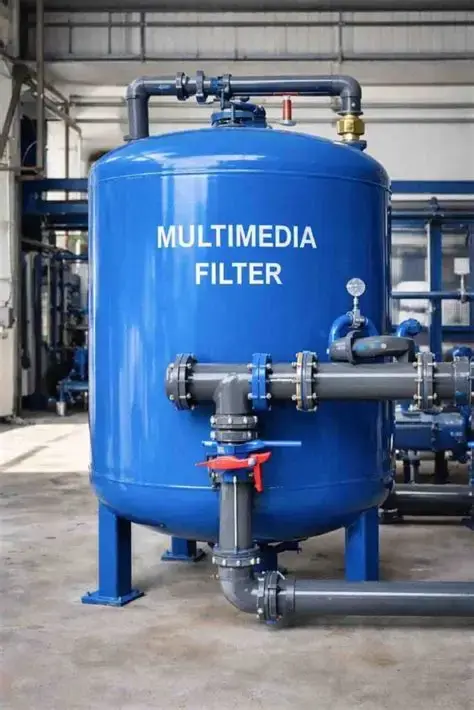
Single-media sand filters are good for getting rid of general sediment in water loops for irrigation and cooling. Using multi-media setups, like anthracite over sand over garnet, lets you run for longer periods of time without having to backwash because the coarse-to-fine stratification traps particles gradually through the bed depth instead of covering the top. Activated carbon media adds an adsorbed layer that can get rid of chlorine and dissolved organics. When using fertigation systems, the water quality has a direct effect on how precisely nutrients are delivered. To protect downstream emitters and injection equipment, the best filtering processes include a hydrocyclone, media bed, disc filter, and screen filter.
Application Fit Across Agricultural Sectors
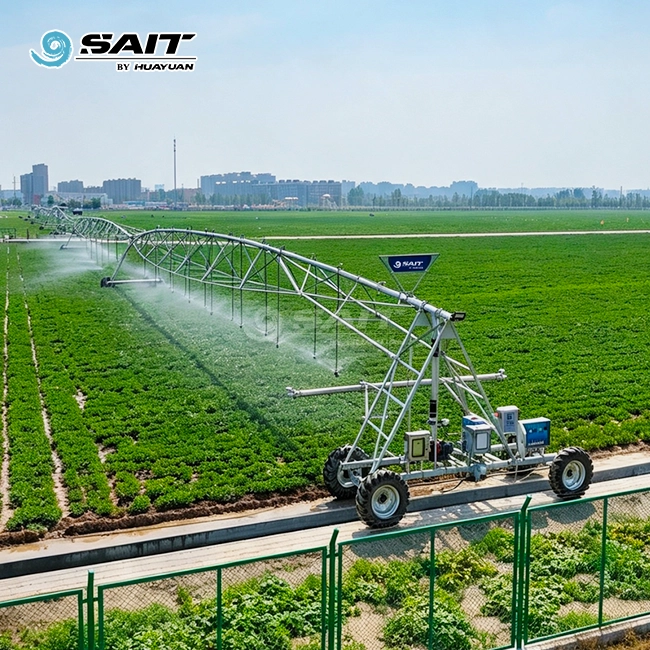
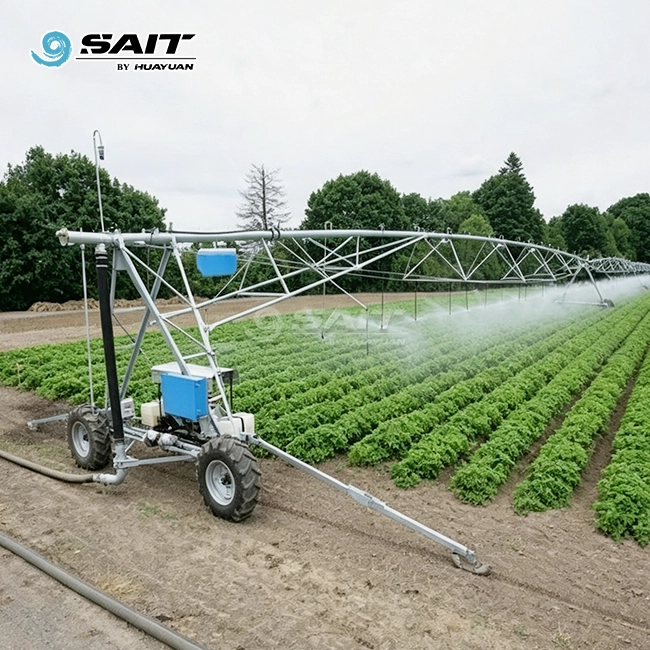
Granular filtering technology can be used for many different tasks. EC and pH readings stay stable in greenhouse hydroponics when the quality of the water coming in is consistent. This stops drift that can mess up nutrient programs. Large orange and almond farms that get their water from surface ditches or ponds have to deal with a lot of sediment. Before the water gets to the drip tape or microsprinklers, these loads are absorbed by a media bed. Open-field center-pivot and linear move irrigation systems benefit from reduced emitter clogging, extending the interval between costly field maintenance visits. Media filtration is used in the tertiary polishing stages of municipal wastewater reclamation facilities to meet irrigation reuse standards. This is becoming more and more important in water-scarce areas of the U.S. Southwest.
Benefits of Integrating Granular Filtration Into Your Procurement Strategy
When buying filtration equipment, procurement teams always look at the total cost of ownership instead of the unit price. When properly set up, a media bed system will usually last five times longer than cartridge-based options; media change cycles will be measured in years instead of weeks. Because flow through the bed is driven by gravity or a small pump head, high-pressure membrane systems are not needed, so the energy used per unit volume filtered stays low.
Here are the core procurement advantages worth evaluating:
- High dirt-holding capacity: Depth filtration traps solids throughout the entire bed volume instead of just at the top. This makes run times much longer between regeneration processes and cuts down on the time needed to service filters.
- Scalability across flow rates: The diameter and number of vessels increase linearly with the required throughput. This lets procurement teams choose the right capacity for projects ranging from single greenhouses to linear move irrigation systems covering hundreds of hectares without having to redesign the filtration architecture.
- Regulatory alignment: NSF/ANSI 61-compliant granular media keeps contaminants from leaching into potable or food-contact irrigation water streams, meeting USDA material compatibility standards that are common in North American project specs.
- Proven reliability with minimal consumables: Unlike membrane systems that need to be cleaned with chemicals and have elements replaced on a regular basis, a sand or anthracite bed that is properly maintained only needs to be backwashed with water and have media added to it every so often.
These benefits directly lead to less unexpected downtime and lower lifetime maintenance costs, which are two of the most important factors for farming project contractors and distributors of irrigation equipment handling multiple sites.
Media Filter Maintenance Tips and Troubleshooting
Scheduling Backwash and Inspecting Media
Backwashing should be based on differential pressure instead of a set calendar schedule, since the turbidity of the source water changes with the seasons and when it rains. Most workers set an automatic trigger at a difference of 8 to 10 psi. Every year, a typical media sample from the top six inches of the bed should be checked for clay buildup, bacterial fouling, or attrition loss. If the Uniformity Coefficient goes above 1.7, it means that fine particles made when media breaks down are lowering the hydraulic conductivity.
Common Faults and Remedies
A fast rise in differential pressure is usually caused by adding too much coagulant or polymer upstream, which makes a dense surface mat instead of spreading solids out evenly across the bed depth. If media moves into effluent lines, it means that the underdrain lateral is broken or the support gravel layer is disturbed. This means that the vessel needs to be opened and inspected from the inside. Uneven flow distribution shows up as channeling, which can be seen as clean and dirty areas next to each other after backwashing. This is usually fixed by moving the surface media around or replacing it. When these problems keep happening even after making changes to how things are done, the right way to escalate is to contact the manufacturer's support team to get a warranty review or parts replacement.
How to Choose the Right Granular Filter for Your Fertigation System
Matching Filter Specifications to Water Quality and Flow
A water quality analysis that looks at TSS concentration, particle size distribution, biological load, and iron or manganese content is the first step in the selection process. The size of the vessel is based on the flow rate needed and the range of operating pressures. For linear move irrigation systems that work in the 0.2–0.7 MPa range, which is normal for most fertigation platforms, a media tank of the right size keeps head loss at a good level without slowing down pump output.
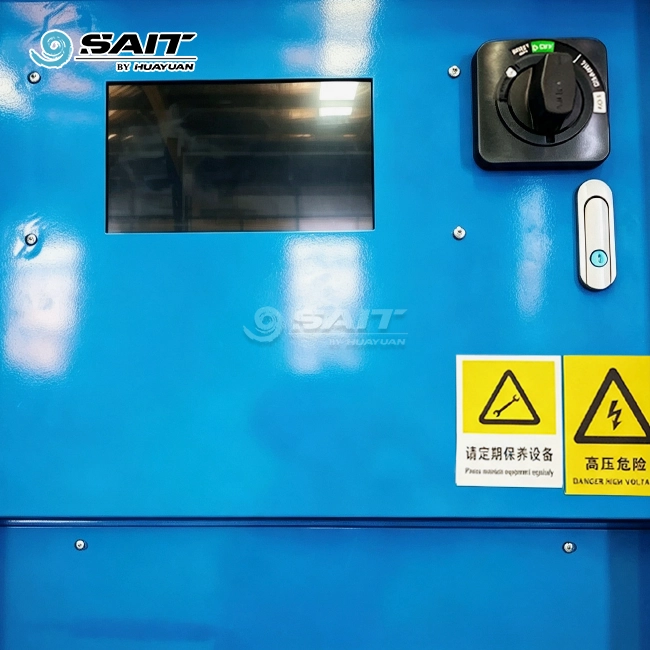
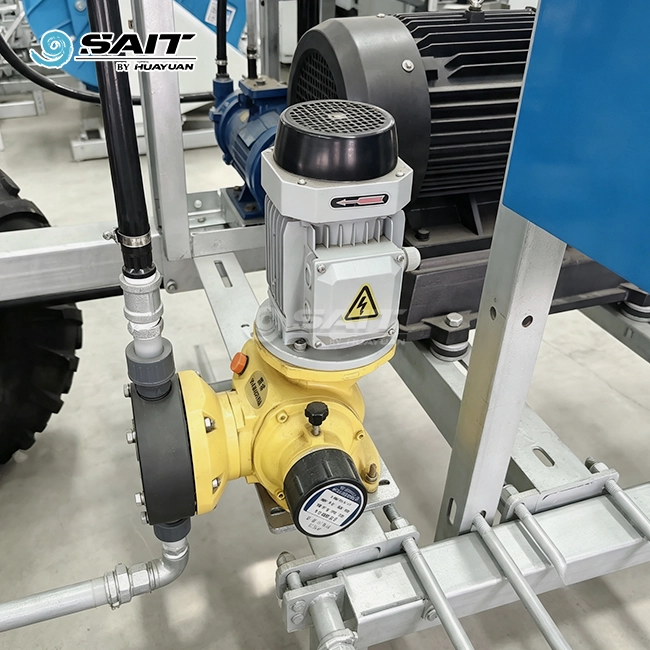
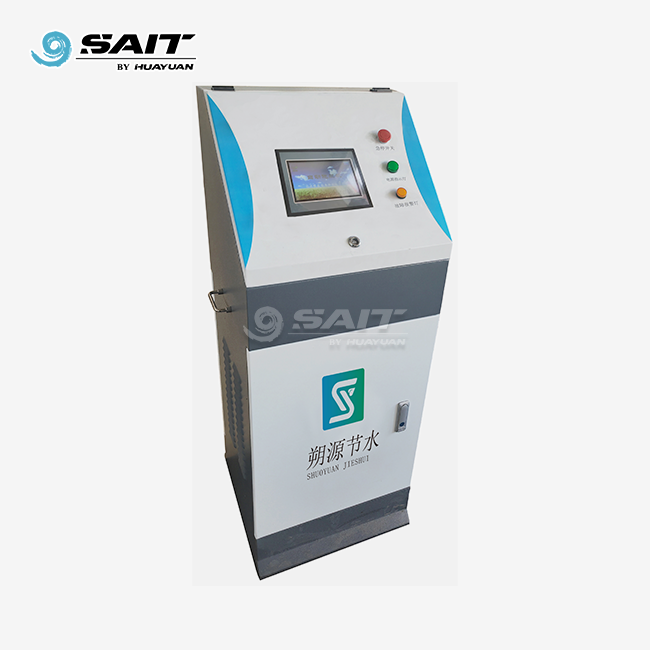
The integrated fertigation line from HUAYUAN SAIT combines filter steps with hardware for injection and control. The Smart Head Control System has a DN100 centrifugal filter and a DN100 automatic self-cleaning filter with a 120/130 mesh accuracy. These filters keep sediment from getting into the 11 kW stainless steel pressure pump and DN115 ultrasonic flowmeter. The mobile Fertilizer-Irrigation Integration System can inject 60 to 1,000 L/h of fertilizer through a single channel and can work at 380V/IP55. It links via DN25 inlet/outlet and has ARM9-chip tablet control and 4G remote app access. Both platforms can automatically check EC and pH levels and work with both solid and liquid fertilizer plans for a wide range of crop types.
If procurement teams are looking at large-scale almond, citrus, or grape operations, they will find that selecting filtration and fertigation from a single combined source gets rid of the problems that come up when putting systems together from different suppliers.
Conclusion
As of now, granular bed filtration is still one of the most durable and cost-effective ways for farmers and businesses to clean water. Procurement workers can choose media filters that really meet the needs of their operations by understanding how depth filtration, media stratification, and controlled backwashing work together. When used with automated fertigation hardware, like in HUAYUAN SAIT's integrated platform, the right filter stage saves all the parts further down the line and makes sure that the nutrients are delivered precisely and consistently season after season. The investment in quality filtration pays back through reduced emitter replacement, stable sensor readings, and longer equipment service life across every linear move irrigation system, field, orchard, or greenhouse it serves.
FAQ
1. How often should granular filter media be replaced?
If you backwash it right, good anthracite or silica sand should last between three and seven years. Depending on the chemistry of the input, catalytic or adsorptive media may use up active sites faster. Once a year, media sampling and sieve analysis can be used to make sure that the gradation stays within the required range before performance starts to slip.
2. What is the difference between a media filter and a sand filter?
One layer of silica sand is used in a sand filter. A multi-media filter stacks two or more granular materials, most often anthracite over sand over garnet, to make the run last longer and the effluent clearer. Instead of putting all the particles at the top, the multi-layer system picks them up gradually as you go deeper into the bed.
3. Can granular filtration remove dissolved fertilizer salts?
Regular granular media only get rid of suspended solids. It doesn't remove dissolved ions, so nutrients from fertilizer that are introduced further downstream stay whole. This means that media bed filtration is the best way to clean the water before fertigation systems. It protects the pumping equipment without changing the purity of the nutrient program.
4. What customization options are available for OEM fertigation projects?
HUAYUAN SAIT can make unique filter stack setups with the right hydrocyclone, media, disc, and screen for the water quality in the area. There are options for branding on the control panel, language localization, channel count (1–4), and sensor packages (EC/pH/flow/pressure). Rapid project validation is possible with pilot orders of one to three units and on-site installation.
Partner With HUAYUAN SAIT — Trusted Media Filter Supplier for Precision Fertigation
When you buy combined fertigation systems from HUAYUAN SAIT, you get 20 years of industrial experience, more than 130 patents, and help with on-site installation. Our media filter solutions, which include smart head control and compatible irrigation systems, are made to work in big farms, gardens, and open fields all over the world. Ask for a quote that is specific to your crop program, flow rate, and water quality. Get in touch with us right away at kevin@showyirrigation.com.
References
1. American Water Works Association. (2011). AWWA B100-11: Granular Filter Material. AWWA Standards.
2. Crittenden, J. C., Trussell, R. R., Hand, D. W., Howe, K. J., & Tchobanoglous, G. (2012). MWH's Water Treatment: Principles and Design (3rd ed.). Wiley.
3. U.S. Environmental Protection Agency. (2012). Guidelines for Water Reuse (EPA/600/R-12/618). U.S. EPA Office of Research and Development.
4. NSF International. (2023). NSF/ANSI 61: Drinking Water System Components — Health Effects. NSF International.
5. Food and Agriculture Organization of the United Nations. (2002). Crop Water Management: Deficit Irrigation Practices (FAO Water Reports No. 22). FAO.
6. Pitts, D. J., Haman, D. Z., & Smajstrla, A. G. (1990). Causes and Prevention of Emitter Plugging in Microirrigation Systems (Bulletin 258).
Get a tailored irrigation solution for your project — our engineering team is ready to support you from design to installation.