How a Center Pivot Irrigation Machine Works
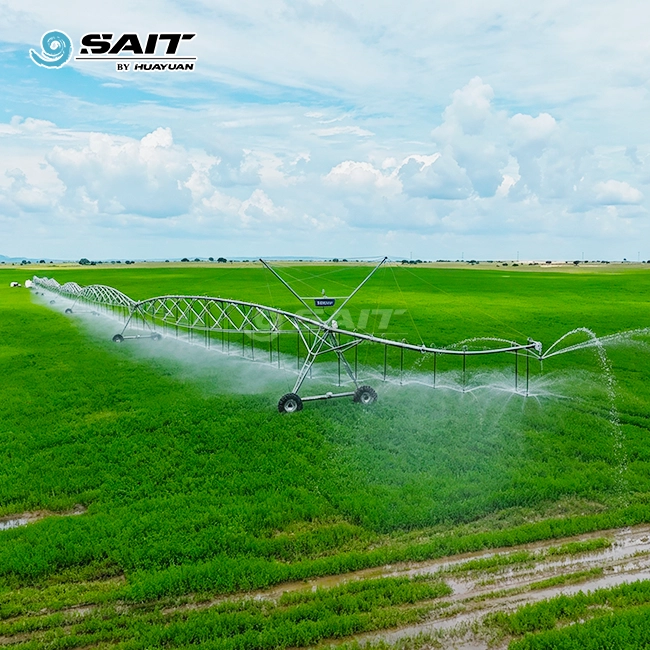
A center pivot irrigation machine is a mechanized system that rotates a pipeline around a fixed central point, distributing water uniformly across large circular fields through a series of sprinklers mounted along wheeled tower spans. Engineered for large-scale row crop production, this technology replaces labor-intensive flood methods with automated, precision overhead application. Water application efficiency routinely exceeds 90%, and a single unit can cover up to 200 hectares per irrigation cycle — making the center pivot one of the most cost-effective mechanized irrigation investments available to commercial farming operations worldwide.
What Is a Center Pivot Irrigation Machine?


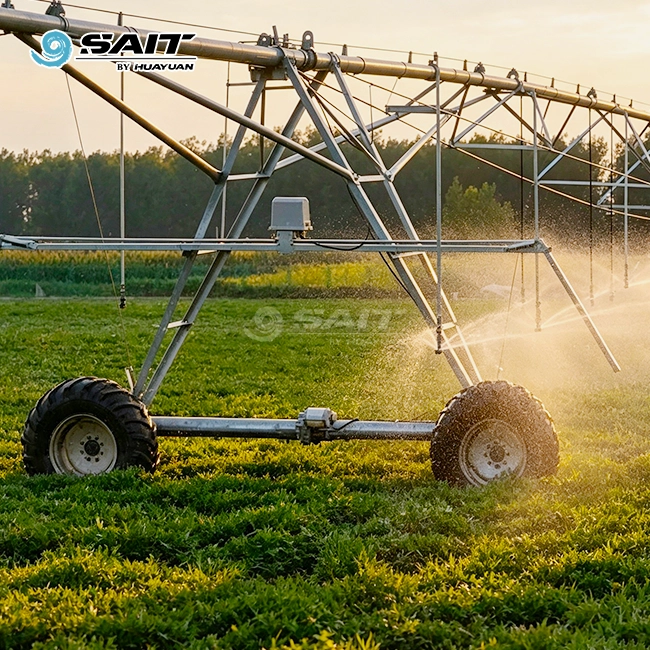
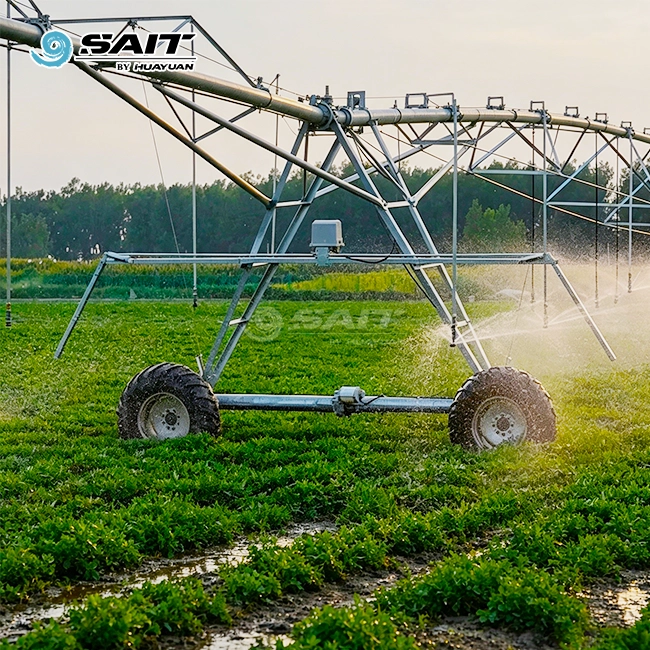
The center tower of a center pivot irrigation system is where the supply point stays in place. The system then spreads out through a number of gaps held up by self-propelled wheeled towers. Each span is joined to the next by flexible joints that can handle uneven ground. This lets the whole side turn constantly or in segments.
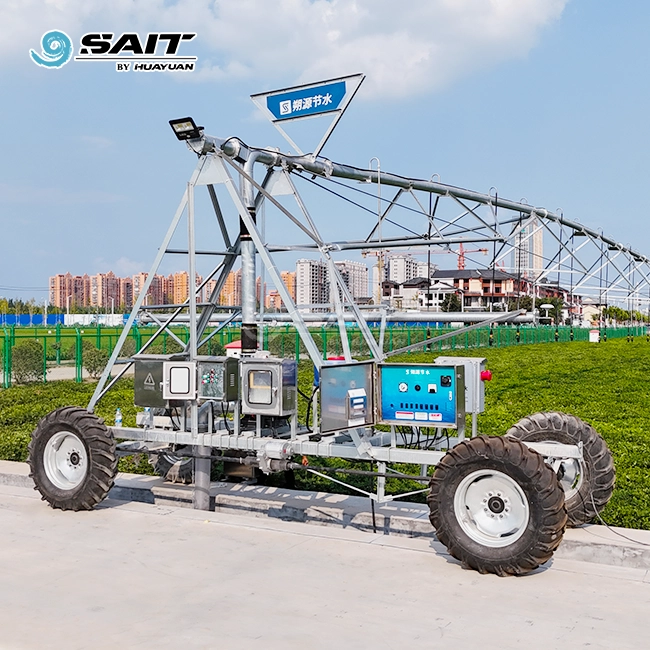
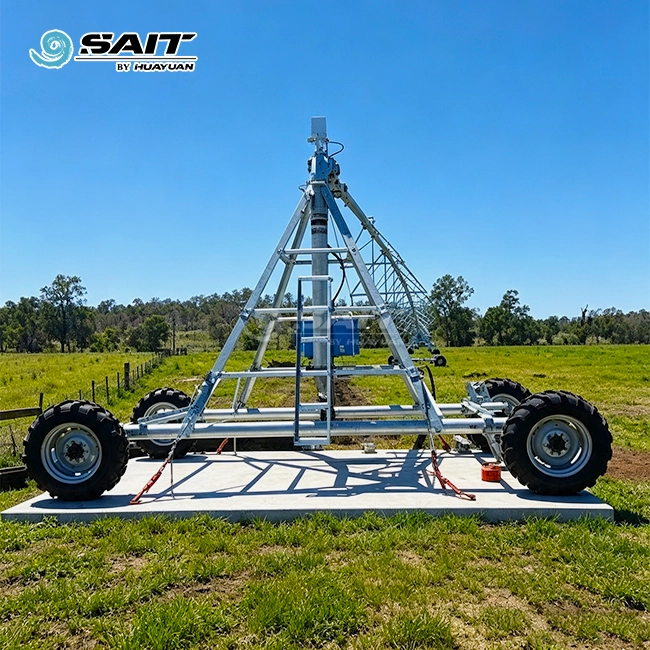
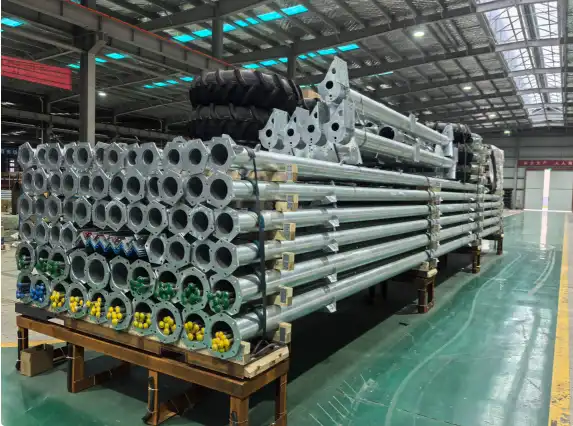
The pipeline, truss assembly, drive towers, spray package, and control panel are all different parts of the structure that do different jobs. The truss rod and angle design spreads the weight evenly across all spans, so the water-filled pipe doesn't cause the structure to bend. The HUAYUAN SAIT systems use 20mm and 22mm truss rods along with hot-dip galvanized steel (with a zinc coating layer of more than 80μm) to provide structural stability that is rated for 20 years or more of service, even in areas with corrosive soil and high humidity.
Core Structural Elements
The pipeline, truss assembly, drive towers, sprinkler package, and control panel each play a defined structural role. The truss rod and angle design distribute load uniformly across every span, preventing deflection under the weight of water-filled pipe. HUAYUAN SAIT systems use 20mm and 22mm truss rods paired with hot-dip galvanized steel — zinc coating thickness exceeding 80μm — to deliver structural integrity rated for a service lifespan of 20 years or more, even in corrosive soil and high-humidity environments.
Available Configurations
For circular irrigation, HUAYUAN SAIT provides four profile heights: 2.1m, 2.9m, 3.8m, and 4.5m. These meet normal, low, high, and ultra-high clearance needs. There are three different pipeline diameters of pipelines: 5" (127mm), 6-5/8" (168mm), and 8-5/8" (219mm). The span lengths range from 37.5m to 66.5m. These layouts can work for small alfalfa fields as well as large sugarcane and biofuel plantations that need a lot of space above the growing canopy.
How Does a Center Pivot Irrigation Machine Work?
Each tower with wheels has an electric motor attached to it through a wheel gearbox, which can have a reduction ratio of 50:1 or 52:1. This turns the motor's rotation into controlled movement to the side. The outermost tower sets the speed, and an alignment control system makes sure that the towers inside are in sync with each other so that the pipeline doesn't buckle or spans get out of place.
Water comes in through the central center pivot supply elbow, flows along the main pipeline, and leaves through sprinkler nozzles that are spaced 1.9m or 2.9m apart. To make up for the faster ground speed of the outer towers, the nozzle orifice size grows in relation to the span radius. This keeps the application depth the same across the whole watered circle. The SAIT Smart Control System goes one step further by combining data on how much water percolates through the soil with variable rate irrigation (VRI) algorithms. These algorithms change the flow rate zone by zone based on real-time agronomic inputs.
The Role of SAIT Smart Control
The SAIT control platform lets you operate from afar using a smartphone or a SCADA interface. It also lets you schedule irrigation and handles zone-based applications for fields with different types of soil. By integrating BeiDou satellite navigation, corner-missed irrigation is no longer a problem, which has been a problem with traditional pivot geometry. The rate of missed irrigation drops below 5%, and the coefficient of uniformity rises above 90%. These numbers are higher than the average for the industry, and they have been proven by installations in the field in a variety of agricultural settings.
Common Challenges Addressed by Pivot Irrigation Systems
Traditional stream and furrow watering methods create a lot of surface runoff, require a lot of work, and wet the soil unevenly, which makes it hard for crops to grow. These problems can be fixed with measurable results from mechanized overhead irrigation.
The center pivot systems made by HUAYUAN SAIT use over 70% less water than standard flood irrigation. The U.S. Department of Agriculture has shown that properly designed overhead pivot systems can apply water 85–95% more efficiently than surface methods (50%–60%). This is not just a marketing claim. That gap directly means lower pumping costs, less energy use, and meaningfully less nutrient leaching on big industrial farms that cover 500 hectares or more.
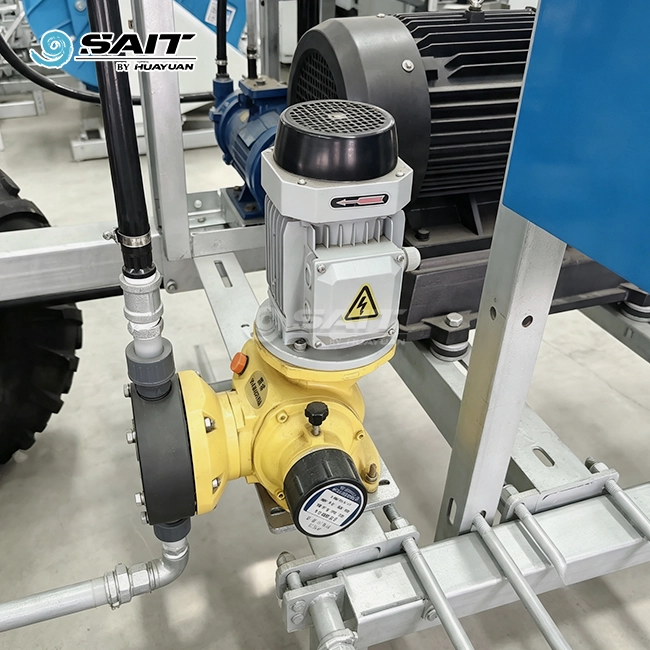
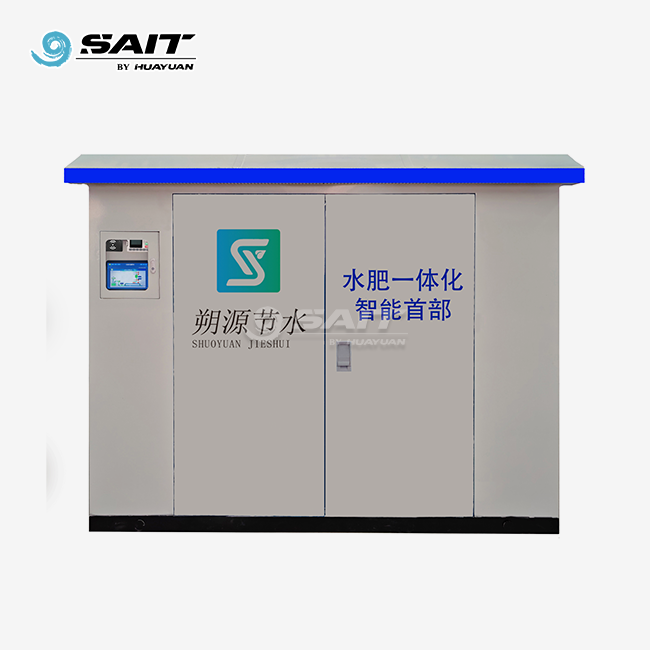
The ability to combine water and fertilizer (fertigation) makes this benefit even stronger. At the pivot point, liquid nutrients are pumped and spread evenly through the tubing to each sprinkler exit. This delivers precise nutrition to the root zone without having to make extra field runs.
Key Components and Their Functional Roles
Procurement experts can look at the total cost of ownership instead of just the unit price when they know the specs of each part. Here are the main technical factors that determine how well a center pivot system works and how long it lasts:
- Main pipeline and truss assembly: Hot-dip galvanized steel pipe with a width of 5", 6-5/8", or 8-5/8" and 20mm or 22mm truss rods to make it stronger. This is the main pipeline and truss system. The angle-and-rod truss shape keeps the beams in place even when there is a dynamic water load and side wind forces. This stops the span from sagging, which makes the application less uniform.
- Drive system: Gearmotors with reduction ratios of 25.5:1 (1.5hp) or 40:1 (0.75hp) and wheel gearboxes with ratios of 50:1 or 52:1. Armored cable that is listed by UL carries power across spans and protects against voltage drop over long lateral distances, which is a common place for systems with a radius of more than 400 meters to fail.
- Wheel and tire package: There are three tire sizes—11.2-24, 14.8-24, and 16.9-24—that can be bought with or without tubes. When the ground is heavy mud or wet, high-flotation choices move the water from the wheel tracks away from the tower paths. This keeps the paths from getting rutted.
- Sprinkler package: There are different types of spray designs to meet the needs of different application rates, crop cover heights, and soil infiltration rates. The SAIT-engineered nozzle choice matches the discharge rates with the measured hydraulic conductivity of the soil to stop water from pooling on the surface and running off.
These parts work together to decide how regular the application is, how reliable the mechanical system is, and how much it will cost to run in the long term. When looking for pivots for business or government projects with multiple units, procurement teams should compare each standard to the soil types, climates, and crop water demand profiles in the area.
For circular irrigation, it is cheaper to avoid expensive field retrofits by making sure that the right pipeline width, span configuration, and tire package are chosen during the planning phase. As part of normal project support, HUAYUAN SAIT's in-house engineering team designs sprinkler packages, chooses tower heights, and lays out spans that are special to the site. This is something that catalog-only suppliers usually can't do.
Best Practices for Selecting and Maintaining a Pivot Irrigation System
The most important buying choice is matching the machine setup to the field geometry. For a center pivot with a maximum radius of 800 meters and the ability to water 200 hectares, the spans must be carefully sequenced to keep the structure balanced and the application depth even. Overhang lengths, which range from 2.7m to 25m, increase coverage without adding a full tower span. This makes the capital efficiency per hectare better.
As part of the yearly maintenance schedule, the gearbox oil needs to be changed every 1,000 hours of use; the sprinkler nozzles need to be checked for wear or clogging; the electrical connections at each tower junction need to be checked; and the galvanizing condition of structural welds needs to be evaluated. HUAYUAN SAIT's after-sales program offers a full warranty for one year, low-cost part replacements for three years, and a lifelong supply of spare parts at the factory cost price. This lowers the long-term ownership risk for operators managing remote installations.
Conclusion
A center pivot irrigation machine is a deployable asset that blends structural engineering, precise water delivery, and smart technology to change the economics of large-scale food production. A lot of agronomic research over many years has shown that the working principles—mechanical rotation, calibrated nozzle design, variable rate control, and application that fits the soil—are sound. The quality of the parts, the level of design engineering, and the length of the after-sales support are what make the buying results different. With 20 years of experience making things, over 130 patents, and the ability to make 1,800 pivot systems a year, HUAYUAN SAIT can handle every aspect.
FAQ
Q1: What crops are best suited for center pivot irrigation?
Most of the time, center pivot systems are used to water corn, soybeans, wheat, cotton, sugarcane, and hay. Tall-season crops like maize and sorghum can be grown on high-clearance configurations with profile heights of 3.8m and 4.5m. The uniform application pattern helps emergence and canopy growth happen the same way across big fields.
Q2: How long does a center pivot system last?
A system made of hot-dip galvanized steel and good engine parts that is well taken care of will work effectively for 20 to 25 years. The main factor that determines how long a structure lasts in the field is the width of the zinc coating, which must be above 80μm for HUAYUAN SAIT units.
Q3: Can the system be operated remotely?
Yes. The SAIT Smart Control System lets you watch from afar, schedule watering, and use zone-based apps on your smartphone or by connecting to a SCADA system. You can change the speed, direction, pressure, and fertigation input rates without being there in person.
Q4: Is fertigation supported?
It comes with built-in water and fertilizer functions. At the pivot supply point, liquid fertilizers and crop protection chemicals are injected and spread evenly through the sprinkler network. This eliminates the need for separate application passes, which lowers the cost of inputs.
Partner with HUAYUAN SAIT for Your Next Center Pivot Supplier Project
Engineered center pivot solutions, not stock tools, are what HUAYUAN SAIT sells. Our team can help you with site-specific design, SAIT smart control interface, and full documentation support, whether you are buying 5 to 20 units for a business row crop operation or a single pilot unit for an OEM showcase. To get specifications, prices, and project advice for your center pivot for sale inquiry, email our engineering team at kevin@showyirrigation.com.
References
1. Food and Agriculture Organization of the United Nations. Irrigation Water Management: Irrigation Methods. FAO, 2020.
2. Howell, T.A. "Enhancing Water Use Efficiency in Irrigated Agriculture." Agronomy Journal, 2001.
3. U.S. Department of Agriculture – Natural Resources Conservation Service. Irrigation Guide (National Engineering Handbook, Part 652). USDA, 2019.
4. American Society of Agricultural and Biological Engineers. ASABE Standard S436.1: Test Procedure for Determining the Uniformity of Water Distribution of Center Pivot and Lateral Move Irrigation Machines. ASABE, 2016.
5. Keller, J., and Bliesner, R.D. Sprinkle and Trickle Irrigation. Van Nostrand Reinhold, 1990.
6. Camp, C.R., Sadler, E.J., and Yoder, R.E. Evapotranspiration and Irrigation Scheduling. American Society of Agricultural Engineers, 1996.
Get a tailored irrigation solution for your project — our engineering team is ready to support you from design to installation.