What Is the Maximum Spray Width of a Hose Reel Irrigator-Mechanical?
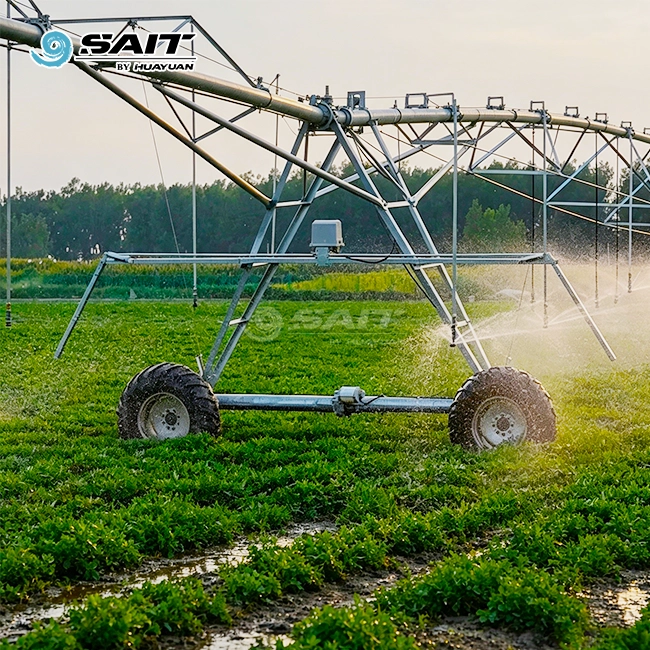
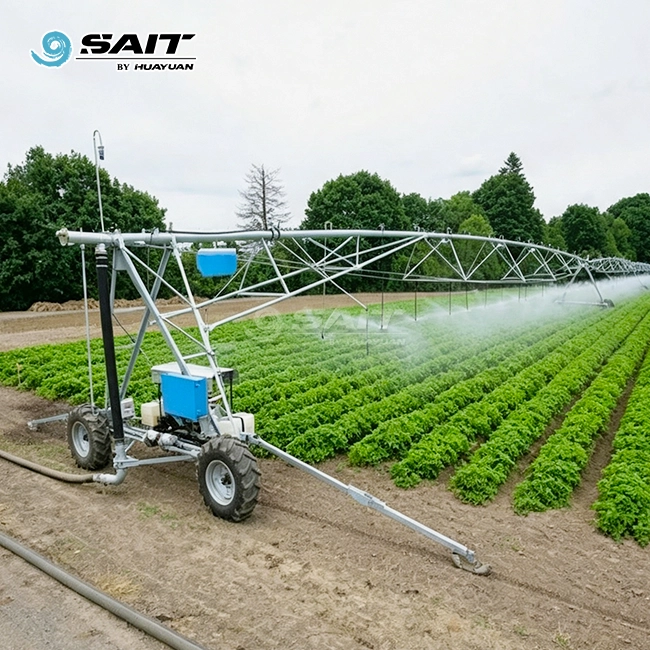
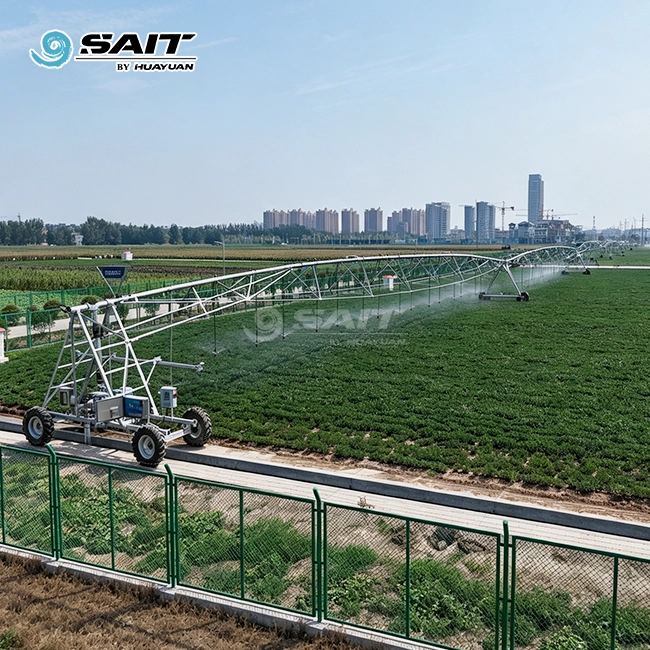
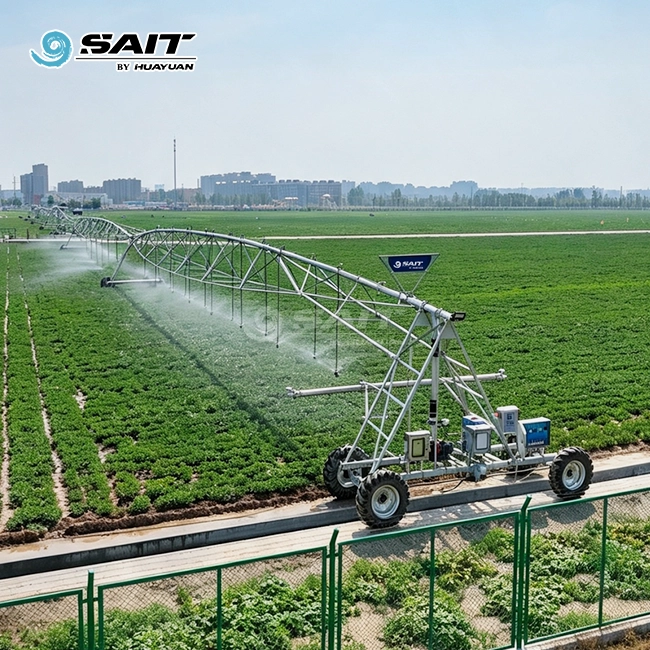
The maximum spray width of a hose reel irrigator-mechanical depends on nozzle diameter, operating pressure, and field conditions. Under standard conditions with minimal wind interference, HUAYUAN SAIT's mechanical reel irrigators achieve an irrigation width of 43–78 meters across the JP-75 and JP-90 model series. The spray range reaches up to 46 meters per side, producing a total coverage band wide enough to irrigate over 1.33 hectares per cycle. This performance makes mechanical reel irrigation one of the most practical choices for medium-to-large-scale field crops, specialty vegetables, and sports turf applications.
Understanding Mechanical Hose Reel Irrigators and Spray Width


What Is a Mechanical Hose Reel Irrigator?
A mechanical hose reel irrigator is an irrigation machine that moves itself. It uses pressurized water to power a turbine, which pulls back a PE pipe that is wound on a big drum. A sprinkler carriage is pulled across the field by the pipe as it goes back into place. In the field, there is no need for electricity because the whole recovery process is powered by the water pressure. Because of how it's made, it works well on farms that aren't connected to the power grid, in large open fields, and other places where running electrical cables wouldn't make sense.
How Spray Width Is Defined
Spray width is the area that is completely wet on both sides of the spray carriage's path. It's about twice as far as the nozzle's spray range. The wet strip is about 80 meters wide for a machine with a 40-meter spray range. The real width of irrigation measured in the field usually takes into account overlap and changes in pressure. This is why HUAYUAN SAIT says the width of irrigation is 43–78 meters, based on the model and nozzle chosen.
Factors That Determine Maximum Spray Width
There are three things that directly affect how far a mechanical reel irrigator can spray:
- Nozzle diameter and pressure: Larger nozzle diameters (up to 28 mm on the JP-90/400) and higher nozzle pressures (up to 0.6 MPa) produce a greater spray radius. The JP-90 series supports nozzle diameters from 14–28 mm, giving operators a wide adjustment range.
- PE pipe diameter and inlet pressure: A wider PE pipe (90 mm) reduces friction losses, delivering more pressure to the nozzle. Inlet pressure across the JP-90/400 reaches 0.3–1.2 MPa.
- Wind and terrain: Even a light crosswind of 3–4 m/s can reduce effective coverage width by 10–15%. Flat, open terrain produces the most consistent results.
When procurement teams know about these factors, they can choose the right hydraulic drive reel model before placing a large order.
Maximum Spray Width: Technical Insights and Real-World Performance
Model-by-Model Spray Width Data
Here is a direct comparison of the five HUAYUAN SAIT mechanical models:
| Model | PE Pipe (mm/m) | Spray Range (m) | Irrigation Width (m) | Flow Rate (m³/h) |
|---|---|---|---|---|
| JP-75/300 | 75/300 | 24–44 | 47–74 | 15.5–34.3 |
| JP-75/400 | 75/400 | 24–44 | 47–74 | 15.5–34.3 |
| JP-75/500 | 75/500 | 24–44 | 47–74 | 15.5–34.3 |
| JP-90/300 | 90/300 | 24–46 | 43–78 | 17.2–48.4 |
| JP-90/400 | 90/400 | 25–46 | 43–78 | 10–50 |
The JP-90 series reaches the widest irrigation band at 78 meters, making it the preferred choice for large grain crops and sports turf applications where strip width directly reduces the number of machine passes required.
Real-World Performance in Field Conditions
In calm wind conditions (below 2 m/s), the JP-90/400 consistently delivers irrigation widths close to its rated 78-meter maximum. At travel speeds of 10–80 m/h and application rates above 8 mm/h, operators can complete a 400-meter run in under two hours while maintaining a uniformity coefficient above 90% — a figure that exceeds what most drip tape installations achieve on uneven terrain.
Boom Carriage vs. Single Gun Configuration
The machine supports both single-gun sprinkler carriages and multi-sprinkler boom-type carriages. Boom configurations spread water across a wider band at lower individual nozzle pressure, which reduces soil compaction and protects delicate seedlings. Single-gun setups concentrate flow into a longer spray arc, better suited for taller row crops or pasture. Selecting the right carriage type is as important as selecting the right model.
Comparing Mechanical Hose Reel Irrigators with Other Irrigation Solutions
Mechanical vs. Electric Reel Irrigators
Electric reel irrigators can be controlled more precisely and are quieter to run, which is good for European markets that have noise laws. Mechanical models are cheaper per unit and don't need to be connected to power in the field. This makes them a clear winner in areas that aren't connected to the grid and when cost is important. The lower price of mechanical types makes the project capital cost much lower for large buyers who buy 10 to 50 units at a time.
Mechanical Reel Irrigators vs. Center Pivot Systems
Center pivot systems are good at covering large circular areas, but they need flat land, permanent underground water mains, and a lot of money. A hose reel irrigator-mechanical system can work on flat or curved plots, can move from one field to another in less than an hour, and doesn't need any infrastructure other than a water source. One JP-90 unit can water more than 1.33 hectares per irrigation cycle, which is about the same as a small pivot segment, but it costs a lot less to set up.
Mechanical Reel Irrigators vs. Drip Irrigation
Drip systems get water directly to the roots with little loss, but the tape needs to be replaced every year on many crops; they get clogged up easily with hard water, and they can't handle fertigation with particles in it. The rotor system of the mechanical reel irrigator can handle small solids in the water, so it can be used with water from open lakes or treated wastewater. A relocatable reel system saves vegetable growers the cost of laying drip tape all over again every season when they switch between different types of crops.
Installation, Maintenance, and Best Practices to Maximize Spray Width
Correct Field Positioning
With the PE pipe laid out in a straight line, put the machine at the far end of the field. When the pipe has curves or kinks, friction losses go up. This lowers the pressure at the tip and makes the spray radius smaller. Every package from HUAYUAN SAIT comes with expert support and on-site installation help, so your team can get it set up right the first time.
Nozzle and Pressure Checks
Make sure the nozzle is clean and the inlet pressure is within the range given before each watering run. Most complaints about spray width in the field are caused by a clogged tip or low pressure. The JP-90/400 has nozzles with diameters between 14 and 28 mm. This means that workers can fine-tune the spray radius by switching out the nozzle inserts instead of changing the whole sprinkler assembly.
Ongoing Maintenance to Protect PE Pipe
HUAYUAN SAIT only uses new polyethylene that has been stabilized by UV light to make its PE pipes for the hydraulic drive reel. It doesn't use any reclaimed material. The thickness of the pipe walls is higher than the norm in the business. This makes stress cracks less likely. PE pipe can last longer than 15 years if it is taken care of properly. After each season, make sure the pipe is completely drained and that the drum entry point is free of wear. Also, store the machine in the shade or under a cover in places with a lot of UV light.
Procurement Considerations: Choosing the Right Mechanical Hose Reel Irrigator
Matching Model to Farm Size and Crop Type
For farms with 50 to 200 hectares of land, the JP-75 series (with pipe lengths of 300 to 500 m) can cover large field blocks with fewer moves to reposition them. Boom cart designs are good for vegetable and specialty crop farms that need to use less force when applying water. Rental businesses and service contractors like standard models so they can share spare parts across their fleet. The JP-75 series' consistent nozzle diameter range (16–22 mm) supports this approach.
Evaluating Warranty and After-Sales Support
Failure of PE pipes is the most common warranty issue in this product group. HUAYUAN SAIT guarantees that its PE pipe will last for 15 years and offers a full warranty for one year, low-cost maintenance for three years, and spare parts at factory cost for life. The company has been making things for 20 years and has over 130 patents, including 35 invention patents. Its quality system is based on ISO 9001 standards, and third-party testing certificates can be sent on request.
Logistics and Lead Time
HUAYUAN SAIT's facility is next to Xuzhou, which is a major rail and road freight hub in eastern China. Fast filling of containers and reasonable freight rates to US ports are possible here. Catalog models usually have a one-week lead time, while OEM and custom-branded orders can take 30–45 days, depending on the configuration.
Conclusion
Depending on the type, nozzle size, and working pressure, a hose reel irrigator-mechanical system can water an area 43 to 78 meters wide. The JP-90 series covers the most area and is best for large-scale applications in turf, forage, and grain. The JP-75 line works well for medium-sized farms and specific crops. Both models use more than half as much water as flood or traditional spray gun methods. With a long service life for PE pipes, low infrastructure needs, and a turbine drive that doesn't need a power grid, these machines are still one of the best investments you can make in irrigation right now.
FAQ
Q1: What is the widest irrigation width available in HUAYUAN SAIT's mechanical reel lineup?
The JP-90/300 and JP-90/400 types can water an area 43 to 78 meters wide and spray 24 to 46 meters on each side. The JP-75 series can water an area 47 to 74 meters wide. The actual results in the field depend on the type of nozzle used, the inlet pressure, and the wind speed at the time of operation.
Q2: Does wind affect the maximum spray width?
Yes. When the crosswind is stronger than 3 m/s, the spray radius gets smaller, and the water is spread out unevenly along the edges of the field. Working early in the morning or late at night, when wind speeds are usually lower, helps keep coverage close to what is specified.
Q3: Can I switch between single-gun and boom carriage setups?
Yes. Both setups can be used with this machine. Boom carriages spread water over a larger area with less pressure at each nozzle, which is good for grass and vegetables. Single-gun systems have a longer spray arc that works well for watering taller plants and pastures.
Q4: How long does the PE pipe last?
HUAYUAN SAIT's fresh PE pipe has been made with UV stability and an above-standard wall thickness. It is guaranteed to last more than 15 years if it is stored and used properly.
Get a Quote from HUAYUAN SAIT — Mechanical Hose Reel Irrigator Manufacturer
For 20 years, HUAYUAN SAIT has sold hose reel irrigator-mechanical units to farms, contractors, and wholesalers in five different countries. We can make our JP-75 and JP-90 lines for OEM/ODM private label production and normal bulk orders (10–50 units). You can email our team at kevin@showyirrigation.com to get details about your next order, including price and wait time.
References
1. Food and Agriculture Organization of the United Nations. Irrigation and Drainage Paper 56: Crop Evapotranspiration. FAO, 1998.
2. Keller, J., & Bliesner, R. D. Sprinkle and Trickle Irrigation. Van Nostrand Reinhold, 1990.
3. International Organization for Standardization. ISO 8224-1: Traveller Irrigation Machines — Part 1: Laboratory and Field Test Methods. ISO, 2003.
4. Von Bernuth, R. D., & Gilley, J. R. "Sprinkler Droplet Size Distribution Estimation from Single Leg Test Data." Transactions of the ASAE, 1984.
5. Playán, E., & Mateos, L. "Modernization and Optimization of Irrigation Systems to Increase Water Productivity." Agricultural Water Management, 2006.
6. Shock, C. C., & Welch, T. "Subsurface Drip Irrigation: Efficiency, Uniformity, and Scheduling." Oregon State University Extension Service, 2013.
Get a tailored irrigation solution for your project — our engineering team is ready to support you from design to installation.