How does ditch feed linear work?
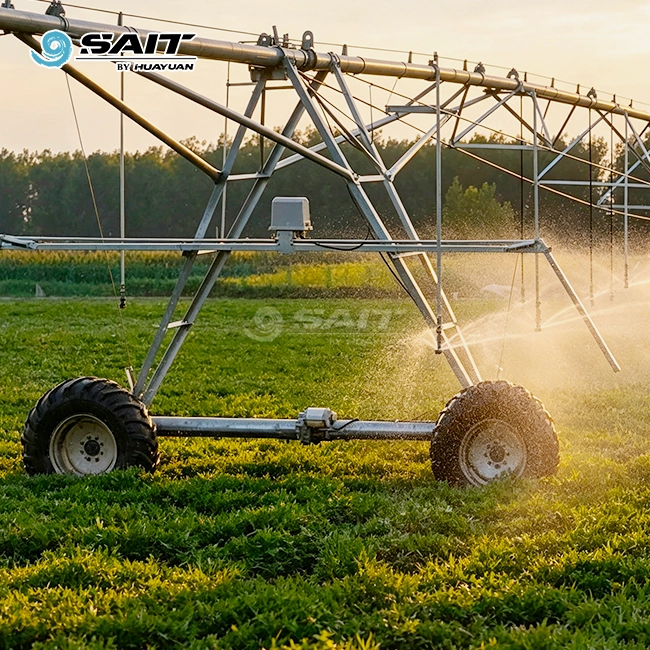
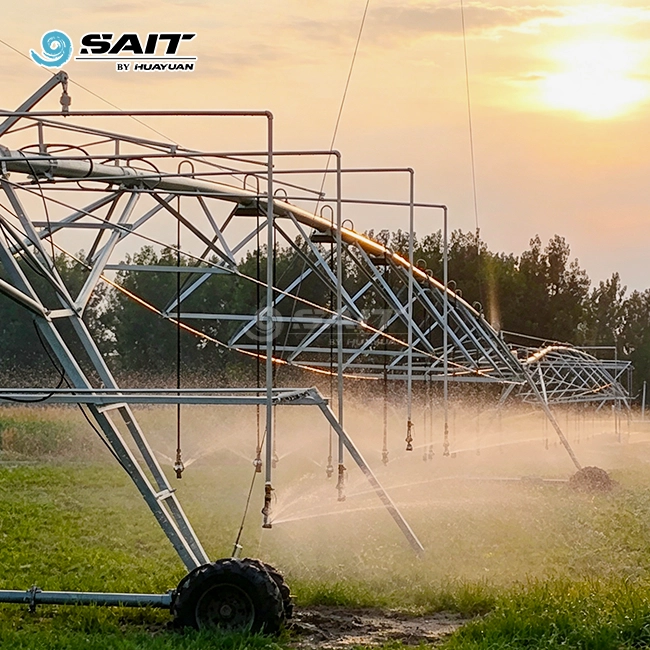
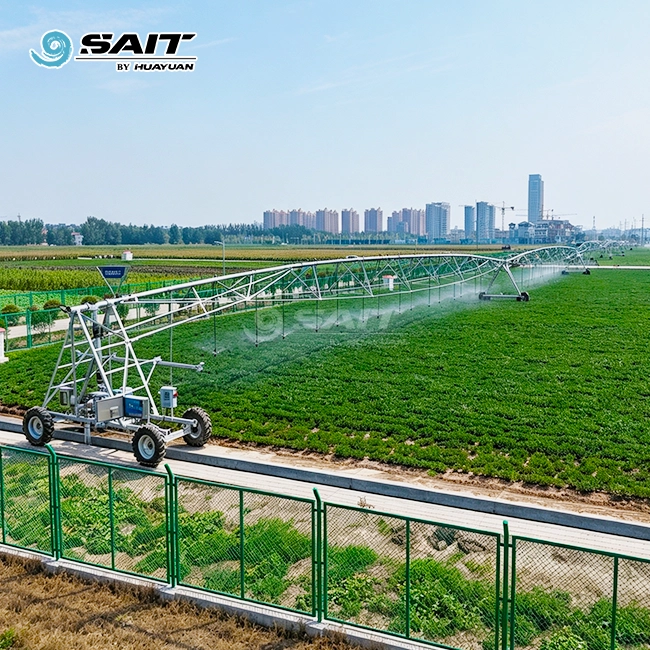
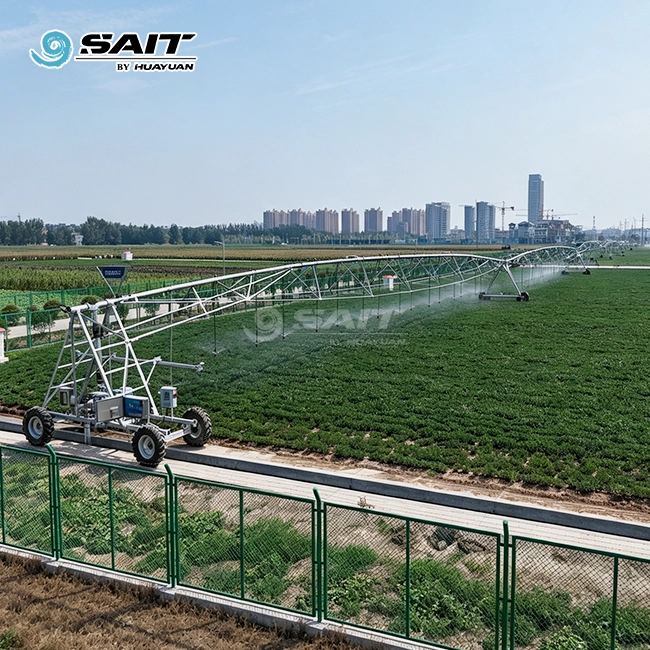
A ditch feed linear irrigation system draws water directly from an open canal running parallel to the field, using an onboard pump to lift and distribute water as the machine travels in a straight line across rectangular plots. Unlike center pivot systems that rotate in circles, a ditch feed linear system moves perpendicular to its structural span, covering every row from one end of the field to the other. This canal-fed approach removes the constraints of hose length and pressure loss, making it the preferred choice for large, flat, rectangular fields where field utilization rates must exceed 98%.
How a Ditch Feed Linear System Actually Works
Knowing how this technology works helps buyers make better decisions about what to buy. The device works like a self-moving, multi-span irrigation bridge that goes across a field while constantly getting water from a supply ditch running parallel to it.
Water Intake and Pumping
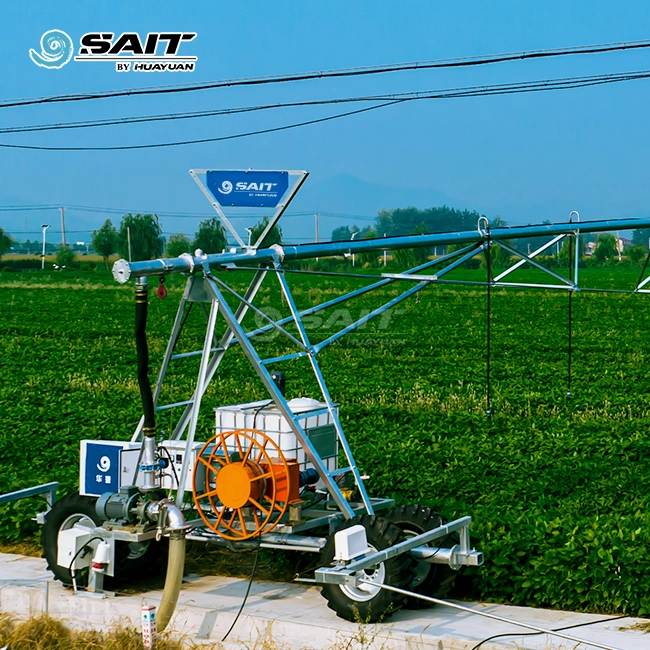
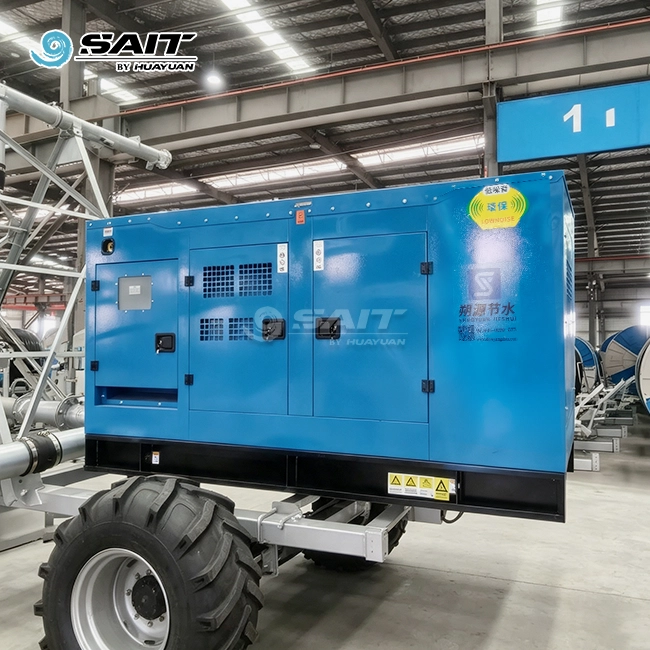
To get water out of the canal, the machine uses floating entry structures with suction screens that clean themselves. These screens are usually 30 mesh or smaller. A built-in pump, which can be driven by a gas engine or a towed power cable, moves water into the main distribution pipe (which comes in two diameters, 168mm and 219mm) and sends it at a steady pressure to the sprinklers above.
Structural Span Configuration
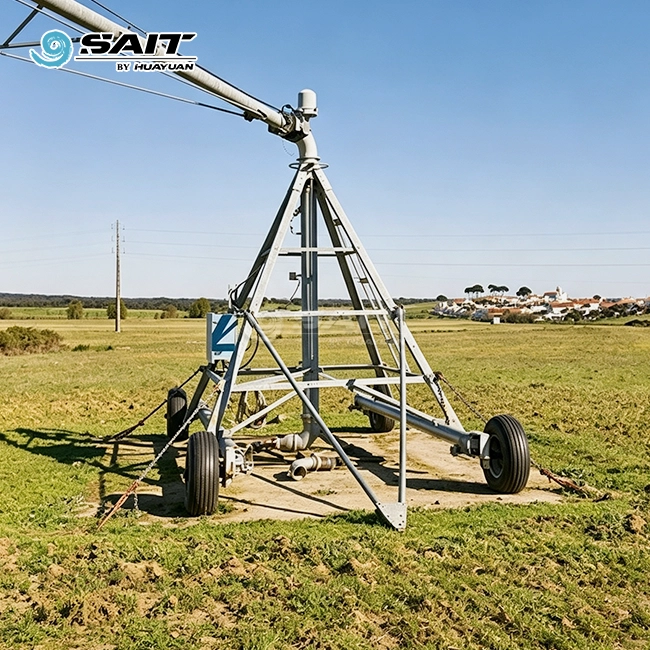
The machine goes across the whole field by putting together separate modules. The standard span lengths are 37.5m, 43.3m, 49.1m, and 54.9m, and the extension can be anywhere from 2.7m to 25m. The longest machine is 973 meters long, and each unit can cover up to 240 hectares over a distance of up to 3,000 meters. The span height can be set to either normal or high clearance, and it can support crops like corn, sugarcane, and orchard plants.
Guidance and Steering
For canal feed linear systems, it takes precise instructions to keep a 973-meter machine aligned over thousands of meters of travel. The HUAYUAN SAIT systems can work in three different modes: cable guidance (a buried wire guides the drive towers), satellite guidance using BDS/GPS dual-mode RTK positioning, and furrow guidance (the machine follows a formed trench). The satellite choice keeps the line within ±10 cm, which stops the span from drifting and keeps the crop rows from getting damaged by the wheels.
Canal Feed vs. Drag Hose: Why Water Supply Method Matters


There are a lot of people who want to know if canal water supply is better than drag hose. The answer depends on how the field is set up. So that procurement teams can honestly weigh their choices, here is a straight comparison of the two ways.
Canal water supply (ditch feed) gives you constant, unlimited access to water without having to handle hoses. The built-in pump pulls water along the whole path of travel, so there is no friction loss and no work moving the hoses around. This method works well for areas that already have irrigation canals set up. This is especially true in the CIS, North Africa, and the Middle East.
An adjustable hose called a drag hose joins the machine to a set hydrant. The hose moves along with the machine as it moves. It works in places where there aren't any open canals and can be used with either underground drip or pressure pipe networks. HUAYUAN SAIT systems can work with both configurations from the same platform. This means that distributors don't have to keep separate lines of products in stock to offer both options.
Technical Specifications That Procurement Teams Care About
Before asking for a price, people in charge should make sure that the specs given by a supplier match what is needed in the field. Here are the main factors that determine how well a system works:
- Machine length: Up to 973m, covering fields up to 240 ha per unit
- Span length options: 37.5m, 43.3m, 49.1m, 54.9m — modular for irregular field boundaries
- Main pipe diameter: 168mm or 219mm — selected based on flow demand and field length
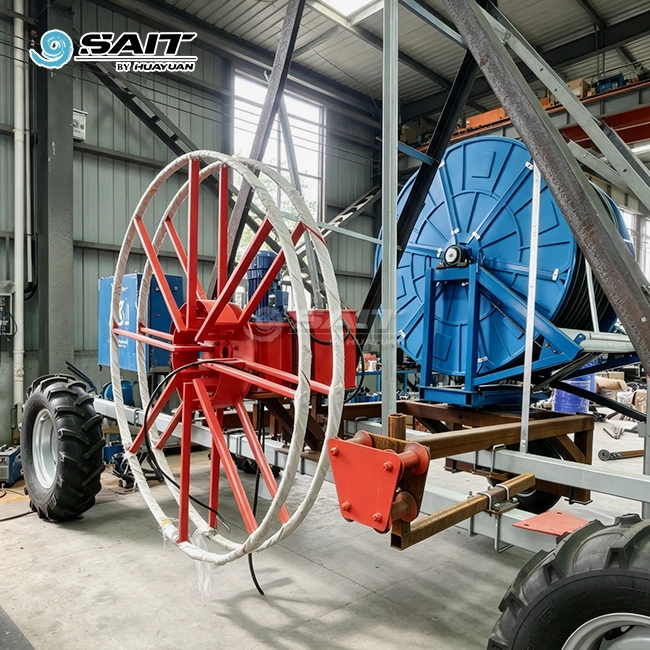
- Wheel options: 11.2-24, 14.9-24, 16.9-24 in tubeless or tubed configurations — matched to soil bearing capacity
- Power supply: Towed cable or diesel generator — critical for remote fields without grid access
- Electronic control: Standard panel or remote control system with optional SAIT IoT platform integration
These ditch feed linear specs directly affect the range in the area, the cost of operation, and how hard it is to set up. If you don't specify the right method for the dirt or the length of the field, you will have to pay a lot to fix problems during the first season.
Also, buyers should check the standards for steel protection. HUAYUAN SAIT hot-dip galvanizes all structural steel to a thickness of more than 80µm, which is thicker than the standard coating level and gives corrosion resistance that can be seen in both high-humidity canal environments and alkaline desert soils.
Why Rectangular Field Operators Choose This Technology?
Center pivot methods don't water the corners of a square area about 21% of the time. That's more than 100 hectares of lost land on a 500-hectare field. That loss is completely eliminated by a lateral move system, which covers the field in parallel passes, with coverage rates above 98%.
These types of operators care about this benefit the most. The rectangular shapes of large sugar beet, potato, and vegetable row crop farms work well with this system's linear travel pattern. Agricultural cooperatives that take care of several adjacent parcels can line up one machine across the shared field boundaries, which lowers the total cost of the equipment. The measurable field usage data is useful for compliance reports by government irrigation officials who are creating farming zones that use less water. The system's ability to support fertigation—delivering fertilizer and water through the same pipeline—helps high-value food production in soils that are low in nutrients. This is useful for desert recovery projects in dry areas.
Procurement Insights: Selecting the Right Supplier
When sourcing a canal feed linear supplier, it's not enough to just compare prices per meter. The real long-term cost per hectare depends on the infrastructure for after-sales service, the availability of parts, and the help with installation.
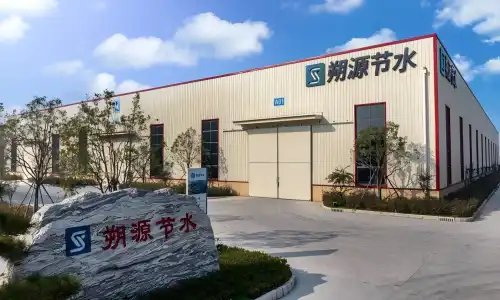
HUAYUAN SAIT's factory is close to Xuzhou, China, and has direct train and highway links that cut down on the time it takes to export goods. Standard delivery for configured units is one week, and the company has more than 130 patents, including 35 invention patents and 15 international patents. These patents were created through a co-research platform with China Agricultural University and are backed by accreditation from the provincial engineering research center.
After the sale, there is free assembly help, a full warranty for one year, low-cost upkeep for three years with parts replacement, and spare parts for life at the original cost price. For OEM users, drive units, control panels, and the SAIT software interface can all have full private-label branding. Proprietary guidance settings are protected by an NDA.
Conclusion
A ditch feed linear irrigation system automatically and on a large scale takes water from an open canal to every row of a rectangular field, solving a clear and measurable problem. It does this with over 98% coverage efficiency. The technology doesn't work well on all types of fields, but on rectangular plots with a length-to-width ratio greater than 2:1, it always does a better job of using land and distributing water evenly than center pivot options. The modular platform from HUAYUAN SAIT includes different guidance modes, power sources, and water supply configurations. This lets procurement teams use the same system architecture in different field conditions without having to find different product lines.
FAQ
Q1: How does the machine stay aligned across 800+ meters of travel?
The HUAYUAN SAIT systems can guide in furrows, along cables, or using both BDS and GPS to guide them. With the satellite option, RTK positioning keeps the alignment within ±10 cm, and it fixes any steering drift that happens along the whole travel path automatically.
Q2: Can the system handle variable water levels in the supply canal?
Yes, floating intake sections and flexible suction pipes keep the pump primed even if the level of the canal changes by up to half a meter. The self-cleaning intake screen needs to be checked every day to make sure that garbage doesn't change the regularity of the nozzles.
Q3: What crops work best with a lateral move system?
It's a good time for grains, vegetables, potatoes, sugar beets, orchards, and nursery crops. The method works for heavy cash crop production that needs precise nutrient delivery because it supports fertigation.
Q4: What is the minimum field size that justifies this investment?
When full field coverage is taken into account, fields with a length-to-width ratio greater than 2:1 and a minimum area of about 50 hectares usually show a clear cost benefit over pivot options.
Request a Quote from HUAYUAN SAIT — Ditch Feed Linear Manufacturer
HUAYUAN SAIT has been making things for 20 years and sells ditch feed linear systems to people in North America, the Middle East, Central Asia, and other places. Our systems have 80µm hot-dip galvanized steel, dual-mode BDS/GPS guidance, and can be fully customized to fit the needs of the OEM. Get in touch with our expert team to get a configuration review for your area, a specification sheet, or a bulk price. You can email us at kevin@showyirrigation.com.
References
1. Evans, R. G., & Sadler, E. J. (2008). Methods and technologies to improve efficiency of water use. Water Resources Research.
2. Food and Agriculture Organization of the United Nations. (2014). Crop evapotranspiration: Guidelines for computing crop water requirements. FAO Irrigation and Drainage Paper No. 56. FAO.
3. Howell, T. A. (2001). Enhancing water use efficiency in irrigated agriculture. Agronomy Journal, 93(2), 281–289.
4. ISO 11545:2009. (2009). Agricultural irrigation equipment — Centre-pivot and lateral-move irrigation machines with sprayer or sprinkler nozzles — Determination of uniformity of water distribution. International Organization for Standardization.
5. Keller, J., & Bliesner, R. D. (1990). Sprinkle and Trickle Irrigation. Van Nostrand Reinhold.
6. USDA Natural Resources Conservation Service. (2016). Irrigation Guide: National Engineering Handbook, Part 652. United States Department of Agriculture.
Get a tailored irrigation solution for your project — our engineering team is ready to support you from design to installation.